• Wyszukiwanie zaawansowane
  • Kategorie
  • Kategorie BISAC
  • Książki na zamówienie
  • Promocje
  • Granty
  • Książka na prezent
  • Opinie
  • Pomoc
  • Załóż konto
  • Zaloguj się

Energy Management Systems: Operation and Control of Electric Energy Transmission Systems » książka


zaloguj się | załóż konto
Logo Krainaksiazek.pl

koszyk

konto

szukaj
topmenu
Księgarnia internetowa
Szukaj
Książki na zamówienie
Promocje
Granty
Książka na prezent
Moje konto
Pomoc
 
 
Wyszukiwanie zaawansowane
Pusty koszyk
Bezpłatna dostawa dla zamówień powyżej 20 złBezpłatna dostawa dla zamówień powyżej 20 zł

Kategorie główne

• Nauka
 [2946600]
• Literatura piękna
 [1856966]

  więcej...
• Turystyka
 [72221]
• Informatyka
 [151456]
• Komiksy
 [35826]
• Encyklopedie
 [23190]
• Dziecięca
 [619653]
• Hobby
 [140543]
• AudioBooki
 [1577]
• Literatura faktu
 [228355]
• Muzyka CD
 [410]
• Słowniki
 [2874]
• Inne
 [445822]
• Kalendarze
 [1744]
• Podręczniki
 [167141]
• Poradniki
 [482898]
• Religia
 [510455]
• Czasopisma
 [526]
• Sport
 [61590]
• Sztuka
 [243598]
• CD, DVD, Video
 [3423]
• Technologie
 [219201]
• Zdrowie
 [101638]
• Książkowe Klimaty
 [124]
• Zabawki
 [2473]
• Puzzle, gry
 [3898]
• Literatura w języku ukraińskim
 [254]
• Art. papiernicze i szkolne
 [8170]
Kategorie szczegółowe BISAC

Energy Management Systems: Operation and Control of Electric Energy Transmission Systems

ISBN-13: 9783642840432 / Angielski / Miękka / 2011 / 183 str.
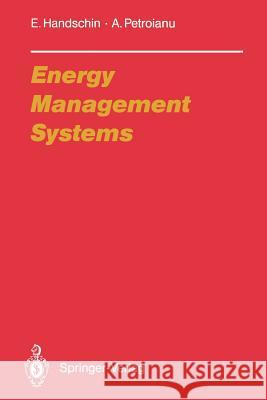
Edmund Handschin; Alexander Petroianu
Energy Management Systems: Operation and Control of Electric Energy Transmission Systems Handschin, Edmund 9783642840432 Springer - książkaWidoczna okładka, to zdjęcie poglądowe, a rzeczywista szata graficzna może różnić się od prezentowanej.

Energy Management Systems: Operation and Control of Electric Energy Transmission Systems

ISBN-13: 9783642840432 / Angielski / Miękka / 2011 / 183 str.

Edmund Handschin; Alexander Petroianu
cena 403,47 zł
(netto: 384,26 VAT:  5%)

Najniższa cena z 30 dni: 385,52 zł
Termin realizacji zamówienia:
ok. 22 dni roboczych
Bez gwarancji dostawy przed świętami

Darmowa dostawa!

Network control is a young discipline and yet already a considerable number of textbooks have been published on the topic. The aim of this book is to give a comprehensive description of Energy Management Systems (EMS) from the operator's point of view, with regard to their hardware and to their software aspects. The scope of the book is restricted to network control of electrical transmission systems and emphasis is placed on systematic description of the different operational planning aspects. The book provides a framework within which EMS may be realised, considering both the present state of the art and future developments in this multidisciplinary field. A carefully edited glossary contains the most important terms used in the field of energy management systems.


Kategorie:
Technologie
Kategorie BISAC:
Technology & Engineering > Power Resources - Electrical
Technology & Engineering > Electrical
Technology & Engineering > Engineering (General)
Wydawca:
Springer
Seria wydawnicza:
Electric Energy Systems and Engineering
Język:
Angielski
ISBN-13:
9783642840432
Rok wydania:
2011
Wydanie:
Softcover Repri
Numer serii:
000339591
Ilość stron:
183
Waga:
0.30 kg
Wymiary:
23.2 x 15.7 x 1.1
Oprawa:
Miękka
Wolumenów:
01
Dodatkowe informacje:
Glosariusz/słownik

1 Introduction.- 1.1 Electric energy systems.- 1.2 Power system engineering.- 1.3 Evolution of power system control technology.- 1.4 Control centre justification.- 1.4.1 Associated effort.- 1.4.2 Factors justifying a new control centre.- 1.4.3 Conclusions.- 2 System engineering aspects of power system operation.- 2.1 Classification.- 2.2 Time decomposition.- 2.2.1 Pre-dispatch.- 2.2.2 Dispatch.- 2.2.3 Post-dispatch.- 2.3 Network level decomposition.- 2.3.1 Transmission.- 2.3.2 Sub-transmission.- 2.3.3 Distribution.- 2.3.4 General remarks.- 2.4 Mode decomposition.- 2.4.1 Operation.- 2.4.2 Operational planning.- 2.5 Operation state decomposition.- 2.6 Activity decomposition.- 2.6.1 Power management.- 2.6.2 Network management.- 2.7 Control decomposition.- 2.7.1 Centralised control.- 2.7.2 Decentralised control.- 2.7.3 Centralised versus decentralised policy.- 2.8 User oriented decomposition.- 2.9 Analysis decomposition.- 2.9.1 Primary analysis functions.- 2.9.2 Secondary analysis functions.- 2.10 Control flow decomposition.- 3 Typical energy control centre functions.- 3.1 System monitoring and security.- 3.2 System economy.- 3.2.1 Minimum cost of operation.- 3.2.2 Minimum active power transmission losses.- 3.2.3 Minimum deviation from a specific operating point.- 3.2.4 Minimum number of controls scheduled.- 3.3 System control.- 3.4 Restorative control.- 4 Power system control centre: hardware structure.- 4.1 Overview.- 4.2 Remote terminal unit.- 4.3 Communication.- 4.4 The real-time computer system.- 4.4.1 Central processing unit.- 4.4.2 Computer memory system.- 4.4.3 Man-machine interface.- 4.5 Review of hardware structure for network control centres.- 4.5.1 The dual computer configuration.- 4.5.2 The front-end computer configuration.- 4.5.3 Triple configuration.- 4.5.4 The quad computer configuration.- 4.5.5 Distributed system configurations.- 4.6 Hardware design considerations.- 4.7 Hardware obsolescence.- 4.8 Performance of SCADA/EMS.- 5 Power system control centre: software structure.- 5.1 Overview.- 5.2 Data acquisition subsystem.- 5.2.1 Collection of data.- 5.2.2 Error checking and plausibility tests.- 5.2.3 Conversion to engineering units.- 5.2.4 Limit checking.- 5.2.5 Handling of alarms.- 5.3 Supervisory control subsystem.- 5.4 Real-time software environment.- 5.4.1 Operating system.- 5.4.2 Real-time traffic manager subsystem.- 5.5 Data base management system.- 5.5.1 Overview.- 5.5.2 Requirements.- 5.5.3 Software aspects.- 5.5.4 Structure of the data base.- 5.5.5 Storage and effort requirements.- 5.5.6 Access methods.- 5.5.7 Performance requirements.- 5.6 Man-machine interface.- 5.6.1 Importance.- 5.6.2 Human factors.- 5.6.3 Display formats.- 5.6.4 Features, design, requirements.- 5.7 Inter-utility communication subsystem.- 6 Power system control centre: dispatcher’s activities.- 6.1 Introduction.- 6.2 Salient features of the operator activity.- 6.3 A conceptual model of the dispatcher’s activity.- 6.4 Requirements.- 6.5 Trends in power dispatch operator’s activity.- 7 Power system and dispatch training simulator.- 7.1 Introduction.- 7.2 Power system technological requirements.- 7.3 Functions of a training simulator.- 7.3.1 General functions.- 7.3.2 Specific functions.- 7.4 Modelling aspects.- 7.5 Different types of training simulators.- 7.5.1 Stand-alone version.- 7.5.2 Integrated version.- 7.5.3 Implementation.- 7.5.4 Economic considerations.- 7.6 Training scenarios and training sessions.- 7.7 Concluding remarks.- 8 Existing energy management systems.- 8.1 General remarks.- 8.2 Energy management systems in a US utility.- 8.2.1 System characteristics.- 2.2.2 The concept of hierarchical control.- 2.2.3 Enhanced control and security assessment.- 8.2.4 Implementation.- 8.3 Energy management systems in Germany.- 8.3.1 Introduction.- 8.3.2 Load-frequency control.- 8.3.3 Energy management systems.- 8.3.4 Concluding remarks.- 8.4 Energy management systems in developing countries.- 8.4.1 Introduction.- 8.4.2 Electrical characteristics of longitudinal power systems.- 8.4.3 Security assessment in longitudinal power systems.- 8.4.4 Concluding remarks.- 9 Project management of energy management systems.- 9.1 Overview.- 9.2 Stages in the implementation of a new control centre.- 9.2.1 Feasibility study.- 9.2.2 System justification.- 9.2.3 Functional requirements and preliminary specifications.- 9.2.4 Releasing the specification.- 9.2.5 Evaluating proposals.- 9.2.6 Negotiating a contract.- 9.2.7 Design specifications.- 9.2.8 Implementation and organisation.- 9.2.9 Training.- 9.2.10 System operation.- 9.3 A step-by-step plan for implementing a new control centre.- 9.3.1 Preliminary system design (pre-contract).- 9.3.2 Work statement.- 9.3.3 System design (post-contract).- 9.3.4 Detailed design specifications.- 9.3.5 Development.- 9.3.6 System integration and tests.- 9.3.7 System acceptance.- 9.4 Design, development, and maintenance of software.- 9.4.1 Software development phases.- 9.4.2 Concluding remarks.- 10 Expert systems for power system operation.- 10.1 Overview.- 10.2 Security monitoring and control.- 10.3 Definitions.- 10.4 Structure of the expert system.- 10.5 Possibilities and limits of expert systems.- 10.6 Applications.- 10.7 Conclusions.- References.


Udostępnij

Facebook - konto krainaksiazek.pl


Opinie o Krainaksiazek.pl na Opineo.pl

Partner Mybenefit

Krainaksiazek.pl w programie rzetelna firma Krainaksiaze.pl - płatności przez paypal

Czytaj nas na:

Facebook - krainaksiazek.pl
  • książki na zamówienie
  • granty
  • książka na prezent
  • kontakt
  • pomoc
  • opinie
  • regulamin
  • polityka prywatności

Zobacz:

  • Księgarnia czeska

  • Wydawnictwo Książkowe Klimaty

1997-2025 DolnySlask.com Agencja Internetowa

© 1997-2022 krainaksiazek.pl
     
KONTAKT | REGULAMIN | POLITYKA PRYWATNOŚCI | USTAWIENIA PRYWATNOŚCI
Zobacz: Księgarnia Czeska | Wydawnictwo Książkowe Klimaty | Mapa strony | Lista autorów
KrainaKsiazek.PL - Księgarnia Internetowa

Polityka prywatnosci - link
Krainaksiazek.pl - płatnośc Przelewy24
Przechowalnia Przechowalnia





