2.2 Individual Good, User Perspective, Personal Effects
2.2.1 Security
2.2.2 Autonomy and Freedom
2.2.3 Positive Experiences
2.3 Social Good, Societal Perspective, Effects on Society
2.3.1 Objectification, Solipsism and Isolation
2.3.2 Solipsism as Imprisonment
2.4 Key Issues
2.4.1 Axiological Issues
2.4.2 Epistemological and Methodological Issues
2.4.3 Ontological Issues
2.5 Disenchanting Humans
Chapter 3. Humans Enchanting Robots
3.1 Magic and Magical Thinking
3.1.1 The Status of Magic and Magical Thinking
3.1.2 The Functions of Magic and Magical Thinking
3.1.3 The Functioning of Magic and Magical Thinking
3.2 Magical Thinking in Interactions with Robots
3.3 Magical Thinking in Reflections About Robots
3.4 Disenchanting Modern Rationality
Chapter 4. Disenchanting and Re-enchanting in Modernity
4.1 Disenchantment and its Limits
4.2 Re-enchantment and its Functions
4.3 Disenchanting Modernity
Chapter 5. In Lieu of a Conclusion: Where Will We Go from Here?
5.1 Intimacy and the Meaning of Life in a World of Widespread Automation
5.2 Taking Robot Rights Seriously: When Designing Becomes Eugenics
5.3 Final Remark
Maciej Musiał, Ph.D., is Assistant Professor of Philosophy at Adam Mickiewicz University in Poznań, Poland. He is interested in transformations of intimacy, new technologies and magical thinking.
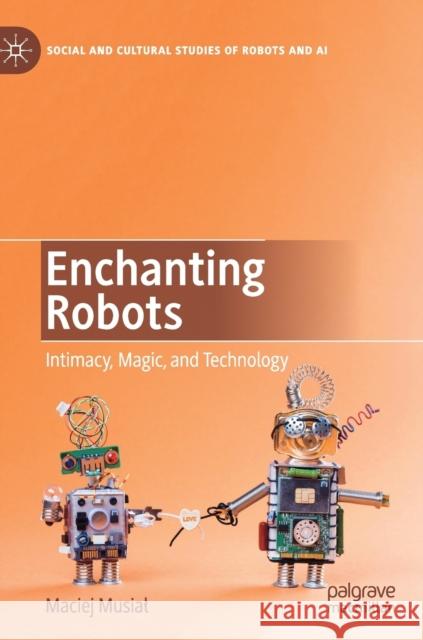
This book argues that robots are enchanting humans (as potential intimate partners), because humans are enchanting robots (by performing magical thinking), and that these processes are a part of a significant re-enchantment of the “modern” world. As a foundation, the author examines arguments for and against intimate relationships with robots, particularly sex robots and care robots. Moreover, the book provides a consideration of human-robot interactions and philosophical reflections about robots through the lens of magic and magical thinking as well as theoretical and practical re-evaluations of their status and presence. Furthermore, the author discusses the abovementioned issues in the context of disenchantment and re-enchantment of the world, characterizing modernity as a coexistence of these two processes. The book closes with a consideration of future scenarios regarding the meaning of life in the age of rampant automation and the possibility that designing robots becomes a sort of new eugenics as a consequence of recognizing robots as persons.