• Wyszukiwanie zaawansowane
  • Kategorie
  • Kategorie BISAC
  • Książki na zamówienie
  • Promocje
  • Granty
  • Książka na prezent
  • Opinie
  • Pomoc
  • Załóż konto
  • Zaloguj się

Enabling Things to Talk: Designing Iot Solutions with the Iot Architectural Reference Model » książka


zaloguj się | załóż konto
Logo Krainaksiazek.pl

koszyk

konto

szukaj
topmenu
Księgarnia internetowa
Szukaj
Książki na zamówienie
Promocje
Granty
Książka na prezent
Moje konto
Pomoc
 
 
Wyszukiwanie zaawansowane
Pusty koszyk
Bezpłatna dostawa dla zamówień powyżej 20 złBezpłatna dostawa dla zamówień powyżej 20 zł

Kategorie główne

• Nauka
 [2950560]
• Literatura piękna
 [1849509]

  więcej...
• Turystyka
 [71097]
• Informatyka
 [151150]
• Komiksy
 [35848]
• Encyklopedie
 [23178]
• Dziecięca
 [617388]
• Hobby
 [139064]
• AudioBooki
 [1657]
• Literatura faktu
 [228597]
• Muzyka CD
 [383]
• Słowniki
 [2855]
• Inne
 [445295]
• Kalendarze
 [1464]
• Podręczniki
 [167547]
• Poradniki
 [480102]
• Religia
 [510749]
• Czasopisma
 [516]
• Sport
 [61293]
• Sztuka
 [243352]
• CD, DVD, Video
 [3414]
• Technologie
 [219456]
• Zdrowie
 [101002]
• Książkowe Klimaty
 [124]
• Zabawki
 [2311]
• Puzzle, gry
 [3459]
• Literatura w języku ukraińskim
 [254]
• Art. papiernicze i szkolne
 [8079]
Kategorie szczegółowe BISAC

Enabling Things to Talk: Designing Iot Solutions with the Iot Architectural Reference Model

ISBN-13: 9783642404023 / Angielski / Twarda / 2013 / 349 str.
Alessandro Bassi; Martin Bauer; Martin Fiedler
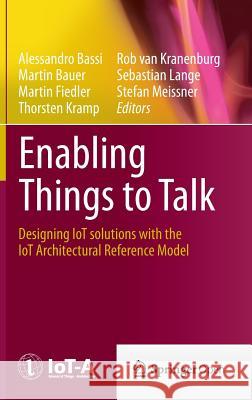
Enabling Things to Talk: Designing Iot Solutions with the Iot Architectural Reference Model Bassi, Alessandro 9783642404023 Springer - książkaWidoczna okładka, to zdjęcie poglądowe, a rzeczywista szata graficzna może różnić się od prezentowanej.

Enabling Things to Talk: Designing Iot Solutions with the Iot Architectural Reference Model

ISBN-13: 9783642404023 / Angielski / Twarda / 2013 / 349 str.

Alessandro Bassi; Martin Bauer; Martin Fiedler
cena 200,77
(netto: 191,21 VAT:  5%)

Najniższa cena z 30 dni: 192,74
Termin realizacji zamówienia:
ok. 22 dni roboczych
Dostawa w 2026 r.

Darmowa dostawa!

The Internet of Things (IoT) is an emerging network superstructure that will connect physical resources and actual users. It will support an ecosystem of smart applications and services bringing hyper-connectivity to our society by using augmented and rich interfaces. Whereas in the beginning IoT referred to the advent of barcodes and Radio Frequency Identification (RFID), which helped to automate inventory, tracking and basic identification, today IoT is characterized by a dynamic trend toward connecting smart sensors, objects, devices, data and applications. The next step will be "cognitive IoT," facilitating object and data re-use across application domains and leveraging hyper-connectivity, interoperability solutions and semantically enriched information distribution.The Architectural Reference Model (ARM), presented in this book by the members of the IoT-A project team driving this harmonization effort, makes it possible to connect vertically closed systems, architectures and application areas so as to create open interoperable systems and integrated environments and platforms. It constitutes a foundation from which software companies can capitalize on the benefits of developing consumer-oriented platforms including hardware, software and services.The material is structured in two parts. Part A introduces the general concepts developed for and applied in the ARM. It is aimed at end users who want to use IoT technologies, managers interested in understanding the opportunities generated by these novel technologies, and system architects who are interested in an overview of the underlying basic models. It also includes several case studies to illustrate how the ARM has been used in real-life scenarios. Part B then addresses the topic at a more detailed technical level and is targeted at readers with a more scientific or technical background. It provides in-depth guidance on the ARM, including a detailed description of a process for generating concrete architectures, as well as reference manuals with guidelines on how to use the various models and perspectives presented to create a concrete architecture. Furthermore, best practices and tips on how system engineers can use the ARM to develop specific IoT architectures for dedicated IoT solutions are illustrated and exemplified in reverse mapping exercises of existing standards and platforms.


Kategorie:
Nauka, Ekonomia i biznes
Kategorie BISAC:
Computers > Information Technology
Business & Economics > Information Management
Computers > Data Science - General
Wydawca:
Springer
Język:
Angielski
ISBN-13:
9783642404023
Rok wydania:
2013
Wydanie:
2013
Ilość stron:
349
Waga:
0.63 kg
Wymiary:
23.5 x 16.38 x 2.39
Oprawa:
Twarda
Wolumenów:
01
Dodatkowe informacje:
Wydanie ilustrowane

From the reviews:

"If your goal is to learn or employ IoT technologies, this book serves as a worthy starting point for that journey; you will certainly benefit from having it in your library for future reference." Nicholas Loulloudes, ACM Computing Reviews, June 2014

Introduction to the Internet of Things.- The Need for a Common Ground for the IoT — The History and Reasoning Behind the IoT — A Project.- The IoT Architectural Reference Model as Enabler.- IoT in Practice: Examples — IoT in Logistics and Health.- IoT — A Guidance to the ARM.- A Process to Generate Concrete Architectures.- IoT Reference Model.- IoT Reference Architecture.- The IoT ARM Reference Manual.- Interactions.- Toward a Concrete Architecture.- ARM Testimonials.- Summary and Outlook.

The IoT-Architecture project (IoT-A) is the European Commission’s flagship project in the European Union’s Seventh Framework Program for Research and Development with respect to establishing an architecture for the Internet of Things. Together, the editors and contributing authors represent more than 20 large industrial companies and research institutions, including Alcatel-Lucent, IBM , Ericsson, NEC, NXP, SAP, Siemens, and the Universities of Rome “La Sapienza,” St. Gallen, Surrey, and Würzburg, as well as CEA, CFRG, FhG, and VTT.

The Internet of Things (IoT) is an emerging network superstructure that will connect physical resources and actual users. It will support an ecosystem of smart applications and services bringing hyper-connectivity to our society by using augmented and rich interfaces.  Whereas in the beginning IoT referred to the advent of barcodes and Radio Frequency Identification (RFID), which helped to automate inventory, tracking and basic identification, today IoT is characterized by a dynamic trend toward connecting smart sensors, objects, devices, data and applications. The next step will be “cognitive IoT,” facilitating object and data re-use across application domains and leveraging hyper-connectivity, interoperability solutions and semantically enriched information distribution.

The Architectural Reference Model (ARM), presented in this book by the members of the IoT-A project team driving this harmonization effort, makes it possible to connect vertically closed systems, architectures and application areas so as to create open interoperable systems and integrated environments and platforms. It constitutes a foundation from which software companies can capitalize on the benefits of developing consumer-oriented platforms including hardware, software and services.

The material is structured in two parts. Part A introduces the general concepts developed for and applied in the ARM. It is aimed at end users who want to use IoT technologies, managers interested in understanding the opportunities generated by these novel technologies, and system architects who are interested in an overview of the underlying basic models. It also includes several case studies to illustrate how the ARM has been used in real-life scenarios. Part B then addresses the topic at a more detailed technical level and is targeted at readers with a more scientific or technical background. It provides in-depth guidance on the ARM, including a detailed description of a process for generating concrete architectures, as well as reference manuals with guidelines on how to use the various models and perspectives presented to create a concrete architecture. Furthermore, best practices and tips on how system engineers can use the ARM to develop specific IoT architectures for dedicated IoT solutions are illustrated and exemplified in reverse mapping exercises of existing standards and platforms.

Bauer, Martin Martin Bauer is the Managing Director of designIT,... więcej >


Udostępnij

Facebook - konto krainaksiazek.pl


Opinie o Krainaksiazek.pl na Opineo.pl

Partner Mybenefit

Krainaksiazek.pl w programie rzetelna firma Krainaksiaze.pl - płatności przez paypal

Czytaj nas na:

Facebook - krainaksiazek.pl
  • książki na zamówienie
  • granty
  • książka na prezent
  • kontakt
  • pomoc
  • opinie
  • regulamin
  • polityka prywatności

Zobacz:

  • Księgarnia czeska

  • Wydawnictwo Książkowe Klimaty

1997-2025 DolnySlask.com Agencja Internetowa

© 1997-2022 krainaksiazek.pl
     
KONTAKT | REGULAMIN | POLITYKA PRYWATNOŚCI | USTAWIENIA PRYWATNOŚCI
Zobacz: Księgarnia Czeska | Wydawnictwo Książkowe Klimaty | Mapa strony | Lista autorów
KrainaKsiazek.PL - Księgarnia Internetowa

Polityka prywatnosci - link
Krainaksiazek.pl - płatnośc Przelewy24
Przechowalnia Przechowalnia




