• Wyszukiwanie zaawansowane
  • Kategorie
  • Kategorie BISAC
  • Książki na zamówienie
  • Promocje
  • Granty
  • Książka na prezent
  • Opinie
  • Pomoc
  • Załóż konto
  • Zaloguj się

Enabling Technologies for Effective Planning and Management in Sustainable Smart Cities » książka


zaloguj się | załóż konto
Logo Krainaksiazek.pl

koszyk

konto

szukaj
topmenu
Księgarnia internetowa
Szukaj
Książki na zamówienie
Promocje
Granty
Książka na prezent
Moje konto
Pomoc
 
 
Wyszukiwanie zaawansowane
Pusty koszyk
Bezpłatna dostawa dla zamówień powyżej 20 złBezpłatna dostawa dla zamówień powyżej 20 zł

Kategorie główne

• Nauka
 [2949965]
• Literatura piękna
 [1857847]

  więcej...
• Turystyka
 [70818]
• Informatyka
 [151303]
• Komiksy
 [35733]
• Encyklopedie
 [23180]
• Dziecięca
 [617748]
• Hobby
 [139972]
• AudioBooki
 [1650]
• Literatura faktu
 [228361]
• Muzyka CD
 [398]
• Słowniki
 [2862]
• Inne
 [444732]
• Kalendarze
 [1620]
• Podręczniki
 [167233]
• Poradniki
 [482388]
• Religia
 [509867]
• Czasopisma
 [533]
• Sport
 [61361]
• Sztuka
 [243125]
• CD, DVD, Video
 [3451]
• Technologie
 [219309]
• Zdrowie
 [101347]
• Książkowe Klimaty
 [123]
• Zabawki
 [2362]
• Puzzle, gry
 [3791]
• Literatura w języku ukraińskim
 [253]
• Art. papiernicze i szkolne
 [7933]
Kategorie szczegółowe BISAC

Enabling Technologies for Effective Planning and Management in Sustainable Smart Cities

ISBN-13: 9783031229213 / Angielski / Twarda / 2023 / 356 str.
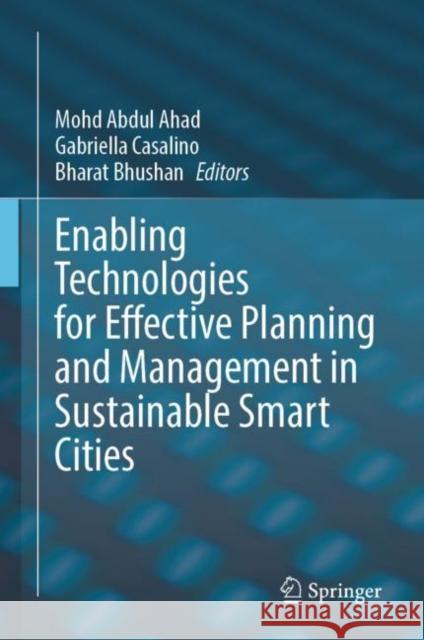
Mohd Abdul Ahad; Gabriella Casalino; Bharat Bhushan
Enabling Technologies for Effective Planning and Management in Sustainable Smart Cities Mohd Abdul Ahad Gabriella Casalino Bharat Bhushan 9783031229213 Springer - książkaWidoczna okładka, to zdjęcie poglądowe, a rzeczywista szata graficzna może różnić się od prezentowanej.

Enabling Technologies for Effective Planning and Management in Sustainable Smart Cities

ISBN-13: 9783031229213 / Angielski / Twarda / 2023 / 356 str.

Mohd Abdul Ahad; Gabriella Casalino; Bharat Bhushan
cena 726,29 zł
(netto: 691,70 VAT:  5%)

Najniższa cena z 30 dni: 655,41 zł
Termin realizacji zamówienia:
ok. 22 dni roboczych
Bez gwarancji dostawy przed świętami

Darmowa dostawa!
inne wydania

With the rapid penetration of technology in varied application domains, the existing cities are getting connected more seamlessly. Cities becomes smart by inducing ICT in the classical city infrastructure for its management. According to McKenzie Report, about 68% of the world population will migrate towards urban settlements in near future. This migration is largely because of the improved Quality of Life (QoL) and livelihood in urban settlements. In the light of urbanization, climate change, democratic flaws, and rising urban welfare expenditures, smart cities have emerged as an important approach for society’s future development. Smart cities have achieved enhanced QoL by giving smart information to people regarding healthcare, transportation, smart parking, smart traffic structure, smart home, smart agronomy, community security etc.Typically, in smart cities data is sensed by the sensor devices and provided to end users for further use. The sensitive data is transferred with the help of internet creating higher chances for the adversaries to breach the data. Considering the privacy and security as the area of prime focus, this book covers the most prominent security vulnerabilities associated with varied application areas like healthcare, manufacturing, transportation, education and agriculture etc. Furthermore, the massive amount of data being generated through ubiquitous sensors placed across the smart cities needs to be handled in an effective, efficient, secured and privacy preserved manner. Since a typical smart city ecosystem is data driven, it is imperative to manage this data in an optimal manner. Enabling technologies like Internet of Things (IoT), Natural Language Processing (NLP), Blockchain Technology, Deep Learning, Machine Learning, Computer vision, Big Data Analytics, Next Generation Networks and Software Defined Networks (SDN) provide exemplary benefits if they are integrated in the classical city ecosystem in an effective manner.The application of Artificial Intelligence (AI) is expanding across many domains in the smart city, such as infrastructure, transportation, environmental protection, power and energy, privacy and security, governance, data management, healthcare, and more. AI has the potential to improve human health, prosperity, and happiness by reducing our reliance on manual labor and accelerating our progress in the sciences and technologies. NLP is an extensive domain of AI and is used in collaboration with machine learning and deep learning algorithms for clinical informatics and data processing. In modern smart cities, blockchain provides a complete framework that controls the city operations and ensures that they are managed as effectively as possible. Besides having an impact on our daily lives, it also facilitates many areas of city management.

With the rapid penetration of technology in varied application domains, the existing cities are getting connected more seamlessly. Cities becomes smart by inducing ICT in the classical city infrastructure for its management. According to McKenzie Report, about 68% of the world population will migrate towards urban settlements in near future. This migration is largely because of the improved Quality of Life (QoL) and livelihood in urban settlements. In the light of urbanization, climate change, democratic flaws, and rising urban welfare expenditures, smart cities have emerged as an important approach for society’s future development. Smart cities have achieved enhanced QoL by giving smart information to people regarding healthcare, transportation, smart parking, smart traffic structure, smart home, smart agronomy, community security etc. 

Typically, in smart cities data is sensed by the sensor devices and provided to end users for further use. The sensitive data is transferred with the help of internet creating higher chances for the adversaries to breach the data. Considering the privacy and security as the area of prime focus, this book covers the most prominent security vulnerabilities associated with varied application areas like healthcare, manufacturing, transportation, education and agriculture etc. Furthermore, the massive amount of data being generated through ubiquitous sensors placed across the smart cities needs to be handled in an effective, efficient, secured and privacy preserved manner. Since a typical smart city ecosystem is data driven, it is imperative to manage this data in an optimal manner. Enabling technologies like Internet of Things (IoT), Natural Language Processing (NLP), Blockchain Technology, Deep Learning, Machine Learning, Computer vision, Big Data Analytics, Next Generation Networks and Software Defined Networks (SDN) provide exemplary benefits if they are integrated in the classical city ecosystem in an effective manner. 
The application of Artificial Intelligence (AI) is expanding across many domains in the smart city, such as infrastructure, transportation, environmental protection, power and energy, privacy and security, governance, data management, healthcare, and more. AI has the potential to improve human health, prosperity, and happiness by reducing our reliance on manual labor and accelerating our progress in the sciences and technologies. NLP is an extensive domain of AI and is used in collaboration with machine learning and deep learning algorithms for clinical informatics and data processing. In modern smart cities, blockchain provides a complete framework that controls the city operations and ensures that they are managed as effectively as possible. Besides having an impact on our daily lives, it also facilitates many areas of city management. 

Kategorie:
Informatyka, Internet
Kategorie BISAC:
Computers > Networking - Hardware
Technology & Engineering > Electrical
Computers > Information Theory
Wydawca:
Springer
Język:
Angielski
ISBN-13:
9783031229213
Rok wydania:
2023
Dostępne języki:
Ilość stron:
356
Oprawa:
Twarda
Dodatkowe informacje:
Wydanie ilustrowane

1 Challenges and Opportunities in Secure Smart Cities for Enhancing the Security and Privacy

2 Reliability and Security of Edge Computing Devices for Smart Cities
3 Artificial Intelligence in Smart City- Systematic Literature review of Current Knowledge and Future Research Avenues
4 Predictive Farmland Optimization and Crop Monitoring using Artificial Intelligence Techniques
5 Natural Language Processing (NLP) based Innovations for Smart Healthcare Applications in Healthcare 4.0
6 Evolving of Smart Banking with NLP and Deep Learning
7 Blockchain based Smart Card for Smart City
8 Blockchain-powered Smart E-healthcare System: Benefits, Use cases, and Future Research Directions
9 A Comprehensive Review of Wireless Medical Biosensor Networks in Connected Healthcare Applications
10 Smart Intelligent System for Cervix Cancer Image Classification using Google Cloud Platform
11 IoT and An Intelligent Cloud-Based Framework to Build a Smart City Traffic Management System
12 Emersion and Immersion of Technology in the development of smart cities: A bibliometric Analysis
13 Examining social media, citizen engagement and risk communication: A smart city perspective
14 5G and 6G Technologies for Smart City
15 Software defined virtual clustering based content distribution mechanism in VNDN
16 Sustainable Energy Usage in Urban and Rural Context-A Study

Dr. Mohd Abdul Ahad is currently working in the Department of Computer Science and Engineering, School of Engineering Sciences and Technology, Jamia Hamdard, New Delhi, India. He has a rich experience of more than 14 years in the field of Computer Science and Engineering. He obtained his Ph.D. degree in the field of Big Data Architecture. His research areas include big data architecture, Distributed Computing, IoT, Sustainable Computing. He has published several research papers in various International Journals of repute in Q1 and Q2 categories. His cumulative Impact factor for the last three years is 49.8 (As per Clarivate/JCR). He has chaired several sessions in International Conferences of Springer, Elsevier etc. He is a Certified Microsoft Innovative Educator and a certified Google Educator. He is a life member of Indian Society of Technical Education (ISTE) as well as an active Senior Member of IEEE. Apart from that he is also on the review board of several prestigious journals like Journal of Networks and Computer Applications, Elsevier, Sustainable Cities and Society, Elsevier, Journal of Ambient Intelligence and Humanized Computing (JAIHC), Springer, Computers in Biology, Elsevier etc. 

Dr. Gabriella Casalino is currently Assistant Professor at the CILab laboratory of the department of Informatics, University of Bari, working on machine learning techniques applied to Web Economy domain. This position has been funded by the Italian Ministry of Education, University and Research (MIUR) through the European funding project AIM (Attraction and International Mobility). Her research interests span in the field of Data Analysis. Her works cover different domains such as Text mining, Hyperspectral Imaging, eHealth, bioinformatic, anomaly detection, Educational Data Mining. She is currently woking on stream data mining algorithms. Gabriella Casalino has got the Ph.D. in Computer Science at the Doctoral School in Computer Science of the Department of Informatics, at University of Bari "A. Moro". She defended the thesis "Non-negative factorization methods for extracting semantically relevant features in Intelligent Data Analysis". She was awarded by the Italian Ministry of Education, University and Research (M.I.U.R.) with a grant covering the three-year period of her Ph.D. In 2008 she got a B.Sc. in Computer Science from the University of Bari, and in 2011 she got a M.Sc. in Computer Science from the same University.

Dr. Bharat Bhushan is an Assistant Professor of Department of Computer Science and Engineering (CSE) at School of Engineering and Technology, Sharda University, Greater Noida, India. He received his Undergraduate Degree (B-Tech in Computer Science and Engineering) with Distinction in 2012, received his Postgraduate Degree (M-Tech in Information Security) with Distinction in 2015 and Doctorate Degree (PhD Computer Science and Engineering) in 2021 from Birla Institute of Technology, Mesra, India. In the year 2021, Stanford University (USA) listed Dr. Bharat Bhushan in the top 2% scientists list. He earned numerous international certifications such as CCNA, MCTS, MCITP, RHCE and CCNP. He has published more than 150 research papers in various renowned International Conferences and SCI indexed journals including Journal of Network and Computer Applications (Elsevier), Wireless Networks (Springer), Wireless Personal Communications (Springer), Sustainable Cities and Society (Elsevier) and Emerging Transactions on Telecommunications (Wiley). He has contributed with more than 30 book chapters in various books and has edited 20 books from the most famed publishers like Elsevier, Springer, Wiley, IOP Press, IGI Global, and CRC Press. He has served as Keynote Speaker (resource person) in numerous reputed faculty development programs and international conferences held in different countries including India, Iraq, Morocco, China, Belgium and Bangladesh. He has served as a Reviewer/Editorial Board Member for several reputed international journals. In the past, he worked as an assistant professor at HMR Institute of Technology and Management, New Delhi and Network Engineer in HCL Infosystems Ltd., Noida. In addition to being the senior member of IEEE, he is also a member of numerous renowned bodies including IAENG, CSTA, SCIEI, IAE and UACEE.

With the rapid penetration of technology in varied application domains, the existing cities are getting connected more seamlessly. Cities becomes smart by inducing ICT in the classical city infrastructure for its management. According to McKenzie Report, about 68% of the world population will migrate towards urban settlements in near future. This migration is largely because of the improved Quality of Life (QoL) and livelihood in urban settlements. In the light of urbanization, climate change, democratic flaws, and rising urban welfare expenditures, smart cities have emerged as an important approach for society’s future development. Smart cities have achieved enhanced QoL by giving smart information to people regarding healthcare, transportation, smart parking, smart traffic structure, smart home, smart agronomy, community security etc. 

Typically, in smart cities data is sensed by the sensor devices and provided to end users for further use. The sensitive data is transferred with the help of internet creating higher chances for the adversaries to breach the data. Considering the privacy and security as the area of prime focus, this book covers the most prominent security vulnerabilities associated with varied application areas like healthcare, manufacturing, transportation, education and agriculture etc. Furthermore, the massive amount of data being generated through ubiquitous sensors placed across the smart cities needs to be handled in an effective, efficient, secured and privacy preserved manner. Since a typical smart city ecosystem is data driven, it is imperative to manage this data in an optimal manner. Enabling technologies like Internet of Things (IoT), Natural Language Processing (NLP), Blockchain Technology, Deep Learning, Machine Learning, Computer vision, Big Data Analytics, Next Generation Networks and Software Defined Networks (SDN) provide exemplary benefits if they are integrated in the classical city ecosystem in an effective manner. 
The application of Artificial Intelligence (AI) is expanding across many domains in the smart city, such as infrastructure, transportation, environmental protection, power and energy, privacy and security, governance, data management, healthcare, and more. AI has the potential to improve human health, prosperity, and happiness by reducing our reliance on manual labor and accelerating our progress in the sciences and technologies. NLP is an extensive domain of AI and is used in collaboration with machine learning and deep learning algorithms for clinical informatics and data processing. In modern smart cities, blockchain provides a complete framework that controls the city operations and ensures that they are managed as effectively as possible. Besides having an impact on our daily lives, it also facilitates many areas of city management. 


Udostępnij

Facebook - konto krainaksiazek.pl


Opinie o Krainaksiazek.pl na Opineo.pl

Partner Mybenefit

Krainaksiazek.pl w programie rzetelna firma Krainaksiaze.pl - płatności przez paypal

Czytaj nas na:

Facebook - krainaksiazek.pl
  • książki na zamówienie
  • granty
  • książka na prezent
  • kontakt
  • pomoc
  • opinie
  • regulamin
  • polityka prywatności

Zobacz:

  • Księgarnia czeska

  • Wydawnictwo Książkowe Klimaty

1997-2025 DolnySlask.com Agencja Internetowa

© 1997-2022 krainaksiazek.pl
     
KONTAKT | REGULAMIN | POLITYKA PRYWATNOŚCI | USTAWIENIA PRYWATNOŚCI
Zobacz: Księgarnia Czeska | Wydawnictwo Książkowe Klimaty | Mapa strony | Lista autorów
KrainaKsiazek.PL - Księgarnia Internetowa

Polityka prywatnosci - link
Krainaksiazek.pl - płatnośc Przelewy24
Przechowalnia Przechowalnia





