Empire, Global Coloniality and African Subjectivity » książka





Empire, Global Coloniality and African Subjectivity
ISBN-13: 9781782381938 / Angielski / Miękka / 2015 / 288 str.
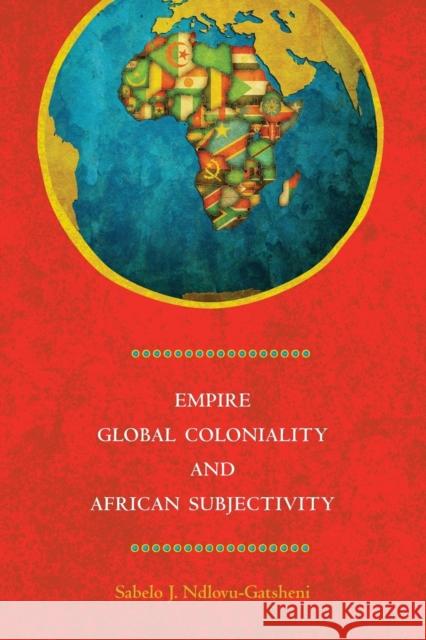
Empire, Global Coloniality and African Subjectivity
ISBN-13: 9781782381938 / Angielski / Miękka / 2015 / 288 str.
(netto: 130,37 VAT: 5%)
Najniższa cena z 30 dni: 135,22
ok. 30 dni roboczych.
Darmowa dostawa!
..".Ndlovu-Gatsheni rejects modernist perspectives that present Africa as deficient and], convincingly conveys the richness of African perspectives, arguing that problems are caused by how coloniality misappropriates Africa's wealth. However, the author] also demonstrates how some demagogical African governments, such as Zimbabwe's ZANU-PF regime, are complicit in plundering the national resources on the pretext of confronting empire. This book] book is an important addition to historiography that interrogates Africa's current condition. It will be a positive step in the theorization of Africa by African scholars." - Africa Spectrum "Sabelo J. Gatsheni-Ndlovu's book brilliantly...reveals empire's invisible Eurocentricism and coloniality from an African perspective... It] unapologetically deciphers how global power hierarchy was rooted in the very making of Western hegemony, which manifested itself in colonial subjugation and subalternization of Africans, and is the very essence of the continent's wretchedness in the current world order today." - Siphamandla Zondi, Director of Institute for Global Dialogue (IDG), South Africa "A path-breaking book that bears eloquent testimony to the finest traditions of liberatory decolonial thinking and cannot be overlooked by all those with a stake in the transformation of Africa." - Cyril Obi, Program Director of the African Peacebuilding Network, Social Science Research Council (SSRC) ..".a very insightful, timely and important contribution to scholarship on the post-colonial African condition and the many challenges that African societies face with regard to nation building and crafting common national identities in a rapidly changing world. It ranks up there with the best in the field with respect to the debates that it tackles. It is, in my view, a very welcome scholarly contribution to African studies in general and African history in particular." - Alois S. Mlambo, University of Pretoria "A most impressive book that] is clearly structured, cleverly argued and exceptionally well written...Within the paradigm selected by the author, that is, a coloniality perspective, conceptual and methodological issues are addressed systematically and with considerable analytical rigour." - Ian Phimister, University of Sheffield Global imperial designs, which have been in place since conquest by western powers, did not suddenly evaporate after decolonization. Global coloniality as a leitmotif of the empire became the order of the day, with its invisible technologies of subjugation continuing to reproduce Africa's subaltern position, a position characterized by perceived deficits ranging from a lack of civilization, a lack of writing and a lack of history to a lack of development, a lack of human rights and a lack of democracy. The author's sharply critical perspective reveals how this epistemology of alterity has kept Africa ensnared within colonial matrices of power, serving to justify external interventions in African affairs, including the interference with liberation struggles and disregard for African positions. Evaluating the quality of African responses and available options, the author opens up a new horizon that includes cognitive justice and new humanism. Sabelo J. Ndlovu-Gatsheni is the director of the Archie Mafeje Research Institute (AMRI) and is also a professor in the Department of Development Studies at the University of South Africa.
"...Ndlovu-Gatsheni rejects modernist perspectives that present Africa as deficient [and],,, convincingly conveys the richness of African perspectives, arguing that problems are caused by how coloniality misappropriates Africas wealth. However, [the author] also demonstrates how some demagogical African governments, such as Zimbabwes ZANU-PF regime, are complicit in plundering the national resources on the pretext of confronting empire. [This book] book is an important addition to historiography that interrogates Africas current condition. It will be a positive step in the theorization of Africa by African scholars." · Africa Spectrum"Sabelo J. Gatsheni-Ndlovus book brilliantly...reveals empires invisible Eurocentricism and coloniality from an African perspective...[It] unapologetically deciphers how global power hierarchy was rooted in the very making of Western hegemony, which manifested itself in colonial subjugation and subalternization of Africans, and is the very essence of the continents wretchedness in the current world order today." · Siphamandla Zondi, Director of Institute for Global Dialogue (IDG), South Africa"A path-breaking book that bears eloquent testimony to the finest traditions of liberatory decolonial thinking and cannot be overlooked by all those with a stake in the transformation of Africa." · Cyril Obi, Program Director of the African Peacebuilding Network, Social Science Research Council (SSRC)"...a very insightful, timely and important contribution to scholarship on the post-colonial African condition and the many challenges that African societies face with regard to nation building and crafting common national identities in a rapidly changing world. It ranks up there with the best in the field with respect to the debates that it tackles. It is, in my view, a very welcome scholarly contribution to African studies in general and African history in particular." · Alois S. Mlambo, University of Pretoria"A most impressive book [that] is clearly structured, cleverly argued and exceptionally well written...Within the paradigm selected by the author, that is, a coloniality perspective, conceptual and methodological issues are addressed systematically and with considerable analytical rigour." · Ian Phimister, University of SheffieldGlobal imperial designs, which have been in place since conquest by western powers, did not suddenly evaporate after decolonization. Global coloniality as a leitmotif of the empire became the order of the day, with its invisible technologies of subjugation continuing to reproduce Africas subaltern position, a position characterized by perceived deficits ranging from a lack of civilization, a lack of writing and a lack of history to a lack of development, a lack of human rights and a lack of democracy. The authors sharply critical perspective reveals how this epistemology of alterity has kept Africa ensnared within colonial matrices of power, serving to justify external interventions in African affairs, including the interference with liberation struggles and disregard for African positions. Evaluating the quality of African responses and available options, the author opens up a new horizon that includes cognitive justice and new humanism.Sabelo J. Ndlovu-Gatsheni is the director of the Archie Mafeje Research Institute (AMRI) and is also a professor in the Department of Development Studies at the University of South Africa.




Czytaj nas na:
KrainaKsiazek.PL - Księgarnia Internetowa


