• Wyszukiwanie zaawansowane
  • Kategorie
  • Kategorie BISAC
  • Książki na zamówienie
  • Promocje
  • Granty
  • Książka na prezent
  • Opinie
  • Pomoc
  • Załóż konto
  • Zaloguj się

Emerging Threats of Synthetic Biology and Biotechnology: Addressing Security and Resilience Issues » książka

zaloguj się | załóż konto
Logo Krainaksiazek.pl

koszyk

konto

szukaj
topmenu
Księgarnia internetowa
Szukaj
Książki na zamówienie
Promocje
Granty
Książka na prezent
Moje konto
Pomoc
 
 
Wyszukiwanie zaawansowane
Pusty koszyk
Bezpłatna dostawa dla zamówień powyżej 20 złBezpłatna dostawa dla zamówień powyżej 20 zł

Kategorie główne

• Nauka
 [2946912]
• Literatura piękna
 [1852311]

  więcej...
• Turystyka
 [71421]
• Informatyka
 [150889]
• Komiksy
 [35717]
• Encyklopedie
 [23177]
• Dziecięca
 [617324]
• Hobby
 [138808]
• AudioBooki
 [1671]
• Literatura faktu
 [228371]
• Muzyka CD
 [400]
• Słowniki
 [2841]
• Inne
 [445428]
• Kalendarze
 [1545]
• Podręczniki
 [166819]
• Poradniki
 [480180]
• Religia
 [510412]
• Czasopisma
 [525]
• Sport
 [61271]
• Sztuka
 [242929]
• CD, DVD, Video
 [3371]
• Technologie
 [219258]
• Zdrowie
 [100961]
• Książkowe Klimaty
 [124]
• Zabawki
 [2341]
• Puzzle, gry
 [3766]
• Literatura w języku ukraińskim
 [255]
• Art. papiernicze i szkolne
 [7810]
Kategorie szczegółowe BISAC

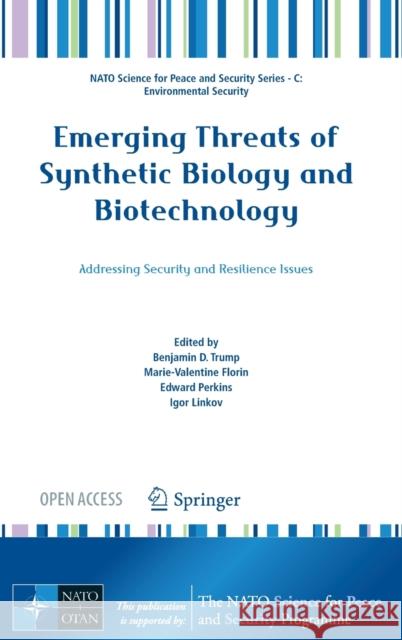
Emerging Threats of Synthetic Biology and Biotechnology: Addressing Security and Resilience Issues

ISBN-13: 9789402420852 / Angielski / Twarda / 2021 / 230 str.

Benjamin D. Trump; Marie-Valentine Florin; Edward Perkins
Emerging Threats of Synthetic Biology and Biotechnology: Addressing Security and Resilience Issues Benjamin D. Trump Marie-Valentine Florin Edward Perkins 9789402420852 Springer - książkaWidoczna okładka, to zdjęcie poglądowe, a rzeczywista szata graficzna może różnić się od prezentowanej.

Emerging Threats of Synthetic Biology and Biotechnology: Addressing Security and Resilience Issues

ISBN-13: 9789402420852 / Angielski / Twarda / 2021 / 230 str.

Benjamin D. Trump; Marie-Valentine Florin; Edward Perkins
cena 201,72
(netto: 192,11 VAT:  5%)

Najniższa cena z 30 dni: 192,74
Termin realizacji zamówienia:
ok. 22 dni roboczych
Bez gwarancji dostawy przed świętami

Darmowa dostawa!
inne wydania
Kategorie:
Nauka, Medycyna
Kategorie BISAC:
Medical > Allied Health Services - Medical Technology
Technology & Engineering > Environmental - General
Political Science > Security (National & International)
Wydawca:
Springer
Seria wydawnicza:
NATO Science for Peace and Security Series C: Environmental
Język:
Angielski
ISBN-13:
9789402420852
Rok wydania:
2021
Wydanie:
2021
Numer serii:
000367345
Ilość stron:
230
Waga:
0.51 kg
Wymiary:
23.39 x 15.6 x 1.42
Oprawa:
Twarda
Wolumenów:
01

Biosecurity for Synthetic Biology and Emerging Biotechnologies: Critical Challenges for Governance 


Emerging Biosecurity Threats and Responses: A Review of Published and Gray Literature

Opportunities, Challenges, and Future Considerations for Top-Down Governance for Biosecurity and Synthetic Biology

Biological standards and biosecurity: The unexplored link

Responsible Governance of Biosecurity in Armenia

Addressing Emerging Synthetic Biology Threats: The Role of Education and Outreach in Fostering Effective Bottom-Up Grassroots Governance

Cybersecurity and Public Health in the Age of COVID-19

Synthetic Biology Brings New Challenges to Managing Biosecurity and Biosafety

Emerging Biotechnology and Information Hazards

Technical Aspects of Biosecurity: Screening Guidance, Attribution, and Traceability

The Soil Habitat and Considerations for Synthetic Biology

Foresight in Synthetic Biology and Biotechnology Threats

Predicting Biosecurity Threats: Deployment and Detection of Biological Weapons

Promoting Effective Biosecurity Governance: Using Tripwires to Anticipate and Ameliorate Potentially Harmful Development Trends

Benjamin D. TRUMP

Dr. Benjamin D. TRUMP is a Research Social Scientist for the US Army Corps of Engineers.

Dr. Trump’s work focuses on decision making and governance of activities under significant

uncertainty, such as emerging and enabling technologies (synthetic biology, nanotechnology)

and developing organizational, infrastructural, social, and informational resilience against

systemic threats to complex interconnected systems. Dr. Trump served as a delegate to assist US

presence in OECD’s Global Science Forum in 2017, and was the President of the Society for

Risk Analysis’ Decision Analysis and Risk Specialty Group in 2018-2019, as well as its

Resilience Analysis Specialty Group in 2019-2020. He was selected as a Fellow of the Emerging

Leaders in Biosecurity Initiative, Class of 2019. In December 2020, Dr. Trump was installed as

the Treasurer of the Society for Risk Analysis. Dr. Trump was also a contributing author of the

International Risk Governance Council’s Guidelines for the Governance of Systemic Risks, as

well as their 2nd Volume of the Resource Guide on Resilience. Dr. Trump is also frequently

active with several Advanced Research Workshops for the North Atlantic Treaty Organization’s

Science for Peace Programme. Co-authored with Dr. Igor Linkov, Dr. Trump’s book The Science

and Practice of Resilience (2019) includes a detailed discussion of the methodological,

philosophical, and governance-related work behind the concept of resilience. His follow-up book

with Dr. Myriam Merad, Expertise Under Scrutiny (2020), addresses the challenges facing

decision makers of how to construct and implement scientifically formed and institutionally valid

decisions within an environment of heightened uncertainty and public criticism. Dr. Trump

received his Ph.D. from the University of Michigan’s School of Public Health, Department of

Health Management and Policy in 2016. He received an M.S. (2012) in Public Policy and

Management and a B.S. in Political Science (2011) from Carnegie Mellon University.


Marie-Valentine FLORIN

Marie-Valentine Florin is the Executive Director of the International Risk Governance Center

(IRGC), at Ecole Polytechnique Fédérale de Lausanne (EPFL) in Switzerland. IRGC acts at the

interface between science and policy and is particularly active about risks related to emerging

technologies, marked by complexity, uncertainty and ambiguity. She continues to develop the

concepts and guidelines for risk governance established by the IRGC Foundation, with a focus

on emerging and systemic risks, for which the risk and the resilience governance perspectives are

relevant. She convenes multi-stakeholder groups of experts to consider the particular risks and

governance challenges that arise in specific sectors such as digital technologies, climate

engineering, nanotechnology, or synthetic biology. Before joining the IRGC Foundation in 2006,

Ms Florin spent the first part of her career (1984-1999) in an international socio-cultural research

and marketing consulting firm. She graduated from Science Po in Paris (public policy and

management) and then earned post-graduate diplomas in marketing strategy, sustainable

development and environmental diplomacy. She is Society for Risk Analysis Fellow and a

member of the Advisory Board to the Global Risk Report of the World Economic Forum.


Edward J. PERKINS

Dr. Edward J. PERKINS is currently the Acting Army Deputy Chief Scientist and Army Senior

Research Scientist for Environmental Networks and Genetic Toxicology with the Army Corps of

Engineers. His work focuses on using genetics and biotechnology to assess chemical hazards

and develop novel applications to support Army activities including new materials and synthetic

biology. Dr. Perkins provides guidance for the Army and Department of Defense (DoD) on basic

and applied research programs, in addition to consulting on issues of national and international

importance for the Army Corps of Engineers, Department of Defense, the United States

Environmental Protection Agency, and the Organization for Economic Cooperation and

Development. He has published widely on genetics, toxicology and novel approaches for risk

assessment, including 4 books and over 150 peer reviewed manuscripts and book chapters. Dr.

Perkins has served many organizations as an expert panelist and has been a co-organizer for

multiple national and international workshops and conferences. Dr Perkins received his Ph.D. in

Genetics and Cell Biology from Washington State University in 1987 and a B.A. in Genetics

from University of Illinois in 1983. He completed his postdoctoral training in genetics at the

University of Washington and Washington State University.


Igor LINKOV

Dr. Igor LINKOV is the Risk and Decision Science Focus Area Lead with the US Army

Engineer Research and Development Center, and Adjunct Professor with Carnegie Mellon

University. Dr. Linkov has managed multiple risk and resilience assessments and management

projects in many application domains, including emerging materials and technologies,

cybersecurity, transportation, supply chain, homeland security and defense, and critical

infrastructure. He was part of several Interagency Committees and Working Groups tasked with

developing risk and resilience metrics and management approaches, including the US National

Nanotechnology Initiative. Dr. Linkov has organized more than thirty national and international

conferences and continuing education workshops, including NATO workshops on

Nanotechnology in Portugal (2009), Climate Change in Iceland (2010, 2012), Resilience in

Portugal (2016), Estonia (2018) and Finland (2019), as well as Chaired Program Committee for

2015 and 2019 World Congresses on Risk in Singapore and Cape Town. He has published

widely on environmental policy, environmental modeling, and risk analysis, including twenty

five books and over 400 peer-reviewed papers and book chapters in top journals, like Nature,

Nature Nanotechnology, Nature Climate Change, among others. He has served on many review

and advisory panels for DOD, DHS, FDA, EPA, NSF, EU and other US and international

agencies. Dr. Linkov is Society for Risk Analysis Fellow and recipient of 2005 Chauncey Starr

Award for exceptional contribution to Risk Analysis, 2014 Outstanding Practitioner Award as

well as 2019 Distinguished Educator Award. He is Elected Fellow with the American

Association for the Advancement of Science (AAAS). Dr. Linkov has a B.S. and M.Sc. in

Physics and Mathematics (Polytechnic Institute) and a Ph.D. in Environmental, Occupational and

Radiation Health (University of Pittsburgh). He completed his postdoctoral training in Risk

Assessment at Harvard University.

Synthetic biology is a field of biotechnology that is rapidly growing in various applications, such as in medicine, environmental sustainability, and energy production. However these technologies also have unforeseen risks and applications to humans and the environment. 


This open access book presents discussions on risks and mitigation strategies for these technologies including biosecurity, or the potential of synthetic biology technologies and processes to be deliberately misused for nefarious purposes. The book presents strategies to prevent, mitigate, and recover from ‘dual-use concern’ biosecurity challenges that may be raised by individuals, rogue states, or non-state actors. Several key topics are explored including opportunities to develop more coherent and scalable approaches to govern biosecurity from a laboratory perspective up to the international scale and strategies to prevent potential health and environmental hazards posed by deliberate misuse of synthetic biology without stifling innovation. The book brings together the expertise of top scholars in synthetic biology and biotechnology risk assessment, management, and communication to discuss potential biosecurity governing strategies and offer perspectives for collaboration in oversight and future regulatory guidance.


Udostępnij

Facebook - konto krainaksiazek.pl


Opinie o Krainaksiazek.pl na Opineo.pl

Partner Mybenefit

Krainaksiazek.pl w programie rzetelna firma Krainaksiaze.pl - płatności przez paypal

Czytaj nas na:

Facebook - krainaksiazek.pl
  • książki na zamówienie
  • granty
  • książka na prezent
  • kontakt
  • pomoc
  • opinie
  • regulamin
  • polityka prywatności

Zobacz:

  • Księgarnia czeska

  • Wydawnictwo Książkowe Klimaty

1997-2025 DolnySlask.com Agencja Internetowa

© 1997-2022 krainaksiazek.pl
     
KONTAKT | REGULAMIN | POLITYKA PRYWATNOŚCI | USTAWIENIA PRYWATNOŚCI
Zobacz: Księgarnia Czeska | Wydawnictwo Książkowe Klimaty | Mapa strony | Lista autorów
KrainaKsiazek.PL - Księgarnia Internetowa
Polityka prywatnosci - link
Krainaksiazek.pl - płatnośc Przelewy24
Przechowalnia Przechowalnia