• Wyszukiwanie zaawansowane
  • Kategorie
  • Kategorie BISAC
  • Książki na zamówienie
  • Promocje
  • Granty
  • Książka na prezent
  • Opinie
  • Pomoc
  • Załóż konto
  • Zaloguj się

Emerging Sustainable Aquaculture Innovations in Africa » książka


zaloguj się | załóż konto
Logo Krainaksiazek.pl

koszyk

konto

szukaj
topmenu
Księgarnia internetowa
Szukaj
Książki na zamówienie
Promocje
Granty
Książka na prezent
Moje konto
Pomoc
 
 
Wyszukiwanie zaawansowane
Pusty koszyk
Bezpłatna dostawa dla zamówień powyżej 20 złBezpłatna dostawa dla zamówień powyżej 20 zł

Kategorie główne

• Nauka
 [2952079]
• Literatura piękna
 [1850969]

  więcej...
• Turystyka
 [71058]
• Informatyka
 [151066]
• Komiksy
 [35579]
• Encyklopedie
 [23181]
• Dziecięca
 [620496]
• Hobby
 [139036]
• AudioBooki
 [1646]
• Literatura faktu
 [228729]
• Muzyka CD
 [379]
• Słowniki
 [2932]
• Inne
 [445708]
• Kalendarze
 [1409]
• Podręczniki
 [164793]
• Poradniki
 [480107]
• Religia
 [510956]
• Czasopisma
 [511]
• Sport
 [61267]
• Sztuka
 [243299]
• CD, DVD, Video
 [3411]
• Technologie
 [219640]
• Zdrowie
 [100984]
• Książkowe Klimaty
 [124]
• Zabawki
 [2281]
• Puzzle, gry
 [3363]
• Literatura w języku ukraińskim
 [258]
• Art. papiernicze i szkolne
 [8020]
Kategorie szczegółowe BISAC

Emerging Sustainable Aquaculture Innovations in Africa

ISBN-13: 9789811974502 / Angielski / Twarda / 2023 / 631 str.
Ndakalimwe Naftal Gabriel; Edosa Omoregie; Kenneth Prudence Abasubong
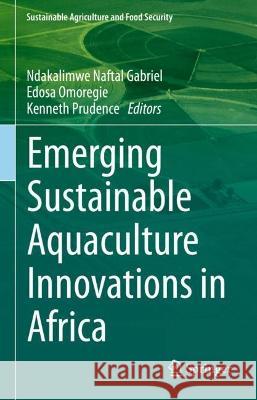
Emerging Sustainable Aquaculture Innovations in Africa Ndakalimwe Naftal Gabriel Edosa Omoregie Kenneth Prudence Abasubong 9789811974502 Springer - książkaWidoczna okładka, to zdjęcie poglądowe, a rzeczywista szata graficzna może różnić się od prezentowanej.

Emerging Sustainable Aquaculture Innovations in Africa

ISBN-13: 9789811974502 / Angielski / Twarda / 2023 / 631 str.

Ndakalimwe Naftal Gabriel; Edosa Omoregie; Kenneth Prudence Abasubong
cena 806,99
(netto: 768,56 VAT:  5%)

Najniższa cena z 30 dni: 771,08
Termin realizacji zamówienia:
ok. 22 dni roboczych
Dostawa w 2026 r.

Darmowa dostawa!
inne wydania

This edited book presents the emerging sustainable innovations in all areas of aquaculture in Africa with a view to create an opportunity whereby scientific outputs and recommendations can be endorsed for improved aquaculture outputs towards poverty alleviation and food security on the continent.Food insecurity and poverty are some of the challenges faced on the African continent. These challenges are further exacerbated by the growing human population and the impacts of climate change. Today, aquaculture has become one of the fastest food producing sectors in the world, with the potential to contribute significantly to food security and poverty alleviation in developing countries. In Africa, aquaculture is at an infant stage, however, many African countries have recognized the potential roles of aquaculture in food security, poverty alleviation and conservation of aquatic resources through their commitment to achieve the United Nation Sustainable Development Goals.The book reviews and synthesize research work from these thematic areas across Africa and provide a unique perspective on the emerging aquaculture innovations and illustrate how aquaculture practices could be feasible and cost effective while promoting social and environmental sustainability. The book also draws from global discussions on sustainable aquaculture practices and provides recommendations on what is feasible for Africa. This book is a great tool for the university students, scholars, aquaculture farmers, investors, and policymakers to understand the scientific based sustainable aquaculture innovations from an African perspective.This book is focused on SDG 2 and SDG 14.


This edited book presents the emerging sustainable innovations in all areas of aquaculture in Africa with a view to create an opportunity whereby scientific outputs and recommendations can be endorsed for improved aquaculture outputs towards poverty alleviation and food security on the continent.Food insecurity and poverty are some of the challenges faced on the African continent. These challenges are further exacerbated by the growing human population and the impacts of climate change. Today, aquaculture has become one of the fastest food producing sectors in the world, with the potential to contribute significantly to food security and poverty alleviation in developing countries. In Africa, aquaculture is at an infant stage, however, many African countries have recognized the potential roles of aquaculture in food security, poverty alleviation and conservation of aquatic resources through their commitment to achieve the United Nation Sustainable Development Goals.The book reviews and synthesize research work from these thematic areas across Africa and provide a unique perspective on the emerging aquaculture innovations and illustrate how aquaculture practices could be feasible and cost effective while promoting social and environmental sustainability. The book also draws from global discussions on sustainable aquaculture practices and provides recommendations on what is feasible for Africa. This book is a great tool for the university students, scholars, aquaculture farmers, investors, and policymakers to understand the scientific based sustainable aquaculture innovations from an African perspective.This book is focused on SDG 2 and SDG 14.

Kategorie:
Nauka, Biologia i przyroda
Kategorie BISAC:
Medical > Weterynaria
Science > Environmental Science (see also Chemistry - Environmental)
Technology & Engineering > Agriculture - Animal Husbandry
Wydawca:
Springer
Język:
Angielski
ISBN-13:
9789811974502
Rok wydania:
2023
Dostępne języki:
Numer serii:
001267015
Ilość stron:
631
Oprawa:
Twarda
Dodatkowe informacje:
Wydanie ilustrowane

1. Fish nutrition: an African aquaculture perspective.- 2. Feed restriction as a feed management strategy in tilapia and catfish culture: An African perspective.- 3. Black soldier fly (Hermetia illucens) larvae meal as a sustainable protein source for fish feed production in Kenya.- 4. Waste to feed: an emerging technology to improve aquaculture in Africa.- 5. Prebiotics as functional ingredients in aquafeed: Trends and prospects in African aquaculture.- 6. The potential benefits of Aloe vera products in aquafeed: current knowledge and prospects.- 7. Use of plant extracts to control reproduction in tilapia production systems: An emerging eco-friendly innovation.- 8. Pawpaw (Carica papaya) extracts as potential growth promoters and sex reversal agents in aquaculture.- 9. Microbial-based systems and single-cell ingredients: exploring their role in sustainable aquaculture production.- 10. Ferulic acid as feed additives in aquaculture: A review on growth, immune response, and antioxidant status of finfish.- 11. The importance and utilisation of oil palm as a fish oil replacement in aquaculture.- 12. A dynamic study of Jatropha curcas on growth and haematological indices in finfish.-13. Applications of aquatic plants in the remediation of aquaculture wastewater: An opportunity for African aquaculture.- 14. African Aquaculture: Enhancement of water quality for sustainable freshwater finfish culture.- 15. Nutrient budget of cage fish culture in a lacustrine environment: Towards model development for the sustainable development of Nile tilapia (Oreochromis niloticus) culture.- 16. Aquaponics as a sustainable food production system with promising development perspectives in Morocco.- 17. Enhancing Food Production employing Integrated Aquaculture in Namibia. Fish Integration with Poultry.- 18. Fishing for answers: should Afrotropical farmers use cages or ponds for grow-out of Nile tilapia?- 19. Aquaculture development perspectives in Sierra Leone. The challenges of critical inputs and political will.- 20. The Namibian mariculture: productivity, challenges, and opportunities.- 21. Climate SMART Best Practices in Aquaculture and Fisheries with Specific Emphasis on Sierra Leone.- 22. The potential of small-scale freshwater aquaculture for household nutritional security and malnutrition alleviation in Namibia.- 23. The Southern mullet (Chelon richardsonii) as a potential candidate species for aquaculture in the Southern African region.- 24. Some significant parasites in aquaculture and their potential impact on the development of aquaculture in Africa.- 25. Interactions between pre-harvest, post-harvest handling and welfare of fish for sustainability in the Aquaculture Sector.- 26. Alternative fish anaesthetics: Perspective on their application in African aquaculture and fisheries research.

Dr. Ndakalimwe Naftal Gabriel is a senior lecturer at the University of Namibia (UNAM), Department of Fisheries and Ocean Sciences holds a PhD in Fisheries and Aquatic Sciences from UNAM. He studied at Nanjing Agricultural University, Jiangsu, China (MSc -aquaculture) from 2013 - 2015 and at UNAM for his bachelor’s degree in Biological Sciences. He has received several awards, including the Nanjing Municipal People’s Government international student scholarship, Distinguished Foreign Student Scholarship-2015, Chinese Government Scholarship, and one of the best students at Nanjing Agricultural University in 2014 and 2015. He has over 10 years of experience in aquaculture as a researcher and five years as a lecturer at UNAM. He has published 18 research articles, three book chapters, and one book and has reviewed several peer-reviewed articles from reputable journals and supervised several graduate students in the field of aquaculture and fisheries sciences.

Prof. Edosa Omoregie obtained his PhD degree in Zoology (Fisheries) from the University of Jos, Nigeria in 1995. He is a NSRIC (Nature Science Research and Innovation Centre, Canada) distinguished professor of fisheries and currently with the Namibia University of Science and Technology. His academic career started in 1990 with the Department of Zoology, University of Jos, Nigeria where is rose to the rank of professor of fisheries in 2004. Between 2011 and 2015, he was the Director of the Sam Nujoma Marine and Coastal Resources Research Centre, University of Namibia. He is actively involved in fisheries and aquatic science research on the African continent and has supervised over 50 postgraduate research students. He has served as review editor for several journals with focus on fisheries and aquatic sciences and has contributed to over 150 scholarly works, including more than 60 peer-reviewed research papers.

Mr. Kenneth Prudence Abasubong holds an MSc in Animal Nutrition and Feed Science in 2018 and is a final year PhD candidate at Nanjing Agricultural University (NAU), China. His specialisation areas are aquaculture nutrition, molecular biology, feed science, animal and aquatic physiology, and nutrient metabolism.  He has attended several international conferences and symposiums in aquaculture and fisheries sciences. He studied at the University of Uyo, Uyo, Nigeria (PGD Aquatic Environmental Management) from 2012 - 2013 and at the University of Calabar for his bachelor’s degree in Animal Sciences. He has published more than 20 articles and reviewed several high-impact international journals in aquaculture. He has received several awards, including the best international student in NAU in 2018.  He has supervised several undergraduate and graduate students in fisheries and aquaculture. He has over 8 years of experience as a researcher in aquaculture.


This edited book presents the emerging sustainable innovations in all areas of aquaculture in Africa with a view to create an opportunity whereby scientific outputs and recommendations can be endorsed for improved aquaculture outputs towards poverty alleviation and food security on the continent.

Food insecurity and poverty are some of the challenges faced on the African continent. These challenges are further exacerbated by the growing human population and the impacts of climate change. Today, aquaculture has become one of the fastest food producing sectors in the world, with the potential to contribute significantly to food security and poverty alleviation in developing countries. In Africa, aquaculture is at an infant stage, however, many African countries have recognized the potential roles of aquaculture in food security, poverty alleviation and conservation of aquatic resources through their commitment to achieve the United Nation Sustainable Development Goals.

The book reviews and synthesize research work from these thematic areas across Africa and provide a unique perspective on the emerging aquaculture innovations and illustrate how aquaculture practices could be feasible and cost effective while promoting social and environmental sustainability. The book also draws from global discussions on sustainable aquaculture practices and provides recommendations on what is feasible for Africa. This book is a great tool for the university students, scholars, aquaculture farmers, investors, and policymakers to understand the scientific based sustainable aquaculture innovations from an African perspective.

This book is focused on SDG 2 and SDG 14.. 


Udostępnij

Facebook - konto krainaksiazek.pl


Opinie o Krainaksiazek.pl na Opineo.pl

Partner Mybenefit

Krainaksiazek.pl w programie rzetelna firma Krainaksiaze.pl - płatności przez paypal

Czytaj nas na:

Facebook - krainaksiazek.pl
  • książki na zamówienie
  • granty
  • książka na prezent
  • kontakt
  • pomoc
  • opinie
  • regulamin
  • polityka prywatności

Zobacz:

  • Księgarnia czeska

  • Wydawnictwo Książkowe Klimaty

1997-2025 DolnySlask.com Agencja Internetowa

© 1997-2022 krainaksiazek.pl
     
KONTAKT | REGULAMIN | POLITYKA PRYWATNOŚCI | USTAWIENIA PRYWATNOŚCI
Zobacz: Księgarnia Czeska | Wydawnictwo Książkowe Klimaty | Mapa strony | Lista autorów
KrainaKsiazek.PL - Księgarnia Internetowa

Polityka prywatnosci - link
Krainaksiazek.pl - płatnośc Przelewy24
Przechowalnia Przechowalnia





