• Wyszukiwanie zaawansowane
  • Kategorie
  • Kategorie BISAC
  • Książki na zamówienie
  • Promocje
  • Granty
  • Książka na prezent
  • Opinie
  • Pomoc
  • Załóż konto
  • Zaloguj się

Embedded Software for the Iot » książka

zaloguj się | załóż konto
Logo Krainaksiazek.pl

koszyk

konto

szukaj
topmenu
Księgarnia internetowa
Szukaj
Książki na zamówienie
Promocje
Granty
Książka na prezent
Moje konto
Pomoc
 
 
Wyszukiwanie zaawansowane
Pusty koszyk
Bezpłatna dostawa dla zamówień powyżej 20 złBezpłatna dostawa dla zamówień powyżej 20 zł

Kategorie główne

• Nauka
 [2949965]
• Literatura piękna
 [1857847]

  więcej...
• Turystyka
 [70818]
• Informatyka
 [151303]
• Komiksy
 [35733]
• Encyklopedie
 [23180]
• Dziecięca
 [617748]
• Hobby
 [139972]
• AudioBooki
 [1650]
• Literatura faktu
 [228361]
• Muzyka CD
 [398]
• Słowniki
 [2862]
• Inne
 [444732]
• Kalendarze
 [1620]
• Podręczniki
 [167233]
• Poradniki
 [482388]
• Religia
 [509867]
• Czasopisma
 [533]
• Sport
 [61361]
• Sztuka
 [243125]
• CD, DVD, Video
 [3451]
• Technologie
 [219309]
• Zdrowie
 [101347]
• Książkowe Klimaty
 [123]
• Zabawki
 [2362]
• Puzzle, gry
 [3791]
• Literatura w języku ukraińskim
 [253]
• Art. papiernicze i szkolne
 [7933]
Kategorie szczegółowe BISAC

Embedded Software for the Iot

ISBN-13: 9781547417155 / Angielski / Miękka / 2018 / 294 str.
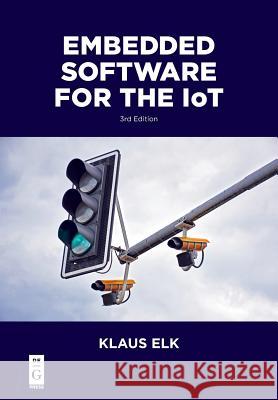
Klaus Elk
Embedded Software for the Iot Elk, Klaus 9781547417155 De Gruyter (JL) - książkaWidoczna okładka, to zdjęcie poglądowe, a rzeczywista szata graficzna może różnić się od prezentowanej.

Embedded Software for the Iot

ISBN-13: 9781547417155 / Angielski / Miękka / 2018 / 294 str.

Klaus Elk
cena 188,27 zł
(netto: 179,30 VAT:  5%)

Najniższa cena z 30 dni: 172,55 zł
Termin realizacji zamówienia:
ok. 16-18 dni roboczych
Bez gwarancji dostawy przed świętami

Darmowa dostawa!
Kategorie:
Informatyka, Bazy danych
Kategorie BISAC:
Computers > Information Technology
Computers > Networking - General
Computers > Software Development & Engineering - Tools
Wydawca:
De Gruyter (JL)
Język:
Angielski
ISBN-13:
9781547417155
Rok wydania:
2018
Ilość stron:
294
Waga:
0.47 kg
Wymiary:
24.41 x 16.99 x 1.57
Oprawa:
Miękka
Wolumenów:
01
Dodatkowe informacje:
Bibliografia


Introduction

1.1 The Tale of the Internet
1.2 The Cloud
1.3 Internet of Things
1.4 IoT related terms

I The Basic System

2 How to select an OS?

2.1 No OS and strictly polling
2.2 Co-routines
2.3 Interrupts
2.4 A small real-time kernel
2.5 A non-preemptive Operating System
2.6 Full OS
2.7 Open Source, GNU licensing and Linux
2.8 OS constructs
2.9 Further Reading

3 Which CPU to use?

3.1 Overview
3.2 CPU Core
3.3 CPU Architecture
3.4 Word-Size
3.5 MMU – Memory Managed Unit
3.6 RAM
3.7 Cache
3.8 EEPROM and Flash
3.9 FPU – Floating Point Unit
3.10 DSP
3.11 Crypto-Engine
3.12 Upgrade Path
3.13 Second Sources
3.14 Price
3.15 Export Control
3.16 RoHS-Compliance
3.17 Evaluation Boards
3.18 Tool-chain
3.19 Benchmarking
3.20 Power-Consumption
3.21 JTAG Debugger
3.22 Peripherals
3.23 Make or Buy
3.24 Further Reading

4 Software Architecture

4.1 Design for Performance
4.2 The fear of the white paper
4.3 Layers
4.4 Not just API’s – more files
4.5 Object Model (Containment Hierarchy)
4.6 Case: CANOpen
4.7 Message Passing
4.8 Middleware
4.9 Case: Architectural Reuse in LAN-XI
4.10 Understanding C
4.11 Further Reading

5 Debug Tools

5.1 Simulator
5.2 ICE – In-Circuit-Emulator
5.3 Background or JTAG debugger
5.4 Target Stand-In
5.5 Debugger
5.6 strace
5.7 Debugging without special tools
5.8 Monitoring Messages
5.9 Test Traffic

6 Code Maintenance

6.1 Poor Man’s Backup
6.2 Version Control – and git
6.3 Build and Virtualization
6.4 Static Code Analysis
6.5 Inspections
6.6 Tracking Defects & Features
6.7 Whiteboard
6.8 Documentation
6.9 Yocto
6.10 OpenWRT
6.11 Further Reading

III IoT Technologies

7 Networks

7.1 Introduction
7.2 Cerf & Kahn – internet as net of nets
7.3 Life of a packet
7.4 Life before the packet
7.5 Getting an IP address
7.6 DHCP
7.7 Network Masks, CIDR and Special Ranges
7.8 Reserved IP-Ranges
7.9 DNS
7.10 Introducing HTTP
7.11 REST
7.12 TCP sockets on IPv4 under Windows
7.13 IP Fragmentation
7.14 Introducing IPv6 addresses
7.15 TCP sockets on IPv6 under Linux
7.16 Data Transmission

7.17 UDP Sockets
7.18 A case of UDP on IPv6
7.19 Application Layer Protocols
7.20 Alternatives to the socket API
7.21 Ethernet Cabling
7.22 Physical Layer Problems
7.23 Further Reading

8 Network Tools

8.1 The Switch as a Tool
8.1.1 Mirroring
8.1.2 Statistics
8.1.3 Simulating lost frames
8.1.4 Pause frames
8.2 Tap
8.3 DHCP Server
8.4 IP scanner
8.5 SNMP
8.6 Wireshark
8.7 Network Commands
8.8 Further Reading

9 Wireless Networks

9.1 Introduction
9.2 Wi-Fi Basics
9.3 The Access Point as a Repeater
9.4 How is speed calculated?
9.5 Case: Wi-Fi Data-transmission
9.6 Case: Beacons
9.7 Why so hesitant?
9.8 Aggregated Frames
9.9 Channel Assessment
9.10 Bluetooth Low Energy
9.11 Certification
9.12 Further Reading

10 Security

10.1 Introduction
10.2 The goals of a Hacker
10.3 Network Security Concepts
10.4 Hash-function
10.5 Symmetric Key Encryption
10.6 Case Story: Enigma
10.7 Asymmetric Key Encryption
10.8 Digital Signature
10.9 Certificates
10.10 Message Authentication Code
10.11 Nonce
10.12 Secure Socket Communication
10.13 Case Story: Heartbleed
10.14 Case Story: WiFi Security
10.15 Software Crypto Libraries
10.16 Trusted Platform Module
10.17 Embedded Systems
10.18 Vulnerabilities in Embedded Systems
10.19 Export Control
10.20 Further Reading

11 Digital Filters

11.1 Why Digital?
11.2 Why Filters?
11.3 Basic Signal Analysis
11.3.1 About the Sample Frequency
11.3.2 Time and Frequency Domains and their Duality
11.3.3 Analog and Digital
11.3.4 More Duality
11.3.5 A Well-behaving System
11.4 IIR filter Basics
11.5 Implementing IIR
11.6 FIR Filter basics
11.7 Implementing FIR
11.8 Integers
11.9 Fixed Point Arithmetic
11.10 Q-Notation and Multiplication
11.11 Division
11.12 BCD
11.13 Further Reading

12 Statistical Process Control

12.1 Introduction
12.2 Important terms
12.3 Control Charts
12.4 Finding the Control Limits
12.5 Subgroups
12.6 Case: Insulation Plates
12.7 EWMA Control Charts
12.8 Process Capability Index
12.9 Further Reading

Epilogue

Klaus Elk graduated as Master of Science (Electronics) in 1984, with a thesis on "Time-Delay Spectrometry"-a Digital Signal Project. Two years later he graduated with a Bachelor of Economics (Marketing). He has since then worked mainly with telecommunications, medical electronics and sound and vibration in private industry. In parallel with this work, he taught courses at the Danish Technical University including courses in object oriented programming and the internet protocol stack. Recently he earned a "Mini MBA," and in the following year took a "Board-Member Masterclass." Today Elk works at Brüel & Kjær Sound & Vibration as R&D Manager of Instrumentation.


Udostępnij

Facebook - konto krainaksiazek.pl


Opinie o Krainaksiazek.pl na Opineo.pl

Partner Mybenefit

Krainaksiazek.pl w programie rzetelna firma Krainaksiaze.pl - płatności przez paypal

Czytaj nas na:

Facebook - krainaksiazek.pl
  • książki na zamówienie
  • granty
  • książka na prezent
  • kontakt
  • pomoc
  • opinie
  • regulamin
  • polityka prywatności

Zobacz:

  • Księgarnia czeska

  • Wydawnictwo Książkowe Klimaty

1997-2025 DolnySlask.com Agencja Internetowa

© 1997-2022 krainaksiazek.pl
     
KONTAKT | REGULAMIN | POLITYKA PRYWATNOŚCI | USTAWIENIA PRYWATNOŚCI
Zobacz: Księgarnia Czeska | Wydawnictwo Książkowe Klimaty | Mapa strony | Lista autorów
KrainaKsiazek.PL - Księgarnia Internetowa

Polityka prywatnosci - link
Krainaksiazek.pl - płatnośc Przelewy24
Przechowalnia Przechowalnia






