• Wyszukiwanie zaawansowane
  • Kategorie
  • Kategorie BISAC
  • Książki na zamówienie
  • Promocje
  • Granty
  • Książka na prezent
  • Opinie
  • Pomoc
  • Załóż konto
  • Zaloguj się

Electronic Value Exchange: Origins of the Visa Electronic Payment System » książka


zaloguj się | załóż konto
Logo Krainaksiazek.pl

koszyk

konto

szukaj
topmenu
Księgarnia internetowa
Szukaj
Książki na zamówienie
Promocje
Granty
Książka na prezent
Moje konto
Pomoc
 
 
Wyszukiwanie zaawansowane
Pusty koszyk
Bezpłatna dostawa dla zamówień powyżej 20 złBezpłatna dostawa dla zamówień powyżej 20 zł

Kategorie główne

• Nauka
 [2949965]
• Literatura piękna
 [1857847]

  więcej...
• Turystyka
 [70818]
• Informatyka
 [151303]
• Komiksy
 [35733]
• Encyklopedie
 [23180]
• Dziecięca
 [617748]
• Hobby
 [139972]
• AudioBooki
 [1650]
• Literatura faktu
 [228361]
• Muzyka CD
 [398]
• Słowniki
 [2862]
• Inne
 [444732]
• Kalendarze
 [1620]
• Podręczniki
 [167233]
• Poradniki
 [482388]
• Religia
 [509867]
• Czasopisma
 [533]
• Sport
 [61361]
• Sztuka
 [243125]
• CD, DVD, Video
 [3451]
• Technologie
 [219309]
• Zdrowie
 [101347]
• Książkowe Klimaty
 [123]
• Zabawki
 [2362]
• Puzzle, gry
 [3791]
• Literatura w języku ukraińskim
 [253]
• Art. papiernicze i szkolne
 [7933]
Kategorie szczegółowe BISAC

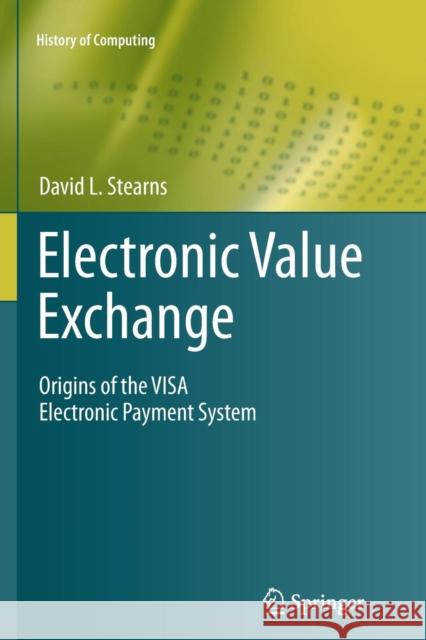
Electronic Value Exchange: Origins of the Visa Electronic Payment System

ISBN-13: 9781447126232 / Angielski / Miękka / 2013 / 240 str.
David L. Stearns
Electronic Value Exchange: Origins of the Visa Electronic Payment System Stearns, David L. 9781447126232 Springer - książkaWidoczna okładka, to zdjęcie poglądowe, a rzeczywista szata graficzna może różnić się od prezentowanej.

Electronic Value Exchange: Origins of the Visa Electronic Payment System

ISBN-13: 9781447126232 / Angielski / Miękka / 2013 / 240 str.

David L. Stearns
cena 685,93 zł
(netto: 653,27 VAT:  5%)

Najniższa cena z 30 dni: 655,41 zł
Termin realizacji zamówienia:
ok. 22 dni roboczych
Bez gwarancji dostawy przed świętami

Darmowa dostawa!
inne wydania

Electronic Value Exchange examines in detail the transformation of the VISA electronic payment system from a collection of non-integrated, localized, paper-based bank credit card programs into the cooperative, global, electronic value exchange network it is today. Topics and features: provides a history of the VISA system from the mid-1960s to the early 1980s; presents a historical narrative based on research gathered from personal documents and interviews with key actors; investigates, for the first time, both the technological and social infrastructures necessary for the VISA system to operate; supplies a detailed case study, highlighting the mutual shaping of technology and social relations, and the influence that earlier information processing practices have on the way firms adopt computers and telecommunications; examines how "gateways" in transactional networks can reinforce or undermine established social boundaries, and reviews the establishment of trust in new payment devices.


Kategorie:
Informatyka
Kategorie BISAC:
Computers > History
Computers > Computer Science
Computers > Social Aspects
Wydawca:
Springer
Seria wydawnicza:
History of Computing
Język:
Angielski
ISBN-13:
9781447126232
Rok wydania:
2013
Wydanie:
2011
Numer serii:
000010838
Ilość stron:
240
Waga:
0.38 kg
Wymiary:
23.39 x 15.6 x 1.45
Oprawa:
Miękka
Wolumenów:
01

From the reviews:

"David L. Stearns argues in Electronic Value Exchange: Origins of the Visa Electronic Payment System that the job of a historian of technology is to make invisible technologies visible again. Certainly, he has achieved this goal. ... Stearns' Electronic Value Exchange is a much-needed contribution to the literature." (Joline Zepcevski, Enterprise and Society, Vol. 13 (2), June, 2012)

"In this well-written, concise volume Stearns ... details both the technological and organizational challenges that Visa had to overcome in order to link merchants and financial institutions into a seamless worldwide electronic network. ... a valuable contribution to not only the history of technology, but the broader fields of financial, consumer, and business history. ... Among the many strengths of this book is its crystal clear writing style. ... Overall, Electronic Value Exchange will be of interest to a wide variety of scholars." (David L. Mason, EH, February, 2012)

"Stearns offers a fascinating narrative that navigates somewhere between the sociology of finance, social studies of technology, retail banking and business history. ... There is an alphabetic index and most references appear as footnotes. ... There is also a list of interviewees and a helpful list of acronyms. ... The style is open and quite engaging, the discussion is easy to follow ... . developments are explained largely without jargon and with the non-specialist reader very much in mind." (NEP-HIS blog, February, 2012)

"Book provides a socio-technical account of VISA, a banking service to which banks that issued cards belonged and that sold card-processing services to merchants. ... a readable volume, based on an extensive set of interviews of protagonists of the story and on secondary theoretical and banking literature. ... a welcome addition to the history of banking and of information technologies, and a useful example of how to examine the role of any modern technology within the cultural and operational context in which it is used." (James W. Cortada, Technology and Culture, Vol. 53, January, 2012)

"In this book from the 'History of Computing' series from Springer, Stearns looks at the origins of the VISA electronic payment system. ... Stearns combines many of these aspects into a very readable book, covering the historical growth of VISA, the personalities involved in its rise, and the computing technology that underpins the organization. Swiping my VISA card will never be quite the same again." (David B. Henderson, ACM Computing Reviews, August, 2011)

Setting the Stage: Money, Credit, and Payments in America

Associating: Dee Hock and the Creation of the Organization

Crafting the Social Dynamics: Staffing, Operating Regulations, and Advertising

Automating Authorization: BASE

Automating Clearing and Settlement: BASE II and III

Expanding the System: Organizational and Technical Growth

Automating the Point of Sale: Encoding Standards and Merchant Dial Terminals

Challenging Conceptual Barriers: EFT and The Debit Card

Negotiating Roles: Controversies and the End of an Era

Conclusions: Towards a General Socio-technical History of Payment Systems

Although those born after the 1990s might never have known a time without them, payment cards and the electronic and computing networks they activate went through an explicit process of creation and adoption—a process which actively shaped these ubiquitous systems into what they are today. To understand why these systems ended up the way they did, one first needs to understand their origins, and how decisions made in their early years fundamentally shaped the way they evolved.

Electronic Value Exchange recaptures the origins of one of these systems in particular: the electronic payment network known as VISA. The book examines in detail the transformation of the VISA system from a collection of non-integrated, localized, paper-based bank credit card programs into the cooperative, global, electronic value exchange network it is today. Following an introductory chapter that sets the context, chapters adhere roughly to chronological order, building the story in a logical fashion.

Topics and features:

  • Provides a history of the VISA system from the mid-1960s to the early 1980s, charting the design, creation and adoption of the system during its foundation years and most prolific period of innovation
  • Presents a historical narrative based on research gathered from personal documents and interviews with key actors who designed, built, and participated in the VISA payment system
  • Investigates, for the first time, both the technological and social infrastructures necessary for the VISA system to operate
  • Supplies a detailed case study, highlighting the mutual shaping of technology and social relations, and the influence that earlier information processing practices have on the way firms adopt computers and telecommunications
  • Examines how “gateways” in transactional networks can reinforce or undermine established social boundaries, and reviews the establishment of trust in new payment devices

This insightful work will be of interest to researchers from a range of disciplines, from historians of technology, business and finance, to economists and sociologists, as well as the general reader. The use of academic jargon is kept to a minimum, and brief explanations are provided of useful concepts from science and technology studies for the benefit of those without a background in this field.

Dr. David L. Stearns is an adjunct lecturer in history at Seattle Pacific University, Seattle, USA. Prior to his return to academia, he was a software developer and designer for nearly twenty years.


Udostępnij

Facebook - konto krainaksiazek.pl


Opinie o Krainaksiazek.pl na Opineo.pl

Partner Mybenefit

Krainaksiazek.pl w programie rzetelna firma Krainaksiaze.pl - płatności przez paypal

Czytaj nas na:

Facebook - krainaksiazek.pl
  • książki na zamówienie
  • granty
  • książka na prezent
  • kontakt
  • pomoc
  • opinie
  • regulamin
  • polityka prywatności

Zobacz:

  • Księgarnia czeska

  • Wydawnictwo Książkowe Klimaty

1997-2025 DolnySlask.com Agencja Internetowa

© 1997-2022 krainaksiazek.pl
     
KONTAKT | REGULAMIN | POLITYKA PRYWATNOŚCI | USTAWIENIA PRYWATNOŚCI
Zobacz: Księgarnia Czeska | Wydawnictwo Książkowe Klimaty | Mapa strony | Lista autorów
KrainaKsiazek.PL - Księgarnia Internetowa

Polityka prywatnosci - link
Krainaksiazek.pl - płatnośc Przelewy24
Przechowalnia Przechowalnia






