• Wyszukiwanie zaawansowane
  • Kategorie
  • Kategorie BISAC
  • Książki na zamówienie
  • Promocje
  • Granty
  • Książka na prezent
  • Opinie
  • Pomoc
  • Załóż konto
  • Zaloguj się

Electrical Design of Through Silicon Via » książka

zaloguj się | załóż konto
Logo Krainaksiazek.pl

koszyk

konto

szukaj
topmenu
Księgarnia internetowa
Szukaj
Książki na zamówienie
Promocje
Granty
Książka na prezent
Moje konto
Pomoc
 
 
Wyszukiwanie zaawansowane
Pusty koszyk
Bezpłatna dostawa dla zamówień powyżej 20 złBezpłatna dostawa dla zamówień powyżej 20 zł

Kategorie główne

• Nauka
 [2950560]
• Literatura piękna
 [1849509]

  więcej...
• Turystyka
 [71097]
• Informatyka
 [151150]
• Komiksy
 [35848]
• Encyklopedie
 [23178]
• Dziecięca
 [617388]
• Hobby
 [139064]
• AudioBooki
 [1657]
• Literatura faktu
 [228597]
• Muzyka CD
 [383]
• Słowniki
 [2855]
• Inne
 [445295]
• Kalendarze
 [1464]
• Podręczniki
 [167547]
• Poradniki
 [480102]
• Religia
 [510749]
• Czasopisma
 [516]
• Sport
 [61293]
• Sztuka
 [243352]
• CD, DVD, Video
 [3414]
• Technologie
 [219456]
• Zdrowie
 [101002]
• Książkowe Klimaty
 [124]
• Zabawki
 [2311]
• Puzzle, gry
 [3459]
• Literatura w języku ukraińskim
 [254]
• Art. papiernicze i szkolne
 [8079]
Kategorie szczegółowe BISAC

Electrical Design of Through Silicon Via

ISBN-13: 9789401790376 / Angielski / Twarda / 2014 / 280 str.
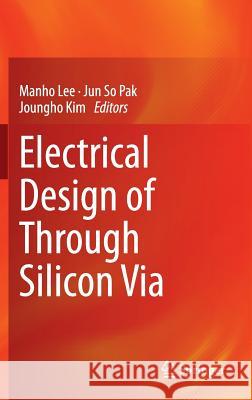
Manho Lee;Jun So Pak;Joungho Kim
Electrical Design of Through Silicon Via Manho Lee, Jun So Pak, Joungho Kim 9789401790376 Springer - książkaWidoczna okładka, to zdjęcie poglądowe, a rzeczywista szata graficzna może różnić się od prezentowanej.

Electrical Design of Through Silicon Via

ISBN-13: 9789401790376 / Angielski / Twarda / 2014 / 280 str.

Manho Lee;Jun So Pak;Joungho Kim
cena 401,58
(netto: 382,46 VAT:  5%)

Najniższa cena z 30 dni: 385,52
Termin realizacji zamówienia:
ok. 22 dni roboczych
Dostawa w 2026 r.

Darmowa dostawa!

Through Silicon Via (TSV) is a key technology for realizing three-dimensional integrated circuits (3D ICs) for future high-performance and low-power systems with small form factors. This book covers both qualitative and quantitative approaches to give insights of modeling TSV in a various viewpoints such as signal integrity, power integrity and thermal integrity. Most of the analysis in this book includes simulations, numerical modelings and measurements for verification. The author and co-authors in each chapter have studied deep intoTSV for many years and the accumulated technical know-hows and tips for related subjects are comprehensively covered."


Kategorie:
Technologie
Kategorie BISAC:
Technology & Engineering > Electronics - Circuits - General
Computers > Artificial Intelligence - Expert Systems
Wydawca:
Springer
Język:
Angielski
ISBN-13:
9789401790376
Rok wydania:
2014
Dostępne języki:
Angielski
Wydanie:
2014
Ilość stron:
280
Waga:
0.61 kg
Wymiary:
23.523.5 x 15.5
Oprawa:
Twarda
Wolumenów:
01
Dodatkowe informacje:
Wydanie ilustrowane

Preface.

Chapter 1 Introduction. 1.1 TSV-based 3D ICs. 1.2 Core Technologies and Electrical Reliability Design for TSV-based 3D IC. 1.3 Electrical Analysis of TSVs based on MIS Analysis. References.

Chapter 2 Electrical Modeling of a Through-Silicon Via (TSV). 2.1 Introduction. 2.2 Equivalent Circuit Model of a TSV. 2.3 Electrical Characterization and Analysis of a TSV Channel. 2.4 Electrical Analysis of a Single-ended and Differential Signal TSV Channel. 2.5 Summary. References.

Chapter 3 High-speed TSV-based Channel Modeling and Design. 3.1 Introduction. 3.2 Model of High-speed TSV-based Channel. 3.3 Analysis of High-speed TSV-based Channel. 3.4 Worst-case Eye-diagram Estimation Algorithm. 3.5 Summary. References.

Chapter 4 Noise Coupling and Shielding in 3D ICs. 4.1 Overview. 4.2 Analysis of Noise Coupling in 3D ICs. 4.3 Analysis of Shielding Structures in 3D-IC. 4.4 Summary. References.

Chapter 5 Thermal Effects on TSV Signal Integrity. 5.1 Overview. 5.2 Temperature-dependent TSV Isolation Characteristics and Model. 5.3 Temperature-dependent TSV Channel. 5.4 Summary. References.

Chapter 6 Power Distribution Network (PDN) Modeling and Analysis for TSV and Interposer-based 3D-ICs in the Frequency Domain. 6.1 Introduction. 6.2 Modeling of PDNs in TSV-based 3D-ICs. 6.3 Analysis of the PDN Impedance in TSV-based 3D-ICs in the Frequency Domain. 6.4 Summary. References.

Chapter 7 TSV Decoupling Schemes. 7.1 Introduction. 7.2 Decoupling Capacitor Schemes. 7.3 Application and Design of TSV-based Decoupling Schemes. 7.4 Summary. References.

Index.

Manho Lee received the B.S. and M.S. degrees in electrical engineering from the Korea Advanced Institute of Science and Technology, Daejeon, Korea, in 2010 and 2012, respectively, where he is currently pursuing the Ph.D. degree in electrical engineering.

His current research interests include the modeling of noise coupling between active circuit and TSV.

Jun So Pak (M'02) received the B.S. degree in electrical communication engineering from Hanyang University, Seoul, Korea, in 1998 and the M.S. and Ph.D. degrees in electrical engineering from the Korea Advanced Institute of Science and Technology (KAIST), Daejeon, Korea, in 2000 and 2005, respectively.

He was a Research Fellow with the High Density Interconnection Group, National Institute of Advanced Industrial Science and Technology, Tsukuba, Japan, in 2005, where he was involved in development of interconnection techniques and interposers for 3-D multichip packaging. Since 2007, he has been a Research Professor with the Department of Electrical Engineering, KAIST. He was the Founder and Director of the 3D-IC Research Center (3DIC- RC) in 2005. His current research interests include development of 3-D stacked chip packaging using through silicon via.

Dr. Pak was a recipient of the Research Fellowship Award from the Japan Society for the Promotion of Science in 2005.

Joungho Kim (M'04) received the B.S. and M.S. degrees from Seoul National University, Seoul, Korea, in 1984 and 1986, respectively and the Ph.D. degree from the University of Michigan, Ann Arbor, in 1993, all in electrical engineering. He was involved in femtosecond time-domain optical measurement techniques for high-speed devices and circuit testing during his graduate study.

After completing the Ph.D. degree, he joined Picometrix, Inc., Ann Arbor, MI, in 1993, as a Research Engineer, where he was involved in development of pico-second sampling systems and 70-GHz photoreceivers. He joined the Memory Di-vision, Samsung Electronics, Kiheung, Korea, in 1994, where he was engaged in Gbit-scale dynamic random access memory design. He joined the Korea Advanced Institute of Science and Technology (KAIST), Taejon, Korea, in 1996, where he is currently a Professor with the Electrical Engineering and Computer Science Department. At KAIST, his research focuses on modeling, design and measurement methodologies of hierarchical semiconductor systems including high-speed chips, packages, interconnection and multilayer printed circuit boards. Specifically, his major research is focused on chip-package co-design and simulation for signal integrity, power integrity, ground integrity, timing integrity and radiated emission in 3-D semiconductor packages, system-in-packages (SiPs) and system-on-packages. He has successfully demonstrated low-noise and high-performance designs of more than ten SiPs for wireless communication applications, including ZigBee, T-DMB, NFC and UWB. He was on sabbatical leave with Silicon Image, Inc., Sunnyvale, CA, as a Staff Engineer, from 2001 to 2002. He was responsible for low-noise package design of SATA, FC, HDMI and Panel Link SerDes devices. Currently, he is the Director of the Satellite Research Laboratory, Hyundai Motors, Hwaseong-si, Kyungki-do, Korea, for electromagnetic interference and electromagnetic compatibility modeling of automotive RF, power electronic and cabling systems. He has authored or co-authored more than 210 papers in refereed journals and conferences.

Dr. Kim has been the Chair or the Co-Chair of the EDAPS Workshop since 2002. He is currently an Associate Editor of the IEEE TRANSACTIONS ON ELECTROMAGNETIC COMPATIBILITY.

Through Silicon Via (TSV) is a key technology for realizing three-dimensional integrated circuits (3D ICs) for future high-performance and low-power systems with small form factors. This book covers both qualitative and quantitative approaches to give insights of modeling TSV in a various viewpoints such as signal integrity, power integrity, and even thermal integrity. Most of the analysis in this book include simulations, numerical modelings and measurements for verification. The author and co-authors in each chapter have been studied deep into a TSV for many years and the accumulated technical know-hows and tips for related subjects are comprehensively covered.


Udostępnij

Facebook - konto krainaksiazek.pl


Opinie o Krainaksiazek.pl na Opineo.pl

Partner Mybenefit

Krainaksiazek.pl w programie rzetelna firma Krainaksiaze.pl - płatności przez paypal

Czytaj nas na:

Facebook - krainaksiazek.pl
  • książki na zamówienie
  • granty
  • książka na prezent
  • kontakt
  • pomoc
  • opinie
  • regulamin
  • polityka prywatności

Zobacz:

  • Księgarnia czeska

  • Wydawnictwo Książkowe Klimaty

1997-2025 DolnySlask.com Agencja Internetowa

© 1997-2022 krainaksiazek.pl
     
KONTAKT | REGULAMIN | POLITYKA PRYWATNOŚCI | USTAWIENIA PRYWATNOŚCI
Zobacz: Księgarnia Czeska | Wydawnictwo Książkowe Klimaty | Mapa strony | Lista autorów
KrainaKsiazek.PL - Księgarnia Internetowa

Polityka prywatnosci - link
Krainaksiazek.pl - płatnośc Przelewy24
Przechowalnia Przechowalnia







