• Wyszukiwanie zaawansowane
  • Kategorie
  • Kategorie BISAC
  • Książki na zamówienie
  • Promocje
  • Granty
  • Książka na prezent
  • Opinie
  • Pomoc
  • Załóż konto
  • Zaloguj się

Ecotourism and Indonesia's Primates » książka


zaloguj się | załóż konto
Logo Krainaksiazek.pl

koszyk

konto

szukaj
topmenu
Księgarnia internetowa
Szukaj
Książki na zamówienie
Promocje
Granty
Książka na prezent
Moje konto
Pomoc
 
 
Wyszukiwanie zaawansowane
Pusty koszyk
Bezpłatna dostawa dla zamówień powyżej 20 złBezpłatna dostawa dla zamówień powyżej 20 zł

Kategorie główne

• Nauka
 [2950560]
• Literatura piękna
 [1849509]

  więcej...
• Turystyka
 [71097]
• Informatyka
 [151150]
• Komiksy
 [35848]
• Encyklopedie
 [23178]
• Dziecięca
 [617388]
• Hobby
 [139064]
• AudioBooki
 [1657]
• Literatura faktu
 [228597]
• Muzyka CD
 [383]
• Słowniki
 [2855]
• Inne
 [445295]
• Kalendarze
 [1464]
• Podręczniki
 [167547]
• Poradniki
 [480102]
• Religia
 [510749]
• Czasopisma
 [516]
• Sport
 [61293]
• Sztuka
 [243352]
• CD, DVD, Video
 [3414]
• Technologie
 [219456]
• Zdrowie
 [101002]
• Książkowe Klimaty
 [124]
• Zabawki
 [2311]
• Puzzle, gry
 [3459]
• Literatura w języku ukraińskim
 [254]
• Art. papiernicze i szkolne
 [8079]
Kategorie szczegółowe BISAC

Ecotourism and Indonesia's Primates

ISBN-13: 9783031149184 / Angielski / Twarda / 2022 / 220 str.
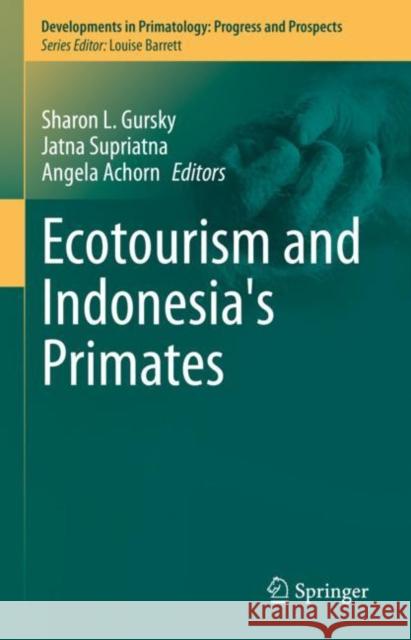
Sharon L. Gursky; Jatna Supriatna; Angela Achorn
Ecotourism and Indonesia's Primates Sharon L. Gursky Jatna Supriatna Angela Achorn 9783031149184 Springer - książkaWidoczna okładka, to zdjęcie poglądowe, a rzeczywista szata graficzna może różnić się od prezentowanej.

Ecotourism and Indonesia's Primates

ISBN-13: 9783031149184 / Angielski / Twarda / 2022 / 220 str.

Sharon L. Gursky; Jatna Supriatna; Angela Achorn
cena 301,18
(netto: 286,84 VAT:  5%)

Najniższa cena z 30 dni: 289,13
Termin realizacji zamówienia:
ok. 22 dni roboczych
Dostawa w 2026 r.

Darmowa dostawa!
inne wydania

The basic goal of the volume is to compile the most up to date research on the effect of ecotourism on Indonesia’s primates. The tremendous diversity of primates in Indonesia, in conjunction with the conservation issues facing the primates of this region, have created a crisis whereby many of Indonesia’s primates are threatened with extinction. Conservationists have developed the concept of “sustainable ecotourism” to fund conservation activities.  National parks agencies worldwide receive as much as 84% of their funding from ecotourism.  While ecotourism funds the majority of conservation activities, there have been very few studies that explore the effects of ecotourism on the habitat and species that they are designed to protect.  It is the burgeoning use of “ecotourism” throughout Indonesia that has created a need for this volume where the successes and pitfalls at various sites can be identified and compared.


The basic goal of the volume is to compile the most up to date research on the effect of ecotourism on Indonesia’s primates. The tremendous diversity of primates in Indonesia, in conjunction with the conservation issues facing the primates of this region, have created a crisis whereby many of Indonesia’s primates are threatened with extinction. Conservationists have developed the concept of “sustainable ecotourism” to fund conservation activities.  National parks agencies worldwide receive as much as 84% of their funding from ecotourism.  While ecotourism funds the majority of conservation activities, there have been very few studies that explore the effects of ecotourism on the habitat and species that they are designed to protect.  It is the burgeoning use of “ecotourism” throughout Indonesia that has created a need for this volume where the successes and pitfalls at various sites can be identified and compared. 

Kategorie:
Nauka, Biologia i przyroda
Kategorie BISAC:
Nature > Environmental Conservation & Protection - General
Social Science > Antropologia
Technology & Engineering > Agriculture - Animal Husbandry
Wydawca:
Springer
Seria wydawnicza:
Developments in Primatology: Progress and Prospects
Język:
Angielski
ISBN-13:
9783031149184
Rok wydania:
2022
Dostępne języki:
Numer serii:
000296961
Ilość stron:
220
Waga:
0.50 kg
Wymiary:
23.39 x 15.6 x 1.42
Oprawa:
Twarda
Dodatkowe informacje:
Wydanie ilustrowane

Chapter 1 Tourism and Indonesia’s Primates: An Introduction

Angela Achorn, Sharon Gursky and Jatna Supriatna


Chapter 2 Similar Perceptions of National and International Volunteer Ecotourists Contribute to the Conservation of the Critically Endangered Javan Slow Loris in Java, Indonesia

K.A.I. Nekaris, Ariana V. Weldon, Michela Balestri, and Marco Campera


Chapter 3 Bukit Lawang and Beyond:  Primates and tourism from a provider’s perspective

Andrea Molyneaux


Chapter 4 Rethinking Tolerance to Tourism: Behavioral responses by wild crested macaques (Macaca nigra) to tourists.

D.A. Bertrand, C.M. Berman, M. Agil, U. Sutiah, and A Engelhardt


Chapter 5 The Effect of Tourism on a Nocturnal Primate, Tarsius spectrum, in Indonesia

Sharon Gursky


Chapter 6 Javan Gibbon Tourism: A Review from West and Central Java Initiatives.

Jatna Supriatna, Anton Ario and Arif Setiawan


Chapter 7 Encountering Sulawesi’s Endemic Primates: Considerations for developing primate tourism in South Sulawesi, Indonesia

Katherine T. Hanson, Kristen S. Morrow, Putu Oka Ngakan, Joshua S. Trinidad, Alison A. Zak and Erin P. Riley


Chapter 8   Primates and Primatologists: Reflecting on two decades of primatological and ethnoprimatological research, tourism, and conservation at the Ubud Monkey Forest


Michaela E. Howells, James E. Loudon, Fany Brotcorne, Jeffrey V. Petterson, I Nengah Wandia, I G.A. Arta Putra, and Agustín Fuentes


Chapter 9   Primate tourism on Java: 40 years of ebony langur viewing in Pangandaran from homestay visits to mass tourism

Vincent Nijman


Chapter 10 Indigenous Bird Ecotourism in Halmahera Island, Indonesia


M. Nasir Tamalene, David Akhmad, Ericka Darmawan, Mustafa Mansur, and Bahtiar


@font-face {font-family:"Cambria Math"; panose-1:2 4 5 3 5 4 6 3 2 4; mso-font-charset:0; mso-generic-font-family:roman; mso-font-pitch:variable; mso-font-signature:-536870145 1107305727 0 0 415 0;}@font-face {font-family:Calibri; panose-1:2 15 5 2 2 2 4 3 2 4; mso-font-charset:0; mso-generic-font-family:swiss; mso-font-pitch:variable; mso-font-signature:-469750017 -1073732485 9 0 511 0;}p.MsoNormal, li.MsoNormal, div.MsoNormal {mso-style-unhide:no; mso-style-qformat:yes; mso-style-parent:""; margin-top:0cm; margin-right:0cm; margin-bottom:8.0pt; margin-left:0cm; line-height:107%; mso-pagination:widow-orphan; font-size:11.0pt; font-family:"Calibri",sans-serif; mso-ascii-font-family:Calibri; mso-ascii-theme-font:minor-latin; mso-fareast-font-family:Calibri; mso-fareast-theme-font:minor-latin; mso-hansi-font-family:Calibri; mso-hansi-theme-font:minor-latin; mso-bidi-font-family:"Times New Roman"; mso-bidi-theme-font:minor-bidi; mso-ansi-language:EN-US; mso-fareast-language:EN-US;}p.MsoFooter, li.MsoFooter, div.MsoFooter {mso-style-priority:99; mso-style-link:"Footer Char"; margin:0cm; mso-pagination:widow-orphan; tab-stops:center 234.0pt right 468.0pt; font-size:11.0pt; font-family:"Calibri",sans-serif; mso-ascii-font-family:Calibri; mso-ascii-theme-font:minor-latin; mso-fareast-font-family:Calibri; mso-fareast-theme-font:minor-latin; mso-hansi-font-family:Calibri; mso-hansi-theme-font:minor-latin; mso-bidi-font-family:"Times New Roman"; mso-bidi-theme-font:minor-bidi; mso-ansi-language:EN-US; mso-fareast-language:EN-US;}p.MsoNoSpacing, li.MsoNoSpacing, div.MsoNoSpacing {mso-style-priority:1; mso-style-unhide:no; mso-style-qformat:yes; mso-style-parent:""; margin:0cm; mso-pagination:widow-orphan; font-size:11.0pt; font-family:"Calibri",sans-serif; mso-ascii-font-family:Calibri; mso-ascii-theme-font:minor-latin; mso-fareast-font-family:Calibri; mso-fareast-theme-font:minor-latin; mso-hansi-font-family:Calibri; mso-hansi-theme-font:minor-latin; mso-bidi-font-family:"Times New Roman"; mso-bidi-theme-font:minor-bidi; mso-ansi-language:EN-US; mso-fareast-language:EN-US;}p.MsoListParagraph, li.MsoListParagraph, div.MsoListParagraph {mso-style-priority:34; mso-style-unhide:no; mso-style-qformat:yes; margin-top:0cm; margin-right:0cm; margin-bottom:8.0pt; margin-left:36.0pt; mso-add-space:auto; line-height:107%; mso-pagination:widow-orphan; font-size:11.0pt; font-family:"Calibri",sans-serif; mso-ascii-font-family:Calibri; mso-ascii-theme-font:minor-latin; mso-fareast-font-family:Calibri; mso-fareast-theme-font:minor-latin; mso-hansi-font-family:Calibri; mso-hansi-theme-font:minor-latin; mso-bidi-font-family:"Times New Roman"; mso-bidi-theme-font:minor-bidi; mso-ansi-language:EN-US; mso-fareast-language:EN-US;}p.MsoListParagraphCxSpFirst, li.MsoListParagraphCxSpFirst, div.MsoListParagraphCxSpFirst {mso-style-priority:34; mso-style-unhide:no; mso-style-qformat:yes; mso-style-type:export-only; margin-top:0cm; margin-right:0cm; margin-bottom:0cm; margin-left:36.0pt; mso-add-space:auto; line-height:107%; mso-pagination:widow-orphan; font-size:11.0pt; font-family:"Calibri",sans-serif; mso-ascii-font-family:Calibri; mso-ascii-theme-font:minor-latin; mso-fareast-font-family:Calibri; mso-fareast-theme-font:minor-latin; mso-hansi-font-family:Calibri; mso-hansi-theme-font:minor-latin; mso-bidi-font-family:"Times New Roman"; mso-bidi-theme-font:minor-bidi; mso-ansi-language:EN-US; mso-fareast-language:EN-US;}p.MsoListParagraphCxSpMiddle, li.MsoListParagraphCxSpMiddle, div.MsoListParagraphCxSpMiddle {mso-style-priority:34; mso-style-unhide:no; mso-style-qformat:yes; mso-style-type:export-only; margin-top:0cm; margin-right:0cm; margin-bottom:0cm; margin-left:36.0pt; mso-add-space:auto; line-height:107%; mso-pagination:widow-orphan; font-size:11.0pt; font-family:"Calibri",sans-serif; mso-ascii-font-family:Calibri; mso-ascii-theme-font:minor-latin; mso-fareast-font-family:Calibri; mso-fareast-theme-font:minor-latin; mso-hansi-font-family:Calibri; mso-hansi-theme-font:minor-latin; mso-bidi-font-family:"Times New Roman"; mso-bidi-theme-font:minor-bidi; mso-ansi-language:EN-US; mso-fareast-language:EN-US;}p.MsoListParagraphCxSpLast, li.MsoListParagraphCxSpLast, div.MsoListParagraphCxSpLast {mso-style-priority:34; mso-style-unhide:no; mso-style-qformat:yes; mso-style-type:export-only; margin-top:0cm; margin-right:0cm; margin-bottom:8.0pt; margin-left:36.0pt; mso-add-space:auto; line-height:107%; mso-pagination:widow-orphan; font-size:11.0pt; font-family:"Calibri",sans-serif; mso-ascii-font-family:Calibri; mso-ascii-theme-font:minor-latin; mso-fareast-font-family:Calibri; mso-fareast-theme-font:minor-latin; mso-hansi-font-family:Calibri; mso-hansi-theme-font:minor-latin; mso-bidi-font-family:"Times New Roman"; mso-bidi-theme-font:minor-bidi; mso-ansi-language:EN-US; mso-fareast-language:EN-US;}span.FooterChar {mso-style-name:"Footer Char"; mso-style-priority:99; mso-style-unhide:no; mso-style-locked:yes; mso-style-link:Footer;}.MsoChpDefault {mso-style-type:export-only; mso-default-props:yes; font-size:11.0pt; mso-ansi-font-size:11.0pt; mso-bidi-font-size:11.0pt; font-family:"Calibri",sans-serif; mso-ascii-font-family:Calibri; mso-ascii-theme-font:minor-latin; mso-fareast-font-family:Calibri; mso-fareast-theme-font:minor-latin; mso-hansi-font-family:Calibri; mso-hansi-theme-font:minor-latin; mso-bidi-font-family:"Times New Roman"; mso-bidi-theme-font:minor-bidi; mso-ansi-language:EN-US; mso-fareast-language:EN-US;}.MsoPapDefault {mso-style-type:export-only; margin-bottom:8.0pt; line-height:107%;}div.WordSection1 {page:WordSection1;}​

Dr. Angela Achorn

Angela graduated from Rhode Island College in 2016 with a B.A. in Anthropology and a minor in Environmental Studies. She earned her M.A. (2018) and her Ph.D. (2022) in Anthropology from Texas A&M University. Angela is a biological anthropologist who explores questions related to cooperation and sociality, sexual selection (and social selection more broadly), cognition, and health in primates. As a graduate student, Angela traveled to Indonesia on a 2019-2020 Fulbright Fellowship to study Sulawesi crested macaques, a Critically Endangered primate species endemic to Sulawesi, Indonesia. When forced to return to the U.S. due to the global pandemic, Angela began studying meat sharing in savanna chimpanzees for her dissertation. She is now a Postdoctoral Fellow at the University of Texas MD Anderson's Keeling Center for Comparative Medicine and Research.


Dr. Sharon Gursky

Sharon Gursky has been studying wild tarsiers in Indonesia since. Her research questions are quite diverse and include: parental care patterns, the ecological and social factors leading to gregarious behavior, predation and the function of mobbing behavior, the influence of moonlight as well as the effects of tourism on the behavior of the tarsiers and the function of these ultrasonic vocalizations.  Her current work is looking at the effect of artificial light on nocturnal primates.  Dr. Gursky is current a Professor of Anthropology at Texas A&M University.


Dr. Jatna Supriatna 

Jatna received his Ph.D. from the University of New Mexico.  He is presently the Regional Vice President and Executive Director for the Indonesian branch of Conservation International.  He is also the President of the Southeast Asian Primatologists Association, Coordinator of the Southeast Primate Specialists Group- Species Survival Commission.  For over 10 years he has been the founder and editor for the journal Tropical Biodiversity and is now the editor for the journal Asian Primates.


The basic goal of the volume is to compile the most up to date research on the effect of ecotourism on Indonesia’s primates. The tremendous diversity of primates in Indonesia, in conjunction with the conservation issues facing the primates of this region, have created a crisis whereby many of Indonesia’s primates are threatened with extinction. Conservationists have developed the concept of “sustainable ecotourism” to fund conservation activities.  National parks agencies worldwide receive as much as 84% of their funding from ecotourism.  While ecotourism funds the majority of conservation activities, there have been very few studies that explore the effects of ecotourism on the habitat and species that they are designed to protect.  It is the burgeoning use of “ecotourism” throughout Indonesia that has created a need for The Ecotourism of Indonesia's Primates where the successes and pitfalls at various sites can be identified and compared.



Udostępnij

Facebook - konto krainaksiazek.pl


Opinie o Krainaksiazek.pl na Opineo.pl

Partner Mybenefit

Krainaksiazek.pl w programie rzetelna firma Krainaksiaze.pl - płatności przez paypal

Czytaj nas na:

Facebook - krainaksiazek.pl
  • książki na zamówienie
  • granty
  • książka na prezent
  • kontakt
  • pomoc
  • opinie
  • regulamin
  • polityka prywatności

Zobacz:

  • Księgarnia czeska

  • Wydawnictwo Książkowe Klimaty

1997-2025 DolnySlask.com Agencja Internetowa

© 1997-2022 krainaksiazek.pl
     
KONTAKT | REGULAMIN | POLITYKA PRYWATNOŚCI | USTAWIENIA PRYWATNOŚCI
Zobacz: Księgarnia Czeska | Wydawnictwo Książkowe Klimaty | Mapa strony | Lista autorów
KrainaKsiazek.PL - Księgarnia Internetowa

Polityka prywatnosci - link
Krainaksiazek.pl - płatnośc Przelewy24
Przechowalnia Przechowalnia




