• Wyszukiwanie zaawansowane
  • Kategorie
  • Kategorie BISAC
  • Książki na zamówienie
  • Promocje
  • Granty
  • Książka na prezent
  • Opinie
  • Pomoc
  • Załóż konto
  • Zaloguj się

Ecosystem Dynamics: From the Past to the Future » książka


zaloguj się | załóż konto
Logo Krainaksiazek.pl

koszyk

konto

szukaj
topmenu
Księgarnia internetowa
Szukaj
Książki na zamówienie
Promocje
Granty
Książka na prezent
Moje konto
Pomoc
 
 
Wyszukiwanie zaawansowane
Pusty koszyk
Bezpłatna dostawa dla zamówień powyżej 20 złBezpłatna dostawa dla zamówień powyżej 20 zł

Kategorie główne

• Nauka
 [2946600]
• Literatura piękna
 [1856966]

  więcej...
• Turystyka
 [72221]
• Informatyka
 [151456]
• Komiksy
 [35826]
• Encyklopedie
 [23190]
• Dziecięca
 [619653]
• Hobby
 [140543]
• AudioBooki
 [1577]
• Literatura faktu
 [228355]
• Muzyka CD
 [410]
• Słowniki
 [2874]
• Inne
 [445822]
• Kalendarze
 [1744]
• Podręczniki
 [167141]
• Poradniki
 [482898]
• Religia
 [510455]
• Czasopisma
 [526]
• Sport
 [61590]
• Sztuka
 [243598]
• CD, DVD, Video
 [3423]
• Technologie
 [219201]
• Zdrowie
 [101638]
• Książkowe Klimaty
 [124]
• Zabawki
 [2473]
• Puzzle, gry
 [3898]
• Literatura w języku ukraińskim
 [254]
• Art. papiernicze i szkolne
 [8170]
Kategorie szczegółowe BISAC

Ecosystem Dynamics: From the Past to the Future

ISBN-13: 9781119970774 / Angielski / Miękka / 2014 / 336 str.
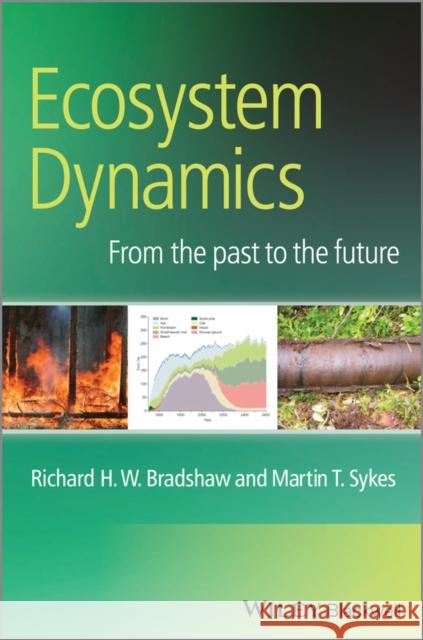
Richard Bradshaw; Martin Sykes
Ecosystem Dynamics: From the Past to the Future Bradshaw, Richard H. W. 9781119970774 John Wiley & Sons - książkaWidoczna okładka, to zdjęcie poglądowe, a rzeczywista szata graficzna może różnić się od prezentowanej.

Ecosystem Dynamics: From the Past to the Future

ISBN-13: 9781119970774 / Angielski / Miękka / 2014 / 336 str.

Richard Bradshaw; Martin Sykes
cena 255,95 zł
(netto: 243,76 VAT:  5%)

Najniższa cena z 30 dni: 253,85 zł
Termin realizacji zamówienia:
ok. 30 dni roboczych
Bez gwarancji dostawy przed świętami

Darmowa dostawa!

Ecosystem Dynamics focuses on long-term terrestrial ecosystems and their changing relationships with human societies. The unique aspect of this text is the long-time scale under consideration as data and insights from the last 10,000 years are used to place present-day ecosystem status into a temporal perspective and to test models that generate forecasts of future conditions. Descriptions and assessments of some of the current modelling tools that are used, along with their uncertainties and assumptions, are an important feature of this book. An overarching theme explores the dynamic interactions between human societies and ecosystem functioning and services. This book is authoritative but accessible and provides a useful background for all students, practitioners, and researchers interested in the subject.

Millennial Ecosystem Dynamics focuses on long–term terrestrial ecosystems and their changing relationships with human societies.


Kategorie:
Nauka, Biologia i przyroda
Kategorie BISAC:
Nature > Ecosystems & Habitats - General
Science > Life Sciences - Ecology
Wydawca:
John Wiley & Sons
Język:
Angielski
ISBN-13:
9781119970774
Rok wydania:
2014
Ilość stron:
336
Waga:
0.61 kg
Wymiary:
24.38 x 16.76 x 1.78
Oprawa:
Miękka
Wolumenów:
01
Dodatkowe informacje:
Bibliografia
Glosariusz/słownik
Wydanie ilustrowane

Personal anecdotes enliven the writing and add a human touch; for graduate students, these will serve as important reminders that there is much to learn outside the laboratory.   (Choice, 1 February 2015)


Acknowledgements ix

About the companion website xi

1 Where Are We and How Did We Arrive Here? 1

1.1 Why this book? 1

1.2 Ecosystems in crisis 2

1.3 Relevance of the past 5

1.4 Forecasting the future 7

1.5 Chapter details and logic 9

1.6 For whom is the book intended? 12

1.7 Four key questions and the links to policy 13

2 Modelling 15

2.1 Introduction 15

2.1.1 How did these models develop? 16

2.1.2 Climate data, climate and earth system models 16

2.2 Background ecosystem, vegetation and species models 18

2.2.1 Vegetation models 18

2.2.2 Species–level modelling 25

2.2.3 Equilibrium physiologically–based modelling of species 27

2.2.4 Statistical equilibrium modelling of species 30

2.2.5 Some uncertainties and assumptions that apply generally to bioclimatic models 31

2.2.6 Models of intermediate complexity 32

2.2.7 Biogeochemistry integrated into equilibrium biome models 33

2.2.8 Integrating biome and NPP models 35

2.3 Dynamic modelling 36

2.3.1 Local to landscape scales: forest gap modelling 36

2.3.2 Regional to global scales: dynamic global vegetation modelling 38

2.4 Integrating models 44

2.4.1 Earth system models 44

2.4.2 Integrated assessment models 45

2.4.3 Agent–based models 48

2.5 Further reading 48

3 Data 49

3.1 Introduction 49

3.2 Which data are relevant? 50

3.3 Ecosystem dynamics: direct observation 51

3.3.1 Phenology 51

3.3.2 Biological monitoring 53

3.4 Ecosystem dynamics: indirect measurement or proxy data 56

3.4.1 Historical ecology 57

3.4.2 Palaeoecology 58

3.4.3 Pollen analysis 60

3.4.4 Charcoal and fire scars 63

3.5 Drivers of ecosystem dynamics 67

3.5.1 Palaeoclimates and greenhouse gases 67

3.5.2 Human impact on ecosystem dynamics 69

3.6 Databases 70

3.7 Gaps in available data and approaches 70

4 Climate Change and Millennial Ecosystem Dynamics: A Complex Relationship 73

4.1 Introduction 73

4.2 Reconstructing climate from biological data 74

4.3 The very long records of vegetation dynamics 78

4.4 Holocene records 81

4.5 Modelling of Holocene vegetation dynamics to help understand pollen data 83

4.5.1 Climate or people? The Tilia Fagus transition in Draved Forest, Denmark 86

4.5.2 Climate or migration biology? The late–Holocene spread of Picea into southern Fennoscandia 87

4.5.3 Fagus in Europe 91

4.6 Simulating Fennoscandian Holocene forest dynamics 94

4.6.1 Holocene dynamics of the Sahara 98

4.7 Climate and megafaunal extinction 101

4.7.1 Recent range shifts 103

4.8 So how important is climate change for future millennial ecosystem dynamics? 103

5 The Role of Episodic Events in Millennial Ecosystem Dynamics: Where the Wild Strawberries Grow 109

5.1 Introduction 109

5.2 Fire 115

5.2.1 Past to present fire 116

5.2.2 Present to future fire 121

5.2.3 Modelling fire 121

5.2.4 Modelling ignition 122

5.2.5 Modelling fire spread 124

5.2.6 Data model comparison 128

5.3 Forest pathogens during the Holocene 131

5.4 Hurricanes and wind damage 135

5.5 Conclusion 139

6 The Impact of Past and Future Human Exploitation on Terrestrial Ecosystem Dynamics 141

6.1 Introduction 141

6.2 Denmark: case study of human impact during the Holocene 146

6.3 Islands: sensitive indicators of human impact 152

6.4 Human influence on Mediterranean, temperate and boreal forests 157

6.5 The tropics 163

6.6 Spatial upscaling of the timing and ecosystem consequences of human impact 164

7 Millennial Ecosystem Dynamics and Their Relationship to Ecosystem Services: Past and Future 173

7.1 Introduction 173

7.2 MEA classification 176

7.2.1 Provisioning services 176

7.2.2 Regulating services 177

7.2.3 Cultural services 177

7.2.4 Supporting services 177

7.3 The current crisis in ecosystem services 179

7.3.1 How did we get here? A palaeo perspective 181

7.3.2 Provisioning services in the past 182

7.3.3 Regulating services in the past 185

7.3.4 Cultural services in the past 189

7.3.5 Supporting services in the past 190

7.4 Ecosystem services and the future 193

7.5 Relating the maintenance of biodiversity to ecosystem service provision 197

7.6 Scenarios of possible futures: some different approaches 197

7.6.1 IPCC Special report on emission scenarios 199

7.6.2 MEA scenarios 201

7.6.3 ALARM scenarios 203

7.7 So what do scenarios say about the possible futures for ecosystem services? 204

7.7.1 MEA scenarios 204

7.7.2 SRES scenarios 205

7.7.3 ALARM scenarios 207

8 Cultural Ecosystem Services 211

8.1 Introduction 211

8.2 Sacred sites and species 212

8.2.1 Some examples from around the globe 214

8.3 Cultural landscapes: biodiverse relicts of former land use systems 219

8.4 Hunting as a cultural ecosystem service 221

9 Conservation 225

9.1 Conservation as we know it 225

9.2 Knowledge of the past: relevance for conservation 228

9.2.1 Fire history, conservation and ecosystem restoration 229

9.2.2 Ecosystem restoration 234

9.2.3 The wood pasture debate 235

9.2.4 Reference states or baselines? 237

9.3 Conservation in practice: protected areas (Natura 2000) 242

9.4 Conservation and alien or invasive species 244

9.4.1 Alien species, climate change and conservation 248

9.5 Global change, biodiversity and conservation in the future 253

9.5.1 The Convention on biological diversity 254

9.5.2 Atlas of biodiversity risk 255

9.6 Conclusion 257

10 Where Are We Headed? 259

10.1 Introduction 259

10.2 Emergent themes and important underlying concepts 262

10.2.1 How have ecosystems changed in the past? 262

10.2.2 How much of this change is attributable to human activities? 263

10.2.3 How much change is anticipated for the future? 264

10.2.4 What are the appropriate ecosystem management measures by which to prepare for the future? 265

References 271

Glossary 297

Index 311

Richard H.W. Bradshaw
School of Environmental Sciences, University of Liverpool, Liverpool, UK

Martin T. Sykes
Physical Geography and Ecosystem Science, Lund University, Sweden

This book examines terrestrial ecosystem dynamics from the past and into the future. Many ecosystems today are responding to the dual pressures of rapid climate change and intensified human impact and this analysis places these changes in a temporal context to show the past state of ecosystems and explore where they might be headed. A major theme is the dynamic interaction between human societies and ecosystem functioning and services. The book offers a special analysis of the cultural services provided by ecosystems through time. Data and insights from the last 10 000 years are used to place present–day ecosystem status into a temporal perspective and to test models that generate forecasts of future conditions.

There are detailed descriptions of research tools such as ecosystem and bioclimatic models, and the authors introduce the data used for the analysis of ecological processes past, present and future. Various types of future scenario are discussed and some sociological aspects are covered in addition to ecological and climatic issues. The analyses of trends in biodiversity highlight some emergent principles for conservation and generate suggestions of how to handle dynamic processes in land management.

The book is authoritative but accessible and provides a useful background for undergraduate and postgraduate students of geography, geology, environmental sciences, conservation, ecology, biology and paleoecology, as well as practitioners and researchers interested in the balance between culture and nature and in future sustainable management of terrestrial ecosystems.

Unique in its long timescale (last 10 000 years), this text places modern ecosystems within a dynamic perspective

Unites key aspects from bioscience and Earth science in an innovative and relevant manner

Includes palaeodata model comparisons to test the ecosystem models used to forecast future conditions

Describes interactions between society and ecosystem functions and services

Provides temporal analysis of ecosystem services to generate insight into future sustainable management of terrestrial ecosystems

Describes the implications of ecosystem dynamics for conservation biology

Full colour throughout, including maps, tables, figures and photographs

Global case studies

Companion Web site


Udostępnij

Facebook - konto krainaksiazek.pl


Opinie o Krainaksiazek.pl na Opineo.pl

Partner Mybenefit

Krainaksiazek.pl w programie rzetelna firma Krainaksiaze.pl - płatności przez paypal

Czytaj nas na:

Facebook - krainaksiazek.pl
  • książki na zamówienie
  • granty
  • książka na prezent
  • kontakt
  • pomoc
  • opinie
  • regulamin
  • polityka prywatności

Zobacz:

  • Księgarnia czeska

  • Wydawnictwo Książkowe Klimaty

1997-2025 DolnySlask.com Agencja Internetowa

© 1997-2022 krainaksiazek.pl
     
KONTAKT | REGULAMIN | POLITYKA PRYWATNOŚCI | USTAWIENIA PRYWATNOŚCI
Zobacz: Księgarnia Czeska | Wydawnictwo Książkowe Klimaty | Mapa strony | Lista autorów
KrainaKsiazek.PL - Księgarnia Internetowa

Polityka prywatnosci - link
Krainaksiazek.pl - płatnośc Przelewy24
Przechowalnia Przechowalnia





