• Wyszukiwanie zaawansowane
  • Kategorie
  • Kategorie BISAC
  • Książki na zamówienie
  • Promocje
  • Granty
  • Książka na prezent
  • Opinie
  • Pomoc
  • Załóż konto
  • Zaloguj się

Ecophysiology of Amphibians Inhabiting Xeric Environments » książka


zaloguj się | załóż konto
Logo Krainaksiazek.pl

koszyk

konto

szukaj
topmenu
Księgarnia internetowa
Szukaj
Książki na zamówienie
Promocje
Granty
Książka na prezent
Moje konto
Pomoc
 
 
Wyszukiwanie zaawansowane
Pusty koszyk
Bezpłatna dostawa dla zamówień powyżej 20 złBezpłatna dostawa dla zamówień powyżej 20 zł

Kategorie główne

• Nauka
 [2946912]
• Literatura piękna
 [1852311]

  więcej...
• Turystyka
 [71421]
• Informatyka
 [150889]
• Komiksy
 [35717]
• Encyklopedie
 [23177]
• Dziecięca
 [617324]
• Hobby
 [138808]
• AudioBooki
 [1671]
• Literatura faktu
 [228371]
• Muzyka CD
 [400]
• Słowniki
 [2841]
• Inne
 [445428]
• Kalendarze
 [1545]
• Podręczniki
 [166819]
• Poradniki
 [480180]
• Religia
 [510412]
• Czasopisma
 [525]
• Sport
 [61271]
• Sztuka
 [242929]
• CD, DVD, Video
 [3371]
• Technologie
 [219258]
• Zdrowie
 [100961]
• Książkowe Klimaty
 [124]
• Zabawki
 [2341]
• Puzzle, gry
 [3766]
• Literatura w języku ukraińskim
 [255]
• Art. papiernicze i szkolne
 [7810]
Kategorie szczegółowe BISAC

Ecophysiology of Amphibians Inhabiting Xeric Environments

ISBN-13: 9783642643699 / Angielski / Miękka / 2011 / 182 str.
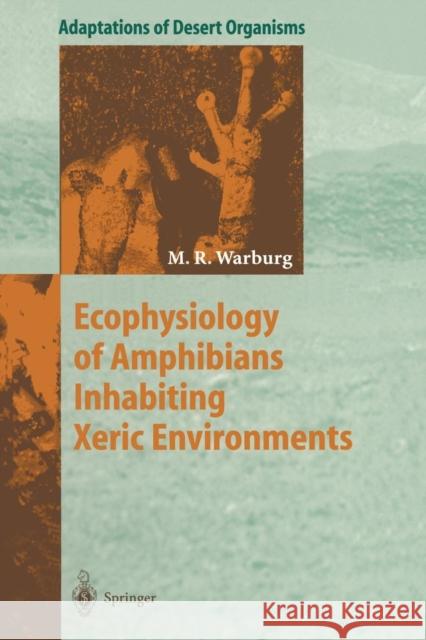
Michael Warburg
Ecophysiology of Amphibians Inhabiting Xeric Environments Michael Warburg 9783642643699 Springer - książkaWidoczna okładka, to zdjęcie poglądowe, a rzeczywista szata graficzna może różnić się od prezentowanej.

Ecophysiology of Amphibians Inhabiting Xeric Environments

ISBN-13: 9783642643699 / Angielski / Miękka / 2011 / 182 str.

Michael Warburg
cena 605,23
(netto: 576,41 VAT:  5%)

Najniższa cena z 30 dni: 578,30
Termin realizacji zamówienia:
ok. 22 dni roboczych
Bez gwarancji dostawy przed świętami

Darmowa dostawa!

Scarcity of water has brought about a number of structural, behavioural, physiological and ecological adaptations in amphibians inhabiting seasonally xeric habitats.
This book describes structural and functional adaptations of key organs such as skin, kidneys, bladder, lungs and ovaries. Behavioural responses to high temperatures mainly involve thermoregulation and the selection of optimal temperatures and humidity. Special emphasis is placed on physiological adaptations: water, electrolyte, nitrogen, and thermal balance and their endocrine control are treated in detail. Development and metamorphosis, larval competition for food resources, and reproductive strategies are only a few of the exciting topics in the chapter on ecological aspects.


Kategorie:
Nauka, Biologia i przyroda
Kategorie BISAC:
Science > Life Sciences - Ecology
Science > Zoologia i nauki o zwierzętach
Literary Collections > Middle Eastern
Wydawca:
Springer
Seria wydawnicza:
Adaptations of Desert Organisms
Język:
Angielski
ISBN-13:
9783642643699
Rok wydania:
2011
Wydanie:
Softcover Repri
Numer serii:
000034705
Ilość stron:
182
Waga:
0.29 kg
Wymiary:
23.39 x 15.6 x 1.09
Oprawa:
Miękka
Wolumenów:
01

1 Introduction.- 2 Xeric Habitats and Their Amphibian Inhabitants.- 2.1 The Habitats.- 2.1.1 The Xeric Habitat.- 2.1.2 The Semi-arid and Arid Habitats.- 3 Structural and Functional Adaptations of Key Organs...- 3.1 Structure and Function of the Integument.- 3.1.1 The Epidermal Structure of Amphibians Inhabiting Xeric Environments.- 3.1.1.1 The Epidermis Structure of the Anuran (Pelobates) Tadpole.- 3.1.1.2 The Epidermis Structure of the Anuran (Pelobates), Post-metamorphic, Terrestrial Stage...- 3.1.1.3 Epidermal Thickness.- 3.1.1.4 Other Anurans Inhabiting Xeric Environments...- 3.1.1.5 Cell Dynamics.- 3.1.1.6 The Epidermis of the Urodele Salamandra salamandra, Aquatic Stage.- 3.1.1.7 Specialized Cell Types of the Urodelan (Salamandra) Larva.- 3.1.1.8 The Urodelan Leydig Cell.- 3.1.1.9 The Larval Mitochondria-Rich Cell, MRC.- 3.1.1.10 The Epidermis of the Urodelan (S. salamandra), Terrestrial, Post-metamorphic Stages.- 3.1.1.11 The Flask Cell.- 3.1.1.12 Conclusions.- 3.1.1.13 Epidermal Cell Layers.- 3.1.1.14 Epidermal Cell Diversity.- 3.1.1.15 The Leydig Cell of Larval Urodeles.- 3.1.1.16 S. salamandra Larval MRC and the Flask Cells of the Adult.- 3.1.2 The Dermis.- 3.1.2.1. The Anuran Calcified Dermal Layer.- 3.1.2.2 Dermal Glands.- 3.1.2.3 Chromatophores.- 3.1.3 Moulting.- 3.1.4 Cocoons.- 3.1.5 Transport of Ions Across the Skin.- 3.1.6 Water Movement Across the Skin.- 3.1.7 Nitrogen Excretion Across the Skin.- 3.1.8 Conclusions.- 3.2 Respiratory Organs and Respiration.- 3.2.1 Structure and Function of the Gills.- 3.2.1.1 The Gill Integument of Salamandra Larvae.- 3.2.1.2 Specialized Cells in the Salamander Gill Integument.- 3.2.2 Structure of the Lungs and Respiration.- 3.2.2.1 Structure.- 3.2.2.2 Respiration.- 3.3 The Endolymphatic System as Calcium Reserve.- 3.4 Kidney Structure and Function.- 3.4.1.1 Kidney Structure.- 3.4.1.2 Kidney Function.- 3.4.2 Endocrine Control of Excretion.- 3.4.3 The Urinary Bladder.- 3.5 Structure and Function of the Female Reproductive System.- 3.5.1 The Ovary and Oogenesis.- 3.5.1.1 Oogenesis.- 3.5.2 Mating, Sperm Storage, Fertilization and Gestation.- 3.5.3 Conclusions.- 4 Receptors, Perception and Behavioural Responses.- 4.1 Photoreception and the Response to Light.- 4.2 Acoustic Behaviour.- 4.3 Olfaction.- 4.4 Selection of Suitable Substrate Moisture and pH..- 4.5 Feeding Behaviour.- 4.6 Locomotory Rhythms and Activity Patterns.- 4.7 Orientation, Homing and Migration.- 4.7.1 Orientation.- 4.7.2 Homing.- 4.7.3 Migration and Breeding Behaviour.- 4.8 Social Behaviour.- 4.8.1 Aggregation Behaviour.- 4.8.2 Kin Recognition.- 4.9 Endocrine Control of Behaviour.- 4.9.1 The Pineal Gland.- 4.9.2 Courtship and Mating Behaviour and Their Endocrine Control.- 4.10 Learning.- 4.11 Conclusions.- 5 Physiological Adaptations.- 5.1 Water Balance.- 5.1.1 Water Content.- 5.1.2 Remarks about Techniques.- 5.1.3 Evaporative Water Loss.- 5.1.4 Survival of Dehydration.- 5.1.5 Water Uptake.- 5.2 Body Fluid Osmolality and Ion Concentration….- 5.3 Nitrogen Balance.- 5.3.1 Ureotelic Amphibians and Urea Retention.- 5.3.2 Uricotelic Amphibians.- 5.3.3 Other Forms of Nitrogen Excretion.- 5.4 Endocrine Control of Water, Electrolyte and Nitrogen Balance.- 5.4.1 Endocrine Control.- 5.4.1.1 The Neurohypophysial Hormones.- 5.4.1.2 The Adenohypophysial Hormones Prolactin (PRL).- 5.4.1.3 The Thyroid Hormones.- 5.4.1.4 Corticosteroids and the Interrenal Hormones….- 5.4.1.5 Parathyroid and Ultimobranchial Hormones Regulating Calcium Balance.- 5.4.1.6 Atrial Natriuretic Peptides (ANP).- 5.4.1.7 Conclusions.- 5.5 Thermal Balance.- 5.5.1 Temperature Preferences.- 5.5.2 Body Temperature Regulation at High Temperatures.- 5.5.3 Critical Thermal Maximum.- 5.5.4 Development Rate and Survival Time at High Temperature.- 6 Ecological Adaptations.- 6.1 The Aquatic Environment.- 6.1.1 Breeding Modes.- 6.1.2 Reproductive Season, Onset and Duration.- 6.1.3 Breeding Migration.- 6.1.4 Batch or Brood Size 1ll.- 6.1.5 Development and Metamorphosis 1ll.- 6.1.6 Development Time.- 6.1.7 Larval Competition for Food Resources, Carnivory, Prédation and Cannibalism.- 6.1.8 Survival of Larvae.- 6.1.9 Factors Affecting Success of Metamorphosis.- 6.1.10 Reproductive Strategies.- 6.1.11 Habitat Use.- 6.2 The Terrestrial Amphibian.- 6.2.1 Aquatic Phase of the Adult Amphibia Inhabiting Xeric Habitats.- 6.2.1.1 The Paedomorphic Amphibian.- 6.2.2 The Adult Terrestrial Amphibian Inhabiting Xeric Habitats.- 6.2.2.1 Ecological Problems with Breeding.- 6.2.2.2 Role of Climate in the Survival of Juveniles and Adults.- 6.2.2.3 Population Ecology of Amphibians Living in Xeric Habitats.- 6.2.2.4 Longevity.- 6.2.2.5 Density Effects.- 6.2.2.6 Climatic Effects.- 6.2.2.7 Population Cycles.- 6.2.2.8 Population Explosion and Migration.- 6.2.2.9 Amphibian Communities.- 6.2.2.10 Conclusions.- 7 Reflections and Conclusions.- 7.1 Habitat.- 7.2 Structure and Function.- 7.3 Behavioural Responses.- 7.4 Ecological Adaptations.- 7.4.1 Breeding and Larval Stages.- 7.4.2 Longevity.- References.

The book describes how special organ structures, behavioural patterns and physiological adaptations enable amphibians to survive in hot and dry environments.


Udostępnij

Facebook - konto krainaksiazek.pl


Opinie o Krainaksiazek.pl na Opineo.pl

Partner Mybenefit

Krainaksiazek.pl w programie rzetelna firma Krainaksiaze.pl - płatności przez paypal

Czytaj nas na:

Facebook - krainaksiazek.pl
  • książki na zamówienie
  • granty
  • książka na prezent
  • kontakt
  • pomoc
  • opinie
  • regulamin
  • polityka prywatności

Zobacz:

  • Księgarnia czeska

  • Wydawnictwo Książkowe Klimaty

1997-2025 DolnySlask.com Agencja Internetowa

© 1997-2022 krainaksiazek.pl
     
KONTAKT | REGULAMIN | POLITYKA PRYWATNOŚCI | USTAWIENIA PRYWATNOŚCI
Zobacz: Księgarnia Czeska | Wydawnictwo Książkowe Klimaty | Mapa strony | Lista autorów
KrainaKsiazek.PL - Księgarnia Internetowa

Polityka prywatnosci - link
Krainaksiazek.pl - płatnośc Przelewy24
Przechowalnia Przechowalnia





