• Wyszukiwanie zaawansowane
  • Kategorie
  • Kategorie BISAC
  • Książki na zamówienie
  • Promocje
  • Granty
  • Książka na prezent
  • Opinie
  • Pomoc
  • Załóż konto
  • Zaloguj się

Ecology of Urban Environments » książka

zaloguj się | załóż konto
Logo Krainaksiazek.pl

koszyk

konto

szukaj
topmenu
Księgarnia internetowa
Szukaj
Książki na zamówienie
Promocje
Granty
Książka na prezent
Moje konto
Pomoc
 
 
Wyszukiwanie zaawansowane
Pusty koszyk
Bezpłatna dostawa dla zamówień powyżej 20 złBezpłatna dostawa dla zamówień powyżej 20 zł

Kategorie główne

• Nauka
 [2952079]
• Literatura piękna
 [1850969]

  więcej...
• Turystyka
 [71058]
• Informatyka
 [151066]
• Komiksy
 [35579]
• Encyklopedie
 [23181]
• Dziecięca
 [620496]
• Hobby
 [139036]
• AudioBooki
 [1646]
• Literatura faktu
 [228729]
• Muzyka CD
 [379]
• Słowniki
 [2932]
• Inne
 [445708]
• Kalendarze
 [1409]
• Podręczniki
 [164793]
• Poradniki
 [480107]
• Religia
 [510956]
• Czasopisma
 [511]
• Sport
 [61267]
• Sztuka
 [243299]
• CD, DVD, Video
 [3411]
• Technologie
 [219640]
• Zdrowie
 [100984]
• Książkowe Klimaty
 [124]
• Zabawki
 [2281]
• Puzzle, gry
 [3363]
• Literatura w języku ukraińskim
 [258]
• Art. papiernicze i szkolne
 [8020]
Kategorie szczegółowe BISAC

Ecology of Urban Environments

ISBN-13: 9781444332643 / Angielski / Twarda / 2016 / 240 str.
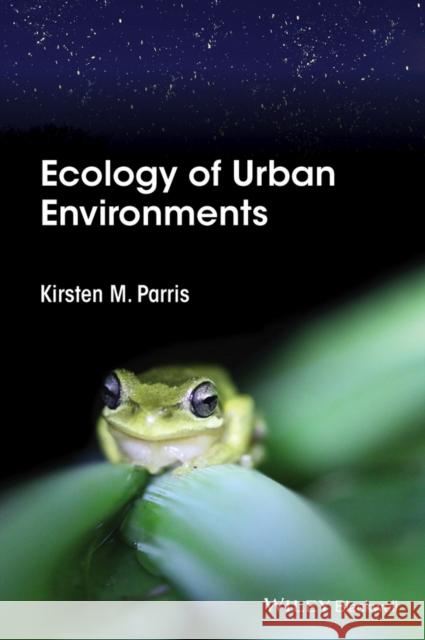
Parris, J.
Ecology of Urban Environments Parris, J. 9781444332643 John Wiley & Sons - książkaWidoczna okładka, to zdjęcie poglądowe, a rzeczywista szata graficzna może różnić się od prezentowanej.

Ecology of Urban Environments

ISBN-13: 9781444332643 / Angielski / Twarda / 2016 / 240 str.

Parris, J.
cena 515,74
(netto: 491,18 VAT:  5%)

Najniższa cena z 30 dni: 511,52
Termin realizacji zamówienia:
ok. 30 dni roboczych.

Darmowa dostawa!
inne wydania

Provides an accessible introduction to urban ecology, using established ecological theory to identify generalities in the complexity of urban environments.

  • Examines the bio-physical processes of urbanization and how these influence the dynamics of urban populations, communities and ecosystems
  • Explores the ecology of humans in cities
  • Discusses practical strategies for conserving biodiversity and maintaining ecosystem services in urban environments
  • Includes case studies with questions to improve retention and understanding

Kategorie:
Inne
Kategorie BISAC:
Science > Zoologia i nauki o zwierzętach
Science > Life Sciences - Ecology
Wydawca:
John Wiley & Sons
Język:
Angielski
ISBN-13:
9781444332643
Rok wydania:
2016
Ilość stron:
240
Waga:
0.38 kg
Wymiary:
23.11 x 15.24 x 1.52
Oprawa:
Twarda
Wolumenów:
01
Dodatkowe informacje:
Bibliografia

Foreword xi

Preface xiii

Acknowledgements xv

1 Introduction 1

1.1 Setting the scene 1

1.2 What is urban ecology? 1

1.3 Why is urban ecology interesting? 2

1.3.1 Urban environments are extensive and growing 3

1.3.2 Urban environments have inherent ecological interest 6

1.3.3 Urban environments are ideal for testing and developing ecological theory 6

1.3.4 The nature of urban environments affects human health and wellbeing 7

1.3.5 Urban environments are important for conserving biological diversity 8

1.4 The aims of this book 10

Study questions 10

References 10

2 Urban environments 15

2.1 Introduction 15

2.2 Primary biophysical processes associated with urbanization 19

2.2.1 Removal of existing vegetation 20

2.2.2 Construction of buildings, roads and other urban infrastructure 21

2.2.3 Replacement of permeable with impermeable surfaces 22

2.2.4 Reduction in the area of open space 22

2.2.5 Modification or destruction of aquatic habitats 24

2.2.6 Production of pollution and waste 25

2.3 Secondary biophysical processes associated with urbanization 28

2.3.1 Habitat loss, fragmentation and isolation 28

2.3.2 Climatic changes 28

2.3.3 Altered hydrological regimes 29

2.3.4 Pollution of air, water and soil 29

2.3.5 Altered noise and light regimes 30

2.4 Stochasticity in urban environments 31

2.5 Summary 32

Study questions 33

References 33

3 Population– and species–level responses to urbanization 41

3.1 Introduction 41

3.2 Responses to the secondary biophysical processes of urbanization 43

3.2.1 Habitat loss, fragmentation and isolation 43

3.2.2 Climatic changes 48

3.2.3 Altered hydrological regimes 49

3.2.4 Pollution of air, water and soil 50

3.2.5 Altered noise and light regimes 53

3.3 Biological introductions and invasions 57

3.3.1 Plants and fungi 57

3.3.2 Animals 59

3.4 Human disturbance 63

3.5 Stochastic effects on populations in urban environments 65

3.6 Summary 66

Study questions 66

References 67

4 Community–level responses to urbanization 81

4.1 Introduction 81

4.2 Selection: niche theories in urban ecology 84

4.2.1 The ecological niche and the environmental gradient 84

4.2.2 Habitat models 90

4.2.3 Ecological guilds and resource–competition models 94

4.3 Ecological drift: modelling stochasticity in urban communities 97

4.4 Dispersal: the movement of individuals through space 99

4.5 Diversification: the evolution of new lineages in urban environments 102

4.6 Summary 104

Study questions 105

References 105

5 Ecosystem–level responses to urbanization 114

5.1 Introduction 114

5.2 Carbon 116

5.2.1 Introduction to the carbon cycle 116

5.2.2 Effects of urbanization on the carbon cycle 119

5.2.3 Mitigation strategies 122

5.3 Water 127

5.3.1 Introduction to the water cycle 127

5.3.2 Effects of urbanization on the water cycle 127

5.3.3 Mitigation strategies 129

5.4 The nitrogen cycle 131

5.4.1 Effects of urbanization on the nitrogen cycle 132

5.4.2 Mitigation strategies 135

5.5 Summary 136

Study questions 136

References 137

6 The urban ecology of humans 146

6.1 Introduction 146

6.2 The urban form 150

6.2.1 Urban parks and open space 150

6.2.2 Urban sprawl and car dependence 156

6.2.3 Neighbourhood disadvantage and neighbourhood disorder 157

6.3 Pollution and waste 158

6.3.1 Outdoor air pollution 160

6.3.2 Indoor air pollution 161

6.4 Climatic changes in urban environments 162

6.5 Health inequities in the world s cities 163

6.6 Summary 164

Study questions 165

References 165

7 Conserving biodiversity and maintaining ecosystem services in cities 175

7.1 Introduction 175

7.2 Strategies for conserving biodiversity and maintaining ecosystem services in cities 177

7.2.1 Integrate urban ecology with urban planning and design 177

7.2.2 Protect biodiverse landscape features and important biophysical assets 180

7.2.3 Grow the green city 182

7.2.4 Maintain or re–establish landscape connectivity 185

7.2.5 Use small spaces 187

7.3 Novel habitats, novel ecosystems 190

7.4 Summary 192

Study questions 192

References 193

8 Summary and future directions 204

8.1 Introduction 204

8.2 Do we need a new theory of urban ecology? 204

8.2.1 The complexity of urban ecosystems 205

8.2.2 The human domination of urban ecosystems 206

8.2.3 The uniqueness of urban ecosystems 206

8.3 The definition and scope of urban ecology 207

8.4 Do we need a new theory of urban science? 208

8.5 Future directions 209

Study questions 210

References 211

Index 214

Kirsten M. Parris: School of Ecosystem and Forest Sciences, The University of Melbourne, Melbourne, Australia

Urban environments are expanding globally as the number and proportion of humans that live in cities continues to increase. The discipline of urban ecology is also expanding as interest surges in the ecological impacts of urbanization and the diverse ways in which urban environments can affect their human and non–human residents.

This book provides an accessible introduction to urban ecology, using established ecological theory to identify generalities in the complexity of urban environments. Engaging yet scholarly, it examines the biophysical processes of urbanization and how these work together to influence (a) the characteristics of urban environments in developed and developing countries, and (b) the dynamics of urban populations, communities and ecosystems. With a strong international focus, it also explores the ecology of humans in cities and discusses practical strategies for conserving biodiveristy and maintaining ecosystem services in urban environments. Finally, it argues that existing ecological theory is appropriate for understanding the ecology of urban environments across all levels of organization, from individual organisms to entire ecosystems; effective science and management need not wait on a new theory of urban ecology.

Designed as a text book for upper–level graduate and postgraduate students, Ecology of Urban Environments will also be an invaluable resource for researchers and policy–makers in the urban sphere.


Udostępnij

Facebook - konto krainaksiazek.pl


Opinie o Krainaksiazek.pl na Opineo.pl

Partner Mybenefit

Krainaksiazek.pl w programie rzetelna firma Krainaksiaze.pl - płatności przez paypal

Czytaj nas na:

Facebook - krainaksiazek.pl
  • książki na zamówienie
  • granty
  • książka na prezent
  • kontakt
  • pomoc
  • opinie
  • regulamin
  • polityka prywatności

Zobacz:

  • Księgarnia czeska

  • Wydawnictwo Książkowe Klimaty

1997-2026 DolnySlask.com Agencja Internetowa

© 1997-2022 krainaksiazek.pl
     
KONTAKT | REGULAMIN | POLITYKA PRYWATNOŚCI | USTAWIENIA PRYWATNOŚCI
Zobacz: Księgarnia Czeska | Wydawnictwo Książkowe Klimaty | Mapa strony | Lista autorów
KrainaKsiazek.PL - Księgarnia Internetowa

Polityka prywatnosci - link
Krainaksiazek.pl - płatnośc Przelewy24
Przechowalnia Przechowalnia








