• Wyszukiwanie zaawansowane
  • Kategorie
  • Kategorie BISAC
  • Książki na zamówienie
  • Promocje
  • Granty
  • Książka na prezent
  • Opinie
  • Pomoc
  • Załóż konto
  • Zaloguj się

Ecological and Genetic Implications of Aquaculture Activities » książka


zaloguj się | załóż konto
Logo Krainaksiazek.pl

koszyk

konto

szukaj
topmenu
Księgarnia internetowa
Szukaj
Książki na zamówienie
Promocje
Granty
Książka na prezent
Moje konto
Pomoc
 
 
Wyszukiwanie zaawansowane
Pusty koszyk
Bezpłatna dostawa dla zamówień powyżej 20 złBezpłatna dostawa dla zamówień powyżej 20 zł

Kategorie główne

• Nauka
 [2952079]
• Literatura piękna
 [1850969]

  więcej...
• Turystyka
 [71058]
• Informatyka
 [151066]
• Komiksy
 [35579]
• Encyklopedie
 [23181]
• Dziecięca
 [620496]
• Hobby
 [139036]
• AudioBooki
 [1646]
• Literatura faktu
 [228729]
• Muzyka CD
 [379]
• Słowniki
 [2932]
• Inne
 [445708]
• Kalendarze
 [1409]
• Podręczniki
 [164793]
• Poradniki
 [480107]
• Religia
 [510956]
• Czasopisma
 [511]
• Sport
 [61267]
• Sztuka
 [243299]
• CD, DVD, Video
 [3411]
• Technologie
 [219640]
• Zdrowie
 [100984]
• Książkowe Klimaty
 [124]
• Zabawki
 [2281]
• Puzzle, gry
 [3363]
• Literatura w języku ukraińskim
 [258]
• Art. papiernicze i szkolne
 [8020]
Kategorie szczegółowe BISAC

Ecological and Genetic Implications of Aquaculture Activities

ISBN-13: 9789048161263 / Angielski / Miękka / 2010 / 545 str.
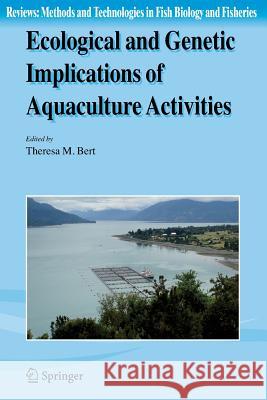
Theresa M. Bert
Ecological and Genetic Implications of Aquaculture Activities Theresa M. Bert 9789048161263 Springer - książkaWidoczna okładka, to zdjęcie poglądowe, a rzeczywista szata graficzna może różnić się od prezentowanej.

Ecological and Genetic Implications of Aquaculture Activities

ISBN-13: 9789048161263 / Angielski / Miękka / 2010 / 545 str.

Theresa M. Bert
cena 805,10
(netto: 766,76 VAT:  5%)

Najniższa cena z 30 dni: 771,08
Termin realizacji zamówienia:
ok. 22 dni roboczych
Dostawa w 2026 r.

Darmowa dostawa!

Aquaculture is a rapidly growing industry and aquaculture practices can directly interact with and depend upon the surrounding environment. Therefore, the effects of all types of aquaculture on living natural resources and ecosystems are of significant and increasing national and international interest. In Ecological and Genetic Implications of Aquaculture Activities, numerous nationally and internationally prominent aquaculture researchers contribute 27 chapters that comprise overviews of aquaculture effects on the environment, discussions of genetic considerations, thorough documentation of aquaculture effects and their solutions specific to countries, and approaches toward environmentally sustainable aquaculture. Together, these chapters comprise a comprehensive synthesis of many ecological and genetic problems implicated in the practice of aquaculture and of many proven, attempted, or postulated solutions to those problems. Many chapters can serve as benchmark documentations of specific aquaculture effects on biodiversity at different levels. The authorship is broadly international; the authors represent 18 different countries or international agencies and all continents except Antarctica. The aquaculture effects and their solutions range from local to global and simple to highly technical. Effects common to many levels and types of aquaculture emerge, as well as both common and unique solutions. Aquaculturists, aquaculture researchers, aquaculture industry developers, conservation biologists, environmental scientists, resource managers, and policy makers should find this book interesting and informative.


Kategorie:
Nauka, Biologia i przyroda
Kategorie BISAC:
Science > Life Sciences - Biological Diversity
Science > Bezkręgowce
Science > Life Sciences - Ecology
Wydawca:
Springer
Seria wydawnicza:
Reviews: Methods and Technologies in Fish Biology and Fisher
Język:
Angielski
ISBN-13:
9789048161263
Rok wydania:
2010
Numer serii:
000393036
Ilość stron:
545
Waga:
0.77 kg
Wymiary:
23.39 x 15.6 x 2.9
Oprawa:
Miękka
Wolumenów:
01

FOREWORD INTRODUCTION 1. Environmentally Responsible Aquaculture—A Work in Progress; Theresa M. Bert SECTION ONE: OVERVIEWS OF ECOLOGICAL INTERACTIONS 2. An Ecosystems Approach to Risk Assessment of Alien Species and Genotypes in Aquaculture; Devin Bartley 3. Indicators for the Sustainability of Aquaculture; Roger S. V. Pullin, Rainer Froese, and Daniel Pauly 4. Sustainable Approaches for Aquaculture Development: Looking Ahead Through Lessons in the Past; Nai-Hsien Chao and I Chiu Liao SECTION TWO: POPULATION GENETIC CONSIDERATIONS 5. Genetic Risks of Marine Hatchery Enhancement: the Good, the Bad, and the Unknown; Dennis Hedgecock and Katharine Coykendall 6. Preventing Genetic Pollution and the Establishment of Feral Populations: a Molecular Solution; Peter M. Grewe et al 7. Behavioral and Genetic Interactions Between Escaped Farm Salmon and Wild Atlantic Salmon; Kjetil Hindar and Ian A. Fleming 8. Genetic Management of Hatchery-based Stock Enhancement; Theresa M. Bert et al SECTION THREE: CASE STUDIES 9. Environmental Impacts in Australian Aquaculture; Damian M. Ogburn 10. Effects Of Hatchery Rearing On Asian Seabass, Lates calcarifera, in Sabah, Malaysia; Saleem Mustafa et al 11. Disturbance of Korean Lake Ecosystems by Aquaculture, and their Rehabilitation; Tae Seok Ahn and Dongsoo Kong 12. Mariculture-related Environmental Concerns in the People’s Republic of China; Jian-Hai Xiang 13. Indigenous Species for African Aquaculture Development; Randall E. Brummett 14. The Introduction of Non-native Fishes to Freshwater Systems of Peru; Hernán Ortega, Humberto Guerra, and Rina Ramírez 15. Introduction of Exotic Species and Transplantation of Native Species Across River Basins in Venezuela; Héctor López-Rojas and Ana Bonilla-Rivero 16. Impacts ofNon-native Fish Species in Minas Gerais, Brazil: Present Situation and Prospects; Carlos Bernardo M. Alves, Fábio Vieira, André Lincoln B. Magalhães, and Marcelo F. G. Brito 17. Salmonid Introductions in Patagonia: a Mixed Blessing; Pablo Horacio Vigliano and Marcelo Fabián Alonso 18. Introduced Anadromous Salmonids in Patagonia: Risks, Uses, and a Conservation Paradox; Miguel A. Pascual and Javier E. Ciancio 19. Addressing Problems Associated with Aquaculture and Aquaculture Effluents in the USA: a Historical Essay; Robert R. Stickney 20. Productivity of Alaska’s Salmon Hatchery Ocean Ranching Program and Management of Biological Risks to Wild Pacific Salmon; William W. Smoker and William R. Heard 21. Empirical Results of Northeast Pacific Salmon Supplementation: a Preliminary Assessment; Robin S. Waples, Michael J. Ford, and Dietrich Schmitt SECTION FOUR: POSITIVE APPROACHES TO ENVIRONMENTALLY SUSTAINABLE AQUACULTURE 22. Macrobenthos as Biological Indicators to Assess the Influence of Aquaculture on Japanese Coastal Environments; Hisashi Yokoyama, Akifumi Nishimura, and Misa Inoue 23. A Simple Experiment in Polyculture: Red Sea Bream (Pagrus major) and Ulvales (Ulva pertusa); Hashiro Hirata, Tatuya Yamauchi, Muneyuki Matsuda, and Shigehisa Yamasaki 24. Microalgae, Macroalgae, and Bivalves as Biofilters in Land-based Mariculture in Israel; Muki Shpigel and Amir Neori 25. Beyond the Monospecific Approach to Animal Aquaculture… the Light of Integrated Aquaculture; Thierry Chopin, Charles Yarish, and Glyn Sharp 26. Using Natural Ecosystem Services to Diminish Salmon-farming Footprints in Southern Chile; Doris Soto and Fernando Jara CONCLUSION 27. Environmentally Responsible Aquaculture: Realities and Possibilities; Theresa M. Bert Index of taxa Index of authors

Aquaculture is a rapidly growing industry and aquaculture practices can directly interact with and depend upon the surrounding environment. Therefore, the effects of all types of aquaculture on living natural resources and ecosystems are of significant and increasing national and international interest. In Ecological and Genetic Implications of Aquaculture Activities, numerous nationally and internationally prominent aquaculture researchers contribute 27 chapters that comprise overviews of aquaculture effects on the environment, discussions of genetic considerations, thorough documentation of aquaculture effects and their solutions specific to countries, and approaches toward environmentally sustainable aquaculture. Together, these chapters comprise a comprehensive synthesis of many ecological and genetic problems implicated in the practice of aquaculture and of many proven, attempted, or postulated solutions to those problems. Many chapters can serve as benchmark documentations of specific aquaculture effects on biodiversity at different levels. The authorship is broadly international; the authors represent 18 different countries or international agencies and all continents except Antarctica. The aquaculture effects and their solutions range from local to global and simple to highly technical. Effects common to many levels and types of aquaculture emerge, as well as both common and unique solutions.

Aquaculturists, aquaculture researchers, aquaculture industry developers, conservation biologists, environmental scientists, resource managers, and policy makers should find this book interesting and informative.




Udostępnij

Facebook - konto krainaksiazek.pl


Opinie o Krainaksiazek.pl na Opineo.pl

Partner Mybenefit

Krainaksiazek.pl w programie rzetelna firma Krainaksiaze.pl - płatności przez paypal

Czytaj nas na:

Facebook - krainaksiazek.pl
  • książki na zamówienie
  • granty
  • książka na prezent
  • kontakt
  • pomoc
  • opinie
  • regulamin
  • polityka prywatności

Zobacz:

  • Księgarnia czeska

  • Wydawnictwo Książkowe Klimaty

1997-2025 DolnySlask.com Agencja Internetowa

© 1997-2022 krainaksiazek.pl
     
KONTAKT | REGULAMIN | POLITYKA PRYWATNOŚCI | USTAWIENIA PRYWATNOŚCI
Zobacz: Księgarnia Czeska | Wydawnictwo Książkowe Klimaty | Mapa strony | Lista autorów
KrainaKsiazek.PL - Księgarnia Internetowa

Polityka prywatnosci - link
Krainaksiazek.pl - płatnośc Przelewy24
Przechowalnia Przechowalnia




