• Wyszukiwanie zaawansowane
  • Kategorie
  • Kategorie BISAC
  • Książki na zamówienie
  • Promocje
  • Granty
  • Książka na prezent
  • Opinie
  • Pomoc
  • Załóż konto
  • Zaloguj się

Eco-Translatology: Towards an Eco-Paradigm of Translation Studies » książka


zaloguj się | załóż konto
Logo Krainaksiazek.pl

koszyk

konto

szukaj
topmenu
Księgarnia internetowa
Szukaj
Książki na zamówienie
Promocje
Granty
Książka na prezent
Moje konto
Pomoc
 
 
Wyszukiwanie zaawansowane
Pusty koszyk
Bezpłatna dostawa dla zamówień powyżej 20 złBezpłatna dostawa dla zamówień powyżej 20 zł

Kategorie główne

• Nauka
 [2949965]
• Literatura piękna
 [1857847]

  więcej...
• Turystyka
 [70818]
• Informatyka
 [151303]
• Komiksy
 [35733]
• Encyklopedie
 [23180]
• Dziecięca
 [617748]
• Hobby
 [139972]
• AudioBooki
 [1650]
• Literatura faktu
 [228361]
• Muzyka CD
 [398]
• Słowniki
 [2862]
• Inne
 [444732]
• Kalendarze
 [1620]
• Podręczniki
 [167233]
• Poradniki
 [482388]
• Religia
 [509867]
• Czasopisma
 [533]
• Sport
 [61361]
• Sztuka
 [243125]
• CD, DVD, Video
 [3451]
• Technologie
 [219309]
• Zdrowie
 [101347]
• Książkowe Klimaty
 [123]
• Zabawki
 [2362]
• Puzzle, gry
 [3791]
• Literatura w języku ukraińskim
 [253]
• Art. papiernicze i szkolne
 [7933]
Kategorie szczegółowe BISAC

Eco-Translatology: Towards an Eco-Paradigm of Translation Studies

ISBN-13: 9789811522628 / Angielski / Miękka / 2021 / 312 str.
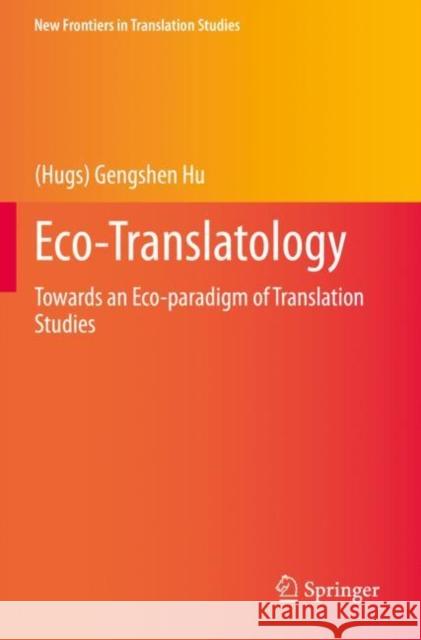
(hugs) Gengshen Hu
Eco-Translatology: Towards an Eco-Paradigm of Translation Studies (hugs) Gengshen Hu 9789811522628 Springer - książkaWidoczna okładka, to zdjęcie poglądowe, a rzeczywista szata graficzna może różnić się od prezentowanej.

Eco-Translatology: Towards an Eco-Paradigm of Translation Studies

ISBN-13: 9789811522628 / Angielski / Miękka / 2021 / 312 str.

(hugs) Gengshen Hu
cena 524,53
(netto: 499,55 VAT:  5%)

Najniższa cena z 30 dni: 501,19
Termin realizacji zamówienia:
ok. 22 dni roboczych
Bez gwarancji dostawy przed świętami

Darmowa dostawa!
inne wydania
Kategorie:
Nauka, Językoznawstwo
Kategorie BISAC:
Language Arts & Disciplines > Translating & Interpreting
Philosophy > Epistemology
Science > Life Sciences - Ecology
Wydawca:
Springer
Seria wydawnicza:
New Frontiers in Translation Studies
Język:
Angielski
ISBN-13:
9789811522628
Rok wydania:
2021
Wydanie:
2020
Numer serii:
000475668
Ilość stron:
312
Oprawa:
Miękka
Wolumenów:
01
Dodatkowe informacje:
Wydanie ilustrowane

Preface 1 A Novel and Original Approach to Translation Studies
Preface 2 An Emerging Eco-translation Paradigm in Translation Studies 
Author’s Remarks 

Preliminaries:The Name and Nature of Eco-translatology
Introduction
1. Translatology
2. Ecology
3. Eco-translatology: an Eco-Paradigm of Translation Studies
4. Understanding Eco-translatology through Terminology
5. Glancing at Eco-translatology through a “Shortcut” of the Nine “Three-in-One” Expressions
6. Eco-translatology vs. Translation Studies and Other Prevailing Translation
Theories
    Summary
References


Chapter 1  Eco-translatology: Inception and Development
Introduction
 1.1 Origins
1.1.1 Globally Ecological Trend of Thought
1.1.2 Ecologically Related Studies in Different Disciplines
1.1.3 Ecologically Superficial Terms Used in Translation Studies
1.1.4 Ecologically Overlooked Dimensions in Translation Scholarship1.2 Prerequisites for the Exploration
    1.2.1 Epistemic Sequence of the “Relevance Chain”
    1.2.2 Isomorphism between Translational and Natural Ecosystems
Please change the corresponding sub-title in the text as per the above.
    1.2.3 Systematic Studies on Translation as Adaptation and Selection (TAS)
1.3 Continuous Studies and Developments
    1.3.1 Initial Studies at the Beginning of the 21st Century
1.3.2 Progressive Achievements and Information Dissemination
1.3.3 Incorporation of TAS into Eco-translatology
    1.3.4 Theoretical Applications and Further Development
    1.3.5 Development Momentum: from Streamlet to “Strong Current”
Summary
References

Chapter 2  Eco-translatology: Research Foci and Theoretical Tenets
Introduction
2.1 The Eco-translation Paradigm
2.1.1 The Scientific Research Paradigm
2.1.2 Translation Research Paradigms
2.1.3 The“Ecological Paradigm”of Eco-translatology
2.2 Theoretical Bases of Eco-translatology
    2.2.1 Eco-holism
2.2.2 Oriental Eco-wisdom
    2.2.3 Translation as Adaptation and Selection(TAS)
2.3 Research Areas of Eco-translatology
2.3.1 Translation Ecologies (Studies on Translational Environments)
2.3.2 Textual Ecologies (Studies on Source-Target Texts)
2.3.3 “Translator Community” Ecologies (Studies on Translator Actions)
2.3.4 Relationships among the Three Ecologies
2.4 Methodology of Eco-translatology Research
2.4.1 Transdisciplinary Overview
2.4.2 Metaphorical Analogies
2.4.3 Conceptual Borrowings
2.4.4 Holistic Integration
2.5 Ecological Principles for Eco-translatology
2.5.1 Emphasizing Holism and Interrelation
2.5.2 Seeking Dynamic Balance
2.5.3 Reflecting Ecological Aesthetics
2.5.4 Identifying the “Translator Community”
Please change the corresponding sub-title in the text as per the above.
2.5.5 Adhering to Eco-translation Ethics
2.5.6 Highlighting Unity in Diversity
2.6 Principles of Eco-translation Ethics
2.6.1 Principle of “Balance and Harmony”
2.6.2 Principle of “Multiple Eco-integration”
2.6.3 Principle of “Symbiosis and Diversity”
2.6.4 Principle of “Translator Responsibility”
2.7 Other Research Foci and Theoretical Tenets
Summary
References

Chapter 3  The Macrolevel: an Entire Translational Ecosystem
Introduction
3.1 Complex Thinking, Complexity of Ecosystems and Cross-disciplinarity of Translation Studies
3.1.1 Complex Thinking
3.1.2 Complexity of Ecosystems
3.1.3 Cross-disciplinarity of Translation Studies
3.2 The Entire Translational Ecosystem
3.2.1 Translation Management Ecosystem
3.2.2 Translation Market Ecosystem
    3.2.3 Translation Education Ecosystem
3.2.4 The Ecosystem of Translation  Itself 
3.2.5 Overall Translational Environments
3.2.6 Other Studies on Translational Ecosystems
3.3 Cross-disciplinary Integration of the Ecosystem of Translation  Itself
3.3.1 Interdisciplinary Interplay and Cross-disciplinary Studies
3.3.2 Synergic Fusion of Multidimensional Studies
3.3.3 Other Studies on the Ecosystem of Translation  Itself
3.4 Coordination and Balance of Translational Ecosystems
3.4.1 Coordination and Balance of Ecosystems from Different Dimensions
3.4.2 Coordination and Balance of Individual Ecologies and Population Ecologies
3.4.3 Coordination and Balance of the Translational Ecosystem and Other Social Systems
3.4.4 Coordination and Balance of Ecosystems along the “Relevance Chain”
 Summary
References

Chapter 4  The Mesolevel: Ontological Translation Theories
Introduction
4.1 Cognition of Translation Theory
4.1.1 Definitions and Purposes of Translation Theory
4.1.2 The Key Components and Functions of Translation Theory
4.1.3 The Characteristics and Judgment of Translation Theory
4.1.4 The Ten Viewpoints in the Research of Translation Theory
4.2  “What Is Translation?” from the Perspective of Eco-translatology
4.2.1 Understanding the Nature of Translation from Different Perspectives
4.2.2 Understanding Translation from the Perspective of Eco-translatology
4.2.3 Translation as Ecological Balance 4.2.4 Translation as Textual Transplants4.2.5 Translation as Adaptation and Selection
4.3  “Who Translates?” from the Perspective of Eco-translatology
4.3.1 “Translator-Centeredness” in the Translation Process
4.3.2 “Translator Responsibility” in Translation Ethics
4.3.3 The Translator’s Adaptation and Construction of the Translational Eco-environment4.3.4  Mechanism of “Post-Event Penalty” 
4.3.5 The Translator’s Survival Conditions and Ability Development 
4.3.6 The Translator, “Translator Community” and “Translator Community”
Ecology
4.4 “How to Translate” from the Perspective of Eco-translatology
4.4.1 The Illustration of the “Translation Process”
4.4.2 The Theoretical Basis for Three-Dimensional Transformation 
4.4.3 The Definition of  the “Holistic Degree of Adaptation and Selection”
4.4.4 Textual transplants and Ecological Balance 
4.4.5 Eco-translational Strategy/Optimizing the Selection of Methods 
4.5 “Why to Translate” from the Perspective of Eco-translatology 
4.5.1 Translator’s Subjective Motivation in “Doing Things with Translations”
4.5.2 The Textual Objective Function of “Doing Things with Translations”
4.5.3 Further Studies on “Doing Things with Translations”
Summary
References

Chapter 5  The Microlevel: Eco-translation Operational Illustrations
Introduction
5.1 “Transplanting” through Multidimensional Adaptation and Selection
5.1.1 “The Last One Was Delicious, Bring Me Another One!”
5.1.2 “Workers Unite to Protect the Factory Property!”
5.2 “Emptying” the Translator’s Mind, Absorbing or Reshaping the New Eco-environment before Translating
5.2.1 Translating a Text of Mystical Experience
5.2.2 “Classified Instruction” or “Dispatching Commander”?
5.3 “Making up” for Lacking Elements in the Target Eco-environment
5.3.1 Additional Explanations in the Target Text
5.3.2 “Supplementation” in Consecutive Interpreting
5.4 “Leaning on” either the Source-text Ecology or the Target-text Ecology
5.4.1 Leaning on the Source-text Ecology
5.4.2 Leaning on the Target-text Ecology
5.5 “Naturalizing” or “Greening” the Translation
5.5.1 Translating the Natural World
5.5.2 Imitating the Natural Shapes
5.6 “Intervening in” the Text Production and the Translation Activity
5.6.1 Translation Interventions in the Patronage of the “Translator Community”
5.6.2 Translation Interventions in the Specific Translational Eco-environments
Summary
References

Chapter 6 Theoretical Applications and Applied Studies
Introduction
6.1 Applied Cases of Practical Studies (1)
6.1.1 Studies on Translation of Literary Works
6.1.2 Studies on Translation of Philosophical and Sociological Literature
6.1.3 Studies on Translation of Sci-tech/Commercial/Legal Documents
6.1.4 Studies on Translation Teaching
6.1.5 Studies on Translators
6.1.6 Studies on Interpreting
6.1.7 Studies on Internet Translation
6.2 Applied Cases of Practical Studies (2)
6.2.1 Studies on Translation History and History of Translation Theory
6.2.2 Studies on Translation Criticism
6.2.3 Studies on Translation Methodology
6.2.4 Studies on Translation Ethics
6.2.5 Studies on Schools of Translation
6.2.6 Other Related Studies
6.3 Overviews and Comments on the Applied Studies
6.3.1 Overviews and Comments on Theoretical Applications
    6.3.2 Overviews and Comments on Critical Reviews
    6.3.3 Overviews and Comments on Applied Studies in General
6.4 Some Phenomenological Interpretations: An Eco-translatological Perspective
6.4.1 Translatability
6.4.2 Retranslation
6.4.3 Translation Strategy Employment
6.4.4 Translation of Styles, etc.
Summary
References

Chapter 7  Implications for Translation Studies and the “Road Map” for Further Development
Introduction
7.1 Developmental Framework of Eco-translatology Research
        7.1.1 Studies at the Macro-, Meso- and Micro-level        
        7.1.2 Academic Pursuit of Integrating “Present with Past”, “Oriental with Occidental”, and “Social with Natural Sciences”
7.1.3 Three Paradigmatic Features of Universality, Openness, and Practicality
7.1.4 Three Developmental Stages of the Theory, the Paradigm, and the
School of Thought
7.2 Impacts on the Development of Translation Studies
7.2.1 Enriching the Philosophical Basis
7.2.2 Broadening Academic Vision
7.2.3 Constructing the Ecological Paradigm
7.2.4 Stimulating Cross-disciplinary Research
7.2.5 Nourishing New Translation Schools of Thought
7.2.6 Giving back to Related Disciplines
7.3 Further Development of Eco-translatology
7.3.1 From a “Theory Consumer” to a “Theory Producer”
7.3.2 Progress of Internationalization
7.3.3 Further Studies
Summary
References


​(Hugs) Gengshen Hu is a Distinguished Professor and Doctoral Supervisor at the School of Foreign Languages, and President of the International Academy of Eco-Translatology, at Zhengzhou University, China. As Editor-in-Chief of the International Journal of Eco-Translation Studies (ISSN 2520-7911) and Chairman of the series of International Symposiums on Eco-Translatology, he has been leading the progressive School of Eco-Translatology since 2001.


He received his Ph. D. in Translation Studies from Hong Kong Baptist University, HK (2003) and pursued research as a Post-doctoral Fellow at the Centre of English and Applied Linguistics, Cambridge University, UK (2004). His research interests include Eco-Translatology, Intercultural/International Communication Pragmatics, Translation Studies, and English Teaching/Research. In the past 10 years, he has successively initiated two National Philosophy & Social Sciences Foundation Projects on Eco-Translatology (08BYY007 & 18BYY022). He is the author of 38 books and collected essays, and has published over 200 articles in domestic and international journals. 

Professor HU created and directs the Cross-Taiwan Straits and Hong Kong-Macao Symposiums on Translation and Intercultural Communication, serving as Chairman of the Steering Committee (since 2004). He also created and directs the International Association for Eco-Translatology Research, serving as its founding President (since 2010).

This book offers a panoramic view of the emerging eco-paradigm of Translation Studies, known as Eco-Translatology, and presents a systematic study of the theoretical discourse from ecological perspectives in the field of Translation Studies. Eco-Translatology describes and interprets translation activities in terms of the ecological principles of Eco-holism, traditional Eastern eco-wisdom, and ‘Translation as Adaptation and Selection’. Further, Eco-Translatology approaches the phenomenon of translation as a broadly conceived eco-system in which the ideas of ‘Translation as Adaptation and Selection’, as well as translation as a ‘textual transplant’ promoting an ‘eco-balance’, are integrated into an all-encompassing vision. Lastly, Eco-Translatology reinforces contextual uniqueness, emphasizing the deep embeddedness of texts, translations, and the human agents involved in their production and reception in their own habitus. It is particularly encouraging, in this increasingly globalised world, to see a new paradigm sourced from East Asian traditions but with universal appeal and applications, and which adds to the diversity and plurality of global Translation Studies. 


This book, the first of its kind, will substantially expand the horizons of Translation Studies, a field that is still trying to define its own borders, and will open a wealth of new possibilities. Destined to become a milestone in the field of Translation, Interpretation and Adaptation Studies, as well as eco-criticism, it will introduce readers to a wholly new epistemological intervention in Translation Studies and therefore will open new vistas of thoughts, discussion and criticism.


Udostępnij

Facebook - konto krainaksiazek.pl


Opinie o Krainaksiazek.pl na Opineo.pl

Partner Mybenefit

Krainaksiazek.pl w programie rzetelna firma Krainaksiaze.pl - płatności przez paypal

Czytaj nas na:

Facebook - krainaksiazek.pl
  • książki na zamówienie
  • granty
  • książka na prezent
  • kontakt
  • pomoc
  • opinie
  • regulamin
  • polityka prywatności

Zobacz:

  • Księgarnia czeska

  • Wydawnictwo Książkowe Klimaty

1997-2025 DolnySlask.com Agencja Internetowa

© 1997-2022 krainaksiazek.pl
     
KONTAKT | REGULAMIN | POLITYKA PRYWATNOŚCI | USTAWIENIA PRYWATNOŚCI
Zobacz: Księgarnia Czeska | Wydawnictwo Książkowe Klimaty | Mapa strony | Lista autorów
KrainaKsiazek.PL - Księgarnia Internetowa

Polityka prywatnosci - link
Krainaksiazek.pl - płatnośc Przelewy24
Przechowalnia Przechowalnia







