Early Islam: A Critical Reconstruction Based on Contemporary Sources » książka





Early Islam: A Critical Reconstruction Based on Contemporary Sources
ISBN-13: 9781616148256 / Angielski / Twarda / 2013 / 647 str.
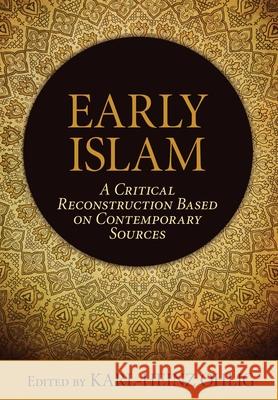
This successor volume to "The Hidden Origins of Islam" (edited by Karl-Heinz Ohlig and Gerd-R. Puin) continues the pioneering research begun in the first volume into the earliest development of Islam. Using coins, commemorative building inscriptions, and a rigorous linguistic analysis of the Koran along with Persian and Christian literature from the seventh and eighth centuries--when Islam was in its formative stages--five expert contributors attempt a reconstruction of this critical time period.
Despite the scholarly nature of their work, the implications of their discoveries are startling:
- Islam originally emerged as a sect of Christianity.
- Its central theological tenets were influenced by a pre-Nicean, Syrian Christianity.
- Aramaic, the common language throughout the Near East for many centuries and the language of Syrian Christianity, significantly influenced the Arabic script and vocabulary used in the Koran.
- Finally, it was not until the end of the eighth and ninth centuries that Islam formed as a separate religion, and the Koran underwent a period of historical development of at least 200 years.
Controversial and highly intriguing, this critical historical analysis reveals the beginning of Islam in a completely new light.




Czytaj nas na:
KrainaKsiazek.PL - Księgarnia Internetowa


