• Wyszukiwanie zaawansowane
  • Kategorie
  • Kategorie BISAC
  • Książki na zamówienie
  • Promocje
  • Granty
  • Książka na prezent
  • Opinie
  • Pomoc
  • Załóż konto
  • Zaloguj się

Early Exploration of the Moon: Ranger to Apollo, Luna to Lunniy Korabl » książka


zaloguj się | załóż konto
Logo Krainaksiazek.pl

koszyk

konto

szukaj
topmenu
Księgarnia internetowa
Szukaj
Książki na zamówienie
Promocje
Granty
Książka na prezent
Moje konto
Pomoc
 
 
Wyszukiwanie zaawansowane
Pusty koszyk
Bezpłatna dostawa dla zamówień powyżej 20 złBezpłatna dostawa dla zamówień powyżej 20 zł

Kategorie główne

• Nauka
 [2946600]
• Literatura piękna
 [1856966]

  więcej...
• Turystyka
 [72221]
• Informatyka
 [151456]
• Komiksy
 [35826]
• Encyklopedie
 [23190]
• Dziecięca
 [619653]
• Hobby
 [140543]
• AudioBooki
 [1577]
• Literatura faktu
 [228355]
• Muzyka CD
 [410]
• Słowniki
 [2874]
• Inne
 [445822]
• Kalendarze
 [1744]
• Podręczniki
 [167141]
• Poradniki
 [482898]
• Religia
 [510455]
• Czasopisma
 [526]
• Sport
 [61590]
• Sztuka
 [243598]
• CD, DVD, Video
 [3423]
• Technologie
 [219201]
• Zdrowie
 [101638]
• Książkowe Klimaty
 [124]
• Zabawki
 [2473]
• Puzzle, gry
 [3898]
• Literatura w języku ukraińskim
 [254]
• Art. papiernicze i szkolne
 [8170]
Kategorie szczegółowe BISAC

Early Exploration of the Moon: Ranger to Apollo, Luna to Lunniy Korabl

ISBN-13: 9783030020705 / Angielski / Miękka / 2019 / 391 str.
Thomas Lund
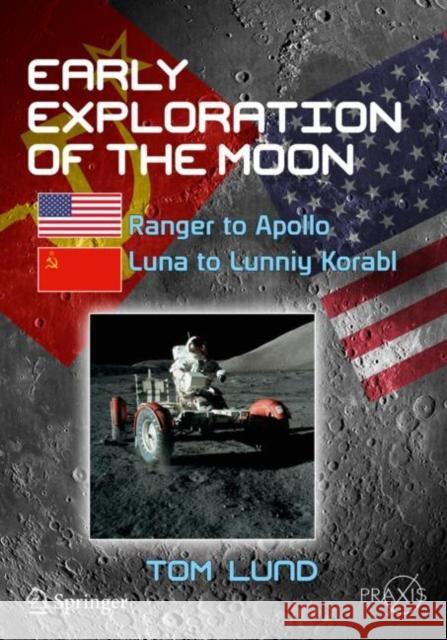
Early Exploration of the Moon: Ranger to Apollo, Luna to Lunniy Korabl Lund, Tom 9783030020705 Springer - książkaWidoczna okładka, to zdjęcie poglądowe, a rzeczywista szata graficzna może różnić się od prezentowanej.

Early Exploration of the Moon: Ranger to Apollo, Luna to Lunniy Korabl

ISBN-13: 9783030020705 / Angielski / Miękka / 2019 / 391 str.

Thomas Lund
cena 153,30 zł
(netto: 146,00 VAT:  5%)

Najniższa cena z 30 dni: 146,48 zł
Termin realizacji zamówienia:
ok. 22 dni roboczych
Bez gwarancji dostawy przed świętami

Darmowa dostawa!

The bold dream of lunar exploration was a national priority for both the US and the USSR during the Cold War era. From the earliest Russian Lunik probes to the United States' successful manned flights to the surface, every attempt to visit the Moon held significant technological and political weight. This book is a lucid and accessible account of humankind's attempts to reach the Moon, from the perspective of an engineer who worked on the Apollo program. It describes in some technical detail the various spacecraft that were designed and launched on the first lunar explorations. Focusing primarily on the US program, it includes several chapters on Russian manned and unmanned lunar missions of the time. The moon-bound spacecraft of the 1950's through to the mid-1970s were remarkable for their performance, efficiency, and ruggedness, reflecting the best engineering art of the day. The book examines how every last bit of performance was wrung out of the existing technology, with the scale and stakes of each mission escalating as every attempt brought the two competing nations-and all of humanity-closer to the Moon.


Kategorie:
Technologie
Kategorie BISAC:
Technology & Engineering > Aeronautics & Astronautics
Science > Astrofizyka
Science > Space Science - General
Wydawca:
Springer
Seria wydawnicza:
Space Exploration
Język:
Angielski
ISBN-13:
9783030020705
Rok wydania:
2019
Wydanie:
2018
Ilość stron:
391
Waga:
0.77 kg
Wymiary:
24.13 x 22.86 x 2.03
Oprawa:
Miękka
Wolumenów:
01
Dodatkowe informacje:
Bibliografia

"For anyone interested in learning more about the technology behind Apollo and its predecessors, I would recommend this book as an interesting and useful reference." (Peter Bond, The Observatory, Vol. 139 (1273), December, 2019)

Dedication.- Introduction.- Chapter 1:The Nature of the Moon.-  Chapter 2: The Ranger Lunar Photography Mission.- Chapter 3: The Lunar Orbiter Mission.- Chapter 4: The Surveyor Lunar Landing Mission.- Chapter 5: The Apollo Manned Exploration of the Moon.- Chapter 6: The Apollo Command Module.- Chapter 7: The Apollo Service Module.- Chapter 8: The Apollo Lunar Module.- Chapter 9: Apollo Crew Personal Equipment.- Chapter 10: Lunar Roving Vehicle and Exploration of the Moon.- Chapter 11: Russian Launch Vehicles, Lunar Impactors and Flybys.- Chapter 12: Russian Soft Landers, Orbiters,
and Rovers.- Chapter 13: Russian Manned Circumlunar Spacecraft.- Chapter 14: Russian Manned Lunar Landing Endeavours.- Bibliography.- Index.

Thomas Lund worked 50 years as an aerospace engineer. After graduating from college, he began working on the Terrier surface-to-air missile from initial design to flight test. He then spent three years as Electronics Officer in the U.S. Navy evaluating naval air-to-air missile systems against electronic countermeasures. He went on to analyze the Doppler navigation systems and then functioned as technical lead for development of the landing radar for the Surveyor spacecraft. He was instrumental in winning the contract for the landing radar for the Apollo Lunar Module and functioned as technical lead for development of that radar. He worked as Technical Director of the Advanced Systems group for a major aerospace company and led the development of three new product lines in areas of fiber optics, radar altimeters, and missile detection radars. Latterly, he was a consultant for predesign and analysis of the Rendezvous Radar for the Space Shuttle.

Luna 2, launched by the USSR in 1959, was the first spacecraft from Earth to land on the moon. That first voyage was followed by increasingly capable lunar exploration spacecraft from Russia and the United States. A total of 36 successful lunar exploration missions were conducted from 1959 to the last Apollo manned exploration in 1972 and the final travels of the Lunokhod lunar rover in 1973. Of all the missions, that of Apollo 17 was the pinnacle of manned space exploration. Apollo 17 astronauts traveled 21 miles on the lunar surface in a dune buggy-type vehicle, stopping frequently to explore and gather samples.

The spacecraft that enabled lunar exploration were ingenious, and reflected the best efforts of talented people working with the technology of the day. This book showcases the engineering involved in those incredible machines. The spacecraft covered, and their missions, are listed below.

From the United States:

• Ranger – Photography en route to lunar impact

• Lunar Orbiter – Photography of front and back side of moon

• Surveyor – Soft landing, photography, and soil analysis

• Apollo – Manned exploration. Lunar Rover expanded range 

From the USSR:

• Luna 2 – Photography en route to lunar impact

• Luna 3 – Photography of back side of moon on flyby

• Luna 9 and 13 – Soft landing, photography, and soil analysis

• Luna 10, 11, 12, 14 – Photography from lunar orbit

• Luna 16, 20, 24 – Soft landing, return of soil sample to Earth

• Lunokhod-1, -2 – Lunar roving vehicle driven from Earth

• L1 – Planned manned lunar flyby but only flew unmanned

• L3 – Planned manned lunar landing but never flew to moon 

To tell the story of these spacecraft, Tom Lund draws on over 40 years’ work on aircraft and spacecraft systems. He was technical lead for the landing radars for the Surveyor and Apollo spacecraft, and his practical experience is augmented by master’s degrees in electrical engineering, physics, and business administration.


Udostępnij

Facebook - konto krainaksiazek.pl


Opinie o Krainaksiazek.pl na Opineo.pl

Partner Mybenefit

Krainaksiazek.pl w programie rzetelna firma Krainaksiaze.pl - płatności przez paypal

Czytaj nas na:

Facebook - krainaksiazek.pl
  • książki na zamówienie
  • granty
  • książka na prezent
  • kontakt
  • pomoc
  • opinie
  • regulamin
  • polityka prywatności

Zobacz:

  • Księgarnia czeska

  • Wydawnictwo Książkowe Klimaty

1997-2025 DolnySlask.com Agencja Internetowa

© 1997-2022 krainaksiazek.pl
     
KONTAKT | REGULAMIN | POLITYKA PRYWATNOŚCI | USTAWIENIA PRYWATNOŚCI
Zobacz: Księgarnia Czeska | Wydawnictwo Książkowe Klimaty | Mapa strony | Lista autorów
KrainaKsiazek.PL - Księgarnia Internetowa

Polityka prywatnosci - link
Krainaksiazek.pl - płatnośc Przelewy24
Przechowalnia Przechowalnia





