• Wyszukiwanie zaawansowane
  • Kategorie
  • Kategorie BISAC
  • Książki na zamówienie
  • Promocje
  • Granty
  • Książka na prezent
  • Opinie
  • Pomoc
  • Załóż konto
  • Zaloguj się

E-Learning Practice in Higher Education: A Mixed-Method Comparative Analysis » książka


zaloguj się | załóż konto
Logo Krainaksiazek.pl

koszyk

konto

szukaj
topmenu
Księgarnia internetowa
Szukaj
Książki na zamówienie
Promocje
Granty
Książka na prezent
Moje konto
Pomoc
 
 
Wyszukiwanie zaawansowane
Pusty koszyk
Bezpłatna dostawa dla zamówień powyżej 20 złBezpłatna dostawa dla zamówień powyżej 20 zł

Kategorie główne

• Nauka
 [2946350]
• Literatura piękna
 [1816154]

  więcej...
• Turystyka
 [70666]
• Informatyka
 [151172]
• Komiksy
 [35576]
• Encyklopedie
 [23172]
• Dziecięca
 [611458]
• Hobby
 [135995]
• AudioBooki
 [1726]
• Literatura faktu
 [225763]
• Muzyka CD
 [378]
• Słowniki
 [2917]
• Inne
 [444280]
• Kalendarze
 [1179]
• Podręczniki
 [166508]
• Poradniki
 [469467]
• Religia
 [507199]
• Czasopisma
 [496]
• Sport
 [61352]
• Sztuka
 [242330]
• CD, DVD, Video
 [3348]
• Technologie
 [219391]
• Zdrowie
 [98638]
• Książkowe Klimaty
 [124]
• Zabawki
 [2382]
• Puzzle, gry
 [3525]
• Literatura w języku ukraińskim
 [259]
• Art. papiernicze i szkolne
 [7107]
Kategorie szczegółowe BISAC

E-Learning Practice in Higher Education: A Mixed-Method Comparative Analysis

ISBN-13: 9783319659381 / Angielski / Twarda / 2017 / 228 str.
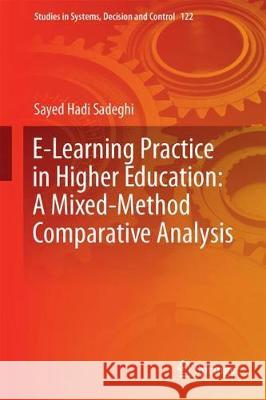
Sayed Hadi Sadeghi
E-Learning Practice in Higher Education: A Mixed-Method Comparative Analysis Sayed Hadi Sadeghi 9783319659381 Springer - książkaWidoczna okładka, to zdjęcie poglądowe, a rzeczywista szata graficzna może różnić się od prezentowanej.

E-Learning Practice in Higher Education: A Mixed-Method Comparative Analysis

ISBN-13: 9783319659381 / Angielski / Twarda / 2017 / 228 str.

Sayed Hadi Sadeghi
cena 402,53
(netto: 383,36 VAT:  5%)

Najniższa cena z 30 dni: 385,52
Termin realizacji zamówienia:
ok. 16-18 dni roboczych.

Darmowa dostawa!

This book investigates e-learning practices at American and Australian institutes of higher learning, their status quo, best-practice examples, and remaining issues. Utilizing a mixed-methods approach, it combines three studies - two using quantitative methods and a third using qualitative methods - in order to gauge the status quo of e-learning. The first study addresses the dominant cultural dimensions, revealing that the main explanation for the results may be the fact that most suppliers of the Australian university's e-learning system had an East Asian cultural background and predominantly traditional perspectives on learning. In Study 2, the findings indicate that the levels of e-learning practice at the Australian and US universities surveyed were above average, although the American university was ranked higher in terms of e-learning practices. In turn, Study 3 investigates current problems in e-learning practice on the basis of four aspects - pedagogy, culture, technology and e-practice - and determines that cultural sensitivity and effective cultural practices show room for improvement, while key technological challenges and issues like faculty polices, quality, LMS, and online support need to be overcome. In general, the outcomes suggest that it is essential for the Australian university surveyed to further develop and update its e-learning system, especially in terms of e-practice, using the same technologies that pioneering countries like America are employing. Indeed, the combination of adopting patterns successfully used in other countries, and adjusting them to the Australian culture, represents the best strategy for educational decision and policy makers. This book provides the basis for designing a culture-sensitive framework for higher education e-learning practice in American and Australian contexts. Moreover, students' and teachers' experiences with e-learning in a comparative higher education context can help higher education instructors and university managers to understand how e-learning relates to, and can be integrated with, other experiences of learning and teaching.


Kategorie:
Podręczniki
Kategorie BISAC:
Education > Schools - Levels - Higher
Computers > Artificial Intelligence - General
Technology & Engineering > Engineering (General)
Wydawca:
Springer
Seria wydawnicza:
Studies in Systems, Decision and Control
Język:
Angielski
ISBN-13:
9783319659381
Rok wydania:
2017
Wydanie:
2018
Numer serii:
000477984
Ilość stron:
228
Waga:
0.52 kg
Wymiary:
23.39 x 15.6 x 1.6
Oprawa:
Twarda
Wolumenów:
01
Dodatkowe informacje:
Wydanie ilustrowane

Introduction and Overview.- Review of Related Literature.- The Dominant Cultural Dimensions in Comparative Context.- The Current Status of e-Practice.- The Current Issues Concerning e-Practices.- Conclusions.

Sayed Hadi Sadeghi obtained his B.Sc. and M.Sc. degrees in educational administration and planning from the University of Tehran in 2004 and 2007, respectively. In February 2016 he submitted his PhD to the Faculty of Education and Social work at the University of Sydney, Australia in the field of e-learning practice in higher education. He developed numerous project management skills over the course of his PhD training. On the technical side, he became an expert in mixed-method research design, applying SPSS and NVivo for analyzing the data. While completing his PhD, he worked in an international educational assembly as Lecturer and Senior Researcher. His responsibilities in this role were identification and evaluation of major cultural events based on pedagogical context in Sydney communities. Recently, he was appointed to the Editorial Board of the International Journal of Academic Studies. His responsibilities in this role are assessing the quality and validity of authors’ manuscripts on computer-supported learning and e-learning practices. Since 2012, as member of the Oceania Comparative and International Education Society, he attempted to expand the understanding of cultural-pedagogical paradigms in different cultures to improve their quality of e-practices, which fits well with the author’s recent comparative study of e-learning between The University of Minnesota and The University of Sydney on practices and policies. For this, he received the “A” grade and reference support letter from the Pro Vice-chancellor Portfolio and Adjunct Professor at the School of Education in the University of New South Wales (UNSW) who was the author’s examiner. He is now working as the Project Director of the University of Tehran’s human resource development project, which is a new cognitive behavioral project to advance future management and organizational learning practice in the Inter-Kingdom Archery Competition (IKAC).

This book investigates e-learning practices at American and Australian institutes of higher learning, their status quo, best-practice examples, and remaining issues. Utilizing a mixed-methods approach, it combines three studies – two using quantitative methods and a third using qualitative methods – in order to gauge the status quo of e-learning.  

The first study addresses the dominant cultural dimensions, revealing that the main explanation for the results may be the fact that most suppliers of the Australian university’s e-learning system had an East Asian cultural background and predominantly traditional perspectives on learning. In Study 2, the findings indicate that the levels of e-learning practice at the Australian and US universities surveyed were above average, although the American university was ranked higher in terms of e-learning practices. 

In turn, Study 3 investigates current problems in e-learning practice on the basis of four aspects – pedagogy, culture, technology and e-practice – and determines that cultural sensitivity and effective cultural practices show room for improvement, while key technological challenges and issues like faculty polices, quality, LMS, and online support need to be overcome.

In general, the outcomes suggest that it is essential for the Australian university surveyed to further develop and update its e-learning system, especially in terms of e-practice, using the same technologies that pioneering countries like America are employing. Indeed, the combination of adopting patterns successfully used in other countries, and adjusting them to the Australian culture, represents the best strategy for educational decision and policy makers. 

This book provides the basis for designing a culture-sensitive framework for higher education e-learning practice in American and Australian contexts. Moreover, students’ and teachers’ experiences with e-learning in a comparative higher education context can help higher education instructors and university managers to understand how e-learning relates to, and can be integrated with, other experiences of learning and teaching.




Udostępnij

Facebook - konto krainaksiazek.pl


Opinie o Krainaksiazek.pl na Opineo.pl

Partner Mybenefit

Krainaksiazek.pl w programie rzetelna firma Krainaksiaze.pl - płatności przez paypal

Czytaj nas na:

Facebook - krainaksiazek.pl
  • książki na zamówienie
  • granty
  • książka na prezent
  • kontakt
  • pomoc
  • opinie
  • regulamin
  • polityka prywatności

Zobacz:

  • Księgarnia czeska

  • Wydawnictwo Książkowe Klimaty

1997-2026 DolnySlask.com Agencja Internetowa

© 1997-2022 krainaksiazek.pl
     
KONTAKT | REGULAMIN | POLITYKA PRYWATNOŚCI | USTAWIENIA PRYWATNOŚCI
Zobacz: Księgarnia Czeska | Wydawnictwo Książkowe Klimaty | Mapa strony | Lista autorów
KrainaKsiazek.PL - Księgarnia Internetowa

Polityka prywatnosci - link
Krainaksiazek.pl - płatnośc Przelewy24
Przechowalnia Przechowalnia




