• Wyszukiwanie zaawansowane
  • Kategorie
  • Kategorie BISAC
  • Książki na zamówienie
  • Promocje
  • Granty
  • Książka na prezent
  • Opinie
  • Pomoc
  • Załóż konto
  • Zaloguj się

Duty and Sentiment: How Culture Shapes Thinking and Behavior in Japan and the West » książka


zaloguj się | załóż konto
Logo Krainaksiazek.pl

koszyk

konto

szukaj
topmenu
Księgarnia internetowa
Szukaj
Książki na zamówienie
Promocje
Granty
Książka na prezent
Moje konto
Pomoc
 
 
Wyszukiwanie zaawansowane
Pusty koszyk
Bezpłatna dostawa dla zamówień powyżej 20 złBezpłatna dostawa dla zamówień powyżej 20 zł

Kategorie główne

• Nauka
 [2946350]
• Literatura piękna
 [1816154]

  więcej...
• Turystyka
 [70666]
• Informatyka
 [151172]
• Komiksy
 [35576]
• Encyklopedie
 [23172]
• Dziecięca
 [611458]
• Hobby
 [135995]
• AudioBooki
 [1726]
• Literatura faktu
 [225763]
• Muzyka CD
 [378]
• Słowniki
 [2917]
• Inne
 [444280]
• Kalendarze
 [1179]
• Podręczniki
 [166508]
• Poradniki
 [469467]
• Religia
 [507199]
• Czasopisma
 [496]
• Sport
 [61352]
• Sztuka
 [242330]
• CD, DVD, Video
 [3348]
• Technologie
 [219391]
• Zdrowie
 [98638]
• Książkowe Klimaty
 [124]
• Zabawki
 [2382]
• Puzzle, gry
 [3525]
• Literatura w języku ukraińskim
 [259]
• Art. papiernicze i szkolne
 [7107]
Kategorie szczegółowe BISAC

Duty and Sentiment: How Culture Shapes Thinking and Behavior in Japan and the West

ISBN-13: 9789811697661 / Angielski / Miękka / 2022 / 152 str.
Eiji Yamamura
Duty and Sentiment: How Culture Shapes Thinking and Behavior in Japan and the West Yamamura, Eiji 9789811697661 Springer Verlag, Singapore - książkaWidoczna okładka, to zdjęcie poglądowe, a rzeczywista szata graficzna może różnić się od prezentowanej.

Duty and Sentiment: How Culture Shapes Thinking and Behavior in Japan and the West

ISBN-13: 9789811697661 / Angielski / Miękka / 2022 / 152 str.

Eiji Yamamura
cena 201,24
(netto: 191,66 VAT:  5%)

Najniższa cena z 30 dni: 192,74
Termin realizacji zamówienia:
ok. 16-18 dni roboczych.

Darmowa dostawa!

This book is an exploration that shows us how sentiment and duty form the core of Japanese culture. It looks at how the combination of common sense, culture, and social norms influence people’s ways of thinking and behavior. Although the focus is Japan in looking at these interrelationships, the author draws on his experience and knowledge of other countries from his days before graduate school, when he traveled the world as a backpacker. Now, from the world of academia, he uses his knowledge of economic analysis to consider the similarities and differences in human behavior among countries and cultures. The wide-ranging scope of the book takes in marital life, education, sports, business, and culture in modern Japanese society. Why, for instance, does linguistic heterogeneity generally have negative effects on FIFA rankings of national soccer teams, and what does this have to do with the difficulty of technology transfer among businesses in multilingual countries? Why was the demand for the film Bohemian Rhapsody, about the British rock group Queen, so high in Japan? How do Kazuo Ishiguro’s novels resemble scenarios related to Japan’s long-term public finance prospects? How does the depiction of contemporary life compared with “the old days” in the films of Yasujiro Ozu provide a cautionary tale for aging societies today? How are older people with grandchildren more likely to accept tax increases to support future generations? And how is the Japanese government actively drawing on behavioral economics to appeal to public sentiment to contain the spread of COVID-19. These and a multitude of other questions are tackled by the backpacker who entered academia to become an economist and who now goes on a journey to find the answers. Readers can take the trip with him under his expert guidance, as he artfully combines sentiment, duty, and economic analysis.  

Kategorie:
Nauka, Socjologia i społeczeństwo
Kategorie BISAC:
Social Science > Ethnic Studies - Asian Studies
Business & Economics > Economics - Theory
Sports & Recreation > General
Wydawca:
Springer Verlag, Singapore
Język:
Angielski
ISBN-13:
9789811697661
Rok wydania:
2022
Ilość stron:
152
Waga:
0.22 kg
Wymiary:
23.39 x 15.6 x 0.84
Oprawa:
Miękka
Wolumenów:
01
Dodatkowe informacje:
Wydanie ilustrowane

​Preface

Contents

About the Author 

Chapter 1.  Why are Koshien high school baseball games all televised?

Why do people watch live professional baseball games?

Why did “Tiger Mask” send gifts?

What makes strong sumo wrestlers stand apart?

Why were Mozart, Beethoven, and Liszt able to produce excellent music?

Can music change people’s behavior?


Chapter 2. Do mathematical theories have national characteristics?

How does the assimilation of immigrants affect the economy?

 Will bon odori dance disappear amid globalization?: Ethnic Japanese in Sao Paulo and Jews in New York

The global contribution of a prizefighter in the Showa era

Why do diplomats in New York park illegally?

What good would it do if Japanese anime was diffused across the world?

What was it in “Oshin” that won the hearts and minds of people overseas?

Do children’s values reflect their parents’ values?

What changes if Fukuzawa Yukichi is shown on a 10,000-yen bill?


Chapter 3. Why is it a secret to successful business management that the business owner treats job seekers to gourmet food?

How is the French mentality relevant to the arrest of Carlos Ghosn?

What does Adam Smith have in common with an old lollipop man?

What comes out from mixing the rich and the poor?

What can we learn from the life of Kazuo Ishiguro about government finance?

Municipalities that fared well in the tax-deductible donation scheme by not offering thank-you gifts

How can Takarasiennes always maintain their modesty, fairness, and graceful beauty?—the reason for the unwaning popularity of the Takarazuka Revue Company

How does ninjo (human sentiments) enrich the market economy? 


Chapter 4. What will become of pupils in a class with a female teacher?

Women: are they born as women or do they become women?

Women and men, what are the differences?

Are women born non-competitive or do they become non-competitive?

Are women born to dislike math or do they grow to dislike it? 

Equal employment opportunities for men and women, how does it affect the difference in height between a husband and a wife? 


Chapter 5. The reason why working husband and housekeeping wife should quarrel

Why do people seek marriage?

What comes to the minds of smokers at the sight of their children? 

Having a working mother, does it determine a man’s choice of a woman he marries?

Does an arrival of a daughter change her father’s world view? 

What changes do grandchildren engender in their grandparents? 


Chapter 6. What came out of the spread of COVID-19? 

Effects of school closure on parents’ working styles

“The life” of Haruma Miura: “the human take on economics” personified

The postponement of the 2020 Olympic Games and ninjo the humanity

Life and money, which is more important?

The coronavirus pandemic and healthcare workers’ mental states 


Chapter 7. Concluding Chapter   How can community be rational? 

Epilogue 

References


Eiji Yamamura is professor of economics at Seinan-Gakuin University, in Fukuoka, Japan. He earned his B.A. and M.A. from Waseda University and a Ph.D. from Tokyo Metropolitan University in 1995, 1999, and 2004, respectively. He has been the executive director of the Association of Behavioral Economics and Finance since 2021. His research topics are behavioral economics, sports economics, income distribution, and household behavior. He has published over 100 papers in peer-reviewed journals including Regional Studies, Papers in Regional Science, Review of Economics and Statistics, Journal of Economic Behavior and Organization, Journal of Population Economics, Journal of Economic Geography, European Journal of Political Economy, Review of World Economics, Review of International Economics, Economics of Education Review, Public Choice, Economics of Governance, Southern Economic Journal, Review of Economics of the Household, Kyklos, Journal of Cultural Economics, Journal of Sports Economics, Social Science and Medicine, Sustainability, and the Journal of the Japanese and International Economies.

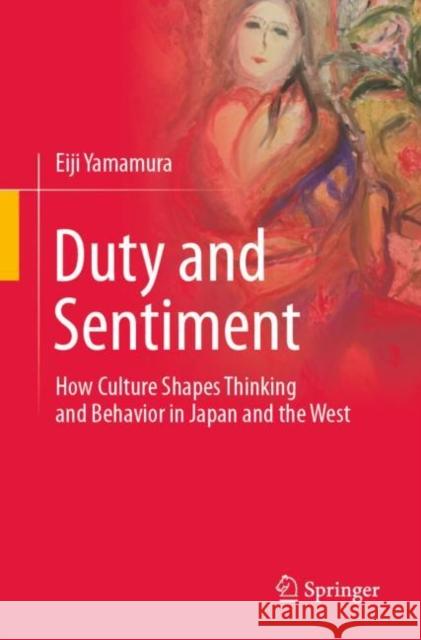
He is also artist, and his tableau Madoi Bi (‘A Day of Reflection’) is on the cover of this book.

This book is an exploration that shows us how sentiment and duty form the core of Japanese culture. It looks at how the combination of common sense, culture, and social norms influence people’s ways of thinking and behavior. Although the focus is Japan in looking at these interrelationships, the author draws on his experience and knowledge of other countries from his days before graduate school, when he traveled the world as a backpacker. Now, from the world of academia, he uses his knowledge of economic analysis to consider the similarities and differences in human behavior among countries and cultures. 

The wide-ranging scope of the book takes in marital life, education, sports, business, and culture in modern Japanese society. Why, for instance, does linguistic heterogeneity generally have negative effects on FIFA rankings of national soccer teams, and what does this have to do with the difficulty of technology transfer among businesses in multilingual countries? Why was the demand for the film Bohemian Rhapsody, about the British rock group Queen, so high in Japan? How do Kazuo Ishiguro’s novels resemble scenarios related to Japan’s long-term public finance prospects? How does the depiction of contemporary life compared with “the old days” in the films of Yasujiro Ozu provide a cautionary tale for aging societies today? How are older people with grandchildren more likely to accept tax increases to support future generations? And how is the Japanese government actively drawing on behavioral economics to appeal to public sentiment to contain the spread of COVID-19. 

These and a multitude of other questions are tackled by the backpacker who entered academia to become an economist and who now goes on a journey to find the answers. Readers can take the trip with him under his expert guidance, as he artfully combines sentiment, duty, and economic analysis.  



Udostępnij

Facebook - konto krainaksiazek.pl


Opinie o Krainaksiazek.pl na Opineo.pl

Partner Mybenefit

Krainaksiazek.pl w programie rzetelna firma Krainaksiaze.pl - płatności przez paypal

Czytaj nas na:

Facebook - krainaksiazek.pl
  • książki na zamówienie
  • granty
  • książka na prezent
  • kontakt
  • pomoc
  • opinie
  • regulamin
  • polityka prywatności

Zobacz:

  • Księgarnia czeska

  • Wydawnictwo Książkowe Klimaty

1997-2026 DolnySlask.com Agencja Internetowa

© 1997-2022 krainaksiazek.pl
     
KONTAKT | REGULAMIN | POLITYKA PRYWATNOŚCI | USTAWIENIA PRYWATNOŚCI
Zobacz: Księgarnia Czeska | Wydawnictwo Książkowe Klimaty | Mapa strony | Lista autorów
KrainaKsiazek.PL - Księgarnia Internetowa

Polityka prywatnosci - link
Krainaksiazek.pl - płatnośc Przelewy24
Przechowalnia Przechowalnia






