• Wyszukiwanie zaawansowane
  • Kategorie
  • Kategorie BISAC
  • Książki na zamówienie
  • Promocje
  • Granty
  • Książka na prezent
  • Opinie
  • Pomoc
  • Załóż konto
  • Zaloguj się

Doping in Conjugated Polymers » książka


zaloguj się | załóż konto
Logo Krainaksiazek.pl

koszyk

konto

szukaj
topmenu
Księgarnia internetowa
Szukaj
Książki na zamówienie
Promocje
Granty
Książka na prezent
Moje konto
Pomoc
 
 
Wyszukiwanie zaawansowane
Pusty koszyk
Bezpłatna dostawa dla zamówień powyżej 20 złBezpłatna dostawa dla zamówień powyżej 20 zł

Kategorie główne

• Nauka
 [2946600]
• Literatura piękna
 [1856966]

  więcej...
• Turystyka
 [72221]
• Informatyka
 [151456]
• Komiksy
 [35826]
• Encyklopedie
 [23190]
• Dziecięca
 [619653]
• Hobby
 [140543]
• AudioBooki
 [1577]
• Literatura faktu
 [228355]
• Muzyka CD
 [410]
• Słowniki
 [2874]
• Inne
 [445822]
• Kalendarze
 [1744]
• Podręczniki
 [167141]
• Poradniki
 [482898]
• Religia
 [510455]
• Czasopisma
 [526]
• Sport
 [61590]
• Sztuka
 [243598]
• CD, DVD, Video
 [3423]
• Technologie
 [219201]
• Zdrowie
 [101638]
• Książkowe Klimaty
 [124]
• Zabawki
 [2473]
• Puzzle, gry
 [3898]
• Literatura w języku ukraińskim
 [254]
• Art. papiernicze i szkolne
 [8170]
Kategorie szczegółowe BISAC

Doping in Conjugated Polymers

ISBN-13: 9781118573808 / Angielski / Twarda / 2013 / 176 str.
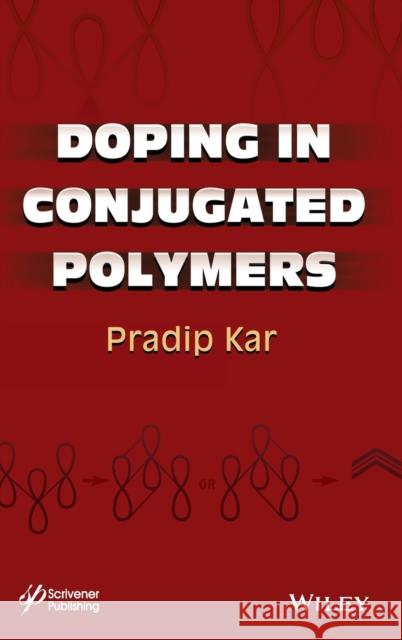
Pradip Kar
Doping in Conjugated Polymers Kar, Pradip 9781118573808 John Wiley & Sons - książkaWidoczna okładka, to zdjęcie poglądowe, a rzeczywista szata graficzna może różnić się od prezentowanej.

Doping in Conjugated Polymers

ISBN-13: 9781118573808 / Angielski / Twarda / 2013 / 176 str.

Pradip Kar
cena 595,35 zł
(netto: 567,00 VAT:  5%)

Najniższa cena z 30 dni: 589,26 zł
Termin realizacji zamówienia:
ok. 30 dni roboczych
Bez gwarancji dostawy przed świętami

Darmowa dostawa!

An A-to-Z of doping including its definition, its importance, methods of measurement, advantages and disadvantages, properties and characteristics--and role in conjugated polymers

The versatility of polymer materials is expanding because of the introduction of electro-active behavior into the characteristics of some of them. The most exciting development in this area is related to the discovery of intrinsically conductive polymers or conjugated polymers, which include such examples as polyacetylene, polyaniline, polypyrrole, and polythiophene as well as their derivatives. "Synmet" or "synthetic metal" conjugated polymers, with their metallic characteristics, including conductivity, are of special interest to researchers. An area of limitless potential and application, conjugated polymers have sparked enormous interest, beginning in 2000 when the Nobel Prize for the discovery and development of electrically conducting conjugated polymers was awarded to three scientists: Alan J. Heeger, Alan G. MacDiarmid, and Hideki Shirakawa.

Conjugated polymers have a combination of properties--both metallic (conductivity) and polymeric; doping gives the conjugated polymer's semiconducting a wide range of conductivity, from insulating to low conducting. The doping process is a tested effective method for producing conducting polymers as semiconducting material, providing a substitute for inorganic semiconductors.

"Doping in Conjugated Polymers" is the first book dedicated to the subject and offers a comprehensive A-to-Z overview. It details doping interaction, dopant types, doping techniques, and the influence of the dopant on applications. It explains how the performance of doped conjugated polymers is greatly influenced by the nature of the dopants and their level of distribution within the polymer, and shows how the electrochemical, mechanical, and optical properties of the doped conjugated polymers can be tailored by controlling the size and mobility of the dopants counter ions.

The book also examines doping at the nanoscale, in particular, with carbon nanotubes.

ReadershipThe book will interest a broad range of researchers including chemists, electrochemists, biochemists, experimental and theoretical physicists, electronic and electrical engineers, polymer and materials scientists. It can also be used in both graduate and upper-level undergraduate courses on conjugated polymers and polymer technology.


Kategorie:
Technologie
Kategorie BISAC:
Technology & Engineering > Chemical & Biochemical
Wydawca:
John Wiley & Sons
Seria wydawnicza:
Polymer Science and Plastics Engineering
Język:
Angielski
ISBN-13:
9781118573808
Rok wydania:
2013
Ilość stron:
176
Waga:
0.41 kg
Wymiary:
23.62 x 15.75 x 1.78
Oprawa:
Twarda
Wolumenów:
01
Dodatkowe informacje:
Bibliografia

Acknowledgement xi

Preface xiii

1 Introduction to Doping in Conjugated Polymer 1

1.1 Introduction 1

1.2 Molecular Orbital Structure of Conjugated Polymer 4

1.3 Possibility of Electronic Conduction in Conjugated Polymer 7

1.4 Necessity of Doping in Conjugated Polymer 9

1.5 Concept of Doping in Conjugated Polymer 12

1.6 Doping as Probable Solution 17

2 Classi cation of Dopants for the Conjugated Polymer 19

2.1 Introduction 19

2.2 Classi cation of Dopant According to Electron Transfer 20

2.3 Classi cation of Dopant According to Chemical Nature 31

2.4 Classi cation of Dopant According to Doping Mechanism 40

3 Doping Techniques for the Conjugated Polymer 47

3.1 Introduction 47

3.2 Electrochemical Doping 48

3.3 Chemical Doping 51

3.4 In–situ doping 56

3.5 Radiation–Induced Doping or Photo Doping 59

3.6 Charge Injection Doping 61

4 Role of Dopant on the Conduction of Conjugated Polymer 63

4.1 Introduction

4.2 Charge Defects within Doped Conjugated Polymer 66

4.3 Charge Transport within the Doped Conjugated Polymer 4.3

4.4 Migration of Dopant Counter Ions 74

5 In uence of Properties of Conjugated Polymer on Doping 81

5.1 Introduction 81

5.2 Conducting Property 82

5.3 Spectroscopic Property 84

5.4 Electrochemical Property 89

5.5 Thermal Property 92

5.6 Structural Property 94

6 Some Special Classes of Dopants for Conjugated Polymer 97

6.1 Introduction 97

6.2 Iodine and Other Halogens 98

6.3 Halide Doping 103

6.4 Protonic Acid Doping 106

6.5 Covalent Doping 110

7 In uence of Dopant on the Applications of Conjugated Polymer 113

7.1 Introduction 113

7.2 Sensors 114

7.3 Actuators 118

7.4 Field Effect Transistor 120

7.5 Rechargeable Batteries 122

7.6 Electrochromic Devices 123

7.7 Optoelectronic Devices 126

7.8 Others Applications 127

8 Recent and Future Trends of Doping in Conjugated Polymer 131

8.1 Introduction 131

8.2 Doping of Nanostructured Conjugated Polymer 133

8.3 Doping in Conjugated Polymer Nanocomposite 137

8.4 Future Trends 142

References 145

Index 000

Pradip Kar obtained his PhD in 2009 from the Indian Institute of Technology, Kharagpur. He is currently an Assistant Professor in the Department of Applied Chemistry, Birla Institute of Technology, Ranchi, India, and has published more than 20 research papers in peer–reviewed journals.

An A–to–Z of doping including its definition, its importance, methods of measurement, advantages and disadvantages, properties and characteristics and role in conjugated polymers

The versatility of polymer materials is expanding because of the introduction of electro–active behavior into the characteristics of some of them. The most exciting development in this area is related to the discovery of intrinsically conductive polymers or conjugated polymers, which include such examples as polyacetylene, polyaniline, polypyrrole, and polythiophene as well as their derivatives. "Synmet" or "synthetic metal" conjugated polymers, with their metallic characteristics, including conductivity, are of special interest to researchers. An area of limitless potential and application, conjugated polymers have sparked enormous interest, beginning in 2000 when the Nobel Prize for the discovery and development of electrically conducting conjugated polymers was awarded to three scientists: Alan J. Heeger, Alan G. MacDiarmid, and Hideki Shirakawa.

Conjugated polymers have a combination of properties both metallic (conductivity) and polymeric; doping gives the conjugated polymer′s semiconducting a wide range of conductivity, from insulating to low conducting. The doping process is a tested effective method for producing conducting polymers as semiconducting material, providing a substitute for inorganic semiconductors.

Doping in Conjugated Polymers is the first book dedicated to the subject and offers a comprehensive A–to–Z overview. It details doping interaction, dopant types, doping techniques, and the influence of the dopant on applications. It explains how the performance of doped conjugated polymers is greatly influenced by the nature of the dopants and their level of distribution within the polymer, and shows how the electrochemical, mechanical, and optical properties of the doped conjugated polymers can be tailored by controlling the size and mobility of the dopants counter ions.

The book also examines doping at the nanoscale, in particular, with carbon nanotubes.

Readership
The book will interest a broad range of researchers including chemists, electrochemists, biochemists, experimental and theoretical physicists, electronic and electrical engineers, polymer and materials scientists. It can also be used in both graduate and upper–level undergraduate courses on conjugated polymers and polymer technology.



Udostępnij

Facebook - konto krainaksiazek.pl


Opinie o Krainaksiazek.pl na Opineo.pl

Partner Mybenefit

Krainaksiazek.pl w programie rzetelna firma Krainaksiaze.pl - płatności przez paypal

Czytaj nas na:

Facebook - krainaksiazek.pl
  • książki na zamówienie
  • granty
  • książka na prezent
  • kontakt
  • pomoc
  • opinie
  • regulamin
  • polityka prywatności

Zobacz:

  • Księgarnia czeska

  • Wydawnictwo Książkowe Klimaty

1997-2025 DolnySlask.com Agencja Internetowa

© 1997-2022 krainaksiazek.pl
     
KONTAKT | REGULAMIN | POLITYKA PRYWATNOŚCI | USTAWIENIA PRYWATNOŚCI
Zobacz: Księgarnia Czeska | Wydawnictwo Książkowe Klimaty | Mapa strony | Lista autorów
KrainaKsiazek.PL - Księgarnia Internetowa

Polityka prywatnosci - link
Krainaksiazek.pl - płatnośc Przelewy24
Przechowalnia Przechowalnia




