• Wyszukiwanie zaawansowane
  • Kategorie
  • Kategorie BISAC
  • Książki na zamówienie
  • Promocje
  • Granty
  • Książka na prezent
  • Opinie
  • Pomoc
  • Załóż konto
  • Zaloguj się

Domain-Specific Modeling: Enabling Full Code Generation » książka


zaloguj się | załóż konto
Logo Krainaksiazek.pl

koszyk

konto

szukaj
topmenu
Księgarnia internetowa
Szukaj
Książki na zamówienie
Promocje
Granty
Książka na prezent
Moje konto
Pomoc
 
 
Wyszukiwanie zaawansowane
Pusty koszyk
Bezpłatna dostawa dla zamówień powyżej 20 złBezpłatna dostawa dla zamówień powyżej 20 zł

Kategorie główne

• Nauka
 [2946600]
• Literatura piękna
 [1856966]

  więcej...
• Turystyka
 [72221]
• Informatyka
 [151456]
• Komiksy
 [35826]
• Encyklopedie
 [23190]
• Dziecięca
 [619653]
• Hobby
 [140543]
• AudioBooki
 [1577]
• Literatura faktu
 [228355]
• Muzyka CD
 [410]
• Słowniki
 [2874]
• Inne
 [445822]
• Kalendarze
 [1744]
• Podręczniki
 [167141]
• Poradniki
 [482898]
• Religia
 [510455]
• Czasopisma
 [526]
• Sport
 [61590]
• Sztuka
 [243598]
• CD, DVD, Video
 [3423]
• Technologie
 [219201]
• Zdrowie
 [101638]
• Książkowe Klimaty
 [124]
• Zabawki
 [2473]
• Puzzle, gry
 [3898]
• Literatura w języku ukraińskim
 [254]
• Art. papiernicze i szkolne
 [8170]
Kategorie szczegółowe BISAC

Domain-Specific Modeling: Enabling Full Code Generation

ISBN-13: 9780470036662 / Angielski / Miękka / 2008 / 444 str.
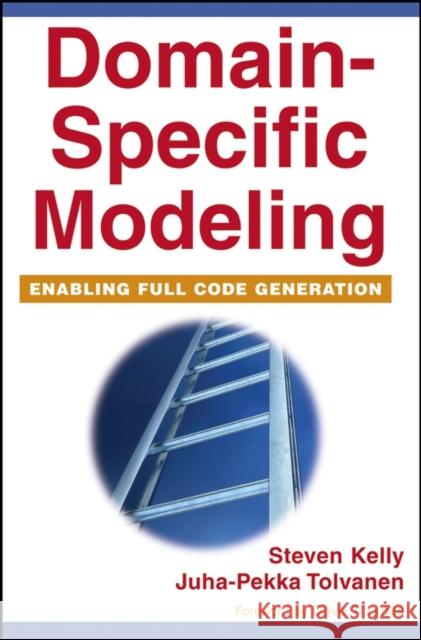
Steven Kelly; Juha-Pekka Tolvanen
Domain-Specific Modeling: Enabling Full Code Generation Kelly, Steven 9780470036662 IEEE Computer Society Press - książkaWidoczna okładka, to zdjęcie poglądowe, a rzeczywista szata graficzna może różnić się od prezentowanej.

Domain-Specific Modeling: Enabling Full Code Generation

ISBN-13: 9780470036662 / Angielski / Miękka / 2008 / 444 str.

Steven Kelly; Juha-Pekka Tolvanen
cena 544,01 zł
(netto: 518,10 VAT:  5%)

Najniższa cena z 30 dni: 538,44 zł
Termin realizacji zamówienia:
ok. 30 dni roboczych
Bez gwarancji dostawy przed świętami

Darmowa dostawa!

" The authors] are pioneers. . . . Few in our industry have their breadth of knowledge and experience."
--From the Foreword by Dave Thomas, Bedarra Labs Domain-Specific Modeling (DSM) is the latest approach to software development, promising to greatly increase the speed and ease of software creation. Early adopters of DSM have been enjoying productivity increases of 500-1000% in production for over a decade. This book introduces DSM and offers examples from various fields to illustrate to experienced developers how DSM can improve software development in their teams. Two authorities in the field explain what DSM is, why it works, and how to successfully create and use a DSM solution to improve productivity and quality. Divided into four parts, the book covers: background and motivation; fundamentals; in-depth examples; and creating DSM solutions. There is an emphasis throughout the book on practical guidelines for implementing DSM, including how to identify the necessary language constructs, how to generate full code from models, and how to provide tool support for a new DSM language. The example cases described in the book are available the book's Website, www.dsmbook.com, along with, an evaluation copy of the MetaEdit+ tool (for Windows, Mac OS X, and Linux), which allows readers to examine and try out the modeling languages and code generators. Domain-Specific Modeling is an essential reference for lead developers, software engineers, architects, methodologists, and technical managers who want to learn how to create a DSM solution and successfully put it into practice.


Kategorie:
Informatyka, Programowanie
Kategorie BISAC:
Computers > Programming - Object Oriented
Wydawca:
IEEE Computer Society Press
Język:
Angielski
ISBN-13:
9780470036662
Rok wydania:
2008
Ilość stron:
444
Waga:
0.64 kg
Wymiary:
23.32 x 15.85 x 2.26
Oprawa:
Miękka
Wolumenów:
01
Dodatkowe informacje:
Bibliografia
Wydanie ilustrowane

"This very clearly written text contains useful detailed explanations inside text boxes and tables, nicely designed, diagrams, and generated software code samples.  This is very practical and highly recommended." ( Computing Reviews, September 9, 2008)

Foreword.

Preface.

PART 1: BACKGROUND AND MOTIVATION.

1. Introduction.

1.1 Seeking the better level of abstraction.

1.2 Code–driven and model–driven development.

1.3 An example: modeling with a general–purpose language and with a domain–specific language.

1.4 What is DSM?

1.5 When to use DSM?

1.6 Summary.

2. Business value.

2.1 Productivity.

2.2 Quality.

2.3 Leverage expertise.

2.4 The economics of DSM.

2.5 Summary.

PART 2: FUNDAMENTALS.

3. DSM defined.

3.1 DSM characteristics.

3.2 Implications of DSM for users.

3.3 Difference to other modeling approaches.

3.4 Tooling for DSM.

3.5 Summary.

4. Architecture of DSM.

4.1 Introduction.

4.2 Language.

4.3 Models.

4.4 Code generator.

4.5 Domain framework and target environment.

4.6 DSM organization and process.

4.7 Summary.

PART 3: DSM EXAMPLES.

5. IP telephony and call processing.

5.1 Introduction and objectives.

5.2 Development process.

5.3 Language for modeling call processing services.

5.4 Modeling IP telephony service.

5.5 Generator for XML.

5.6 Framework support.

5.7 Main results.

5.8 Summary.

6. Insurance products.

6.1 Introduction and objectives.

6.2 Development process.

6.3 Language for modeling insurances.

6.4 Modeling insurance products.

6.5 Generator for Java.

6.6 Framework support.

6.7 Main results.

6.8 Summary.

7. Home Automation.

7.1 Introduction and objectives.

7.2 Development process.

7.3 Home automation modeling language.

7.4 Home automation modeling language in use.

7.5 Generator.

7.6 Main results.

7.7 Summary.

8. Mobile phone applications using Python framework.

8.1 Introduction and objectives.

8.2 Development process.

8.3 Language for application modeling.

8.4 Modeling phone applications.

8.5 Generator for Python.

8.6 Framework support.

8.7 Main results.

8.8 Extending the solution to native S60 C++.

8.9 Summary.

9. Digital Wristwatch.

9.1 Introduction and Objectives.

9.2 Development Process.

9.3 Modeling Language.

9.4 Models.

9.5 Code Generation for Watch Models.

9.6 The Domain Framework.

9.7 Main Results.

9.8 Summary.

PART 4: CREATING DSM SOLUTIONS.

10 DSM language definition.

10.1 Introduction and objectives.

10.2 Identifying and defining modeling concepts.

10.3 Formalizing languages with metamodeling.

10.4 Defining language rules.

10.5 Integrating multiple languages.

10.6 Notation for the language.

10.7 Testing the languages.

10.8 Maintaining the languages.

10.9 Summary.

11. Generator definition.

11.1 "Here′s one I made earlier".

11.2 Types of generator facilities.

11.3 Generator output patterns.

11.4 Generator structure.

11.5 Process.

11.6 Summary.

12. Domain Framework.

12.1 Removing duplication from generated code.

12.2 Hiding platform details.

12.3 Providing an interface for the generator.

12.4 Summary.

13. DSM definition process.

13.1 Choosing among possible candidate domains.

13.2 Organizing for DSM.

13.3 Proof of concept.

13.4 Defining the DSM solution.

13.5 Pilot project.

13.6 DSM deployment.

13.7 DSM as a continuous process in the real world.

13.8 Summary.

14. Tools for DSM.

14.1 Different approaches to building tool support.

14.2 A Brief History of Tools.

14.3 What is needed in a DSM environment.

14.4 Current tools.

14.5 Summary.

15. DSM in use.

15.1 Model reuse.

15.2 Model sharing and splitting.

15.3 Model versioning.

15.4 Summary.

16. Conclusion.

16.1 No sweat shops––But no Fritz Lang′s Metropolis either.

16.2 The onward march of DSM.

Appendix A: Metamodeling Language. 

References.

Index. 

Steven Kelly, PhD, is the CTO of MetaCase and cofounder of the DSM Forum. He has over fifteen years of experience in building metamodeling environments and acting as a consultant on their use in DSM. As architect and lead developer of MetaEdit+, MetaCase′s DSM tool, he has seen it win or become a finalist for awards from Byte, SD Times, the Innosuomi Prize for innovation awarded by the Finnish president, and the Jolt Excellence Awards. Ever–present on the OOPSLA DSM workshop program committee, he co–organized the first workshop in 2001.

Juha–Pekka Tolvanen, PhD, is the CEO of MetaCase. He has been involved in model–driven approaches, metamodeling, and DSM languages and tools since 1991. He has acted as a consultant worldwide on modeling language development and has written over sixty articles for software development magazines and conferences. Dr. Tolvanen started the OOPSLA workshops on DSM in 2001 and has been on the organizing committee since. As cofounder of the DSM Forum, he plays a leading role in the shift toward model–driven software development.

"[The authors] are pioneers. . . . Few in our industry have their breadth of knowledge and experience."
—From the Foreword by Dave Thomas, Bedarra Labs

Domain–Specific Modeling (DSM) is the latest approach to software development, promising to greatly increase the speed and ease of software creation. Early adopters of DSM have been enjoying productivity increases of 500–1000% in production for over a decade. This book introduces DSM and offers examples from various fields to illustrate to experienced developers how DSM can improve software development in their teams.

Two authorities in the field explain what DSM is, why it works, and how to successfully create and use a DSM solution to improve productivity and quality. Divided into four parts, the book covers: background and motivation; fundamentals; in–depth examples; and creating DSM solutions. There is an emphasis throughout the book on practical guidelines for implementing DSM, including how to identify the necessary language constructs, how to generate full code from models, and how to provide tool support for a new DSM language. The example cases described in the book are available the book′s Website, www.dsmbook.com, along with, an evaluation copy of the MetaEdit+ tool (for Windows, Mac OS X, and Linux), which allows readers to examine and try out the modeling languages and code generators.

Domain–Specific Modeling is an essential reference for lead developers, software engineers, architects, methodologists, and technical managers who want to learn how to create a DSM solution and successfully put it into practice.




Udostępnij

Facebook - konto krainaksiazek.pl


Opinie o Krainaksiazek.pl na Opineo.pl

Partner Mybenefit

Krainaksiazek.pl w programie rzetelna firma Krainaksiaze.pl - płatności przez paypal

Czytaj nas na:

Facebook - krainaksiazek.pl
  • książki na zamówienie
  • granty
  • książka na prezent
  • kontakt
  • pomoc
  • opinie
  • regulamin
  • polityka prywatności

Zobacz:

  • Księgarnia czeska

  • Wydawnictwo Książkowe Klimaty

1997-2025 DolnySlask.com Agencja Internetowa

© 1997-2022 krainaksiazek.pl
     
KONTAKT | REGULAMIN | POLITYKA PRYWATNOŚCI | USTAWIENIA PRYWATNOŚCI
Zobacz: Księgarnia Czeska | Wydawnictwo Książkowe Klimaty | Mapa strony | Lista autorów
KrainaKsiazek.PL - Księgarnia Internetowa

Polityka prywatnosci - link
Krainaksiazek.pl - płatnośc Przelewy24
Przechowalnia Przechowalnia




