• Wyszukiwanie zaawansowane
  • Kategorie
  • Kategorie BISAC
  • Książki na zamówienie
  • Promocje
  • Granty
  • Książka na prezent
  • Opinie
  • Pomoc
  • Załóż konto
  • Zaloguj się

Does Neuroscience Have Normative Implications? » książka


zaloguj się | załóż konto
Logo Krainaksiazek.pl

koszyk

konto

szukaj
topmenu
Księgarnia internetowa
Szukaj
Książki na zamówienie
Promocje
Granty
Książka na prezent
Moje konto
Pomoc
 
 
Wyszukiwanie zaawansowane
Pusty koszyk
Bezpłatna dostawa dla zamówień powyżej 20 złBezpłatna dostawa dla zamówień powyżej 20 zł

Kategorie główne

• Nauka
 [2946912]
• Literatura piękna
 [1852311]

  więcej...
• Turystyka
 [71421]
• Informatyka
 [150889]
• Komiksy
 [35717]
• Encyklopedie
 [23177]
• Dziecięca
 [617324]
• Hobby
 [138808]
• AudioBooki
 [1671]
• Literatura faktu
 [228371]
• Muzyka CD
 [400]
• Słowniki
 [2841]
• Inne
 [445428]
• Kalendarze
 [1545]
• Podręczniki
 [166819]
• Poradniki
 [480180]
• Religia
 [510412]
• Czasopisma
 [525]
• Sport
 [61271]
• Sztuka
 [242929]
• CD, DVD, Video
 [3371]
• Technologie
 [219258]
• Zdrowie
 [100961]
• Książkowe Klimaty
 [124]
• Zabawki
 [2341]
• Puzzle, gry
 [3766]
• Literatura w języku ukraińskim
 [255]
• Art. papiernicze i szkolne
 [7810]
Kategorie szczegółowe BISAC

Does Neuroscience Have Normative Implications?

ISBN-13: 9783030561369 / Angielski / Miękka / 2021 / 228 str.
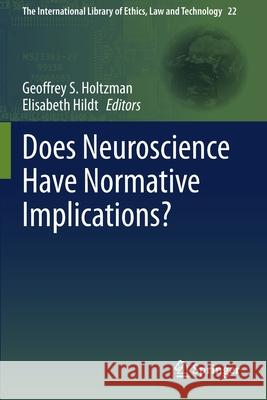
Does Neuroscience Have Normative Implications?  9783030561369 Springer International Publishing - książkaWidoczna okładka, to zdjęcie poglądowe, a rzeczywista szata graficzna może różnić się od prezentowanej.

Does Neuroscience Have Normative Implications?

ISBN-13: 9783030561369 / Angielski / Miękka / 2021 / 228 str.

cena 442,79
(netto: 421,70 VAT:  5%)

Najniższa cena z 30 dni: 424,07
Termin realizacji zamówienia:
ok. 22 dni roboczych
Bez gwarancji dostawy przed świętami

Darmowa dostawa!
inne wydania

This book brings together a number of essays that are optimistic about the ways certain neuroscientific insights might advance philosophical ethics, and other essays that are more circumspect about the relevance of neuroscience to philosophical ethics. As a whole, the essays form a self-reflective body of work that simultaneously seeks to derive normative ethical implications from neuroscience, and to question whether and how that may be possible at all. In doing so, the collection brings together psychology, neuroscience, philosophy of mind, ethics, and philosophy of science. Neuroscience seeks to understand the biological systems that guide human behavior and cognition. Normative ethics, on the other hand, seeks to understand the system of abstract moral principles dictating how people ought to behave. By studying how the human brain makes moral judgments, can philosophers learn anything about the nature of morality itself? A growing number of researchers believe that neuroscience can, indeed, provide insights into the questions of philosophical ethics. However, even these advocates acknowledge that the path from neuroscientific is to normative ethical ought can be quite fraught. 

Kategorie:
Nauka, Filozofia
Kategorie BISAC:
Philosophy > Ethics & Moral Philosophy
Medical > Neuroscience
Psychology > Cognitive Psychology & Cognition
Wydawca:
Springer International Publishing
Seria wydawnicza:
The International Library of Ethics, Law and Technology
Język:
Angielski
ISBN-13:
9783030561369
Rok wydania:
2021
Ilość stron:
228
Waga:
0.32 kg
Wymiary:
23.39 x 15.6 x 1.22
Oprawa:
Miękka
Wolumenów:
01
Dodatkowe informacje:
Wydanie ilustrowane

1. The Neuroscience of Human Morality: Three Levels of Normative Implications (Jon Leefmann).- 2. Moral Responsibility and Perceived Threats from Neuroscience (Myrto Mylopoulos).- 3. Lessons for Ethics from the Science of Pain (Jennifer Corns and Robert Cowan).- 4. Two Theories of Moral Cognition (Julia Haas).- 5. Rethinking Moral Motivation: How Neuroscience Supports an Alternative to Motivation Internalism (Chris Zarpentine).- 6. The Reactive Roots of Retribution: Normative Implications of the Neuroscience of Punishment (Isaac Wiegman).- 7. Normative Implications of Neuroscience and Sociobiology – Intended and Perceived (Ullica Segerstrale).- 8. Nervous Norms (Matthew Ruble).- 9. Neuromodulation of the “Moral Brain” – Evaluating Bridges Between Neural Foundations of Moral Capacities and Normative Aims of the Intervention (Christian Ineichen and Markus Christen).- 10. Autistic Moral Agency and Integrative Neuroethics (Bongrae Seok).

Geoffrey S. Holtzman received his BA in Cognitive Science from Vassar College in 2007 and his PhD in Philosophy from CUNY Graduate Center in 2014. After completing his dissertation on the experimental philosophy of faultless disagreement, he undertook a fellowship in neuroethics at the Illinois Institute of Technology, followed by a fellowship in moral psychology at Geisinger Health System. He most recently taught courses in neuroethics and moral psychology as a faculty member at Franklin & Marshall College.

Elisabeth Hildt is Professor of Philosophy and Director of the Center for the Study of Ethics in the Professions at Illinois Institute of Technology, Chicago. Her research focus is on neuroethics, ethics of technology, and Science and Technology Studies. Before moving to Chicago, she was the head of the Research Group on Neuroethics/Neurophilosophy at the University of Mainz, Germany.

This book brings together a number of essays that are optimistic about the ways certain neuroscientific insights might advance philosophical ethics, and other essays that are more circumspect about the relevance of neuroscience to philosophical ethics. As a whole, the essays form a self-reflective body of work that simultaneously seeks to derive normative ethical implications from neuroscience, and to question whether and how that may be possible at all. In doing so, the collection brings together psychology, neuroscience, philosophy of mind, ethics, and philosophy of science. Neuroscience seeks to understand the biological systems that guide human behavior and cognition. Normative ethics, on the other hand, seeks to understand the system of abstract moral principles dictating how people ought to behave. By studying how the human brain makes moral judgments, can philosophers learn anything about the nature of morality itself? A growing number of researchers believe that neuroscience can, indeed, provide insights into the questions of philosophical ethics. However, even these advocates acknowledge that the path from neuroscientific is to normative ethical ought can be quite fraught. 



Udostępnij

Facebook - konto krainaksiazek.pl


Opinie o Krainaksiazek.pl na Opineo.pl

Partner Mybenefit

Krainaksiazek.pl w programie rzetelna firma Krainaksiaze.pl - płatności przez paypal

Czytaj nas na:

Facebook - krainaksiazek.pl
  • książki na zamówienie
  • granty
  • książka na prezent
  • kontakt
  • pomoc
  • opinie
  • regulamin
  • polityka prywatności

Zobacz:

  • Księgarnia czeska

  • Wydawnictwo Książkowe Klimaty

1997-2025 DolnySlask.com Agencja Internetowa

© 1997-2022 krainaksiazek.pl
     
KONTAKT | REGULAMIN | POLITYKA PRYWATNOŚCI | USTAWIENIA PRYWATNOŚCI
Zobacz: Księgarnia Czeska | Wydawnictwo Książkowe Klimaty | Mapa strony | Lista autorów
KrainaKsiazek.PL - Księgarnia Internetowa

Polityka prywatnosci - link
Krainaksiazek.pl - płatnośc Przelewy24
Przechowalnia Przechowalnia






