Divine Violence and the Christus Victor Atonement Model » książka





Divine Violence and the Christus Victor Atonement Model
ISBN-13: 9781498239479 / Angielski / Miękka / 2016 / 262 str.
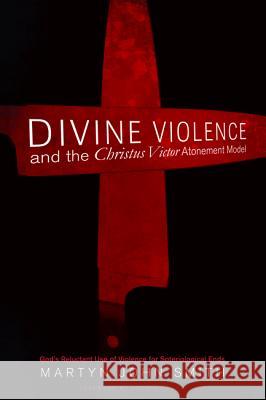
Divine Violence and the Christus Victor Atonement Model
ISBN-13: 9781498239479 / Angielski / Miękka / 2016 / 262 str.
(netto: 141,90 VAT: 5%)
Najniższa cena z 30 dni: 146,94
ok. 16-18 dni roboczych.
Darmowa dostawa!
In this book Martyn Smith addresses the issue of God's violence and refuses to shy away from difficult and controversial conclusions. Through his wide-ranging and measured study he reflects upon God and violence in both biblical and theological contexts, assessing the implications of divine violence for understanding and engaging with God's nature and character. Jesus too, through his dramatic actions in the temple, is presented as one capable of exhibiting a surprising degree of violent behavior in the furtherance of God's purposes. Through a reappropriation of the ancient Christus Victor model of atonement, with its dramatic representation of God's war with the Satan, Smith proposes that Christian understanding of both God and salvation has to return to its long-neglected past in order to move forward, both biblically and dynamically, into the future. ""In this well-researched study on the atonement, Martyn Smith refuses to shy away from the hard theological questions.Neither is he afraid to take a controversial stance.Insisting that theology's task is to allow the Scriptures to speak for themselves, Smith boldly claims that God regularly engages in acts of violence in his redemption of the world.The result is a robust re-articulation and defense of the Christus Victor model of the atonement."" --Hans Boersma, J. I. Packer Professor of Theology, Regent College ""There is no getting away from it, Martyn Smith's debutant book is as contentious and exciting as the work of Gustaf Aulen, which he champions. Aulen's book Christus Victor, A Historical Study of the Three Main Types of the Idea of Atonement (1931) was a revisionist theological history divided into what he called the classical theory, the scholastic, and the moral exemplar theories. The classical model he identifies with the (mainly Eastern) Fathers of the Early Church, the scholastic begins with Anselm in the early middle ages, (eleventh century) and the moral exemplar model with Peter Abelard (also eleventh century, but a little later than Anselm) At the present time, Christians of a liberal disposition follow Abelard because in doing so they can talk of peace, reconciliation, and morality without a commitment to the supernaturalism of pre-Enlightenment metaphysics. More Conservative Christians are divided over the first two types. Many Evangelicals, for example, see the Juridical views of Anselm as the touchstone of orthodoxy whereas the Christus Victor type, when combined with a strong Incarnational view of the atonement--the focus being the person of Christ--the ontological issue of who he is takes precedence over what he does (the work of Christ is dependent on the fact that he is truly God (ho theos) and truly human (anthropos) The first epistle of John (1 John 4:2) tells us that those who belong to God are those who recognize that Jesus Christ has come in the flesh. Smith argues, following Aulen, that the classical model was the one that best explained the atonement. The full import of the Christus Victor type is clearly described in the words of John's first epistle, 'The Son of God was revealed for this purpose, to destroy the works of the devil' (1 John 3:8 NRSV). Smith wonders, as do I, whether you can tell the Gospel story without a belief in a real Devil. The fact, by the way, that Smith calls the Evil One 'the Satan' is not affectation but a grammatical convention in Hebrew that Satan is a title not his name; the actual meaning of the word Satan is adversary. Smith's book rests on a disturbing but prescient premise: Christ's victory involves violence. This is a shocking view of the cross, which these days is more often understood in the words of Walter Wink, as 'redemptive non violence.' Smith, however, is nothing if not bold. It is a fact that in an era of terrorism and violence talk of the violence of God - whether intrinsic or extrinsic - is not politically correct. I cannot conclude this commendation of Smith's book without a comment a"
In this book Martyn Smith addresses the issue of Gods violence and refuses to shy away from difficult and controversial conclusions. Through his wide-ranging and measured study he reflects upon God and violence in both biblical and theological contexts, assessing the implications of divine violence for understanding and engaging with Gods nature and character. Jesus too, through his dramatic actions in the temple, is presented as one capable of exhibiting a surprising degree of violent behavior in the furtherance of Gods purposes.Through a reappropriation of the ancient Christus Victor model of atonement, with its dramatic representation of Gods war with the Satan, Smith proposes that Christian understanding of both God and salvation has to return to its long-neglected past in order to move forward, both biblically and dynamically, into the future.""In this well-researched study on the atonement, Martyn Smith refuses to shy away from the hard theological questions. Neither is he afraid to take a controversial stance. Insisting that theologys task is to allow the Scriptures to speak for themselves, Smith boldly claims that God regularly engages in acts of violence in his redemption of the world. The result is a robust re-articulation and defense of the Christus Victor model of the atonement.""--Hans Boersma, J. I. Packer Professor of Theology, Regent College""There is no getting away from it, Martyn Smiths debutant book is as contentious and exciting as the work of Gustaf Aulen, which he champions. Aulens book Christus Victor, A Historical Study of the Three Main Types of the Idea of Atonement (1931) was a revisionist theological history divided into what he called the classical theory, the scholastic, and the moral exemplar theories. The classical model he identifies with the (mainly Eastern) Fathers of the Early Church, the scholastic begins with Anselm in the early middle ages, (eleventh century) and the moral exemplar model with Peter Abelard (also eleventh century, but a little later than Anselm)At the present time, Christians of a liberal disposition follow Abelard because in doing so they can talk of peace, reconciliation, and morality without a commitment to the supernaturalism of pre-Enlightenment metaphysics. More Conservative Christians are divided over the first two types. Many Evangelicals, for example, see the Juridical views of Anselm as the touchstone of orthodoxy whereas the Christus Victor type, when combined with a strong Incarnational view of the atonement--the focus being the person of Christ--the ontological issue of who he is takes precedence over what he does (the work of Christ is dependent on the fact that he is truly God (ho theos) and truly human (anthropos) The first epistle of John (1 John 4:2) tells us that those who belong to God are those who recognize that Jesus Christ has come in the flesh.Smith argues, following Aulen, that the classical model was the one that best explained the atonement. The full import of the Christus Victor type is clearly described in the words of Johns first epistle, The Son of God was revealed for this purpose, to destroy the works of the devil (1 John 3:8 NRSV). Smith wonders, as do I, whether you can tell the Gospel story without a belief in a real Devil. The fact, by the way, that Smith calls the Evil One the Satan is not affectation but a grammatical convention in Hebrew that Satan is a title not his name; the actual meaning of the word Satan is adversary. Smiths book rests on a disturbing but prescient premise: Christs victory involves violence. This is a shocking view of the cross, which these days is more often understood in the words of Walter Wink, as redemptive non violence. Smith, however, is nothing if not bold. It is a fact that in an era of terrorism and violence talk of the violence of God - whether intrinsic or extrinsic - is not politically correct. I cannot conclude this commendation of Smiths book without a comment a




Czytaj nas na:
KrainaKsiazek.PL - Księgarnia Internetowa


