• Wyszukiwanie zaawansowane
  • Kategorie
  • Kategorie BISAC
  • Książki na zamówienie
  • Promocje
  • Granty
  • Książka na prezent
  • Opinie
  • Pomoc
  • Załóż konto
  • Zaloguj się

Disrupting Finance: FinTech and Strategy in the 21st Century » książka


zaloguj się | załóż konto
Logo Krainaksiazek.pl

koszyk

konto

szukaj
topmenu
Księgarnia internetowa
Szukaj
Książki na zamówienie
Promocje
Granty
Książka na prezent
Moje konto
Pomoc
 
 
Wyszukiwanie zaawansowane
Pusty koszyk
Bezpłatna dostawa dla zamówień powyżej 20 złBezpłatna dostawa dla zamówień powyżej 20 zł

Kategorie główne

• Nauka
 [2946912]
• Literatura piękna
 [1852311]

  więcej...
• Turystyka
 [71421]
• Informatyka
 [150889]
• Komiksy
 [35717]
• Encyklopedie
 [23177]
• Dziecięca
 [617324]
• Hobby
 [138808]
• AudioBooki
 [1671]
• Literatura faktu
 [228371]
• Muzyka CD
 [400]
• Słowniki
 [2841]
• Inne
 [445428]
• Kalendarze
 [1545]
• Podręczniki
 [166819]
• Poradniki
 [480180]
• Religia
 [510412]
• Czasopisma
 [525]
• Sport
 [61271]
• Sztuka
 [242929]
• CD, DVD, Video
 [3371]
• Technologie
 [219258]
• Zdrowie
 [100961]
• Książkowe Klimaty
 [124]
• Zabawki
 [2341]
• Puzzle, gry
 [3766]
• Literatura w języku ukraińskim
 [255]
• Art. papiernicze i szkolne
 [7810]
Kategorie szczegółowe BISAC

Disrupting Finance: FinTech and Strategy in the 21st Century

ISBN-13: 9783030023294 / Angielski / Twarda / 2018 / 175 str.
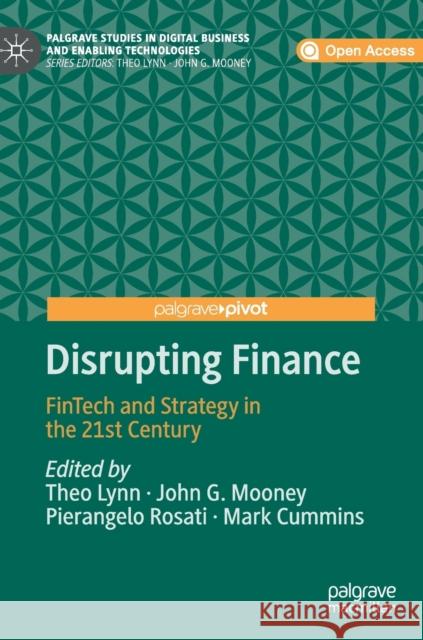
Disrupting Finance: FinTech and Strategy in the 21st Century  9783030023294 Springer Nature Switzerland AG - książkaWidoczna okładka, to zdjęcie poglądowe, a rzeczywista szata graficzna może różnić się od prezentowanej.

Disrupting Finance: FinTech and Strategy in the 21st Century

ISBN-13: 9783030023294 / Angielski / Twarda / 2018 / 175 str.

cena 100,41
(netto: 95,63 VAT:  5%)

Najniższa cena z 30 dni: 100,64
Termin realizacji zamówienia:
ok. 10-14 dni roboczych
Dostawa w 2026 r.

Darmowa dostawa!

This open access Pivot demonstrates how a variety of technologies act as innovation catalysts within the banking and financial services sector. Traditional banks and financial services are under increasing competition from global IT companies such as Google, Apple, Amazon and PayPal whilst facing pressure from investors to reduce costs, increase agility and improve customer retention. Technologies such as blockchain, cloud computing, mobile technologies, big data analytics and social media therefore have perhaps more potential in this industry and area of business than any other. This book defines a fintech ecosystem for the 21st century, providing a state-of-the art review of current literature, suggesting avenues for new research and offering perspectives from business, technology and industry.


Kategorie:
Nauka, Ekonomia i biznes
Kategorie BISAC:
Business & Economics > Production & Operations Management
Business & Economics > Information Management
Business & Economics > Industries - Financial Services
Wydawca:
Springer Nature Switzerland AG
Seria wydawnicza:
Palgrave Studies in Digital Business & Enabling Technologies
Język:
Angielski
ISBN-13:
9783030023294
Rok wydania:
2018
Wydanie:
2019
Ilość stron:
175
Waga:
0.39 kg
Wymiary:
21.01 x 14.81 x 1.27
Oprawa:
Twarda
Wolumenów:
01
Dodatkowe informacje:
Wydanie ilustrowane

1.                       Deciphering Crowdfunding

1.1.        The Crowdfunding Phenomenon: an Overview

1.1.1.               The European Market

1.1.2.               The US market

1.1.3.               The Asia-Pacific Market

1.2.   Crowdfunding State-of-the-Art

1.2.1.               Investment Models

1.2.2.               Non-investment Models

1.3.   New Research Trends: The language of Crowdfunding

1.4.   References

2.                       Addressing Information Asymmetries in Online Peer-to-Peer Lending

2.1.       Introduction

2.2.       Online Peer-to-Peer Lending Platforms

2.3.       Information Asymmetries and Peer to Peer Lending Platforms

2.4.       Conclusions and Future Directions for Research

2.5.       References

3.                       Machine learning and AI for risk management

3.1.       Introduction

3.2.       Machine Learning and AI Techniques for Risk Management

3.3.       Machine Learning and AI Applications for Risk Management

3.3.1.               Application to Credit Risk

3.3.2.               Application to Market Risk

3.3.3.               Application to Operational Risk

3.3.4.               Application to RegTech

3.4.       The Challenges and Future of Machine Learning and AI for Risk Management

3.5.       References

4.        What Fintech Can Learn from High-Frequency Trading: Economic Consequences, Open Issues and Future of Corporate Disclosure

4.1.   Introduction

4.2.   High Frequency Trading: Definition and Data

4.2.1.                Methodology

4.2.2.                Descriptive Statistics

4.3.   Results

4.3.1.                Thematic Analysis

4.3.2.                Impact of HFT

4.3.2.1.                    Effects on Market Quality

4.3.2.2.                    HFT’s Trading Strategies and Speed

4.3.2.3.                    Market Structure, Co-location and Regulation after the Flash Crash

4.3.3.                HFT Reaction to Corporate Disclosure

4.4.  Conclusion and Future Research Directions

4.5.  References

5.        InsurTech

5.1.   Introduction

5.2.   How Does Insurance Work?

5.3.   The Big Data Paradigm

5.3.1.                Telematics

5.3.2.                Wearables

5.3.3.                Smart Homes and the Internet of Things (IoT)

5.3.4.                Big Data: Trustworthiness and Privacy Concerns

5.4.   Artificial Intelligence

5.4.1.                Machine Learning and AI in the Underwriting Process

5.4.2.                AI in Claims Management Process

5.4.3.                AI in Customer Interaction

5.5.   Distributed Ledger Technologies

5.5.1.                Improving Current Processes Using DLTs

5.5.2.                P2P Insurance

5.6.   Conclusion

5.7.   References

6.        Understanding RegTech for Digital Regulatory Compliance

6.1.   Introduction

6.2.   Business Drivers of RegTech

6.3.   RegTech in Focus: Digital Regulatory Reporting

6.3.1.                Phase 1 Digital Regulatory Alerts

6.3.2.                Phase 2 Making Regulations Digital

6.3.3.                Phase 3 Performing Digital Regulatory Reporting

6.3.4.                Phase 4 Creating Meta-Data Models for Semantic Interoperability

6.4.   Discussion and Implications

6.5.   Conclusion

7.        Payment Service Directive II and its Implications

7.1.   Introduction

7.2.   Background

7.3.   EU Initiated Review of the Effectiveness of PSD I

7.3.1.                Main Findings of Impact Study

7.4.   Payment Services Directive II

7.4.1.                Scope of the Directive and the Removal of Exclusions

7.4.2.                Authorisation of Payment Institutions

7.4.3.                Innovation

7.4.4.                Confirmation of Availability of Funds

7.4.5.                Enhancing Competition

7.4.6.                Customer Protection

7.4.7.                Security

7.4.8.                Complaints Handling

7.5.   European Banking Authority (EBA) Work on PSD II

7.6.   Strong Customer Authentication (SCA)

7.6.1.                Exemptions for SCA

7.7.   Commentary

7.8.   References

8.        From Transactions to Interactions: Social Considerations for Digital Money

8.1.   Introduction

8.2.   Affordances of Digital Money

8.3.   Opportunities for Interaction

8.3.1.                Negotiating Payment

8.3.2.                Effects of Intermediation

8.3.3.                Collaborative Value Creation

8.4.   Social Impacts of Digital Transactions

8.4.1.                Sensitive Data Generation and Sharing

8.4.2.                Choice Proliferation

8.4.3.                Untangling Money and Payment System

8.5.   Conclusion

8.6.   References

9.        Token-based Business Models

9.1.   Introduction

9.2.   Native Digital Assets

9.3.   Crypto Tokens

9.4.   Token-based Business Models

9.5.   Driving Forces behind the Token-based Business Models

9.6.   Crypto Tokens to enhance the Sharing Economy

9.7.   References

10.    Blockchain beyond Cryptocurrencies

10.1.    Introduction

10.2.    What is Blockchain?

10.3.    Payments and Remittance

10.4.    Credit and Lending

10.5.    Trading and Settlements

10.6.    Compliance

10.7.    Conclusion and Avenues for Future Research

10.8.    References


Theo Lynn is Professor of Digital Business at Dublin City University, Ireland, and is the Principal Investigator (PI) of the Irish Centre for Cloud Computing and Commerce, an Enterprise Ireland/IDA-funded Cloud Computing Technology Centre.

John G. Mooney is Associate Professor of Information Systems and Technology Management and Academic Director of the Executive Doctorate in Business Administration at the Pepperdine Graziadio Business School, USA.

Pierangelo Rosati is Assistant Professor in Business Analytics at DCU Business School, Ireland. He previously worked as Post-Doctoral Researcher at the Irish Centre for Cloud Computing and Commerce (IC4).

Mark Cummins is Professor of Finance at DCU Business School, Ireland. He holds a PhD in Quantitative Finance with specialism in the application of integral transforms and the fast Fourier transform (FFT) for derivatives valuation and risk management.

This open access Pivot demonstrates how a variety of technologies act as innovation catalysts within the banking and financial services sector. Traditional banks and financial services are under increasing competition from global IT companies such as Google, Apple, Amazon and PayPal whilst facing pressure from investors to reduce costs, increase agility and improve customer retention. Technologies such as blockchain, cloud computing, mobile technologies, big data analytics and social media therefore have perhaps more potential in this industry and area of business than any other. This book defines a fintech ecosystem for the 21st century, providing a state-of-the art review of current literature, suggesting avenues for new research and offering perspectives from business, technology and industry.




Udostępnij

Facebook - konto krainaksiazek.pl


Opinie o Krainaksiazek.pl na Opineo.pl

Partner Mybenefit

Krainaksiazek.pl w programie rzetelna firma Krainaksiaze.pl - płatności przez paypal

Czytaj nas na:

Facebook - krainaksiazek.pl
  • książki na zamówienie
  • granty
  • książka na prezent
  • kontakt
  • pomoc
  • opinie
  • regulamin
  • polityka prywatności

Zobacz:

  • Księgarnia czeska

  • Wydawnictwo Książkowe Klimaty

1997-2025 DolnySlask.com Agencja Internetowa

© 1997-2022 krainaksiazek.pl
     
KONTAKT | REGULAMIN | POLITYKA PRYWATNOŚCI | USTAWIENIA PRYWATNOŚCI
Zobacz: Księgarnia Czeska | Wydawnictwo Książkowe Klimaty | Mapa strony | Lista autorów
KrainaKsiazek.PL - Księgarnia Internetowa

Polityka prywatnosci - link
Krainaksiazek.pl - płatnośc Przelewy24
Przechowalnia Przechowalnia




