Disrupt Science: The Future Matters » książka





Disrupt Science: The Future Matters
ISBN-13: 9783031439599 / Angielski / Miękka / 2025 / 255 str.
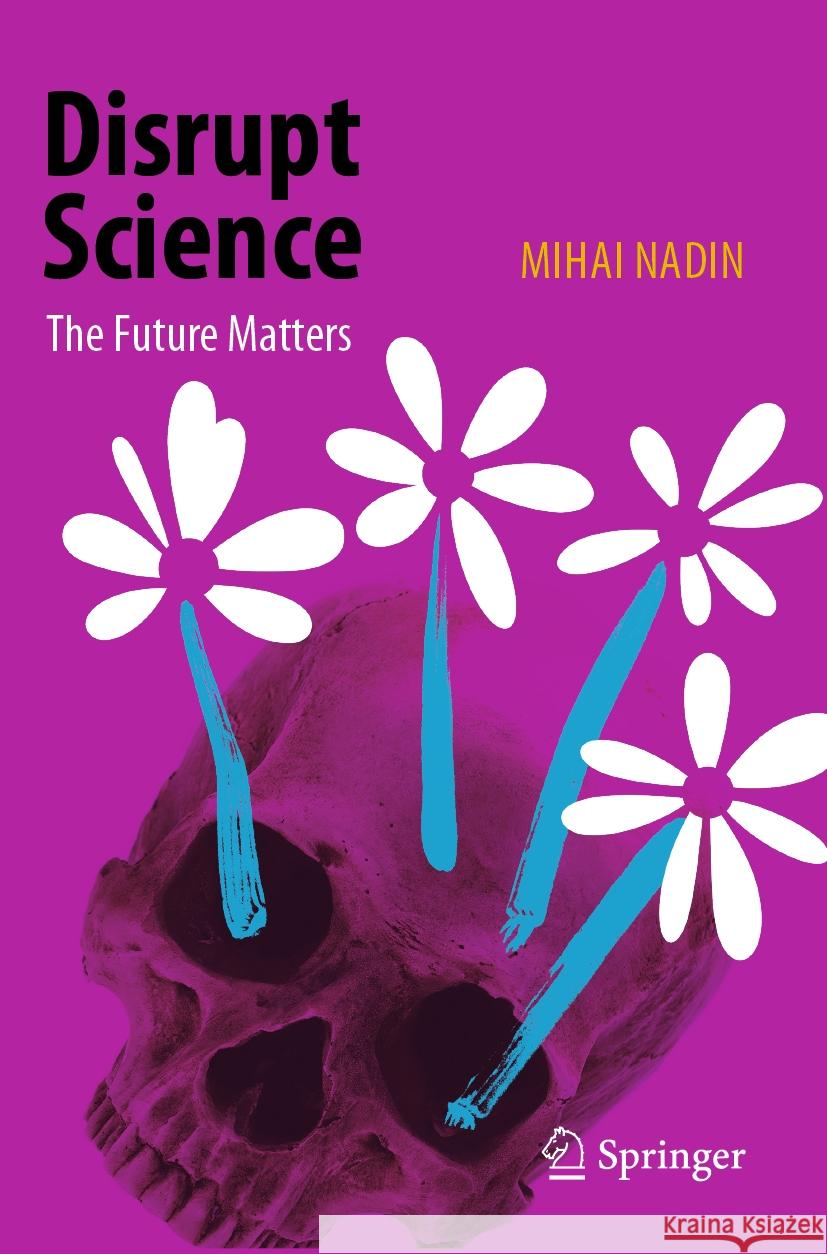
Reaction to breakdowns is more expensive, by many orders of magnitude, than prevention. This again became clear during the COVID-19 pandemic and is evinced in the sustainability crisis. The dynamics of living matter transcends deterministic reaction. Embodied in machines, determinism empowered the human being, providing the path to prosperity. However, in conjunction with reductionism, it does away with complexity, in which life is couched. The living is by necessity anticipatory. Awareness of the future means preserving life not in reaction to, but in anticipation of change. Living entities, from the simplest bacteria, to plants and insects, to human beings, are adaptive, goal-oriented, and capable of self-healing. Anticipatory actions are expressed through non-deterministic processes that unfold in concert with reactions. They engage the wholeness of life, including its interactions with the environment. Awareness of consequences, together with memory of the past, informs actions that reflect the creative nature of human beings. Redefining science—and implicitly, medicine—is not a negation of its past, but rather an affirmation of trust in explaining life’s capacity to renew itself. As opposed to increasingly expensive medicine as a practice of repair, to prevent and to heal is to make life sustainable. The moment of truth can no longer be postponed. At stake is the future of humankind and even of life on planet Earth. Reductionist determinism informs the obsession with progress at any cost. Awareness of the fact that the human condition transcends that of the matter in which it is embodied explains, and indeed justifies, the call to Disrupt Science in its current state. The age of the digital machine, in particular of artificial intelligence, is one of opportunities that pale when compared to its inherent risks. The record of breakdowns (including so-called natural disasters), by now global in scale, is part of the empirical premise for the call for completing the Cartesian Revolution. A “Second Revolution in Science” could unleash humanity’s remaking, free of surrendering to want. Science has the opportunity not only to measure everything—life included—and accumulate data and process it for its own sake, but also to realize its meaning. The book cover is designed by Baruch Gorkin, who is celebrated internationally for exquisite typefaces and for books reflecting meaning-driven design.
Reaction to breakdowns is more expensive, by many orders of magnitude, than prevention. This again became clear during the COVID-19 pandemic and is evinced in the sustainability crisis. The dynamics of living matter transcends deterministic reaction. Embodied in machines, determinism empowered the human being, providing the path to prosperity. However, in conjunction with reductionism, it does away with complexity, in which life is couched. The living is by necessity anticipatory. Awareness of the future means preserving life not in reaction to, but in anticipation of change. Living entities, from the simplest bacteria, to plants and insects, to human beings, are adaptive, goal-oriented, and capable of self-healing. Anticipatory actions are expressed through non-deterministic processes that unfold in concert with reactions. They engage the wholeness of life, including its interactions with the environment. Awareness of consequences, together with memory of the past, informs actions that reflect the creative nature of human beings. Redefining science—and implicitly, medicine—is not a negation of its past, but rather an affirmation of trust in explaining life’s capacity to renew itself. As opposed to increasingly expensive medicine as a practice of repair, to prevent and to heal is to make life sustainable. The moment of truth can no longer be postponed. At stake is the future of humankind and even of life on planet Earth. Reductionist determinism informs the obsession with progress at any cost. Awareness of the fact that the human condition transcends that of the matter in which it is embodied explains, and indeed justifies, the call to Disrupt Science in its current state. The age of the digital machine, in particular of artificial intelligence, is one of opportunities that pale when compared to its inherent risks. The record of breakdowns (including so-called natural disasters), by now global in scale, is part of the empirical premise for the call for completing the Cartesian Revolution. A “Second Revolution in Science” could unleash humanity’s remaking, free of surrendering to want. Science has the opportunity not only to measure everything—life included—and accumulate data and process it for its own sake, but also to realize its meaning. The book cover is designed by Baruch Gorkin, who is celebrated internationally for exquisite typefaces and for books reflecting meaning-driven design.




Czytaj nas na:
KrainaKsiazek.PL - Księgarnia Internetowa


