• Wyszukiwanie zaawansowane
  • Kategorie
  • Kategorie BISAC
  • Książki na zamówienie
  • Promocje
  • Granty
  • Książka na prezent
  • Opinie
  • Pomoc
  • Załóż konto
  • Zaloguj się

Disease Control in Crops: Biological and Environmentally-Friendly Approaches » książka


zaloguj się | załóż konto
Logo Krainaksiazek.pl

koszyk

konto

szukaj
topmenu
Księgarnia internetowa
Szukaj
Książki na zamówienie
Promocje
Granty
Książka na prezent
Moje konto
Pomoc
 
 
Wyszukiwanie zaawansowane
Pusty koszyk
Bezpłatna dostawa dla zamówień powyżej 20 złBezpłatna dostawa dla zamówień powyżej 20 zł

Kategorie główne

• Nauka
 [2946912]
• Literatura piękna
 [1852311]

  więcej...
• Turystyka
 [71421]
• Informatyka
 [150889]
• Komiksy
 [35717]
• Encyklopedie
 [23177]
• Dziecięca
 [617324]
• Hobby
 [138808]
• AudioBooki
 [1671]
• Literatura faktu
 [228371]
• Muzyka CD
 [400]
• Słowniki
 [2841]
• Inne
 [445428]
• Kalendarze
 [1545]
• Podręczniki
 [166819]
• Poradniki
 [480180]
• Religia
 [510412]
• Czasopisma
 [525]
• Sport
 [61271]
• Sztuka
 [242929]
• CD, DVD, Video
 [3371]
• Technologie
 [219258]
• Zdrowie
 [100961]
• Książkowe Klimaty
 [124]
• Zabawki
 [2341]
• Puzzle, gry
 [3766]
• Literatura w języku ukraińskim
 [255]
• Art. papiernicze i szkolne
 [7810]
Kategorie szczegółowe BISAC

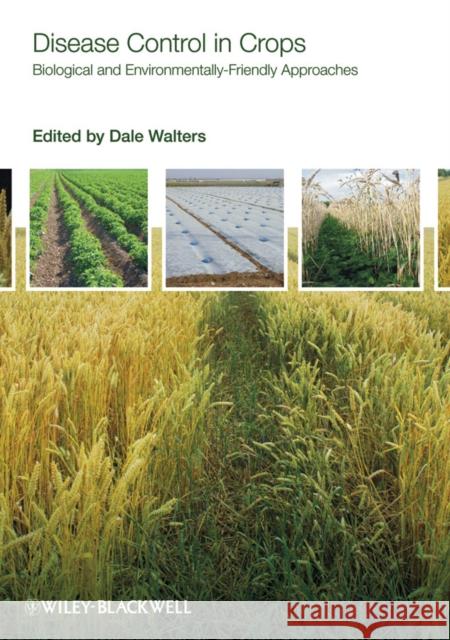
Disease Control in Crops: Biological and Environmentally-Friendly Approaches

ISBN-13: 9781405169479 / Angielski / Twarda / 2009 / 280 str.
Dale Walters
Disease Control in Crops: Biological and Environmentally-Friendly Approaches Walters, Dale 9781405169479 Wiley-Blackwell - książkaWidoczna okładka, to zdjęcie poglądowe, a rzeczywista szata graficzna może różnić się od prezentowanej.

Disease Control in Crops: Biological and Environmentally-Friendly Approaches

ISBN-13: 9781405169479 / Angielski / Twarda / 2009 / 280 str.

Dale Walters
cena 943,80
(netto: 898,86 VAT:  5%)

Najniższa cena z 30 dni: 939,92
Termin realizacji zamówienia:
ok. 30 dni roboczych
Bez gwarancji dostawy przed świętami

Darmowa dostawa!

The control of diseases in crops is still largely dominated by the use of fungicides, but with the increasing incidence of fungicide resistance, plus mounting concern for the environment resulting from excessive agrochemical use, the search for alternative, reliable methods of disease control is gaining momentum.

The purpose of this important book is to examine the development and exploitation (or potential for exploitation) of a range of non-chemical approaches to disease control, with a focus on the need for a greater understanding of crop ecology as the basis for effective disease control in the field. Chapters in the book, written by international experts in the subject area, include coverage of: biological control methods host-plant resistance the exploitation of tolerance and the use of bacteriophages

Carefully edited by Professor Dale Walters, widely respected for his work in the area of crop protection, "Disease Control in Crops" is an essential reference book for plant pathologists, microbiologists, plant and agricultural scientists and crop protection specialists, including those working within, and providing consultancy to, the agrochemical industries. Libraries in all universities and research establishments where biological sciences and agriculture are studied and taught should have copies of this timely publication on their shelves.


Kategorie:
Nauka, Biologia i przyroda
Kategorie BISAC:
Technology & Engineering > Agriculture - Agronomy - General
Wydawca:
Wiley-Blackwell
Język:
Angielski
ISBN-13:
9781405169479
Rok wydania:
2009
Ilość stron:
280
Waga:
0.60 kg
Wymiary:
25.63 x 17.17 x 2.11
Oprawa:
Twarda
Wolumenów:
01
Dodatkowe informacje:
Bibliografia
Wydanie ilustrowane

?Here, Walters, a crop protection specialist, offers readers a remarkable series of papers discussing greatly improved control methods.? ( CHOICE, October 2009)

List of contributors

Preface

Chapter 1 Introduction

Dale Walters

1.1 The importance of plant disease

1.2 Problems associated with controlling plant disease

1.3 Conclusions

1.4 Acknowledgements

1.5 References

Chapter 2 Managing crop disease through cultural practices

Dale Walters

2.1 Introduction

2.2 Reducing the amount of pathogen inoculum

2.3 Reducing pathogen spread within the crop

2.4 Soil amendments and mulching

2.5 Suppressive soils

2.6 Intercropping

2.7 Conclusions

2.8 Acknowledgements

2.9 References

Chapter 3 Biological control agents in plant disease control

John M. Whipps and Mark P. McQuilken

3.1 Introduction

3.2 Modes of action

3.3 Production, formulation and application

3.4 Commercial products available and uses

3.5 Factors affecting variable efficacy and constraints on commercial developments

3.6 Future research directions and conclusions

3.7 References

Chapter 4 Induced resistance for plant disease control

Tony Reglinski and Dale Walters

4.1 Introduction

4.2 Induced resistance in practice

4.3 Costs associated with induced resistance

4.4 Trade–offs associated with induced resistance

4.5 Future prospects

4.6 Acknowledgements

4.7 References

Chapter 5 The use of composts and compost extracts in plant disease control

Audrey Litterick and Martin Wood

5.1 Introduction

5.2 Definitions of composts, composting, compost extracts and compost teas

5.3 Production of composts and compost extracts/teas

5.4 History of the use of composts and compost extracts in crop production

5.5 Current use of composts and compost extracts/teas in crop production

5.6 Crop and soil health

5.7 Effects of composts on plant disease

5.8 Effects of compost extracts/teas on plant disease

5.9 Mechanisms involved in the suppression/control of plant disease using composts and compost extracts/teas

5.10 Conclusions and future work

5.11 References

Chapter 6 The use of host plant resistance in disease control

Hugh Wallwork

6.1 Introduction and benefits of resistance

6.2 Types of resistance

6.3 Sources of resistance

6.4 Breeding methodology and selection strategies for inbreeding crops

6.5 Deployment of resistance

6.6 Conclusion

6.7 References

Chapter 7 Crop tolerance of foliar pathogens: possible mechanisms and potential for exploitation

Ian Bingham and Adrian Newton

7.1 Introduction

7.2 Concepts and definitions a historical perspective

7.3 Yield formation

7.4 How can tolerance be quantified?

7.5 Potential crop traits conferring tolerance

7.6 Is there a physiological or ecological cost to tolerance?

7.7 Role of modelling

7.8 Strategy for improving tolerance

7.9 Acknowledgements

7.10 References

Chapter 8 Plant disease control through the use of variety mixtures

Adrian Newton

8.1 Introduction

8.2 Trial demonstrations of mixtures

8.3 Mixtures used in practice

8.4 Conclusion

8.5 References

Chapter 9 Biofumigation for plant disease control from the fundamentals to the farming system

John Kirkegaard

9.1 Introduction

9.2 The glucosinolate myrosinase system

9.3 Modes of utilization

9.4 Separating GSL–related suppression from other effects of biofumigants

9.5 Maximizing biofumigation potential

9.6 Release efficiency, fate and activity of hydrolysis products in soil

9.7 Ecological considerations

9.8 Field implementation

9.9 Summary

9.10 References

Chapter 10 Control of plant disease through soil solarization

Abraham Gamliel and Jaacov Katan

10.1 Introduction

10.2 Principles of soil solarization

10.3 Pathogen and weed control

10.4 Mechanisms of control and plant–growth improvement

10.5 Integrated management

10.6 Modelling of soil solarization and decision–making tools

10.7 Improvements by intensifying soil heating

10.8 Implementation and application

10.9 Special uses of solarization

10.10 Solarization and the MB crisis

10.11 Concluding remarks

10.12 References

Chapter 11 Plant disease control by nutrient management: sulphur

Silvia Haneklaus, Elke Bloem and Ewald Schnug

11.1 Introduction

11.2 Sulphur–induced resistance agronomic, physiological and molecular aspects

11.3 Perspectives in research

11.4 References

Chapter 12 Control of plant disease by disguising the leaf surface

Dale Walters

12.1 Introduction

12.2 Controlling disease using film–forming polymers

12.3 Particle films as agents for control of plant diseases

12.4 Disrupting spore adhesion to the leaf surface

12.5 Conclusions

12.6 Acknowledgements

12.7 References

Chapter 13 Bacteriophages as agents for the control of plant pathogenic bacteria

Botond Balogh, Timur Momol, Aleksa Obradovic and Jeffrey Jones

13.1 Introduction disease control for bacterial diseases

13.2 Biological control

13.3 Early use of bacteriophages in agriculture

13.4 Recent approaches for using phages in plant pathology

13.5 Challenges in using phages for disease control

13.6 Phages as part of an integrated management strategy

13.7 Summary

13.8 References

Chapter 14 Controlling plant disease using biological and environmentally friendly approaches: making it work in practice

Dale Walters

14.1 Introduction

14.2 How might biologically based disease control be used in crop protection practice?

14.3 Biologically based disease control: barriers to implementation

14.4 Conclusions

14.5 Acknowledgements

14.6 References

Index

Professor Dale Walters is based at the Crop and Soil Systems research Group, Scottish Agricultural College, Edinburgh, U. K.

The control of diseases in crops is still largely dominated by the use of fungicides, but with the increasing incidence of fungicide resistance, plus mounting concern for the environment resulting from excessive agrochemical use, the search for alternative, reliable methods of disease control is gaining momentum.

The purpose of this important book is to examine the development and exploitation (or potential for exploitation) of a range of non–chemical approaches to disease control, with a focus on the need for a greater understanding of crop ecology as the basis for effective disease control in the field. Chapters in the book, written by international experts in the subject area, include coverage of:

  • biological control methods
  • host–plant resistance
  • the exploitation of tolerance
  • and the use of bacteriophages

Carefully edited by Professor Dale Walters, widely respected for his work in the area of crop protection, Disease Control in Crops is an essential reference book for plant pathologists, microbiologists, plant and agricultural scientists and crop protection specialists, including those working within, and providing consultancy to, the agrochemical industries. Libraries in all universities and research establishments where biological sciences and agriculture are studied and taught should have copies of this timely publication on their shelves. 

Walters, Dale Dale Walters, Crop and Soil Research Group, Scotti... więcej >


Udostępnij

Facebook - konto krainaksiazek.pl


Opinie o Krainaksiazek.pl na Opineo.pl

Partner Mybenefit

Krainaksiazek.pl w programie rzetelna firma Krainaksiaze.pl - płatności przez paypal

Czytaj nas na:

Facebook - krainaksiazek.pl
  • książki na zamówienie
  • granty
  • książka na prezent
  • kontakt
  • pomoc
  • opinie
  • regulamin
  • polityka prywatności

Zobacz:

  • Księgarnia czeska

  • Wydawnictwo Książkowe Klimaty

1997-2025 DolnySlask.com Agencja Internetowa

© 1997-2022 krainaksiazek.pl
     
KONTAKT | REGULAMIN | POLITYKA PRYWATNOŚCI | USTAWIENIA PRYWATNOŚCI
Zobacz: Księgarnia Czeska | Wydawnictwo Książkowe Klimaty | Mapa strony | Lista autorów
KrainaKsiazek.PL - Księgarnia Internetowa

Polityka prywatnosci - link
Krainaksiazek.pl - płatnośc Przelewy24
Przechowalnia Przechowalnia





