• Wyszukiwanie zaawansowane
  • Kategorie
  • Kategorie BISAC
  • Książki na zamówienie
  • Promocje
  • Granty
  • Książka na prezent
  • Opinie
  • Pomoc
  • Załóż konto
  • Zaloguj się

Disaster Risk Reduction for Resilience » książka

zaloguj się | załóż konto
Logo Krainaksiazek.pl

koszyk

konto

szukaj
topmenu
Księgarnia internetowa
Szukaj
Książki na zamówienie
Promocje
Granty
Książka na prezent
Moje konto
Pomoc
 
 
Wyszukiwanie zaawansowane
Pusty koszyk
Bezpłatna dostawa dla zamówień powyżej 20 złBezpłatna dostawa dla zamówień powyżej 20 zł

Kategorie główne

• Nauka
 [2946600]
• Literatura piękna
 [1856966]

  więcej...
• Turystyka
 [72221]
• Informatyka
 [151456]
• Komiksy
 [35826]
• Encyklopedie
 [23190]
• Dziecięca
 [619653]
• Hobby
 [140543]
• AudioBooki
 [1577]
• Literatura faktu
 [228355]
• Muzyka CD
 [410]
• Słowniki
 [2874]
• Inne
 [445822]
• Kalendarze
 [1744]
• Podręczniki
 [167141]
• Poradniki
 [482898]
• Religia
 [510455]
• Czasopisma
 [526]
• Sport
 [61590]
• Sztuka
 [243598]
• CD, DVD, Video
 [3423]
• Technologie
 [219201]
• Zdrowie
 [101638]
• Książkowe Klimaty
 [124]
• Zabawki
 [2473]
• Puzzle, gry
 [3898]
• Literatura w języku ukraińskim
 [254]
• Art. papiernicze i szkolne
 [8170]
Kategorie szczegółowe BISAC

Disaster Risk Reduction for Resilience

ISBN-13: 9783031083273 / Angielski / Miękka / 2023
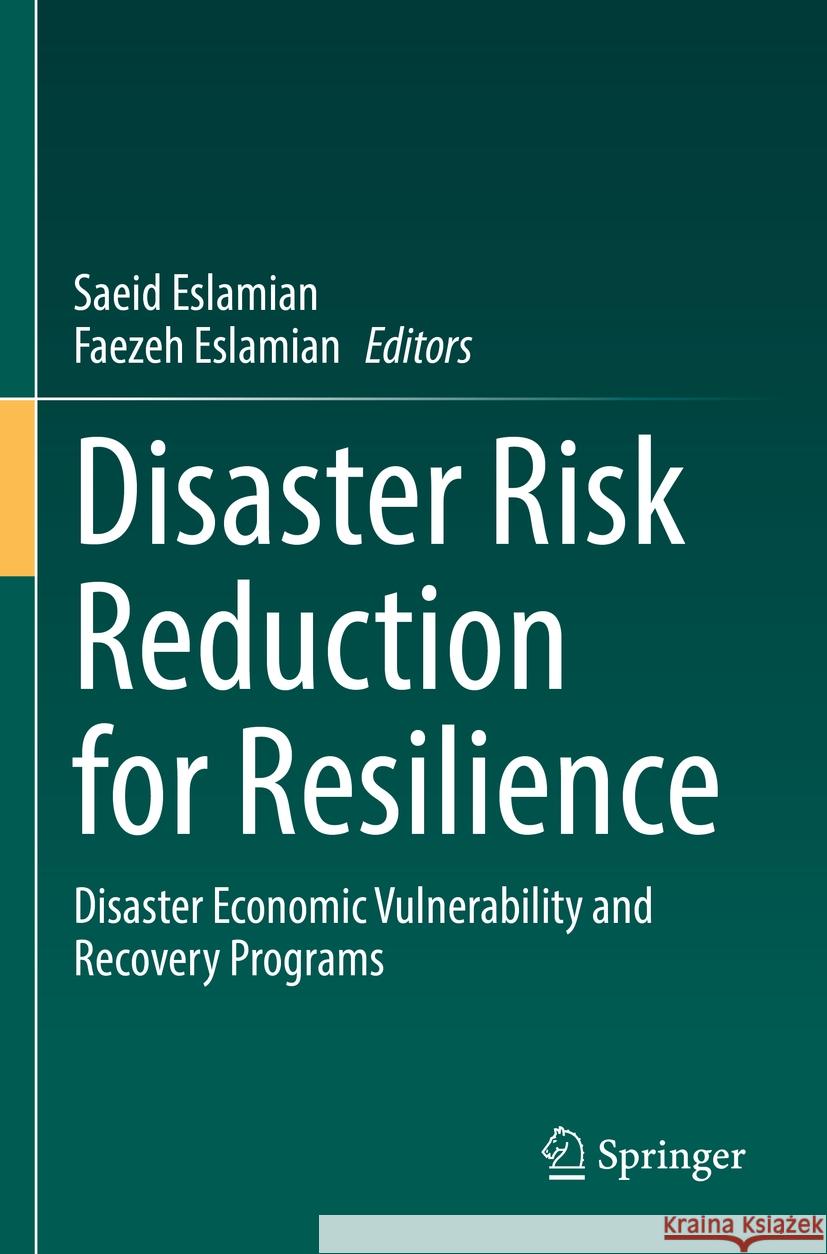
Disaster Risk Reduction for Resilience  9783031083273 Springer International Publishing - książkaWidoczna okładka, to zdjęcie poglądowe, a rzeczywista szata graficzna może różnić się od prezentowanej.

Disaster Risk Reduction for Resilience

ISBN-13: 9783031083273 / Angielski / Miękka / 2023

cena 403,47 zł
(netto: 384,26 VAT:  5%)

Najniższa cena z 30 dni: 385,52 zł
Termin realizacji zamówienia:
ok. 22 dni roboczych
Bez gwarancji dostawy przed świętami

Darmowa dostawa!
inne wydania

This book is part of a six-volume series on Disaster Risk Reduction and Resilience. The series aims to fill in gaps in theory and practice in the Sendai Framework, providing additional resources, methodologies, and communication strategies to enhance the plan for action and targets proposed by the Sendai Framework. The series will appeal to a broad range of researchers, academics, students, policy makers, and practitioners in engineering, environmental science and geography, geoscience, emergency management, finance, community adaptation, atmospheric science, and information technology.


This volume focuses on the concepts of economic and development vulnerability, discussing the roles of physical, social, cultural, political, economic, technological, and development factors that contribute to disaster impacts and threat levels on vulnerable populations. This approach explores how the resilience of individuals and communities can be increased in the face of future hazard threats, and how post-disaster efforts are planned for and implemented to manage risk reduction and the potential outcomes of hazard threats. Topics addressed in the boom include disaster recovery reform and resilience, recovery, and development programs, place-based reconstruction policies, resilient and sustainable disaster relief, and recovery programs, sustainable community development, and disaster recovery and post-hazard recovery strategies.

Kategorie:
Nauka, Biologia i przyroda
Kategorie BISAC:
Nature > Natural Disasters
Science > Environmental Science (see also Chemistry - Environmental)
Technology & Engineering > Quality Control
Wydawca:
Springer International Publishing
Język:
Angielski
ISBN-13:
9783031083273
Rok wydania:
2023
Waga:
0.55 kg
Wymiary:
23.5 x 15.5
Oprawa:
Miękka
Dodatkowe informacje:
Wydanie ilustrowane

Chapter 1. Systemic Risk and Mitigating Economic Disasters In the Arctic: Cases of Oil Spills, Cruise Ships and Pandemics.- Chapter 2. Assessing Loss and Damage of Low Exposed Sudden Onset Disasters: Evidence from the Marginal Salt Cultivators of Kutubdia Island, Bangladesh.- Chapter 3. Disaster Economic Vulnerability and Recovery Programs Experience from Tanzania.- Chapter 4. Gendered Economic Vulnerabilities in Disaster Environments the case of the COVID-19 Pandemic.- Chapter 5. Economic Growth and Hazard Risk Reduction.- Chapter 6. Resilience in Disaster Relief and Recovery Programs at the Person-Environment Nexus.- Chapter 7. Improving Resilience Capacity of the Policies and Planning for Temporary Shelters in Crises and Disasters.- Chapter 8. Evaluating risk from disasters to improve resilience Lessons from Nigeria and South Africa.- Chapter 9. Perspectives for collaborative disaster risk reduction experience report from the Brazilian Disaster Knowledge Platform.- Chapter 10. Development of an Earthquake-Induced Landslide Hazard Assessment.- Chapter 11. Use of Typha Latifolia as a Tool for Biomonitoring of Hazardous Domestic Effluents.- Chapter 12. Arsenic Control for Hazard Risk Reduction.- Chapter 13. A Climate Adaptation Monitoring Tool for Sustainable Marine Planning.- Chapter 14. Urban Rivers Resilience.- Chapter 15. A Risk-Based Approach to Development Planning.- Chapter 16. Unveiling the Latent Disasters from a Holistic and Probabilistic View Development of a National Risk Atlas.

Dr. Saeid Eslamian is a Full Professor of Hydrology and Water Resources Sustainability at Isfahan University of Technology in the Department of Water Engineering. His research focuses mainly on statistical and environmental hydrology and climate change. In particular, he is working on modeling natural hazards including flood, drought, storm, wind, and pollution toward a sustainable environment. Formerly, he was a Visiting Professor at Princeton University, University of ETH Zurich, and McGill University. He has contributed to more than 1K publications in journals, books, or as technical reports, and he is the Founder and Chief Editor of the International Journal of Hydrology Science and Technology. Eslamian is now associate editor of six important publications: Journal of Hydrology (Elsevier), Eco-Hydrology and Hydrobiology (Elsevier), Water Reuse (IWA) and Journal of the Saudi Society of Agricultural Sciences (Elsevier), Arabian Journal of Geosciences (Springer), International Journal of Climate Change Strategies and Management (Emerlad)

Professor Saeid Eslamian is the editor and author of approximately 25 Handbooks. The editorship of Eleven handbooks published by Taylor & Francis (CRC Press): the three-volume Handbook of Engineering Hydrology in 2014, Urban Water Reuse Handbook in 2016, Underground Aqueducts Handbook (2017), the three-volume Handbook of Drought and Water Scarcity (2017), Constructed Wetlands: Hydraulic Design (2020), Handbook of Irrigation System Selection for Semi-Arid Regions (2020), Urban and Industrial Water Conservation Methods (2021), the two-volume Handbook of Water Harvesting and Conservation by Wiley and two books entitled Evaluation of Groundwater Storage Potentials in a Semiarid Climate and Advances in Hydrogeochemistry Research by Nova Science Publishers (USA) are also his book publications in 2021, 2019 and 2020, respectively.

The six-volume series on Handbook of Disaster Risk Reduction and Resilience is also one of the Saeid Contribution to knowledge that four volumes have been published so far.

Faezeh Eslamian is a PhD Holder of Bioresource Engineering in McGill University. Her research focuses on the development of a novel lime-based product to mitigate phosphorus loss from agricultural fields. Faezeh completed her bachelor and master’s degrees in Civil and Environmental Engineering from Isfahan University of Technology, Iran where she evaluated natural and low-cost absorbents for the removal of pollutants such as textile dyes and heavy metals. Furthermore, she has conducted research on the worldwide water quality standards and wastewater reuse guidelines. Faezeh is an experienced multidisciplinary researcher with interest in soil and water quality, environmental remediation, water reuse and drought management.

This book is part of a six-volume series on Disaster Risk Reduction and Resilience. The series aims to fill in gaps in theory and practice in the Sendai Framework, providing additional resources, methodologies, and communication strategies to enhance the plan for action and targets proposed by the Sendai Framework. The series will appeal to a broad range of researchers, academics, students, policy makers, and practitioners in engineering, environmental science and geography, geoscience, emergency management, finance, community adaptation, atmospheric science, and information technology.


This volume focuses on the concepts of economic and development vulnerability, discussing the roles of physical, social, cultural, political, economic, technological, and development factors that contribute to disaster impacts and threat levels on vulnerable populations. This approach explores how the resilience of individuals and communities can be increased in the face of future hazard threats, and how post-disaster efforts are planned for and implemented to manage risk reduction and the potential outcomes of hazard threats. Topics addressed in the boom include disaster recovery reform and resilience, recovery, and development programs, place-based reconstruction policies, resilient and sustainable disaster relief, and recovery programs, sustainable community development, and disaster recovery and post-hazard recovery strategies.



Udostępnij

Facebook - konto krainaksiazek.pl


Opinie o Krainaksiazek.pl na Opineo.pl

Partner Mybenefit

Krainaksiazek.pl w programie rzetelna firma Krainaksiaze.pl - płatności przez paypal

Czytaj nas na:

Facebook - krainaksiazek.pl
  • książki na zamówienie
  • granty
  • książka na prezent
  • kontakt
  • pomoc
  • opinie
  • regulamin
  • polityka prywatności

Zobacz:

  • Księgarnia czeska

  • Wydawnictwo Książkowe Klimaty

1997-2025 DolnySlask.com Agencja Internetowa

© 1997-2022 krainaksiazek.pl
     
KONTAKT | REGULAMIN | POLITYKA PRYWATNOŚCI | USTAWIENIA PRYWATNOŚCI
Zobacz: Księgarnia Czeska | Wydawnictwo Książkowe Klimaty | Mapa strony | Lista autorów
KrainaKsiazek.PL - Księgarnia Internetowa

Polityka prywatnosci - link
Krainaksiazek.pl - płatnośc Przelewy24
Przechowalnia Przechowalnia







