• Wyszukiwanie zaawansowane
  • Kategorie
  • Kategorie BISAC
  • Książki na zamówienie
  • Promocje
  • Granty
  • Książka na prezent
  • Opinie
  • Pomoc
  • Załóż konto
  • Zaloguj się

Disaster Risk Governance in India and Cross Cutting Issues » książka


zaloguj się | załóż konto
Logo Krainaksiazek.pl

koszyk

konto

szukaj
topmenu
Księgarnia internetowa
Szukaj
Książki na zamówienie
Promocje
Granty
Książka na prezent
Moje konto
Pomoc
 
 
Wyszukiwanie zaawansowane
Pusty koszyk
Bezpłatna dostawa dla zamówień powyżej 20 złBezpłatna dostawa dla zamówień powyżej 20 zł

Kategorie główne

• Nauka
 [2946600]
• Literatura piękna
 [1856966]

  więcej...
• Turystyka
 [72221]
• Informatyka
 [151456]
• Komiksy
 [35826]
• Encyklopedie
 [23190]
• Dziecięca
 [619653]
• Hobby
 [140543]
• AudioBooki
 [1577]
• Literatura faktu
 [228355]
• Muzyka CD
 [410]
• Słowniki
 [2874]
• Inne
 [445822]
• Kalendarze
 [1744]
• Podręczniki
 [167141]
• Poradniki
 [482898]
• Religia
 [510455]
• Czasopisma
 [526]
• Sport
 [61590]
• Sztuka
 [243598]
• CD, DVD, Video
 [3423]
• Technologie
 [219201]
• Zdrowie
 [101638]
• Książkowe Klimaty
 [124]
• Zabawki
 [2473]
• Puzzle, gry
 [3898]
• Literatura w języku ukraińskim
 [254]
• Art. papiernicze i szkolne
 [8170]
Kategorie szczegółowe BISAC

Disaster Risk Governance in India and Cross Cutting Issues

ISBN-13: 9789811033094 / Angielski / Twarda / 2017 / 413 str.
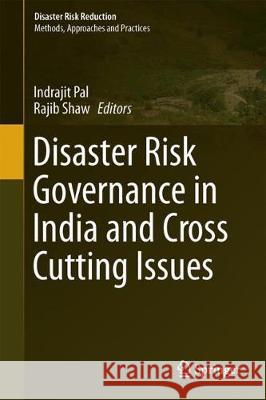
Indrajit Pal; Rajib Shaw
Disaster Risk Governance in India and Cross Cutting Issues Indrajit Pal Rajib Shaw 9789811033094 Springer - książkaWidoczna okładka, to zdjęcie poglądowe, a rzeczywista szata graficzna może różnić się od prezentowanej.

Disaster Risk Governance in India and Cross Cutting Issues

ISBN-13: 9789811033094 / Angielski / Twarda / 2017 / 413 str.

Indrajit Pal; Rajib Shaw
cena 403,47 zł
(netto: 384,26 VAT:  5%)

Najniższa cena z 30 dni: 385,52 zł
Termin realizacji zamówienia:
ok. 22 dni roboczych
Bez gwarancji dostawy przed świętami

Darmowa dostawa!

This book provides an analytical discussion of the status of disaster risk reduction and governance in an Indian context, drawing examples and lessons from the output of the national and regional level programs and projects and from other relevant experiences in the country. Different types of disasters faced by Indian states are covered, including geophysical and hydrometeorological hazards. The book incorporates and draws upon some of the key lessons from the pre-disaster phase through the disaster phase and finally to the post-disaster phase, thus establishing an effective framework in the form of key lessons learned. The rich content of the book is based on contributions from various stakeholders, from academicians and practitioners to decision makers and nongovernment organizations related to disaster risk management systems in an Indian context. Special emphasis is given to analyzing field experiences from academic perspectives and pointing out key issues along with the relevance of risk governance of disaster risk reduction. The book works as a comprehensive reference in disaster risk governance for disaster managers in India and other countries. The book has 19 chapters organized into four parts. Part I provides the outline and basics of disaster risk governance perspectives at the national level with supporting examples from a global point of view. Part II specifically emphasizes the detailed perspectives on risk governance at the regional and local levels. Part III is devoted to approaches and issues of disaster risk governance and development at various levels, stressing the practices and clear examples of disaster risk governance, policy options, institutional organization, risk-reduction strategies, and key lessons learned. Finally, Part IV highlights risk reduction and cross-cutting issues, focusing on risk mitigation and scientific intervention for disaster risk reduction.


Kategorie:
Nauka, Geografia
Kategorie BISAC:
Nature > Natural Disasters
Science > Earth Sciences - Meteorology & Climatology
Science > Earth Sciences - Geography
Wydawca:
Springer
Seria wydawnicza:
Disaster Risk Reduction
Język:
Angielski
ISBN-13:
9789811033094
Rok wydania:
2017
Wydanie:
2018
Numer serii:
000465721
Ilość stron:
413
Waga:
8.40 kg
Wymiary:
23.5 x 15.5
Oprawa:
Twarda
Wolumenów:
01


Indrajit Pal is an assistant professor in Disaster Preparedness, Mitigation and Management, Asian Institute of Technology, Thailand. He served as a faculty member at the Centre for Disaster Management at Lal Bahadur Shastri National Academy of Administration, Mussoorie, India (a premier national institute for training Indian administrative services officers) for more than 8 years. Dr. Pal holds a Ph.D. in Seismotectonic and Earthquake Hazard Assessment, and two master’s degrees, one in applied geology and another in sociology with a specialization in urban sociology. He has more than 14 years of experience in teaching, training, research, curriculum development, advocacy, consultancy primarily focused on disaster governance, risk management (DRM), incident command systems, disaster risk eduction (DRR), hazard and risk assessment, GIS and remote sensing in DRM, climate change adaptation, and DRM. Dr. Pal is working with international organizations on various aspects of DRR and supervising doctoral and master’s degree research students in the field of DRM. He is a reviewer for reputed international journals and has published a number of books and research articles in refereed national and international journals. In 2017 Dr. Pal was been recognized as an IRDR Young Scientist by Integrated Research on Disaster Risk, Beijing, China. 

Rajib Shaw is a professor of Keio University at its Shonan Fujisawa Campus in Japan. Earlier, he was the executive director of Integrated Research on Disaster Risk (IRDR), a decade-long research program co-sponsored by the International Council for Science (ICSU), the International Social Science Council (ISSC), and the United Nations International Strategy for Disaster Reduction (UNISDR). He is the co-chair of the UNISDR Asia Science Technology Academic Advisory Group (ASTAAG). Dr. Shaw is also a senior fellow of the Institute of Global Environmental Strategies (IGES) Japan and the chairperson of SEEDS Asia, a Japanese NGO. Previously, he was a professor in the Graduate School of Global Environmental Studies of Kyoto University, Japan. His expertise includes community-based disaster risk management, climate change adaptation, urban risk management, and disaster and environmental education. He has published more than 40 books and more than 300 academic papers and book chapters.

This book provides an analytical discussion of the status of disaster risk reduction and governance in an Indian context, drawing examples and lessons from the output of the national and regional level programs and projects and from other relevant experiences in the country. Different types of disasters faced by Indian states are covered, including geophysical and hydrometeorological hazards. The book incorporates and draws upon some of the key lessons  from the pre-disaster phase through the disaster phase and finally to the post-disaster phase, thus establishing an effective framework in the form of key lessons learned.

The rich content of the book is based on contributions from various stakeholders, from academicians and practitioners to decision makers and nongovernment organizations related to disaster risk management systems in an Indian context.Special emphasis is given to analyzing field experiences from academic perspectives and pointing out key issues along with the relevance of risk governance of disaster risk reduction. The book works as a comprehensive reference in disaster risk governance for disaster managers in India and other countries.

The book has 19 chapters organized into four parts. Part I provides the outline and basics of disaster risk governance perspectives at the national level with supporting examples from a global point of view. Part II specifically emphasizes the detailed perspectives on risk governance at the regional and local levels. Part III is devoted to approaches and issues of disaster risk governance and development at various levels, stressing the practices and clear examples of disaster risk governance, policy options, institutional organization, risk-reduction strategies, and key lessons learned. Finally, Part IV highlights risk reduction and cross-cutting issues, focusing on risk mitigation and scientific intervention for disaster risk reduction.




Udostępnij

Facebook - konto krainaksiazek.pl


Opinie o Krainaksiazek.pl na Opineo.pl

Partner Mybenefit

Krainaksiazek.pl w programie rzetelna firma Krainaksiaze.pl - płatności przez paypal

Czytaj nas na:

Facebook - krainaksiazek.pl
  • książki na zamówienie
  • granty
  • książka na prezent
  • kontakt
  • pomoc
  • opinie
  • regulamin
  • polityka prywatności

Zobacz:

  • Księgarnia czeska

  • Wydawnictwo Książkowe Klimaty

1997-2025 DolnySlask.com Agencja Internetowa

© 1997-2022 krainaksiazek.pl
     
KONTAKT | REGULAMIN | POLITYKA PRYWATNOŚCI | USTAWIENIA PRYWATNOŚCI
Zobacz: Księgarnia Czeska | Wydawnictwo Książkowe Klimaty | Mapa strony | Lista autorów
KrainaKsiazek.PL - Księgarnia Internetowa

Polityka prywatnosci - link
Krainaksiazek.pl - płatnośc Przelewy24
Przechowalnia Przechowalnia




