• Wyszukiwanie zaawansowane
  • Kategorie
  • Kategorie BISAC
  • Książki na zamówienie
  • Promocje
  • Granty
  • Książka na prezent
  • Opinie
  • Pomoc
  • Załóż konto
  • Zaloguj się

Direct-Fed Microbials and Prebiotics for Animals » książka


zaloguj się | załóż konto
Logo Krainaksiazek.pl

koszyk

konto

szukaj
topmenu
Księgarnia internetowa
Szukaj
Książki na zamówienie
Promocje
Granty
Książka na prezent
Moje konto
Pomoc
 
 
Wyszukiwanie zaawansowane
Pusty koszyk
Bezpłatna dostawa dla zamówień powyżej 20 złBezpłatna dostawa dla zamówień powyżej 20 zł

Kategorie główne

• Nauka
 [2949965]
• Literatura piękna
 [1857847]

  więcej...
• Turystyka
 [70818]
• Informatyka
 [151303]
• Komiksy
 [35733]
• Encyklopedie
 [23180]
• Dziecięca
 [617748]
• Hobby
 [139972]
• AudioBooki
 [1650]
• Literatura faktu
 [228361]
• Muzyka CD
 [398]
• Słowniki
 [2862]
• Inne
 [444732]
• Kalendarze
 [1620]
• Podręczniki
 [167233]
• Poradniki
 [482388]
• Religia
 [509867]
• Czasopisma
 [533]
• Sport
 [61361]
• Sztuka
 [243125]
• CD, DVD, Video
 [3451]
• Technologie
 [219309]
• Zdrowie
 [101347]
• Książkowe Klimaty
 [123]
• Zabawki
 [2362]
• Puzzle, gry
 [3791]
• Literatura w języku ukraińskim
 [253]
• Art. papiernicze i szkolne
 [7933]
Kategorie szczegółowe BISAC

Direct-Fed Microbials and Prebiotics for Animals

ISBN-13: 9783031405112 / Angielski / Twarda / 2023
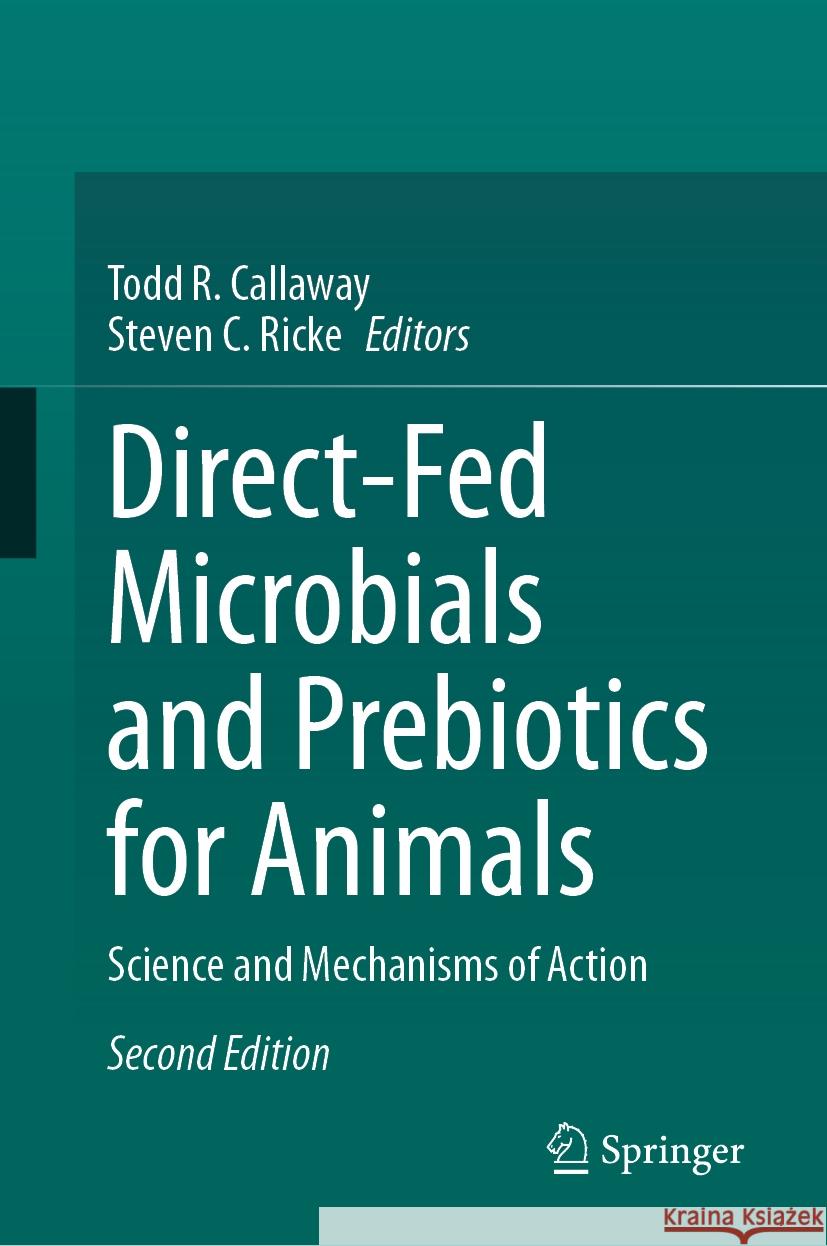
Direct-Fed Microbials and Prebiotics for Animals  9783031405112 Springer International Publishing - książkaWidoczna okładka, to zdjęcie poglądowe, a rzeczywista szata graficzna może różnić się od prezentowanej.

Direct-Fed Microbials and Prebiotics for Animals

ISBN-13: 9783031405112 / Angielski / Twarda / 2023

cena 806,99
(netto: 768,56 VAT:  5%)

Najniższa cena z 30 dni: 771,08
Termin realizacji zamówienia:
ok. 22 dni roboczych
Bez gwarancji dostawy przed świętami

Darmowa dostawa!
inne wydania

In this exciting update, readers will learn how feeding direct-fed microbials (including eubiotics, postbiotics, prebiotics, and synbiotics) is becoming increasingly widespread during food animal production.  Animal production must improve efficiency of growth, and the use of direct-fed microbial and prebiotic additives to domestic animals has become widely accepted and utilized.  The benefits of probiotic-type approaches in cattle, pigs, fish, and poultry, include improved general animal health, reduced foodborne pathogen populations, increased growth rate and feed efficiency, improved milk and egg production, and have been reported world-wide.  Successes from probiotic approaches in multiple species have ensured their adoption; however, several fundamental questions remain.  Early establishment and retention of an ecological balance in the gastrointestinal tract is an important first step for an external biological additive to be effective in young animals, suggesting that some of the benefits of direct-fed microbials may be due to an early establishment of a “normal” native gut microbial population.  Research has indicated that the establishment of a normal population can enhance gut epithelial integrity, preventing inflammation and improving animal health.  Thus, it is important that we understand the key processes that occur during the establishment of the gut microbial population that can impact gastrointestinal fermentation and provide protection against pathogens of the animals and of human consumers. Knowing how these processes work and how they impact animal energy and protein expenditures can guide further improvements of available and future commercial products.  Exciting research opportunities are discussed in this book, examining different characteristics of DFMs that are fed to animals to meet different production demands in different production scenarios (e.g., beef versus dairy versus swine versus fin fish).  The advent of molecular and next-generation sequencing offers methods of developing tailored DFMs, and of early detection of successful DFM establishment in the gut.  These techniques will further deepen our insight into understanding the microbial population of the gut and how these populations impact animal health, food safety, and sustainability of animal-derived protein production.


Kategorie:
Nauka, Biologia i przyroda
Kategorie BISAC:
Technology & Engineering > Food Science - Chemistry & Biotechnology
Medical > Weterynaria
Technology & Engineering > Agriculture - General
Wydawca:
Springer International Publishing
Język:
Angielski
ISBN-13:
9783031405112
Rok wydania:
2023
Waga:
0.71 kg
Wymiary:
23.5 x 15.5
Oprawa:
Twarda
Dodatkowe informacje:
Wydanie ilustrowane

Part I: The Gastrointestinal Tract of Food Animals and Impact of Feed Additives 


1. The Commensal Microbiota as a Complex Interactive Consortia J. A. Patterson T.R. Callaway, and S. C. Ricke

 2. The Poultry Gastrointestinal Tract: Overview of Microbial Ecology S. C. Ricke, L.A. Wythe, and A. Scheaffer 

3. Current understanding of the crosstalk between direct-fed microbials and indigenous microbiome in gastrointestinal tract: Applications and challenges in food-producing animals T. Ma and L. L. Guan 

4. Advancements in Poultry Nutrition and Genetics: The Role of Antibiotic Growth Promoters, and the Introduction of Feed Additive Alternatives L. A. Wythe, D. K. Dittoe, and S. C. Ricke 

5. Prebiotics of Plant and Microbial Origin C. Alexander, C. Y. Lin, B. M. Vester Boler, G. C. Fahey, Jr., and K. S. Swanson

 6. Prospects for Prebiotic and Postbiotic Applications in Poultry S. C. Ricke, L.A. Wytthe, E. G. Olson, and A. Scheaffer Part II: Probiotics: Current Status and Future Challenges of Practical Applications

 7. Probiotics in Poultry Preharvest Food Safety: Historical Developments and Current Prospects A.V.S. Perumalla, L.A. Wythe, and S. C. Ricke 

8. Probiotics and Prebiotics: Application to Pets C. Y. Lin, C. Alexander, B. M. Vester-Boler, G. C. Fahey, Jr., and K. S. Swanson

9. Direct-Fed Microbial Supplementation and the Swine Gastrointestinal Tract Microbial Population: Current Challenges and Future Prospects E. Davis, T. R. Callaway, and S. C. Ricke 

10.Current Perspectives on Finfish Microbiota and Direct-Fed-Microbial Applications in Aquaculture J. W. Bledsoe and B. C. Small 

11.Practical Applications of Probiotics in Beef Cattle Production. T. R. Callaway, O. Koyun, N. Corcionivoschi, J. Baloyi, C. Ateba, L. Stef, R. El Jeni, and D. Bu 

12.Current Status of Practical Applications: Probiotics in Dairy Cattle R. El Jeni, A. Osorio-Doblado, K. Feldmann, J. Lourenco, D. Bu, and T. R. Callaway

Dr. Todd R. Callaway received his B.S. Agriculture degree in Animal Health and Animal and Dairy Sciences, as well as his M.S. in Animal and Dairy Sciences from the University of Georgia.  He received his Ph.D. in Microbiology from Cornell University, with minors in Biochemistry and Animal Science.  Dr. Callaway is a Research Microbiologist for the Agricultural Research Service of the U.S. Department of Agriculture, and has served as a Science Fellow for the Foreign Agriculture Service and the U.S. State Department.  He has adjunct faculty appointments in the Department of Agriculture at Angelo State University, the Animal and Dairy Sciences Department at Mississippi State University, and the Department of Animal Science at Texas A&M University. Dr. Callaway has a research program focused on manipulating the microbial ecology of the animal gastrointestinal tract to reduce populations of foodborne pathogenic bacteria in food animals before they enter the food chain.


Dr. Steven C. Ricke received his B.S. degree in Animal Science and M.S. degree in Ruminant Nutrition from the University of Illinois and his Ph.D. degree from the University of Wisconsin with a co-major in Animal Science and Bacteriology. He is currently holder of the Donald “Buddy” Wray Endowed Chair in Food Safety and Director of the Center for Food Safety at the University of Arkansas.  He is also a faculty member of the Department of Food Science, the Department of Poultry Science and the Cellular and Molecular Graduate program. Dr. Ricke’s research program is primarily focused on virulence and pathogenic characteristics of foodborne salmonellae.

In this exciting update, readers will learn how feeding direct-fed microbials (including eubiotics, postbiotics, prebiotics, and synbiotics) is becoming increasingly widespread during food animal production.  Animal production must improve efficiency of growth, and the use of direct-fed microbial and prebiotic additives to domestic animals has become widely accepted and utilized.  The benefits of probiotic-type approaches in cattle, pigs, fish, and poultry, include improved general animal health, reduced foodborne pathogen populations, increased growth rate and feed efficiency, improved milk and egg production, and have been reported world-wide.  Successes from probiotic approaches in multiple species have ensured their adoption; however, several fundamental questions remain.  Early establishment and retention of an ecological balance in the gastrointestinal tract is an important first step for an external biological additive to be effective in young animals, suggesting that some of the benefits of direct-fed microbials may be due to an early establishment of a “normal” native gut microbial population.  Research has indicated that the establishment of a normal population can enhance gut epithelial integrity, preventing inflammation and improving animal health.  Thus, it is important that we understand the key processes that occur during the establishment of the gut microbial population that can impact gastrointestinal fermentation and provide protection against pathogens of the animals and of human consumers.

Knowing how these processes work and how they impact animal energy and protein expenditures can guide further improvements of available and future commercial products.  Exciting research opportunities are discussed in this book, examining different characteristics of DFMs that are fed to animals to meet different production demands in different production scenarios (e.g., beef versus dairy versus swine versus fin fish).  The advent of molecular and next-generation sequencing offers methods of developing tailored DFMs, and of early detection of successful DFM establishment in the gut.  These techniques will further deepen our insight into understanding the microbial population of the gut and how these populations impact animal health, food safety, and sustainability of animal-derived protein production.




Udostępnij

Facebook - konto krainaksiazek.pl


Opinie o Krainaksiazek.pl na Opineo.pl

Partner Mybenefit

Krainaksiazek.pl w programie rzetelna firma Krainaksiaze.pl - płatności przez paypal

Czytaj nas na:

Facebook - krainaksiazek.pl
  • książki na zamówienie
  • granty
  • książka na prezent
  • kontakt
  • pomoc
  • opinie
  • regulamin
  • polityka prywatności

Zobacz:

  • Księgarnia czeska

  • Wydawnictwo Książkowe Klimaty

1997-2025 DolnySlask.com Agencja Internetowa

© 1997-2022 krainaksiazek.pl
     
KONTAKT | REGULAMIN | POLITYKA PRYWATNOŚCI | USTAWIENIA PRYWATNOŚCI
Zobacz: Księgarnia Czeska | Wydawnictwo Książkowe Klimaty | Mapa strony | Lista autorów
KrainaKsiazek.PL - Księgarnia Internetowa

Polityka prywatnosci - link
Krainaksiazek.pl - płatnośc Przelewy24
Przechowalnia Przechowalnia




