• Wyszukiwanie zaawansowane
  • Kategorie
  • Kategorie BISAC
  • Książki na zamówienie
  • Promocje
  • Granty
  • Książka na prezent
  • Opinie
  • Pomoc
  • Załóż konto
  • Zaloguj się

Digital Transformation of Identity in the Age of Artificial Intelligence » książka


zaloguj się | załóż konto
Logo Krainaksiazek.pl

koszyk

konto

szukaj
topmenu
Księgarnia internetowa
Szukaj
Książki na zamówienie
Promocje
Granty
Książka na prezent
Moje konto
Pomoc
 
 
Wyszukiwanie zaawansowane
Pusty koszyk
Bezpłatna dostawa dla zamówień powyżej 20 złBezpłatna dostawa dla zamówień powyżej 20 zł

Kategorie główne

• Nauka
 [2946912]
• Literatura piękna
 [1852311]

  więcej...
• Turystyka
 [71421]
• Informatyka
 [150889]
• Komiksy
 [35717]
• Encyklopedie
 [23177]
• Dziecięca
 [617324]
• Hobby
 [138808]
• AudioBooki
 [1671]
• Literatura faktu
 [228371]
• Muzyka CD
 [400]
• Słowniki
 [2841]
• Inne
 [445428]
• Kalendarze
 [1545]
• Podręczniki
 [166819]
• Poradniki
 [480180]
• Religia
 [510412]
• Czasopisma
 [525]
• Sport
 [61271]
• Sztuka
 [242929]
• CD, DVD, Video
 [3371]
• Technologie
 [219258]
• Zdrowie
 [100961]
• Książkowe Klimaty
 [124]
• Zabawki
 [2341]
• Puzzle, gry
 [3766]
• Literatura w języku ukraińskim
 [255]
• Art. papiernicze i szkolne
 [7810]
Kategorie szczegółowe BISAC

Digital Transformation of Identity in the Age of Artificial Intelligence

ISBN-13: 9789811522505 / Angielski / Miękka / 2021 / 286 str.
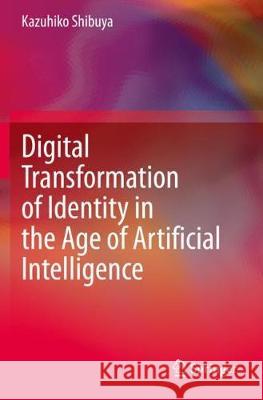
Kazuhiko Shibuya
Digital Transformation of Identity in the Age of Artificial Intelligence Kazuhiko Shibuya 9789811522505 Springer - książkaWidoczna okładka, to zdjęcie poglądowe, a rzeczywista szata graficzna może różnić się od prezentowanej.

Digital Transformation of Identity in the Age of Artificial Intelligence

ISBN-13: 9789811522505 / Angielski / Miękka / 2021 / 286 str.

Kazuhiko Shibuya
cena 442,79
(netto: 421,70 VAT:  5%)

Najniższa cena z 30 dni: 424,07
Termin realizacji zamówienia:
ok. 22 dni roboczych
Bez gwarancji dostawy przed świętami

Darmowa dostawa!
inne wydania
Kategorie:
Nauka, Matematyka
Kategorie BISAC:
Mathematics > Matematyka stosowana
Social Science > Socjologia
Language Arts & Disciplines > Library & Information Science - General
Wydawca:
Springer
Język:
Angielski
ISBN-13:
9789811522505
Rok wydania:
2021
Wydanie:
2020
Ilość stron:
286
Waga:
0.43 kg
Wymiary:
23.39 x 15.6 x 1.65
Oprawa:
Miękka
Wolumenów:
01
Dodatkowe informacje:
Wydanie ilustrowane

1. Digital Social Science
1.1 What does the advanced Technology mean for human-being?
1.1.1 When AI excesses the Leader of the Primates
1.1.2 Big-data accumulates everything
1.2 The Sign of Latent Risks
1.2.1 How Can We depict a Good Future opened by advanced technologies?
1.2.2 Asilomar Conference on Beneficial AI
1.3 Grounding in the Actuality
1.3.1 Grounding between Technologies and Thought
1.3.2 Brief Historical Perspective of Digital Progress
1.4 What is a Role of digital social science in those contexts?
1.4.1 Definition of Digital Social Science and its Vector
1.4.2 Sociological Taxonomy
1.4.3 Interdisciplinary Taxonomy
References
2. Investigating Identity
2.1 Lexical Definitions
2.1.1 From Personality Science
2.1.2 From Sociological Context
2.1.3 AI and Agents
2.2 Preconditions for Identity
2.2.1 Preconditions
2.2.2 Civil Law rules on AI and Robotics in EU
2.3 Identity and its areas in digitized society
2.4 Methodologies for Identity in digitized society
References
3. Identity Ambiguity
3.1 Communications with the others
3.1.1 The Self encounters the others
3.1.2 Empathy for the others
3.2 Physical-body contact and Interconnected online contact
3.2.1 A Case: the Question for life
3.2.2 Existence of the Others
3.2.3 Other Existence as Intruder to My Space and Time
3.3 Identity as existence and representation
3.4 Dignity for Human-Being
3.4.1 Difference between Artefact and Human
3.4.1.1 Extensional Artefact of Body
3.4.1.2 Dignity
3.4.2 Barriers against Ethical Misconducts by AI
3.4.3 Trustful AI
References
4. Identity Valuation
4.1 Earning Money by Big-Data
4.2 Scoring a value of your life
4.2.1 Your Digitized Scores by the AI
4.2.1.1 Scoring Services
4.2.1.2 On Value
4.2.1.3 Theories on Value
4.2.2 Internalizing the External Moral Standard through Scoring
4.2.2.1 Internalizing Value among Citizens
4.2.2.2 An Example of Social Simulation on Dominant Influence of the Value
4.2.3 Working for the Ethical Rules and Economic Valuation
4.3 Distinction: Random Selection or Modified Life
4.3.1 Genetic Therapy and its Value for Life
4.3.2 Genome Editing and Modification of Life
4.3.3 Sociological Criticisms
4.3.4 Value Chains beyond Family and Individuals
4.4 AI Optimizing Economic Satisfactions for Medical Services
4.5 Regaining Priceless Value of own Identity
References
5. Identity Protection
5.1 Identity Management in social context
5.2 What Data Should be protected?
5.2.1 Individual
5.2.1.1 Level 0: Sensibility on somewhat data by physical contacts
5.2.1.2 Level 1: Identification data for publicly intercommunications
5.2.1.3 Level 2: Protection as the way for access controls on privacy and sensitive private data
5.2.1.4 Level 3: Guarding private data of each individual by any external attacks in daily living
5.2.1.5 Level 4: Protections for the private rights to manage each physical-body and its parts
5.2.2 Enterprises
5.2.3 Nations
5.2.4 DataBase Management and Data Base Protection
5.3 Information Bank
5.4 Block Chain and Its Distributed Database
5.5 Rule of Conduct for Auhthority in Medical Data
5.6 Risk Management on Identity
5.6.1 Online harms and Reputation Management for each Individual
5.6.2 Identity Theft
5.6.3 Leaking Privacy
5.6.4 Unintentional Usages of Privacy
References
6. Identity Proof
6.1 Proving Evidence
6.2 Proving What You Are
6.2.1 Ciphering and Encoding
6.2.2 Signaling
6.2.3 Interactive Zero-Knowledge Proof in depth
6.3 The Monty Hall Problem with Interactive zero-knowledge proof
6.3.1 Procedure
6.3.2 Applicability Online
6.4 Discussion on model
References
7. Identity Deception
7.1 Detecting Deceptions
7.2 Dyad Interactions for Anti-Deceptions: A Perspective from difference equations
7.2.1 Anomaly Detection in Interaction
7.2.2 Agent-Based Dyad Interaction
7.2.3 Applying For Deception Detection
7.2.4 Discussion on model
7.3 Social Intelligence against Deceptive Interaction
7.3.1 A Game of Werewolf
7.3.2 Detection vs Deception
7.4 Deception Technology by Generative Adversarial Machine Learning
References
8. Social Identification
8.1 Needs of Rethought for Social Identification
8.2 Sociocultural Backgrounds of National Identity
8.3 Uncertainty Reduction in Social Group and Culture
8.3.1 Collectivism and Individualism
8.3.2 Social Uncertainty
8.3.3 Group Identification in Uncertainty
8.3.4 Culture as System and Social Uncertainty
8.4 Self-Consciousness and Identity
8.4.1 Self-Consciousness and Self-Regulation
8.4.2 Shared Group Belief as Identification
8.4.3 Social Trust, Group Identification and Self-Consciousness
8.5 Sharing Place and History for Social Identity
8.6 National Identity and Social media
References
9. Collective Identity
9.1 Collective Dynamics and Mobility
9.1.1 Collective Dynamics of Human Behavior
9.1.2 Modality on Human-Behavior
9.1.2.1 A Possibility of Ubiquitous Computation
9.1.2.2 Measuring Dynamics in City
9.3 Modeling Mobility Flow and Dynamics
9.3.1 Geospatial Informatics on Mobility Flow
9.3.2 The law of migration
9.3.3 Mathematical Models of Mobility in Socioeconomic Issues
9.3.4 Gravity Model
9.3.5 Spatial Autocorrelation
9.4 Immigration Dynamics crossing Nations
9.4.1 The World History as Collective Immigration
9.4.2 What is the meaning of ‘Arab Spring’?
9.4.3 Migration Crises: As One of the World Affairs
9.5 Simulation of Migration by Deferred Acceptance Algorithm
9.5.1 Basic Scenario
9.5.2 Matching Algorithm
9.5.3 AHP
9.5.4 Exploring the Route by Genetic Algorithm
9.5.5 Running Simulation
9.5.6 Conclusion of Simulation
References
10. Networked Identity
10.1 Synchronizing Networked Identities
10.2 Synchronization In Networking
10.2.1 A Moment of Truth against Reality Lost
10.2.2 Social Movement and Collective Protests all over the Worlds
10.2.3 Greater Disaster
10.3 Infuluencers’ Power in Social Networking
10.3.1 Social Influences of Power
10.3.2 Power holder and Followers
10.3.3 Algorithm
10.3.3.1 Networked clusters
10.3.3.2 Homophily Model
10.3.3.3 Convergence of Opinions
10.3.3.4 Percolation in Spatial Graph
10.4 Estimating Activities Online
10.4.1 Wireless Sensing System
10.4.2 Image Analysis by Artificial Intelligence
10.4.3 Remote Sensing
10.4.4 Estimation of Online Participants
10.5 An Aspect of National Identity
10.5.1 Emerging Bit-Nation
10.5.2 Digital Transformation against the National Border
10.5.3 Rewiring International Orders
References
11. Identity Health
11.1 Digital Society and Health
11.1.1 Addiction Online
11.1.2 Medical Data analysis
11.1.3 A Case of the World Pandemic Flu at 2009
11.1.3.1 The Humankind and Diseases
11.1.3.2 Coincidences between Online and Offline Trends?
11.2 Identity Crisis
11.2.1 Disasters in the Big-Data Age
11.2.2 A Case of Fukushima Disaster
11.2.3 Victims of the Fukushima
11.2.4 Caring for Victims and their Community
11.3 Monitoring Health in Daily Life
11.3.1 Working In Digital Era
11.3.2 Quality of Life
11.4 Therapy for Human By AI
11.4.1 Therapy for Identity in both personal and social level
11.4.2 Theory of Mind: the nature of Understanding myself and the others
11.4.3 Assistance by the AI and Robots
References
12. Identity History
12.1 An Insight History on Life and Death
12.2 Reconsidering Life on Historical Perspective
12.2.1 Two Meanings of Time
12.2.2 Evaluating Present Time and Future
12.3 Big-data of ‘I’
12.3.1 How does estimate the Data Volume of ‘I’?
12.3.2 A Case of the Three Watsons
12.3.3 Sharing each lifelog as Human-History
12.4 Histories in Simulations
12.5 Forensics
12.5.1 Needs for digital forensics for identification
12.5.2 Revealing Original Writer
12.5.3 Archiving Memorials
12.6 Irreversibility
12.6.1 Pandora Box
12.6.2 What If Human-Being gains Immortality
12.6.2.1 Ethics: from the God to the Human-Being
12.6.2.2 Ethical Issues against immortality
12.6.2.3 Devaluation on Life of the Human-Being
12.6.2.4 Prolonged Working Life
12.6.2.5 Ewig Wiederkehren
12.6.3 Precautionary Principle and Imaginations against Potential Problems
References
13. General Discussion
13.1 Historical Necessity and Certainty
13.2 Latent Threats of AI
13.2.1 AI Threats
13.2.2 The Cases of Threats by AI
13.2.3 Further points 281
13.3 A Coexistence Possibility Theorem and its Limit
13.3.1 Proof
13.3.2 Balance and Equilibrium
13.3.3 National Security and Warfare
13.3.4 Symmetry Breaking between the Humankind and the AI
13.3.5 Barrier against Logical Weakness
13.3.6 Cooperation Beyond The Difference
13.3.6.1 Cooperation Possibility
13.3.6.2 The Significance for Grounding in Practical Solutions
13.3.7 Inequality in Social Welfare and Utility
13.4 Manipulatable Minds
13.4.1 Information Manipulation
13.4.2 Emerging Sharp Power
13.4.3 Becoming Citizens as Mercenary by Manipulations of Social Media
13.4.4 Education for Citizens in the Digitized Democratic Society
13.5 Democracy in the Age of AI
13.5.1 Democratic Enforcement
13.5.2 A Lone King of the lone Kingdom
13.5.2.1 Why Revolutions matters in the Digital World?
13.5.2.2 Social Media 309
13.5.2.3 Misleading Signals on Democracy by Social Media against Citizens
13.5.2.4 Lone King: the Projecting Excessive Identity
13.5.2.5 The AI and King
13.5.2.6 Enlightenment
13.6 Working with AI? Either Worked by AI or…?
13.6.1 Working or Learning
13.6.2 Self-Actualization
13.7 Antinomy and Scenario Analysis
13.7.1 Antinomy Analysis on Scenario Based Model
13.7.2 Environmental Factors
13.7.3 China’s Demography Control and Technology Progress
13.7.4 AI Tyranny
13.7.5 Game Changer
13.7.6 Sub Specie Aeternitatis
13.8 Beyond Singularity
References
14. Conclusion
References
Further Web Sites
Further Researches (e.g. Universities, Associations)
Appendix
An Example of R code on Interactive Dyad Dynamics
Index

Dr Kazuhiko Shibuya is an Associate Professor at the Faculty of System Design, Tokyo Metropolitan University, Japan. He majored in Computational Social Science, which focuses on social science studies using computational techniques in wide areas such as advanced information technologies, science research policy (including Science and Technology Studies (STS)), digitized data analysis, sustainable environment policy, disaster resilience studies and comprehensive risk studies.

This book examines the digital transformation of identity in the age of artificial intelligence. It articulates the nature of identity of human beings, based on cutting-edge knowledge in the field of AI and big-data sciences, and discusses identity by drawing on comprehensive investigations in digital social sciences and exploring wider disciplines related to philosophy, ethics, sociology, STS, computer sciences, engineering, and medical sciences. Reviewing contemporary conditions proliferated by advanced technological trends and unveiling social mechanisms of human identity, this book appeals to undergraduate and graduate  students as well as academic researchers.


Udostępnij

Facebook - konto krainaksiazek.pl


Opinie o Krainaksiazek.pl na Opineo.pl

Partner Mybenefit

Krainaksiazek.pl w programie rzetelna firma Krainaksiaze.pl - płatności przez paypal

Czytaj nas na:

Facebook - krainaksiazek.pl
  • książki na zamówienie
  • granty
  • książka na prezent
  • kontakt
  • pomoc
  • opinie
  • regulamin
  • polityka prywatności

Zobacz:

  • Księgarnia czeska

  • Wydawnictwo Książkowe Klimaty

1997-2025 DolnySlask.com Agencja Internetowa

© 1997-2022 krainaksiazek.pl
     
KONTAKT | REGULAMIN | POLITYKA PRYWATNOŚCI | USTAWIENIA PRYWATNOŚCI
Zobacz: Księgarnia Czeska | Wydawnictwo Książkowe Klimaty | Mapa strony | Lista autorów
KrainaKsiazek.PL - Księgarnia Internetowa

Polityka prywatnosci - link
Krainaksiazek.pl - płatnośc Przelewy24
Przechowalnia Przechowalnia







