Dialectics of Class Struggle in the Global Economy » książka





Dialectics of Class Struggle in the Global Economy
ISBN-13: 9780415778107 / Angielski / Twarda / 2009 / 208 str.
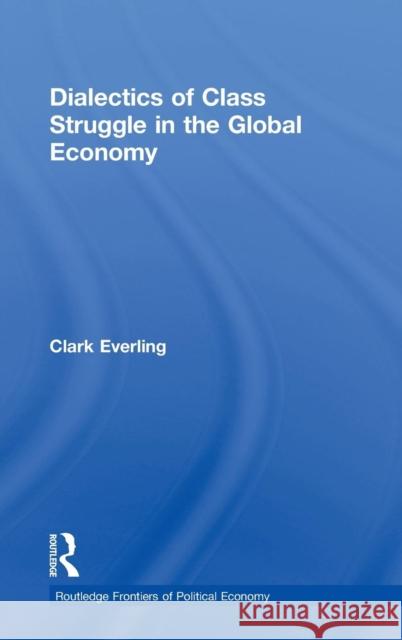
Dialectics of Class Struggle in the Global Economy
ISBN-13: 9780415778107 / Angielski / Twarda / 2009 / 208 str.
(netto: 738,72 VAT: 5%)
Najniższa cena z 30 dni: 755,61
ok. 22 dni roboczych
Bez gwarancji dostawy przed świętami
Darmowa dostawa!
Much ink has been spilled in attempts to prove that humans are only animals and are, like other species, only aggressive. Marx distinguishes both class and cooperative relations as inorganic: humans create their subjectivity through their mutual social production. They build upon their previous forms of social production and, with capitalism, become not only an opposition of classes, but have the capacity for urban individualism and cooperation. Dialectics of Class Struggle examines the historical development of classes from ancient times to present. It analyses the development of ancient slavery into feudalism and the latter into capitalism. It focuses on the laws and limits of capitalist development, the contradictions inherent in the capitalist state, revolutions in the twentieth century and the possibilities for human freedom that they revealed. It concludes with an examination of class struggles in the global economy and shows the human deprivations as well as the human possibilities.
Much ink has been spilled to prove that humans are only animals in the same ways as other species and only aggressive. Marx distinguishes both class and cooperative relations as inorganic: humans’ create their subjectivity through their mutual social production. They build upon their previous forms of social production and, with capitalism, become not only an opposition of classes, but have the capacity for urban individualism and cooperation. In Dialectics of Class Struggle in the Global Economy, Clark Everling restores social production and classes back at the centre of Marxist theory by providing what E. V. Ilyenkov calls the development of a "fully logical and really historical" dialectical examination of human social production.
Examining the historical development of classes from ancient times to present, the author analyzes the development of ancient slavery into feudalism and the latter into capitalism. The book focuses upon the laws and limits of capitalist development, the contradictions inherent in the capitalist state, revolutions in the 20th century and the possibilities for human freedom that they revealed. It concludes with an examination of class struggles in the global economy and shows the human deprivations as well as the human possibilities.




Czytaj nas na:
KrainaKsiazek.PL - Księgarnia Internetowa


