• Wyszukiwanie zaawansowane
  • Kategorie
  • Kategorie BISAC
  • Książki na zamówienie
  • Promocje
  • Granty
  • Książka na prezent
  • Opinie
  • Pomoc
  • Załóż konto
  • Zaloguj się

Designing the Exterior Wall: An Architectural Guide to the Vertical Envelope » książka

zaloguj się | załóż konto
Logo Krainaksiazek.pl

koszyk

konto

szukaj
topmenu
Księgarnia internetowa
Szukaj
Książki na zamówienie
Promocje
Granty
Książka na prezent
Moje konto
Pomoc
 
 
Wyszukiwanie zaawansowane
Pusty koszyk
Bezpłatna dostawa dla zamówień powyżej 20 złBezpłatna dostawa dla zamówień powyżej 20 zł

Kategorie główne

• Nauka
 [2946600]
• Literatura piękna
 [1856966]

  więcej...
• Turystyka
 [72221]
• Informatyka
 [151456]
• Komiksy
 [35826]
• Encyklopedie
 [23190]
• Dziecięca
 [619653]
• Hobby
 [140543]
• AudioBooki
 [1577]
• Literatura faktu
 [228355]
• Muzyka CD
 [410]
• Słowniki
 [2874]
• Inne
 [445822]
• Kalendarze
 [1744]
• Podręczniki
 [167141]
• Poradniki
 [482898]
• Religia
 [510455]
• Czasopisma
 [526]
• Sport
 [61590]
• Sztuka
 [243598]
• CD, DVD, Video
 [3423]
• Technologie
 [219201]
• Zdrowie
 [101638]
• Książkowe Klimaty
 [124]
• Zabawki
 [2473]
• Puzzle, gry
 [3898]
• Literatura w języku ukraińskim
 [254]
• Art. papiernicze i szkolne
 [8170]
Kategorie szczegółowe BISAC

Designing the Exterior Wall: An Architectural Guide to the Vertical Envelope

ISBN-13: 9780471451914 / Angielski / Twarda / 2005 / 400 str.
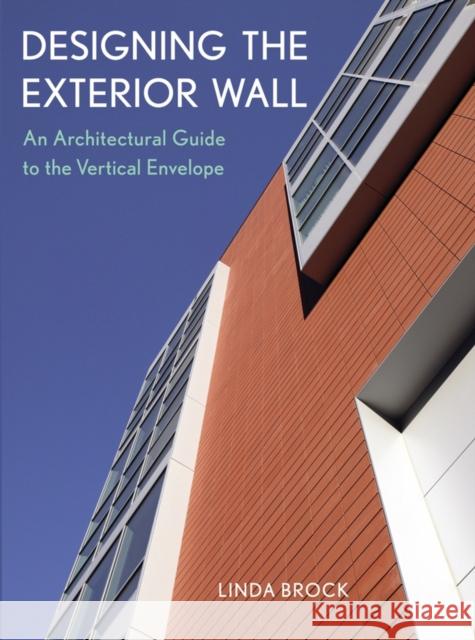
Linda Brock
Designing the Exterior Wall: An Architectural Guide to the Vertical Envelope Brock, Linda 9780471451914 John Wiley & Sons - książkaWidoczna okładka, to zdjęcie poglądowe, a rzeczywista szata graficzna może różnić się od prezentowanej.

Designing the Exterior Wall: An Architectural Guide to the Vertical Envelope

ISBN-13: 9780471451914 / Angielski / Twarda / 2005 / 400 str.

Linda Brock
cena 482,39 zł
(netto: 459,42 VAT:  5%)

Najniższa cena z 30 dni: 477,46 zł
Termin realizacji zamówienia:
ok. 30 dni roboczych
Bez gwarancji dostawy przed świętami

Darmowa dostawa!

By presenting the basics of building science along with a prescribed set of details, Designing the Exterior Wall helps you understand why buildings fail and how they can be made more durable through design. Author Linda Brock connects the science and aesthetics of building envelopes through the examination of a variety of construction and cladding types. She features details from real world projects in a variety of climates, successful and unsuccessful case studies, and checklists you can use on your own projects.

  • Helps you reduce your liability by showing why building envelopes fail and how they can be designed to endure.
  • Moves from theory to actual construction by including hundreds of building envelope details from a broad array of projects and climates.
  • Integrates numerous contemporary case studies, including Frank Gehry's Experiential Music Center in Seattle (thin skins), Renzo Piano's Rue de Meaux housing in Paris (terra cotta cladding), and Mario Botta's San Francisco Museum of Modern Art (prefabricated brick panels).
Designing the Exterior Wall is a must-have book, whether you're an architect or a student. Order your copy today.

Kategorie:
Sztuka, Architektura
Kategorie BISAC:
Architecture > Budynki użyteczności publicznej
Architecture > Design, Drafting, Drawing & Presentation
Wydawca:
John Wiley & Sons
Język:
Angielski
ISBN-13:
9780471451914
Rok wydania:
2005
Ilość stron:
400
Waga:
1.11 kg
Wymiary:
28.4 x 21.95 x 2.54
Oprawa:
Twarda
Wolumenów:
01
Dodatkowe informacje:
Bibliografia
Wydanie ilustrowane

Preface.

Acknowledgments.

Using This Book.

PART 1: CHOOSING THE COMPONENTS.

Chapter 1: Decisions That Affect the Exterior Wall.

1.1 Introduction to the Building Envelope.

1.2 Decisions Affecting Aesthetics, Function, Durability, and the Budget.

1.3 Climate and the Exterior Wall.

1.4 Function of the Exterior Wall.

1.5 Cladding Systems.

1.6 Whole–Wall Design.

1.7 Selecting and Positioning the Barriers and Retarders.

CHECKLIST: Preliminary Design Information and Decisions.

Chapter 2: Water Barriers and Flashings.

2.1 Managing Water.

2.2 Water Management Systems.

2.3 Selecting the Right Water Management System.

2.4 Water Barriers and Their Placement.

2.5 Installation.

2.6 Flashings.

2.7 Testing and Measuring Water Leakage.

2.8 Quick Notes: Water Ingress.

Chapter 3:  Air Barrier Systems, Vapor Retarders, and Insulation.

3.1 Stopping Air and Controlling Thermal and Vapor Transfer.

3.2 Air Movement: Loss of Conditioned and Vapor–Laden Air.

3.3 Vapor Transmission by Diffusion.

3.4 Heat Transfer by Conduction And Radiation.

Chapter 4: Sealant Joints.

4.1 Structural Forces and Differential Movement.

4.2 Expansion and Control Joints.

4.3 Joint Design.

4.4 Construction Tolerances.

4.5 Joint Components.

4.6 Installation of Liquid Sealants.

4.7 Maintenance.

4.8 Testing Sealants.

4.9 Quick Notes: Sealant Joints.

CHECKLIST: Selecting and Positioning Barriers and Retarders.

PART II: DETAILING FOR DURABILITY.

Chapter 5: Curtain Walls.

5.1 The Development of Curtain Walls.

5.2 Aluminum Glass Curtain Walls.

5.3 Metal– and Stone–Panel Curtain Walls.

5.4 Designing Curtain Walls with Glass, Metal, and Stone Panels.

5.5 Case Study.

5.6 Precast Concrete and Glass–Fiber Reinforced Concrete Panels.

5.7 How to Stay Out of Trouble When Designing Curtain Walls.

5.8 References.

Chapter 6: Anchored Brick Veneer.

6.1 Brick Veneer Anchored to the Steel–Stud Backup Walls of a Four– to Twenty–Story Building.

6.2 Wall Type A: Brick Veneer Anchored To Steel–Stud Backup.

6.3 Climate.

6.4 Is ABV/SS Risky Business?

6.5 Reducing Risk.

6.6 Repelling Water.

6.7 Accommodating Differential Movement with Expansion Joints.

6.8 Designing Parapet Veneer Panels: A Special Case.

6.9 Supplemental Information On ABV/SS Components.

6.10 ABV Details.

6.11 Case Study.

6.12 Other Systems.

6.13 References.

Chapter 7 Exterior Insulation Finish System (EIFS) and Concrete Masonry Walls.

7.1 Concrete Masonry Walls.

7.2 Single–Wythe Concrete Masonry: Face–Sealed Barrier Wall.

7.3 Exterior Insulation Finish System (EIFS).

7.4 Wall Type B: EIFS with Internal Drainage Plane on Concrete Masonry Wall.

7.5 EIFS Design.

7.6 EIFS Installation.

7.7 Maintenance.

7.8 EIFS Concerns.

7.9 Details: EIFS.

7.10 EIFS over Light–Gauge Steel or Wood Stud Walls.

7.11 Case Study.

7.12 Case Study.

7.13 References.

Chapter 8: Wood–Frame Construction, Stucco, and Fiber–Cement Siding.

8.1 Wood–Frame Construction.

8.2 Stucco.

8.3 Wall Type C: Three–Coat Stucco on Wood Frame with Internal Drainage Plane.

8.4 Stucco Design.

8.5 Stucco Application.

8.6 Maintenance.

8.7 Concerns with Stucco.

8.8 Details: Stucco.

8.9 Fiber–Cement Cladding.

8.10 Wall Type D: Fiber–Cement Board Siding with Drainage Cavity.

8.11 Fiber–Cement Siding Design.

8.12 Fiber–Cement Siding Installation.

8.13 Maintenance.

8.14 Concerns with Fiber–Cement Claddings.

8.15 Details: Fiber–Cement Siding.

8.16 Case Study.

8.17 References.

PART III: ADVANCING THE ENVELOPE.

Chapter 9: Terra–Cotta, EIFS, Stone, and Brick: Are They Durable?

9.1 Truth In Materials.

9.2 The Great Impostors: EIFS and Terra–Cotta.

9.3 Aesthetics and Durability: Can You Have Both with Carrara Marble?

9.4 Build It Right The First Time or Repair It Quickly: Anchored Brick Veneer Failures.

Chapter 10: Architect s Design Kit: Form, Surface, Color, and Thick and Thin Walls.

10.1 The Exterior Wall.

10.2 Aesthetic Kit: Form, Surface, and Color.

10.3 Westin New York at Times Square.

10.4 Experience Music Project, Seattle, Gehry Partners.

10.5 Comparisons: Mondrian Planes and Swoopy Forms.

10.6 Functional Kit: Thick and Thin Walls.

10.7 Vitra Conference Pavilion: Thicker Walls in Germany.

10.8 San Francisco Museum of Modern Art: Thin Brick That Works.

10.9 Are Two Walls Better than One?

10.10 Seattle Justice Center.

Chapter 11: Wood–Frame Construction: Designing for the Climate and the Future.

11.1 Durability The Linchpin of Sustainability.

11.2 Vancouver, British Columbia: The Look That Didn t Last .

11.3 Seattle: When It Rains, It Pours In .

11.4 What Can Be Learned from the Leaky Condos?

11.5 How To Do It Right: Two Countries, Two Climates, and Two Solutions.

11.6 Home 2000 and Winter Rains of Vancouver, British Columbia.

11.7 KST–Hokkaido House and Heavy Snow Loads of Northern Japan.

11.8 What Can Be Learned from the Two Houses?

Appendix A: Hygrothermal Maps.

Appendix B: Building Form.

Notes.

Bibliography and Resources.

Index.

LINDA BROCK, a registered architect in the United States and Canada, is an associate professor directing the building technology program in the School of Architecture at the University of British Columbia, Vancouver, Canada. She has given seminars on building envelope design and has conducted investigations of fa?ade failures for more than two decades. Her professional work and research has dealt with masonry, stucco and EIFS, "breathable" walls, energy efficiency, adhered brick systems, and Japanese housing models.

An eye–opening guide to the art and science of creating a structure′s skin

Designing the Exterior Wall presents the basics of building science along with a prescribed set of details to help architects understand why buildings fail and how to design them to be more durable.

Covering everything from theory to actual construction, this insightful guide presents a thorough examination of a variety of construction and cladding types that illustrate the science and aesthetics of building envelopes. It offers helpful tools demonstrated in numerous actual projects set in a variety of climates; identifies proven strategies and pitfalls to avoid through successful and unsuccessful case studies; and provides useful checklists to assist professionals in the real world.

Designing the Exterior Wall features many recent exemplars of building skins from big–budget projects by star architects to finely crafted cladding built with more modest budgets that are varied in form, surface, and colors, including:

  • Frank Gehry: Experience Music Project (thin metal skins and amorphous forms)
  • Arquitectonica: Western New York at Times Square (glass curtain walls of 1,000 permutations)
  • NBBJ Architects: Seattle Justice Center (double façade)
  • Mario Botta: San Francisco Museum of Modern Art (thin brick in precast panels)
  • Miller/Hull Partnership: Olympic College, Shelton Campus (MDO plywood cladding)
  • Brand + Allen Architects: Glassworks Condominium Homes (terra cotta rainscreen cladding)

Designing the Exterior Wall offers architects complete and reliable guidance for advancing the design of exterior walls by examining design failures and testing new ideas.

Brock, Linda LINDA BROCK, a registered architect in the United ... więcej >


Udostępnij

Facebook - konto krainaksiazek.pl


Opinie o Krainaksiazek.pl na Opineo.pl

Partner Mybenefit

Krainaksiazek.pl w programie rzetelna firma Krainaksiaze.pl - płatności przez paypal

Czytaj nas na:

Facebook - krainaksiazek.pl
  • książki na zamówienie
  • granty
  • książka na prezent
  • kontakt
  • pomoc
  • opinie
  • regulamin
  • polityka prywatności

Zobacz:

  • Księgarnia czeska

  • Wydawnictwo Książkowe Klimaty

1997-2025 DolnySlask.com Agencja Internetowa

© 1997-2022 krainaksiazek.pl
     
KONTAKT | REGULAMIN | POLITYKA PRYWATNOŚCI | USTAWIENIA PRYWATNOŚCI
Zobacz: Księgarnia Czeska | Wydawnictwo Książkowe Klimaty | Mapa strony | Lista autorów
KrainaKsiazek.PL - Księgarnia Internetowa

Polityka prywatnosci - link
Krainaksiazek.pl - płatnośc Przelewy24
Przechowalnia Przechowalnia








