• Wyszukiwanie zaawansowane
  • Kategorie
  • Kategorie BISAC
  • Książki na zamówienie
  • Promocje
  • Granty
  • Książka na prezent
  • Opinie
  • Pomoc
  • Załóż konto
  • Zaloguj się

Designing Human-Machine Cooperation Systems » książka


zaloguj się | załóż konto
Logo Krainaksiazek.pl

koszyk

konto

szukaj
topmenu
Księgarnia internetowa
Szukaj
Książki na zamówienie
Promocje
Granty
Książka na prezent
Moje konto
Pomoc
 
 
Wyszukiwanie zaawansowane
Pusty koszyk
Bezpłatna dostawa dla zamówień powyżej 20 złBezpłatna dostawa dla zamówień powyżej 20 zł

Kategorie główne

• Nauka
 [2949965]
• Literatura piękna
 [1857847]

  więcej...
• Turystyka
 [70818]
• Informatyka
 [151303]
• Komiksy
 [35733]
• Encyklopedie
 [23180]
• Dziecięca
 [617748]
• Hobby
 [139972]
• AudioBooki
 [1650]
• Literatura faktu
 [228361]
• Muzyka CD
 [398]
• Słowniki
 [2862]
• Inne
 [444732]
• Kalendarze
 [1620]
• Podręczniki
 [167233]
• Poradniki
 [482388]
• Religia
 [509867]
• Czasopisma
 [533]
• Sport
 [61361]
• Sztuka
 [243125]
• CD, DVD, Video
 [3451]
• Technologie
 [219309]
• Zdrowie
 [101347]
• Książkowe Klimaty
 [123]
• Zabawki
 [2362]
• Puzzle, gry
 [3791]
• Literatura w języku ukraińskim
 [253]
• Art. papiernicze i szkolne
 [7933]
Kategorie szczegółowe BISAC

Designing Human-Machine Cooperation Systems

ISBN-13: 9781848216853 / Angielski / Twarda / 2014 / 416 str.
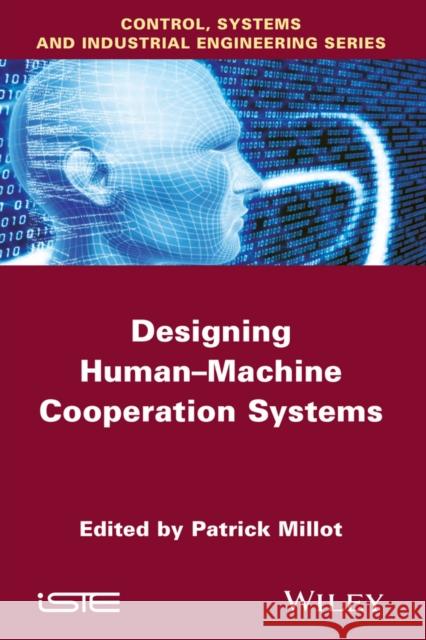
Designing Human-Machine Cooperation Systems  9781848216853 John Wiley & Sons - książkaWidoczna okładka, to zdjęcie poglądowe, a rzeczywista szata graficzna może różnić się od prezentowanej.

Designing Human-Machine Cooperation Systems

ISBN-13: 9781848216853 / Angielski / Twarda / 2014 / 416 str.

cena 850,33
(netto: 809,84 VAT:  5%)

Najniższa cena z 30 dni: 843,36
Termin realizacji zamówienia:
ok. 30 dni roboczych
Bez gwarancji dostawy przed świętami

Darmowa dostawa!

This book, on the ergonomics of human-machine systems, is aimed at engineers specializing in informatics, automation, production or robotics, who are faced with a significant dilemma during the conception of human-machine systems. On the one hand, the human operator guarantees the reliability of the system and has been known to salvage numerous critical situations through an ability to reason in unplanned, imprecise and uncertain situations; on the other hand, the human operator can be unpredictable and create disturbances in the automated system. The first part of the book is dedicated to the methods of human-centered design, from three different points of view, the various chapters focusing on models developed by human engineers and functional models to explain human behavior in their environment, models of cognitive psychology and models in the domain of automobile driving. Part 2 develops the methods of evaluation of the human-machine systems, looking at the evaluation of the activity of the human operator at work and human error analysis methods. Finally, Part 3 is dedicated to human-machine cooperation, where the authors show that a cooperative agent comprises a know-how and a so-called know-how-to-cooperate and show the way to design and evaluate that cooperation in real industrial contexts.


Kategorie:
Technologie
Kategorie BISAC:
Technology & Engineering > Drafting & Mechanical Drawing
Technology & Engineering > Industrial Design - General
Wydawca:
John Wiley & Sons
Seria wydawnicza:
Iste
Język:
Angielski
ISBN-13:
9781848216853
Rok wydania:
2014
Ilość stron:
416
Oprawa:
Twarda
Wolumenów:
01
Dodatkowe informacje:
Bibliografia
Wydanie ilustrowane

FOREWORD xi
Bernard DUBUISSON

INTRODUCTION xv
Patrick MILLOT

PART 1. DESIGN OF HUMAN MACHINE SYSTEMS 1

CHAPTER 1. HUMAN–CENTERED DESIGN 3
Patrick MILLOT

1.1. Introduction 3

1.2. The task system operator triangle 4

1.2.1. Controlling the diversity of the tasks depending on the situation 4

1.2.2. Managing the complexity of the system 9

1.2.3. Managing human complexity 10

1.3. Organization of the human machine system 21

1.3.1. The ambiguous role of the operator in automated systems 21

1.3.2. Allocating humans with their proper role 23

1.3.3. Sharing tasks and functions between humans and machines 24

1.4. Human–centered design methodology 33

1.5. Conclusion 35

1.6. Bibliography 36

CHAPTER 2. INTEGRATION OF ERGONOMICS IN THE DESIGN OF HUMAN MACHINE SYSTEMS 43
Christine CHAUVIN and Jean–Michel HOC

2.1. Introduction 43

2.2. Classic and partial approaches of the system 46

2.2.1. Machine–centered approach 46

2.2.2. Activity and human–based approaches 49

2.3. The central notion of performance (Long, Dowell and Timmer) 52

2.4. An integrated approach: cognitive work analysis 59

2.4.1. Domain analysis 60

2.4.2. Task analysis 68

2.4.3. Analysis of information–processing strategies 71

2.4.4. Socio–organizational approach 73

2.4.5. Analysis of competences 76

2.4.6. Some general remarks on the integrated approach 78

2.5. Conclusion 79

2.6. Bibliography 81

CHAPTER 3. THE USE OF ACCIDENTS IN DESIGN: THE CASE OF ROAD ACCIDENTS 87
Gilles MALATERRE, Hélène FONTAINE and Marine MILLOT

3.1. Accidents, correction and prevention 87

3.2. Analysis of accidents specific to the road 89

3.2.1. Road accidents as a statistical unit 89

3.2.2. Accidents as diagnosis tools 91

3.3. Need–driven approach 93

3.3.1. Definition of needs from the analysis of accidents 93

3.3.2. Particular case of urban areas 96

3.4. A priori analyses 98

3.5. What assistance for which needs? 101

3.5.1. Collision with a stationary vehicle 102

3.5.2. The struck vehicle is waiting to turn on an NR or a DR 103

3.5.3. Catching up with a slower vehicle 103

3.5.4. Dense lines: major incident at the front 105

3.5.5. Dense line: violent accident happening just in front 106

3.5.6. Dense line: sudden slowing 106

3.6. Case of cooperative systems 107

3.7. Using results in design 108

3.7.1. Detection of a slower user 110

3.7.2. Detection of several stopped vehicles blocking all the lanes 110

3.7.3. Detection of a stopped vehicle completely or partially obstructing a road 111

3.7.4. Detection of a vehicle preparing to turn left 111

3.7.5. Detection of light two–wheelers circulating on the right–hand side of the road 112

3.7.6. Detection of a disturbance at the front of the line 112

3.7.7. Prevention of wild insertions 113

3.7.8. Prevention of frontal collisions 113

3.8. Conclusion 113

3.9. Bibliography 114

PART 2. EVALUATION MODELS OF HUMAN MACHINE SYSTEMS 119

CHAPTER 4. MODELS BASED ON THE ANALYSIS OF HUMAN BEHAVIOR: EXAMPLE OF THE DETECTION OF HYPO–VIGILANCE IN AUTOMOBILE DRIVING 121
Jean–Christophe POPIEUL, Pierre LOSLEVER and Philippe SIMON

4.1. Introduction 121

4.2. The different models used in detection and diagnosis 122

4.2.1. Methods based on knowledge models 122

4.2.2. Classification methods: pattern recognition 125

4.3. The case of human machine systems 135

4.4. Example of application: automobile driving 138

4.4.1. Automobile driving 138

4.4.2. Difficulties with diagnosing losses in vigilance 141

4.4.3. Approach applied 143

4.5. Conclusion 162

4.6. Bibliography 165

CHAPTER 5. EVALUATION OF HUMAN RELIABILITY IN SYSTEMS ENGINEERING 171
Frédéric VANDERHAEGEN, Peter WIERINGA and Pietro Carlo CACCIABUE

5.1. Introduction 171

5.2. Principles of evaluating human reliability 173

5.2.1. Human reliability versus human error 173

5.2.2. General approach for the analysis of human reliability 174

5.2.3. Synthetic review of methods 176

5.2.4. Discussion 178

5.3. Analysis of dynamic reliability 180

5.3.1. The DYLAM method 180

5.3.2. The HITLINE method 183

5.4. Analysis of altered or added tasks 187

5.4.1. Principles of the ACIH method 187

5.4.2. Acceptability and evaluation of human behaviors 188

5.4.3. Example of application 191

5.5. Perspectives for the design of a safe system 194

5.6. Conclusion 197

5.7. Bibliography 198

PART 3. HUMAN MACHINE COOPERATION 205

CHAPTER 6. CAUSAL REASONING: A TOOL FOR HUMAN MACHINE COOPERATION 207
Jacky MONTMAIN

6.1. Introduction 207

6.2. Supervision 208

6.3. Qualitative model 214

6.3.1. The origins 214

6.3.2. Current models 216

6.3.3. The evolution of qualitative reasoning (QR) 217

6.4. Causal graphs and event–based simulation 220

6.4.1. The causal graph 222

6.4.2. Evolution and event 224

6.4.3. Simulation 227

6.5. Hierarchy of behavior models 235

6.5.1. Definition of a graph hierarchy 236

6.5.2. Creation of the hierarchy 237

6.5.3. Online construction of graphs 238

6.6. Fault filtering 242

6.6.1. Causality and digital simulators 242

6.6.2. Generation of residuals and causal structure 247

6.6.3. Interpretation of the errors for the isolation and filtering of faults 248

6.6.4. Advantages for supervision 252

6.7. Discussion and conclusion 256

6.8. Bibliography 261

CHAPTER 7. HUMAN MACHINE COOPERATION: A FUNCTIONAL APPROACH 273
Jean–Michel HOC

7.1. Introduction 273

7.2. A functional approach to cooperation 275

7.3. Cooperation in actions 278

7.4. Cooperation in planning 280

7.5. Meta–cooperation 281

7.6. Conclusion 282

7.7. Bibliography 283

CHAPTER 8. THE COMMON WORK SPACE FOR THE SUPPORT OF SUPERVISION AND HUMAN MACHINE COOPERATION 285
Serge DEBERNARD, Bernard RIERA and Thierry POULAIN

8.1. Introduction 285

8.2. Human machine cooperation 287

8.2.1. Definitions of human machine cooperation 287

8.2.2. Characterization of cooperation activities 289

8.2.3. Common work space: human machine cooperation medium 292

8.3. Application in air traffic control 294

8.3.1. Dynamic allocation of tasks 295

8.3.2. Air traffic control 296

8.3.3. First studies: SPECTRA projects 297

8.3.4. The AMANDA project 303

8.4. Application to the process of nuclear combustibles reprocessing 305

8.4.1. Introduction 305

8.4.2. Human supervision tasks 307

8.4.3. Design methodology of supervision systems adapted to humans 310

8.4.4. Improvement of the supervision and diagnosis system 311

8.4.5. Approximate reasoning 313

8.4.6. The use of cognitive principles in the design of supervision tools 317

8.4.7. An example of an advanced supervision system (ASS) 323

8.5. Conclusion 332

8.6. Acronyms 333

8.7. Bibliography 334

CHAPTER 9. HUMAN MACHINE COOPERATION AND SITUATION AWARENESS 343
Patrick MILLOT and Marie–Pierre PACAUX–LEMOINE

9.1. Introduction 343

9.2. Collective situation awareness 344

9.3. Structural approaches of human machine cooperation 346

9.3.1. Dynamic allocation of tasks: horizontal cooperation structure 347

9.3.2. Vertical structure for cooperation 348

9.3.3. Multilevel structure for the dynamic allocation of tasks 351

9.4. Human machine cooperation: a functional approach 353

9.4.1. Cooperative agents, forms of cooperation 353

9.4.2. Organization and cooperation 356

9.4.3. Human factors activating or inhibiting cooperation 358

9.4.4. Multilevel cooperative organization 359

9.4.5. Common work space (CWS) 360

9.5. Common work space for team–SA 367

9.6. Conclusion 369

9.7. Bibliography 370

CONCLUSION 375
Patrick MILLOT

LIST OF AUTHORS 379

INDEX 381


Udostępnij

Facebook - konto krainaksiazek.pl


Opinie o Krainaksiazek.pl na Opineo.pl

Partner Mybenefit

Krainaksiazek.pl w programie rzetelna firma Krainaksiaze.pl - płatności przez paypal

Czytaj nas na:

Facebook - krainaksiazek.pl
  • książki na zamówienie
  • granty
  • książka na prezent
  • kontakt
  • pomoc
  • opinie
  • regulamin
  • polityka prywatności

Zobacz:

  • Księgarnia czeska

  • Wydawnictwo Książkowe Klimaty

1997-2025 DolnySlask.com Agencja Internetowa

© 1997-2022 krainaksiazek.pl
     
KONTAKT | REGULAMIN | POLITYKA PRYWATNOŚCI | USTAWIENIA PRYWATNOŚCI
Zobacz: Księgarnia Czeska | Wydawnictwo Książkowe Klimaty | Mapa strony | Lista autorów
KrainaKsiazek.PL - Księgarnia Internetowa

Polityka prywatnosci - link
Krainaksiazek.pl - płatnośc Przelewy24
Przechowalnia Przechowalnia





