• Wyszukiwanie zaawansowane
  • Kategorie
  • Kategorie BISAC
  • Książki na zamówienie
  • Promocje
  • Granty
  • Książka na prezent
  • Opinie
  • Pomoc
  • Załóż konto
  • Zaloguj się

Democratizing Risk Governance: Bridging Science, Expertise, Deliberation and Public Values » książka


zaloguj się | załóż konto
Logo Krainaksiazek.pl

koszyk

konto

szukaj
topmenu
Księgarnia internetowa
Szukaj
Książki na zamówienie
Promocje
Granty
Książka na prezent
Moje konto
Pomoc
 
 
Wyszukiwanie zaawansowane
Pusty koszyk
Bezpłatna dostawa dla zamówień powyżej 20 złBezpłatna dostawa dla zamówień powyżej 20 zł

Kategorie główne

• Nauka
 [2949965]
• Literatura piękna
 [1857847]

  więcej...
• Turystyka
 [70818]
• Informatyka
 [151303]
• Komiksy
 [35733]
• Encyklopedie
 [23180]
• Dziecięca
 [617748]
• Hobby
 [139972]
• AudioBooki
 [1650]
• Literatura faktu
 [228361]
• Muzyka CD
 [398]
• Słowniki
 [2862]
• Inne
 [444732]
• Kalendarze
 [1620]
• Podręczniki
 [167233]
• Poradniki
 [482388]
• Religia
 [509867]
• Czasopisma
 [533]
• Sport
 [61361]
• Sztuka
 [243125]
• CD, DVD, Video
 [3451]
• Technologie
 [219309]
• Zdrowie
 [101347]
• Książkowe Klimaty
 [123]
• Zabawki
 [2362]
• Puzzle, gry
 [3791]
• Literatura w języku ukraińskim
 [253]
• Art. papiernicze i szkolne
 [7933]
Kategorie szczegółowe BISAC

Democratizing Risk Governance: Bridging Science, Expertise, Deliberation and Public Values

ISBN-13: 9783031242731 / Angielski
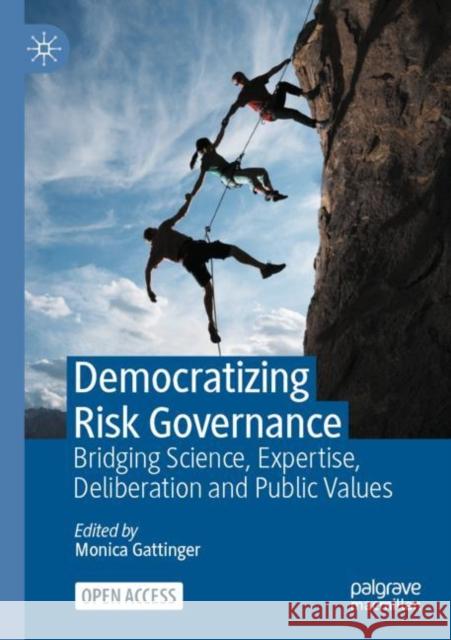
Monica Gattinger
Democratizing Risk Governance: Bridging Science, Expertise, Deliberation and Public Values Monica Gattinger 9783031242731 Palgrave MacMillan - książkaWidoczna okładka, to zdjęcie poglądowe, a rzeczywista szata graficzna może różnić się od prezentowanej.

Democratizing Risk Governance: Bridging Science, Expertise, Deliberation and Public Values

ISBN-13: 9783031242731 / Angielski

Monica Gattinger
cena 161,36 zł
(netto: 153,68 VAT:  5%)

Najniższa cena z 30 dni: 154,18 zł
Termin realizacji zamówienia:
ok. 22 dni roboczych
Bez gwarancji dostawy przed świętami

Darmowa dostawa!
inne wydania

This open access book features contributions from a multidisciplinary team of leading and emerging scholars focused on democratization of risk assessment, management, and communication. The volume identifies and sheds light on key risk governance dilemmas related to public trust, risk perception and public participation. The first part of the book articulates the relationship among science, expertise, deliberation and public values, featuring an in-depth analysis of the concept of ‘motivated reasoning,’ and the role of trust, values and worldviews in understanding and addressing contemporary controversies over risk decision-making. The volume’s second part features eight case studies from three policy fields – energy, genomics, and public health – and a special section dedicated to vaccine decision-making for Covid-19. Chapters analyze the level, nature and mechanisms of public involvement in risk decision-making, assessing its contribution to the effectiveness and legitimacy of decisions. The case studies focus predominantly on Canada, but they draw on global scholarship and are of direct relevance for scholars and practitioners of risk governance in any country.


This open access book features contributions from a multidisciplinary team of leading and emerging scholars focused on democratization of risk assessment, management, and communication. The volume identifies and sheds light on key risk governance dilemmas related to public trust, risk perception and public participation. The first part of the book articulates the relationship among science, expertise, deliberation and public values, featuring an in-depth analysis of the concept of ‘motivated reasoning,’ and the role of trust, values and worldviews in understanding and addressing contemporary controversies over risk decision-making. The volume’s second part features eight case studies from three policy fields – energy, genomics, and public health – and a special section dedicated to vaccine decision-making for Covid-19. Chapters analyze the level, nature and mechanisms of public involvement in risk decision-making, assessing its contribution to the effectiveness and legitimacy of decisions. The case studies focus predominantly on Canada, but they draw on global scholarship and are of direct relevance for scholars and practitioners of risk governance in any country. 

Kategorie:
Nauka, Socjologia i społeczeństwo
Kategorie BISAC:
Social Science > Socjologia
Political Science > Public Policy - Environmental Policy
Science > Philosophy & Social Aspects
Wydawca:
Palgrave MacMillan
Język:
Angielski
ISBN-13:
9783031242731

Chapter 1:Introduction – Risk governance dilemmas and democratization: public trust, risk perception and public participation in risk decision-making.- Part I: Motivated reasoning, science and values: rethinking risk perception and public participation in risk governance.- Chapter 2: Motivated reasoning and risk governance: what risk scholars and practitioners need to know.- Chapter 3: Science and values: the pervasive entanglement.- Chapter 4: The BIAS FREE Framework: A tool for science/technology and society education to increase science and risk literacy.- Part II: Public trust, risk perception and public participation: lessons from the real worlds of risk governance Energy.- Chapter 5: Getting it Right? The Site Selection Process for Canada's High-Level Nuclear Waste.- Chapter 6: Hydraulic fracturing in New Brunswick: trust, deliberation and risk decision-making. Chapter 7: Carbon capture, utilization and storage: public confidence in risk decision-making.- Chapter 8: Public Inclusion and Responsiveness in Governance of Genetically Engineered Animals.- Chapter 9: Decision-making about Newborn screening panels in Canada: risk management and public participation.- Chapter 10: Balancing shared decision-making with population-based recommendations: a policy perspective of PSA testing and mammography screening.- Chapter 11: Public Engagement on Childhood Vaccination: Democratizing policy decision-making through public deliberation.- Chapter 12: Narratives and the Water Fluoridation Controversy.- Chapter 13: Exploring the Role of Information Sources in Vaccine Decision-Making among Four Culturally and Linguistically Diverse Communities in the U.S.- Chapter 14: Opportunities and Perils of Public Consultation in the creation of COVID-19 vaccine priority groups.

Monica Gattinger is Director of the Institute for Science, Society and Policy, Full Professor at the School of Political Studies and Founding Chair of Positive Energy at the University of Ottawa. Dr. Gattinger is an award-winning researcher and highly sought-after speaker, adviser and media commentator in the energy and arts/cultural policy sectors. Her innovative research programme convenes business, government, Indigenous, civil society and academic leaders to address complex policy, regulatory and governance challenges. She has published widely in the energy and arts/cultural policy fields, with a focus on strengthening decision-making in the context of fast-past technological change and markets, changing social values, and fluctuating levels of trust in governments, industry, science and expertise. Gattinger is Fellow at the Canadian Global Affairs Institute, board member of the Clean Resource Innovation Network, and serves on advisory boards for the Institute on Governance, the National Research Council Canada, the Nuclear Waste Management Organization, Pollution Probe and the University of Calgary. Monica received the 2020 Clean50 Award for her thought leadership in the energy sector. She holds a Ph.D. in public policy from Carleton University.

This open access book features contributions from a multidisciplinary team of leading and emerging scholars focused on democratization of risk assessment, management, and communication. The volume identifies and sheds light on key risk governance dilemmas related to public trust, risk perception and public participation. The first part of the book articulates the relationship among science, expertise, deliberation and public values, featuring an in-depth analysis of the concept of ‘motivated reasoning,’ and the role of trust, values and worldviews in understanding and addressing contemporary controversies over risk decision-making. The volume’s second part features eight case studies from three policy fields – energy, genomics, and public health – and a special section dedicated to vaccine decision-making for Covid-19. Chapters analyze the level, nature and mechanisms of public involvement in risk decision-making, assessing its contribution to the effectiveness and legitimacy of decisions. The case studies focus predominantly on Canada, but they draw on global scholarship and are of direct relevance for scholars and practitioners of risk governance in any country. 

Monica Gattinger is Director of the Institute for Science, Society and Policy, Full Professor at the School of Political Studies and Founding Chair of Positive Energy at the University of Ottawa. Dr. Gattinger is an award-winning researcher and highly sought-after speaker, adviser and media commentator in the energy and arts/cultural policy sectors. Her innovative research programme convenes business, government, Indigenous, civil society and academic leaders to address complex policy, regulatory and governance challenges. She has published widely in the energy and arts/cultural policy fields, with a focus on strengthening decision-making in the context of fast-past technological change and markets, changing social values, and fluctuating levels of trust in governments, industry, science and expertise. Gattinger is Fellow at the Canadian Global Affairs Institute, board member of the Clean Resource Innovation Network, and serves on advisory boards for the Institute on Governance, the National Research Council Canada, the Nuclear Waste Management Organization, Pollution Probe and the University of Calgary. Monica received the 2020 Clean50 Award for her thought leadership in the energy sector. She holds a Ph.D. in public policy from Carleton University.


Udostępnij

Facebook - konto krainaksiazek.pl


Opinie o Krainaksiazek.pl na Opineo.pl

Partner Mybenefit

Krainaksiazek.pl w programie rzetelna firma Krainaksiaze.pl - płatności przez paypal

Czytaj nas na:

Facebook - krainaksiazek.pl
  • książki na zamówienie
  • granty
  • książka na prezent
  • kontakt
  • pomoc
  • opinie
  • regulamin
  • polityka prywatności

Zobacz:

  • Księgarnia czeska

  • Wydawnictwo Książkowe Klimaty

1997-2025 DolnySlask.com Agencja Internetowa

© 1997-2022 krainaksiazek.pl
     
KONTAKT | REGULAMIN | POLITYKA PRYWATNOŚCI | USTAWIENIA PRYWATNOŚCI
Zobacz: Księgarnia Czeska | Wydawnictwo Książkowe Klimaty | Mapa strony | Lista autorów
KrainaKsiazek.PL - Księgarnia Internetowa

Polityka prywatnosci - link
Krainaksiazek.pl - płatnośc Przelewy24
Przechowalnia Przechowalnia



