Democratic Dilemmas: Why Democracies Ban Political Parties » książka





Democratic Dilemmas: Why Democracies Ban Political Parties
ISBN-13: 9781138898011 / Angielski / Twarda / 2018 / 280 str.
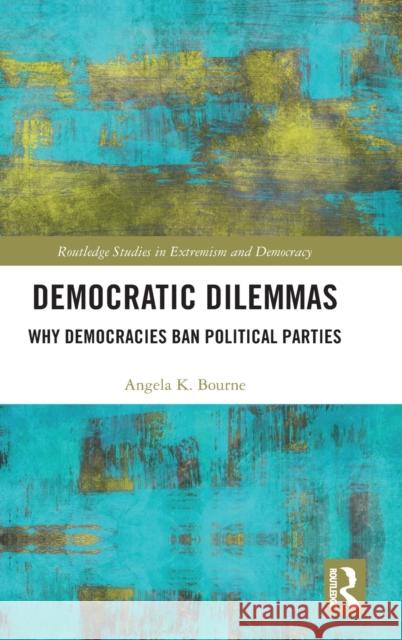
Democratic Dilemmas: Why Democracies Ban Political Parties
ISBN-13: 9781138898011 / Angielski / Twarda / 2018 / 280 str.
(netto: 723,00 VAT: 5%)
Najniższa cena z 30 dni: 654,86
ok. 22 dni roboczych.
Darmowa dostawa!
This book examines how citizens, governments and courts in democratic states resolve dilemmas posed by anti-system parties or, more specifically, the question of why democracies ban political parties. On the one hand, party bans are purportedly designed to 'protect' democracies, usually from groups deemed to undermine the democratic system, challenge core democratic values, territorial integrity or state security. At the same time, democracies that ban parties - entities whose representatives are, at least in theory, elected to represent citizens in the political arena - simultaneously challenge their own foundational commitments to political pluralism, tolerance and rights to free speech and association. Through an examination of the various measures used to respond to such parties, this book probes the deliberative processes, discursive strategies and power politics employed when democratic communities negotiate inherent tensions in foundational commitments to tolerance and pluralism. With reference to empirical case studies of both contemporary and historical anti-system party bans in Spain, the United Kingdom and Germany, this book is the first attempt to examine in a systematic and comparative manner the question of why democracies ban parties and provides a political perspective in a literature largely dominated by law and political philosophy. This book will be of interest to undergraduate and postgraduate students in the areas of European Politics, Democracy Studies, Party Politics and Comparative Politics.




Czytaj nas na:
KrainaKsiazek.PL - Księgarnia Internetowa


