• Wyszukiwanie zaawansowane
  • Kategorie
  • Kategorie BISAC
  • Książki na zamówienie
  • Promocje
  • Granty
  • Książka na prezent
  • Opinie
  • Pomoc
  • Załóż konto
  • Zaloguj się

Delivering Compassionate Care: A Mindfulness Curriculum for Interdisciplinary Healthcare Professionals » książka


zaloguj się | załóż konto
Logo Krainaksiazek.pl

koszyk

konto

szukaj
topmenu
Księgarnia internetowa
Szukaj
Książki na zamówienie
Promocje
Granty
Książka na prezent
Moje konto
Pomoc
 
 
Wyszukiwanie zaawansowane
Pusty koszyk
Bezpłatna dostawa dla zamówień powyżej 20 złBezpłatna dostawa dla zamówień powyżej 20 zł

Kategorie główne

• Nauka
 [2946912]
• Literatura piękna
 [1852311]

  więcej...
• Turystyka
 [71421]
• Informatyka
 [150889]
• Komiksy
 [35717]
• Encyklopedie
 [23177]
• Dziecięca
 [617324]
• Hobby
 [138808]
• AudioBooki
 [1671]
• Literatura faktu
 [228371]
• Muzyka CD
 [400]
• Słowniki
 [2841]
• Inne
 [445428]
• Kalendarze
 [1545]
• Podręczniki
 [166819]
• Poradniki
 [480180]
• Religia
 [510412]
• Czasopisma
 [525]
• Sport
 [61271]
• Sztuka
 [242929]
• CD, DVD, Video
 [3371]
• Technologie
 [219258]
• Zdrowie
 [100961]
• Książkowe Klimaty
 [124]
• Zabawki
 [2341]
• Puzzle, gry
 [3766]
• Literatura w języku ukraińskim
 [255]
• Art. papiernicze i szkolne
 [7810]
Kategorie szczegółowe BISAC

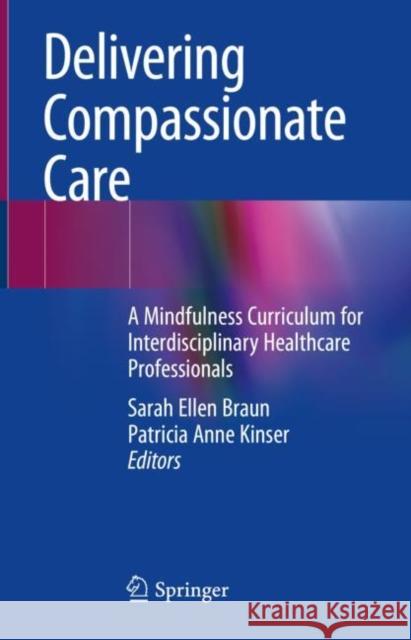
Delivering Compassionate Care: A Mindfulness Curriculum for Interdisciplinary Healthcare Professionals

ISBN-13: 9783030910617 / Angielski / Twarda / 2022
Braun, Sarah Ellen
Delivering Compassionate Care: A Mindfulness Curriculum for Interdisciplinary Healthcare Professionals Braun, Sarah Ellen 9783030910617 Springer Nature Switzerland AG - książkaWidoczna okładka, to zdjęcie poglądowe, a rzeczywista szata graficzna może różnić się od prezentowanej.

Delivering Compassionate Care: A Mindfulness Curriculum for Interdisciplinary Healthcare Professionals

ISBN-13: 9783030910617 / Angielski / Twarda / 2022

Braun, Sarah Ellen
cena 240,93
(netto: 229,46 VAT:  5%)

Najniższa cena z 30 dni: 231,29
Termin realizacji zamówienia:
ok. 22 dni roboczych
Dostawa w 2026 r.

Darmowa dostawa!
inne wydania

This textbook is an evidenced-based course for interdisciplinary healthcare professionals for improving resilience and reducing stress and burnout. This curriculum improves patient-centered care by providing training in compassion and attention. It is a structured skills-based manual complete with resources for full implementation and dissemination of this evidence-based course.  This textbook addresses the gaps existing in other mindfulness-based interventions.It is a unique manual that can be followed in a linear fashion or can be used modularly to suit the needs of specific settings. The curriculum contains didactic content and specific examples of practices; hence, it is easily adaptable for use by groups and classes of various sizes and structure. The authors have conducted several research studies with findings to support its use to prevent and treat burnout. Results demonstrate the curriculum’s feasibility and acceptability in healthcare professionals and students as well as efficacy in stress and burnout reduction with increases in dispositional mindfulness.


Kategorie:
Nauka, Medycyna
Kategorie BISAC:
Medical > Pielęgniarstwo
Health & Fitness > General
Medical > Allied Health Services - General
Wydawca:
Springer Nature Switzerland AG
Język:
Angielski
ISBN-13:
9783030910617
Rok wydania:
2022
Waga:
0.49 kg
Wymiary:
23.5 x 15.5
Oprawa:
Twarda

Foreword – Sharon Salzberg, Amy Weintraub, Michael Krasner, or Susan Bauer-Wu

Part 1: Introduction and Overview

Chapter 1: How to Use This Book: Teaching and Learning Mindfulness for NursesHealthcare Professionals
This chapter serves as a guide for using this book and is geared toward students of a course using this as a textbook as well as those who will teach this manualized curriculum. This chapter reinforces that an important active ingredient of the curriculum is the development of one’s personal mindfulness practice, including that of the instructor teaching the course. This chapter provides an overview of the layout of Part 2 in which chapters are organized by a) key concepts, b) suggested activities and practices for each session, c) tips for instructors, d) hand-outs and resources, and e) formal mindful movement and meditation practice. 

Supplemental material for this chapter: Direction on how to use curriculum materials, resources for the instructor’s mindfulness practices, and how to create a safe space and adapt materials according to the audience. Recommendations will be provided about making the most of your setting by engaging transdisciplinary experts as instructors (e.g., leaders for meditation, yoga, and discussion).
Chapter authors: Sarah Braun and Patricia Kinser 

Chapter 2: Evidence to Support Mindful Nurses and Healthcare Professionals
Introduce and define relevant terms including mindfulness and compassion. Discuss the need in medicine and healthcare for these concepts and the trainings that cultivate them. Provide overview on the research to support the use of mindfulness by interdisciplinary healthcare professionals and students. It also includes research on this curriculum specifically, presenting quantitative and qualitative data. 

Spiritual dimension in the exploration of mindfulness as this is fundamental to the delivery of holistic care
Chapter authors: Sarah Braun and Patricia Kinser 

Chapter 3: Compassion
The nurses and Hhealthcare professional faces the extremes of human suffering without being taught how to handle this suffering.  We forget the human element of the healthcare professional. This chapter will focus on the concept of compassion as a container in which all the skills / strategies / practices presented in this curriculum are held.

Review of current resources and practices available for healthcare professionals facing suffering. existing good practice set against the challenges all healthcare professionals face when confronted with suffering, frailty and their own vulnerability and mortality
Chapter authors: Sarah Braun and Christopher Guerry 

Chapter 4: Being Mindful in a Mindless World
This chapter will focus on key mindfulness concepts such as intention, attitude, and attention. It will acknowledge the often seemingly conflicting goals of professionalism and mindfulness, of practical living and emotional functioning to set the stage for delivering this curriculum to interdisciplinary healthcare professionals.
Chapter authors: Jordan Quaglia , Sarah Braun, Patricia Kinser

Part 2: The Curriculum

Chapter 5: Module 1: Introduction to Mindfulness
Key concepts: stress cycle, defining mindfulness, defining compassion, finding the contemplative practice that meets an individual’s needs, goals of mindfulness and compassionate intentions (creating the ‘pause’), research about mindfulness, developing a home practice
Activities and practices: Stop/Breathe/Be
Hand-outs / Resources: Stop/Breathe/Be, list of research articles, Artfulness link, video links, meditation recording
Formal mindful movement and meditation practice: Invite a yoga teacher to lead a 45-minutes of gentle alignment-based yoga practice ending with a brief body scan, sequences provided as examples, 5-minute focused-attention breath meditation

Supplemental material for this chapter/Tips for instructors: acknowledge paradox of perfectionism vs. realism, resources for instructor self-care, creating a safe space and confidential space, importance of and how to find guest speakers
Chapter authors: Patricia Kinser and Sarah Braun

Chapter 6: Module 2: Mindfulness to Enhance Resilience and Handle Burnout
Key concepts: check-in about home practice, define and discuss burnout, mindfulness and neuroplasticity, effortful to effortless
Activities and practices: partner/group discussion – describe a time when you were burnt out and discuss healthy / unhealthy ways of coping, formal ‘hand’ practice, signs of burnout and non-negotiables worksheet 
Hand-outs / Resources: handout for using stickers with Stop/Breathe/Be, signs of burnout and non-negotiables worksheet, meditation recording
Formal mindful movement and meditation practice: Invite a yoga teacher to lead 45-minutes of gentle alignment-based yoga practice ending with a brief body scan and up to 20 minutes of focused-attention breath meditation  

Supplemental material for this chapter/ Tips for instructors: managing group dynamics
Chapter authors: Sarah Braun and Patricia Kinser

Chapter 7: Module 3: Applications of Mindfulness as a NurseHealthcare Professional
Key concepts: check-in about home practice, introduce the Yerkes-Dodson curve and finding the ‘sweet-spot’, creating space for informal practice, teaching mindfulness to others
Activities and practices: story-telling about being in the sweet-spot, informal mudra practice, walking meditation 
Hand-outs / Resources: meditation recording
Formal mindful movement and meditation practice: Invite a tai-chi or Qi gong teacher to lead 45-minutes of practice, sequences provided as examples, 10 to 15-minute awareness of thoughts meditation (e.g., leaves on a stream, conveyor belt, labelling thoughts) 

Supplemental material for this chapter/ Tips for instructors: being comfortable with silence
Chapter authors: Patricia Kinser, Christopher Guerry, Jo Robins, and Sarah Braun 

Chapter 8: Module 4: Interpersonal Mindfulness and Compassionate Patient Care
Key concepts: check-in about home practice, revisit personal intention statement, discuss SMART goals, teaching mindfulness to patients, awareness of automatic thoughts, compassionate listening
Activities and practices: partner teaching informal mindfulness practices, gratitude journaling, 
Hand-outs / Resources: SMART goals handout, 21 Ways to Practice Handout, meditation recording
Formal mindful movement and meditation practice:  Invite a yoga teacher to lead a 45-minutes of gentle alignment-based yoga practice ending with a brief body scan, sequences provided as examples, 15-minute sensation meditation (positive, neutral, and negative)

Supplemental material for this chapter/ Tips for instructors: self-disclosure (what to share and how to share it)
Chapter authors: Sarah Braun and Patricia Kinser

Chapter 9: Module 5: Mindful Teams and Leadership
Key concepts: check-in about home practice, discuss team functioning, 
Activities and practices: self-assessment of conflict management, discuss mindful leadership concepts, awareness / understanding / responding mindfully, social intelligence, research about mindfulness in the context of leadership and teamwork
Hand-outs / Resources: Self-assessment of Conflict Management Quiz, video link, meditation recording
Formal mindful movement and meditation practice: Walking meditation (outside if feasible), 15-minute loving-kindness meditation

Supplemental material for this chapter/ Tips for instructors: how to inspire people who might not be practicing at home yet

Chapter 10: Module 6: Mindfulness in the Presence of Suffering
Key concepts: check-in about home practice, sympathy / empathy / compassion, empathic distress vs. compassionate responding, balancing healthcare professionalclinician goals with patient-centered care, brief intro into concepts of motivational interviewing and the righting reflex, self-compassion
Activities and practices: paired compassionate listening, self-compassion break
Hand-outs / Resources: Self-compassion break, video links, meditation recording
Formal mindful movement and meditation practice: Invite a yoga teacher to lead a 45-minutes of gentle alignment-based yoga practice ending with a brief body scan, sequences provided as examples, 15-minute loving-kindness OR Tonglen meditation 

Supplemental material for this chapter/ Tips for instructors: preparing for participant distress (Chris Woods)
Chapter authors: Sarah Braun, Chris Woods, and Patricia Kinser

Chapter 11: Module 7: Mindfulness and Compassion in the Face of Imperfection
Key concepts: check-in about home practice, mindfulness in the context of our humanity, transparency and compassion in the face of errors, research on mindfulness and patient safety
Activities and practices: “too tight too loose” breathing meditation, panel discussion on self-care as necessity not an indulgence
Hand-outs / Resources: video link, meditation recording
Formal mindful movement and meditation practice: 15-minutes of gentle stretching, sequences provided as examples, 45-minute yoga nidra practice on carrying opposites

Supplemental material for this chapter/ Tips for instructors: how to find and organize panel speakers 
Chapter authors: Sarah Braun and Patricia Kinser

Chapter 12: Module 8: Finding Balance Through Mindful Living
Key concepts: check-in about home practice, pulling together the past key concepts, resources for continued practice
Activities and practices: individual completion of worksheet and group discussion on personal intention statement, and revisiting SMART goals 
Hand-outs / Resources: Personal intention statement worksheet, resources hand-out, meditation recording
Formal mindful movement and meditation practice: Invite a yoga teacher to lead 45-minutes of gentle alignment-based partner yoga practice ending with a brief body scan, sequences provided as examples, 15-minute meditation by participant request

Supplemental material for this chapter/ Tips for instructors: bringing together relevant resources for continued practice
Chapter authors: Patricia Kinser and Sarah Braun

Sarah Ellen Braun, PhD, is a clinical psychologist and neuropsychology fellow completing her fellowship training at Virginia Commonwealth University in the Division of Neuro-Oncology. She completed her PhD in clinical psychology at Virginia Commonwealth University where she co-developed the intervention Mindfulness for Interdisciplinary Healthcare Professionals (MIHP). At VCU, she taught the course to more than 100 faculty, staff, residents, and students across disciplines. Much of Dr. Braun’s research has focused on mindfulness training for healthcare professionals. She is the author of several peer-reviewed papers and book chapters, including a recent paper demonstrating the effectiveness of MIHP in reducing burnout, stress, and daily activity impairment. She received the 2019 Elizabeth Fries Scholarship in Cancer Prevention and Control, the 2018 Young Investigator Award for her research at the International Congress on Integrative Medicine and Health, and the 2017 Emerging Leader in Interprofessionalism Award at the Emswiller Interprofessional Symposium. Her research has been funded by the American Psychological Association.

Patricia Anne Kinser, PhD, WHNP-BC, RN, FAAN, is a tenured professor, nurse scientist, and nurse practitioner at the Virginia Commonwealth University School of Nursing. Dr. Kinser’s program of research is focused on two areas: first, she studies mindfulness interventions to enhance resilience-building in interdisciplinary healthcare professionals, with the long-term goal to improve patient care quality and safety; second, she explores biobehavioral mechanisms underlying depression and she develops and tests innovative non-pharmacologic symptom management strategies. Her interdisciplinary research studies have been funded by sources such as the National Institutes of Health, the American Nurses Foundation, and Sigma Theta Tau International. Dr. Kinser is a Governor-Appointee to the Virginia Board of Health, a practicing board-certified Women’s Health Nurse Practitioner, and a Fellow in the American Academy of Nursing.  


This textbook is an evidenced-based course for interdisciplinary healthcare professionals for improving resilience and reducing stress and burnout. This curriculum improves patient-centered care by providing training in compassion and attention. It is a structured skills-based manual complete with resources for full implementation and dissemination of this evidence-based course.  This textbook addresses the gaps existing in other mindfulness-based interventions.

It is a unique manual that can be followed in a linear fashion or can be used modularly to suit the needs of specific settings. The curriculum contains didactic content and specific examples of practices; hence, it is easily adaptable for use by groups and classes of various sizes and structure. The authors have conducted several research studies with findings to support its use to prevent and treat burnout. Results demonstrate the curriculum’s feasibility and acceptability in healthcare professionals and students as well as efficacy in stress and burnout reduction with increases in dispositional mindfulness.



Udostępnij

Facebook - konto krainaksiazek.pl


Opinie o Krainaksiazek.pl na Opineo.pl

Partner Mybenefit

Krainaksiazek.pl w programie rzetelna firma Krainaksiaze.pl - płatności przez paypal

Czytaj nas na:

Facebook - krainaksiazek.pl
  • książki na zamówienie
  • granty
  • książka na prezent
  • kontakt
  • pomoc
  • opinie
  • regulamin
  • polityka prywatności

Zobacz:

  • Księgarnia czeska

  • Wydawnictwo Książkowe Klimaty

1997-2025 DolnySlask.com Agencja Internetowa

© 1997-2022 krainaksiazek.pl
     
KONTAKT | REGULAMIN | POLITYKA PRYWATNOŚCI | USTAWIENIA PRYWATNOŚCI
Zobacz: Księgarnia Czeska | Wydawnictwo Książkowe Klimaty | Mapa strony | Lista autorów
KrainaKsiazek.PL - Księgarnia Internetowa

Polityka prywatnosci - link
Krainaksiazek.pl - płatnośc Przelewy24
Przechowalnia Przechowalnia




