Decolonization and the Evolution of International Human Rights » książka





Decolonization and the Evolution of International Human Rights
ISBN-13: 9780812222586 / Angielski / Miękka / 2013 / 240 str.
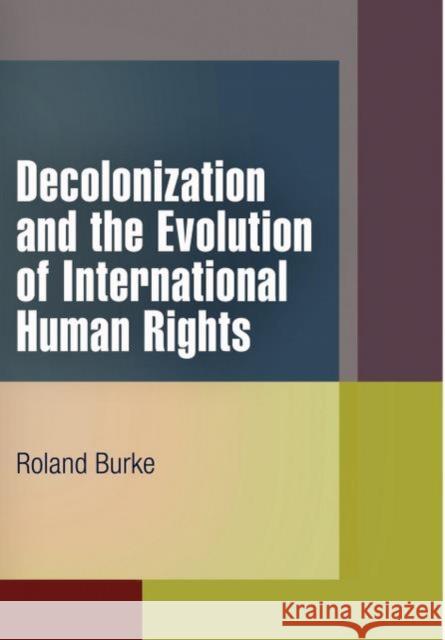
Decolonization and the Evolution of International Human Rights Roland Burke "An important contribution to the historicization and globalization of the human rights debates over the last six decades. . . . Burke belongs to a new generation of historians who are more critical not only of the success rate of the human rights project but also of the motivations behind advocating a particular human rights agenda."--Human Rights Quarterly "In this book, extraordinary for its clarity of argument, crispness of prose, and depth of evidence, Roland Burke successfully challenges the argument that human rights were foisted onto the Third World by Western imperialists at the United Nations."--American Historical Review "Burke's book is a powerful and necessary piece of history as it tears apart some of the myths associated with cultural relativism and the postcolonial politics of human rights."--Law, Culture, and the Humanities In the decades following the triumphant proclamation of the Universal Declaration of Human Rights in 1948, the UN General Assembly was transformed by the arrival of newly independent states from Asia, Africa, and the Middle East. This diverse constellation of states introduced new ideas, methods, and priorities to the human rights program. Their influence was magnified by the highly effective nature of Asian, Arab, and African diplomacy in the UN human rights bodies and the sheer numerical superiority of the so-called Afro-Asian bloc. Owing to the nature of General Assembly procedure, the Third World states dominated the human rights agenda, and enthusiastic support for universal human rights was replaced by decades of authoritarianism and an increasingly strident rejection of the ideas laid out in the Universal Declaration. In Decolonization and the Evolution of International Human Rights, Roland Burke explores the changing impact of decolonization on the UN human rights program. By recovering the contributions of those Asian, African, and Arab voices that joined the global rights debate, Burke demonstrates the central importance of Third World influence across the most pivotal battles in the United Nations, from those that secured the principle of universality, to the passage of the first binding human rights treaties, to the flawed but radical step of studying individual pleas for help. The very presence of so many independent voices from outside the West, and the often defensive nature of Western interventions, complicates the common presumption that the postwar human rights project was driven by Europe and the United States. Drawing on UN transcripts, archives, and the personal papers of key historical actors, this book challenges the notion that the international rights order was imposed on an unwilling and marginalized Third World. Far from being excluded, Asian, African, and Middle Eastern diplomats were powerful agents in both advancing and later obstructing the promotion of human rights. Roland Burke is Lecturer in the Faculty of Humanities and Social Sciences at La Trobe University. Pennsylvania Studies in Human Rights 2010 240 pages 6 x 9 ISBN 978-0-8122-4219-5 Cloth $55.00s 36.00 ISBN 978-0-8122-2258-6 Paper $24.95s 16.50 ISBN 978-0-8122-0532-9 Ebook $24.95s 16.50 World Rights Political Science Short copy: This book challenges traditional accounts of the Third World's contribution to international human rights. It demonstrates that diplomats from Third World countries helped both to radicalize the UN human rights agenda in the heyday of decolonization and to undermine that agenda by advancing cultural relativism as an excuse for abuses in the 1970s.
Decolonization and the Evolution of International Human RightsRoland Burke"An important contribution to the historicization and globalization of the human rights debates over the last six decades. . . . Burke belongs to a new generation of historians who are more critical not only of the success rate of the human rights project but also of the motivations behind advocating a particular human rights agenda."--Human Rights Quarterly"In this book, extraordinary for its clarity of argument, crispness of prose, and depth of evidence, Roland Burke successfully challenges the argument that human rights were foisted onto the Third World by Western imperialists at the United Nations."--American Historical Review"Burkes book is a powerful and necessary piece of history as it tears apart some of the myths associated with cultural relativism and the postcolonial politics of human rights."--Law, Culture, and the HumanitiesIn the decades following the triumphant proclamation of the Universal Declaration of Human Rights in 1948, the UN General Assembly was transformed by the arrival of newly independent states from Asia, Africa, and the Middle East. This diverse constellation of states introduced new ideas, methods, and priorities to the human rights program. Their influence was magnified by the highly effective nature of Asian, Arab, and African diplomacy in the UN human rights bodies and the sheer numerical superiority of the so-called Afro-Asian bloc. Owing to the nature of General Assembly procedure, the Third World states dominated the human rights agenda, and enthusiastic support for universal human rights was replaced by decades of authoritarianism and an increasingly strident rejection of the ideas laid out in the Universal Declaration.In Decolonization and the Evolution of International Human Rights, Roland Burke explores the changing impact of decolonization on the UN human rights program. By recovering the contributions of those Asian, African, and Arab voices that joined the global rights debate, Burke demonstrates the central importance of Third World influence across the most pivotal battles in the United Nations, from those that secured the principle of universality, to the passage of the first binding human rights treaties, to the flawed but radical step of studying individual pleas for help. The very presence of so many independent voices from outside the West, and the often defensive nature of Western interventions, complicates the common presumption that the postwar human rights project was driven by Europe and the United States. Drawing on UN transcripts, archives, and the personal papers of key historical actors, this book challenges the notion that the international rights order was imposed on an unwilling and marginalized Third World. Far from being excluded, Asian, African, and Middle Eastern diplomats were powerful agents in both advancing and later obstructing the promotion of human rights.Roland Burke is Lecturer in the Faculty of Humanities and Social Sciences at La Trobe University.Pennsylvania Studies in Human Rights2010 | 240 pages | 6 x 9ISBN 978-0-8122-4219-5 | Cloth | $55.00s | L36.00 ISBN 978-0-8122-2258-6 | Paper | $24.95s | L16.50 ISBN 978-0-8122-0532-9 | Ebook | $24.95s | L16.50 World Rights | Political ScienceShort copy:This book challenges traditional accounts of the Third Worlds contribution to international human rights. It demonstrates that diplomats from Third World countries helped both to radicalize the UN human rights agenda in the heyday of decolonization and to undermine that agenda by advancing cultural relativism as an excuse for abuses in the 1970s.




Czytaj nas na:
KrainaKsiazek.PL - Księgarnia Internetowa


