• Wyszukiwanie zaawansowane
  • Kategorie
  • Kategorie BISAC
  • Książki na zamówienie
  • Promocje
  • Granty
  • Książka na prezent
  • Opinie
  • Pomoc
  • Załóż konto
  • Zaloguj się

Decentralized Water Reclamation Engineering: A Curriculum Workbook » książka


zaloguj się | załóż konto
Logo Krainaksiazek.pl

koszyk

konto

szukaj
topmenu
Księgarnia internetowa
Szukaj
Książki na zamówienie
Promocje
Granty
Książka na prezent
Moje konto
Pomoc
 
 
Wyszukiwanie zaawansowane
Pusty koszyk
Bezpłatna dostawa dla zamówień powyżej 20 złBezpłatna dostawa dla zamówień powyżej 20 zł

Kategorie główne

• Nauka
 [2950560]
• Literatura piękna
 [1849509]

  więcej...
• Turystyka
 [71097]
• Informatyka
 [151150]
• Komiksy
 [35848]
• Encyklopedie
 [23178]
• Dziecięca
 [617388]
• Hobby
 [139064]
• AudioBooki
 [1657]
• Literatura faktu
 [228597]
• Muzyka CD
 [383]
• Słowniki
 [2855]
• Inne
 [445295]
• Kalendarze
 [1464]
• Podręczniki
 [167547]
• Poradniki
 [480102]
• Religia
 [510749]
• Czasopisma
 [516]
• Sport
 [61293]
• Sztuka
 [243352]
• CD, DVD, Video
 [3414]
• Technologie
 [219456]
• Zdrowie
 [101002]
• Książkowe Klimaty
 [124]
• Zabawki
 [2311]
• Puzzle, gry
 [3459]
• Literatura w języku ukraińskim
 [254]
• Art. papiernicze i szkolne
 [8079]
Kategorie szczegółowe BISAC

Decentralized Water Reclamation Engineering: A Curriculum Workbook

ISBN-13: 9783319404714 / Angielski / Twarda / 2016 / 947 str.
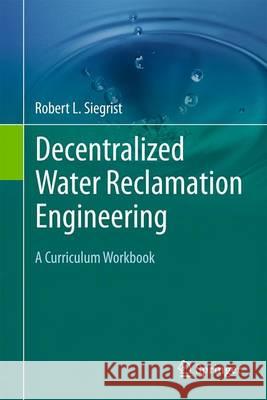
Robert L. Siegrist
Decentralized Water Reclamation Engineering: A Curriculum Workbook Siegrist, Robert L. 9783319404714 Springer - książkaWidoczna okładka, to zdjęcie poglądowe, a rzeczywista szata graficzna może różnić się od prezentowanej.

Decentralized Water Reclamation Engineering: A Curriculum Workbook

ISBN-13: 9783319404714 / Angielski / Twarda / 2016 / 947 str.

Robert L. Siegrist
cena 522,07
(netto: 497,21 VAT:  5%)

Najniższa cena z 30 dni: 501,19
Termin realizacji zamówienia:
ok. 22 dni roboczych
Dostawa w 2026 r.

Darmowa dostawa!

This book presents technical information and materials concerning the engineering of decentralized infrastructure to achieve effective wastewater treatment while also minimizing resource consumption and providing a source of reclaimed water, nutrients and organic matter. The approaches, technologies and systems described are targeted for green building and sustainable infrastructure across the United States and similar industrialized nations, but they are also applicable to water and sanitation projects in developing regions around the world. Today, decentralized infrastructure can be used to sustainably serve houses, buildings and developments with water use and wastewater flows of 100 to 100,000 gal/d or more.The book provides in-depth engineering coverage of the subject in a narrative and slide format specifically designed for classroom lectures or facilitated self-study. Key topics are covered including: engineering to satisfy project goals and requirements including sustainability, contemporary water use and wastewater generation and methods to achieve water use efficiency and source separation, alternative methods of wastewater collection and conveyance, and treatment and reuse operations including tank-based (e.g., septic tanks, aerobic treatment units, porous media biofilters, membrane bioreactors), wetland-based (e.g., free water surface and vegetated subsurface bed wetlands), and land-based unit operations (e.g., subsurface soil infiltration, shallow drip dispersal). Approaches and technologies are also presented that can achieve nutrient reduction and resource recovery in some cases or pathogen destruction to enable a particular discharge or reuse plan. The book also describes requirements and methods for effective management of the process solids, sludges and residuals that can be generated by various approaches, technologies, and systems. The book contains over 300 figures and illustrations of technologies and systems and over 150 tables of design and performance data. There are also more than 200 questions and problems relevant to the topics covered including example problems that have solutions presented to illustrate engineering concepts and calculations.


Kategorie:
Technologie
Kategorie BISAC:
Technology & Engineering > Environmental - Water Supply
Science > Environmental Science (see also Chemistry - Environmental)
Wydawca:
Springer
Język:
Angielski
ISBN-13:
9783319404714
Rok wydania:
2016
Wydanie:
2017
Ilość stron:
947
Waga:
2.00 kg
Wymiary:
24.26 x 15.75 x 5.61
Oprawa:
Twarda
Wolumenów:
01
Dodatkowe informacje:
Wydanie ilustrowane

Chapter 1. Introduction to Decentralized Infrastructure for Wastewater Treatment and Water Reclamation.- Chapter 2. System Selection, Design and Implementation.- Chapter 3. Contemporary Water Use and Wastewater Generation.- Chapter 4. Water Use Efficiency and Waste Stream Source Separation.- Chapter 5. Alternative Wastewater Collection and Conveyance in Decentralized Infrastructure.- Chapter 6. Treatment Using Septic Tanks.- Chapter 7. Treatment Using Aerobic Bioreactors.- Chapter 8. Treatment Using Porous Media Biofilters.- Chapter 9. Treatment Using Membrane Bioreactors.- Chapter 10. Treatment Using Constructed Wetlands.- Chapter 11. Treatment Using Subsurface Soil Infiltration.- Chapter 12. Treatment Using Landscape Drip Dispersal.- Chapter 13. Treatment for Nutrient Reduction.- Chapter 14. Treatment for Pathogen Reduction.- Chapter 15. Management of Process Solids, Sludges, and Residual.

Dr. Robert L. Siegrist is University Professor Emeritus of Environmental Science and Engineering at the Colorado School of Mines (CSM) where he is also a Professor of Civil and Environmental Engineering. He earned his BS (High Honors) and MS degrees in Civil Engineering and his PhD degree in Environmental Engineering at the University of Wisconsin. While at the University of Wisconsin, Dr. Siegrist was a graduate student and research staff member with the Small Scale Waste Management Project, a large multidisciplinary research program focused on small systems for water and wastewater treatment and disposal/reuse. Before joining CSM in 1995, Dr. Siegrist held academic and research positions with the University of Wisconsin, Norwegian Institute for Georesources and Pollution Research, and Oak Ridge National Laboratory. Dr. Siegrist was also a founding partner and senior engineer with RSE Inc., an environmental consulting company that specialized in the engineering of decentralized systems for water and sanitation.
Dr. Siegrist served as Program Director for the Small Flows Program, which he established at CSM in 1998 to advance the science and engineering of sustainable decentralized approaches to water and sanitation. The Program was designed to enhance the quantitative understanding of processes important to system design and performance and to develop decision-support tools for applications involving individual houses and buildings up to those involving large developments, communities, and watershed-scale situations. To support research and teaching, a unique field test facility, the Mines Park Test Site, was established on the CSM campus. Dr. Siegrist is also developer of an undergraduate/graduate course covering the principles and practices of decentralized water reclamation and reuse, which he has taught for the past 10 years.  
Dr. Siegrist is an internationally recognized expert in decentralized systems for wastewater treatment and water reclamation as well as remediation of contaminated soil and groundwater.  He has published over 300 technical papers, 7 book chapters, and 2 textbooks. Dr. Siegrist has given invited lectures at more than 100 workshops and conferences in more than 30 countries worldwide. He was a founding Member of the Consortium of Institutes for Decentralized Wastewater Treatment, a group of 25 educational institutions cooperating on training and research efforts in the area of decentralized wastewater treatment and water reclamation. During his career Dr. Siegrist has served as a science and engineering advisor to numerous U.S. and foreign companies, organizations and agencies and has been a Fellow with the NATO Committee for Challenges to Modern Society.

This book presents technical information and materials concerning the engineering of decentralized infrastructure to achieve effective wastewater treatment while also minimizing resource consumption and providing a source of reclaimed water, nutrients and organic matter. The approaches, technologies and systems described are targeted for green building and sustainable infrastructure across the United States and similar industrialized nations, but they are also applicable to water and sanitation projects in developing regions around the world. Today, decentralized infrastructure can be used to sustainably serve houses, buildings and developments with water use and wastewater flows of 100 to 100,000 gal/d or more.

The book provides in-depth engineering coverage of the subject in a narrative and slide format specifically designed for classroom lectures or facilitated self-study. Key topics are covered including: engineering to satisfy project goals and requirements including sustainability, contemporary water use and wastewater generation and methods to achieve water use efficiency and source separation, alternative methods of wastewater collection and conveyance, and treatment and reuse operations including tank-based (e.g., septic tanks, aerobic treatment units, porous media biofilters, membrane bioreactors), wetland-based (e.g., free water surface and vegetated subsurface bed wetlands), and land-based unit operations (e.g., subsurface soil infiltration, shallow drip dispersal). Approaches and technologies are also presented that can achieve nutrient reduction and resource recovery in some cases or pathogen destruction to enable a particular discharge or reuse plan. The book also describes requirements and methods for effective management of the process solids, sludges and residuals that can be generated by various approaches, technologies, and systems. The book contains over 300 figures and illustrations of technologies and systems and over 150 tables of design and performance data. There are also more than 200 questions and problems relevant to the topics covered including example problems that have solutions presented to illustrate engineering concepts and calculations.




Udostępnij

Facebook - konto krainaksiazek.pl


Opinie o Krainaksiazek.pl na Opineo.pl

Partner Mybenefit

Krainaksiazek.pl w programie rzetelna firma Krainaksiaze.pl - płatności przez paypal

Czytaj nas na:

Facebook - krainaksiazek.pl
  • książki na zamówienie
  • granty
  • książka na prezent
  • kontakt
  • pomoc
  • opinie
  • regulamin
  • polityka prywatności

Zobacz:

  • Księgarnia czeska

  • Wydawnictwo Książkowe Klimaty

1997-2025 DolnySlask.com Agencja Internetowa

© 1997-2022 krainaksiazek.pl
     
KONTAKT | REGULAMIN | POLITYKA PRYWATNOŚCI | USTAWIENIA PRYWATNOŚCI
Zobacz: Księgarnia Czeska | Wydawnictwo Książkowe Klimaty | Mapa strony | Lista autorów
KrainaKsiazek.PL - Księgarnia Internetowa

Polityka prywatnosci - link
Krainaksiazek.pl - płatnośc Przelewy24
Przechowalnia Przechowalnia



