Debugging the Link Between Social Theory and Social Insects » książka





Debugging the Link Between Social Theory and Social Insects
ISBN-13: 9780807133699 / Angielski / Miękka / 2008 / 224 str.
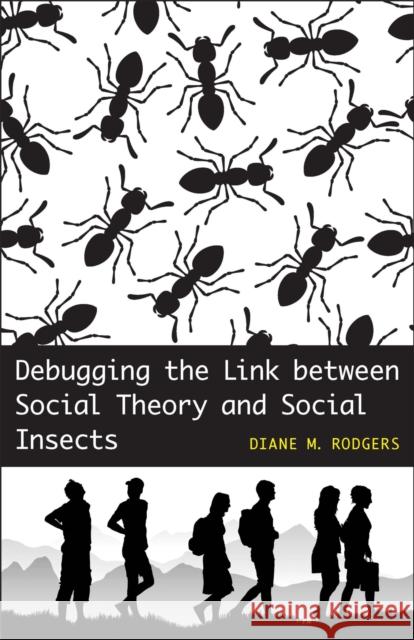
During the nineteenth and early twentieth centuries, natural and social scientists began comparing certain insects to human social organization. Entomologists theorized that social insects -- such as ants, bees, wasps, and termites -- organize themselves into highly specialized, hierarchical divisions of labor. Using a distinctly human vocabulary that reflected the dominant social structure of the time, they described insects as queens, workers, and soldiers and categorized their behaviors with words like marriage, slavery, farming, and factories. At the same time, sociologists working to develop a model for human organization compared people to insects, relying on the same premise that humans arrange themselves hierarchically. In Debugging the Link between Social Theory and Social Insects, Diane M. Rodgers explains how these co-constructed theories reinforced one another, thereby naturalizing Western conceptions of race, class, and gender as they gained prominence in popular culture and the scientific world.
Using a critical science studies perspective not previously applied to research on social insect symbolism, Rodgers attempts to "debug" this theoretical co-construction. She provides sufficient background information to accommodate readers unfamiliar with entomology -- including in-depth explanations of the terms used in the research and discussion of social insects, particularly the insect sociality scale. The entire premise of sociality for insects depends on a dominant understanding of high/low civilization standards -- particularly the tenets of a specialized division of labor and hierarchy -- comparisons that appear to be informed by nineteenth-century colonial thought. Placing these theories in a historical and cross-cultural context, Rodgers explains why hierarchical ideas gained prominence, despite the existence of opposing theories in the literature, and how they resulted in an inhibiting vocabulary that relies more heavily on metaphors than on description.
Such analysis is necessary, Rodgers argues, because it sheds light both on newly proposed scientific models and on future changes in human social structures. Contemporary scientists have begun to challenge the traditional understanding of insect social organization and to propose new interdisciplinary models that combine ideas about social insect and human organizational structure with computer technologies. Without a thorough understanding of how the old models came about, residual language and embedded assumptions may remain and continue to reinforce hierarchical social constructions.
This intriguing interdisciplinary book makes an important contribution to the history -- and future -- of science and sociology.




Czytaj nas na:
KrainaKsiazek.PL - Księgarnia Internetowa


