• Wyszukiwanie zaawansowane
  • Kategorie
  • Kategorie BISAC
  • Książki na zamówienie
  • Promocje
  • Granty
  • Książka na prezent
  • Opinie
  • Pomoc
  • Załóż konto
  • Zaloguj się

Debris Flow: Mechanics, Prediction and Countermeasures, 2nd Edition » książka


zaloguj się | załóż konto
Logo Krainaksiazek.pl

koszyk

konto

szukaj
topmenu
Księgarnia internetowa
Szukaj
Książki na zamówienie
Promocje
Granty
Książka na prezent
Moje konto
Pomoc
 
 
Wyszukiwanie zaawansowane
Pusty koszyk
Bezpłatna dostawa dla zamówień powyżej 20 złBezpłatna dostawa dla zamówień powyżej 20 zł

Kategorie główne

• Nauka
 [2949965]
• Literatura piękna
 [1857847]

  więcej...
• Turystyka
 [70818]
• Informatyka
 [151303]
• Komiksy
 [35733]
• Encyklopedie
 [23180]
• Dziecięca
 [617748]
• Hobby
 [139972]
• AudioBooki
 [1650]
• Literatura faktu
 [228361]
• Muzyka CD
 [398]
• Słowniki
 [2862]
• Inne
 [444732]
• Kalendarze
 [1620]
• Podręczniki
 [167233]
• Poradniki
 [482388]
• Religia
 [509867]
• Czasopisma
 [533]
• Sport
 [61361]
• Sztuka
 [243125]
• CD, DVD, Video
 [3451]
• Technologie
 [219309]
• Zdrowie
 [101347]
• Książkowe Klimaty
 [123]
• Zabawki
 [2362]
• Puzzle, gry
 [3791]
• Literatura w języku ukraińskim
 [253]
• Art. papiernicze i szkolne
 [7933]
Kategorie szczegółowe BISAC

Debris Flow: Mechanics, Prediction and Countermeasures, 2nd Edition

ISBN-13: 9781138073678 / Angielski / Miękka / 2019 / 572 str.
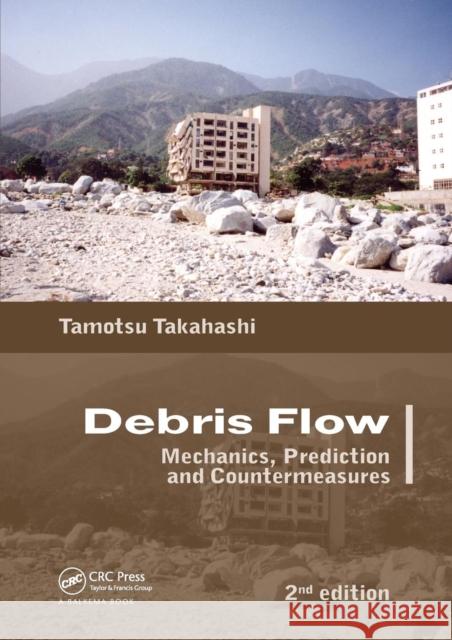
Tamotsu Takahashi
Debris Flow: Mechanics, Prediction and Countermeasures, 2nd Edition Tamotsu Takahashi 9781138073678 CRC Press - książkaWidoczna okładka, to zdjęcie poglądowe, a rzeczywista szata graficzna może różnić się od prezentowanej.

Debris Flow: Mechanics, Prediction and Countermeasures, 2nd Edition

ISBN-13: 9781138073678 / Angielski / Miękka / 2019 / 572 str.

Tamotsu Takahashi
cena 282,86 zł
(netto: 269,39 VAT:  5%)

Najniższa cena z 30 dni: 277,00 zł
Termin realizacji zamówienia:
ok. 22 dni roboczych
Bez gwarancji dostawy przed świętami

Darmowa dostawa!
inne wydania

This book on debris flow discusses fundamental mechanical characteristics, including flow characteristics, type classification, mechanics, occurrence and development, fully developed flow, and deposition processes. It presents applications of the theories in computer-simulations of real disasters. This second edition covers debris flow controlling structures, design effectiveness and performance and soft countermeasure problems, and includes a new chapter on sediment runoff models. An excellent textbook for graduate-level courses, it is also recommended for professionals working on the mechanics and countermeasures of debris flow.


Kategorie:
Technologie
Kategorie BISAC:
Technology & Engineering > Engineering (General)
Technology & Engineering > Civil - Dams & Reservoirs
Technology & Engineering > Environmental - Water Supply
Wydawca:
CRC Press
Język:
Angielski
ISBN-13:
9781138073678
Rok wydania:
2019
Ilość stron:
572
Waga:
0.92 kg
Wymiary:
24.61 x 17.4 x 2.95
Oprawa:
Miękka
Wolumenów:
01
Dodatkowe informacje:
Wydanie ilustrowane

Preface
Preface to the first English edition
Preface to the second English edition
About the author

1 What is debris flow?
1.1 Various sediment moving phenomena
1.2 Definition of debris flow
1.3 Classification and characteristics of debris flows
1.3.1 Stony-type debris flow
1.3.2 Turbulent-muddy-type debris flow
1.3.3 Viscous debris flow
1.4 The significance of the mechanical classification of debris flows
1.5 Classifications based on other view points

2 Models for mechanics of flow
2.1 Models for solids and fluid mixture as the multi-phase flow
2.2 Single-phase continuum models
2.2.1 Visco-plastic fluid model
2.2.2 Dilatant fluid model
2.3 Two-phase continuum models (mixture theory)
2.3.1 Stress equilibrium equations
2.3.2 Coulomb mixture theory (Quasi-static debris flow)
2.4 Theory for subaerial rapid granular flows
2.4.1 Particle collision stress
2.4.2 Kinetic stress
2.4.3 Skeletal stresses
2.4.4 Constitutive relations
2.4.5 Application of the theory to dry granular flow
2.4.6 Comparison with other constitutive relations for inertial range
2.5 Mechanical classification of debris flows revisited based on the theory for granular flows
2.6 The mechanism of inertial debris flows
2.6.1 The supplementary explanation of mature stony debris flow
2.6.2 Immature debris flow
2.6.3 Turbulent-muddy debris flow
2.7 Generalized theory for inertial debris flows
2.7.1 Theoretical considerations
2.7.2 Verification by experimental data
2.7.3 Approximate solutions for solids concentration and resistance to flow
2.8 Newtonian fluid model for viscous debris flow
2.8.1 Theoretical considerations
2.8.2 Verification by experiments
2.9 Equilibrium sediment discharge in inertial debris flows

3 Initiation, development and declination of debris flow
3.1 Initiation and development of debris flow due to gully bed erosion
3.1.1 The formation of incipient debris flow by the effects of surface water runoff
3.1.2 The development and decline of stony debris flow on sediment bed
3.1.3 Verification of the theory by experiments
3.2 Landslide-induced debris flow
3.2.1 Mechanism of shallow landslides induced by severe rainfall
3.2.2 Debris avalanche
3.2.3 Model for the transformation into debris flow
3.2.4 Mathematical model for the one-dimensional motion of a deformable earth block with the liquefied layer
3.2.5 Numerical simulation of earth block and debris flow motions across a three-dimensional terrain
3.3 Debris flow and flood flow induced by the collapse of a natural dam
3.3.1 Formative conditions and shapes of a natural dam
3.3.2 Life span of a natural dam
3.3.3 Failure in entire channel width and the resulting debris flow
3.3.4 Prediction of debris flow/flood flow induced by the overflow in partial width

4 Characteristics of fully-developed debris flow
4.1 Translation of debris flow surge and the shape of the snout
4.1.1 The case of stony-type debris flow
4.1.2 The case of viscous-type debris flow
4.2 Boulder accumulation at the forefront of stony debris flow
4.2.1 Various concepts for the mechanism
4.2.2 The theory of Takahashi (1980)
4.3 Ability to transport large boulders
4.4 The causes of intermittency
4.5 Debris flow around a bend
4.6 Routing of debris flow in the transferring reach
4.6.1 Kinematic wave method
4.6.2 Dynamic wave method

5 Processes and geomorphology of deposition
5.1 One-dimensional stoppage/depositing processes of stony debris flow
5.1.1 The arrival distance at the sudden change in channel slope
5.1.2 Topography of deposit formed at a sudden slope change
5.1.3 Numerical simulation of depositing process
5.2 One-dimensional depositing process of turbulent muddy debris flow
5.3 Formation of a debris flow fan
5.3.1 Description of the experimental results for stony debris flow and empirical presentations of the feature of a debris flow fan
5.3.2 Numerical simulation of fan formation process and its verification
5.3.3 Numerical simulation of fan formation by turbulent debris flow
5.4 Particle size distribution in the fan formed by stony debris flow
5.4.1 General situations found in the field and experimental data
5.4.2 Mathematical model for the particle size distributions
5.5 Erosion and deformation of a debris flow fan
5.5.1 Experiments for the process of erosion
5.5.2 Model and its verification for the fan comprised of uniform material
5.5.3 Model and its verification for the fan comprised of heterogeneous material

6 Sediment runoff models that include debris flow processes
6.1 The viewpoints for the process-based modeling of sediment runoff
6.1.1 What kinds of phenomena are considered?
6.1.2 Which of the two is to be predicted: average runoff in a period, or runoff at every moment?
6.2 A distributed sediment runoff model for a devastated mountain watershed: SERMOW
6.2.1 The constitution of SERMOW
6.2.2 Variation of grain size beneath the surface of the riverbed
6.2.3 Growth and recession of the talus
6.3 Investigation of actual situations of sediment runoff phenomena in the Takase dam basin
6.3.1 Characteristics of the Takase dam basin
6.3.2 Erosion of bare-land slope and riverbed variation in a medium time span analyzed by digital photogrammetry
6.3.3 Measurements of bare-land erosion in the Takase River basin
6.4 Application of SERMOW to the Takase dam basin
6.4.1 Modeling of the watershed
6.4.2 Implementation of the first calculation
6.4.3 Improvement of the model by the second calculation
6.5 SERMOW ver.2
6.5.1 The constitution of SERMOW ver.2
6.5.2 Application of SERMOW ver.2 model to the Nigorisawa-Fudosawa watershed

7 Debris flow disasters and their reproduction by computer simulations
7.1 The rainstorm disasters at Okuetsu
7.1.1 Outline of the disasters
7.1.2 The natural dam formation and the damage done by backwater
7.1.3 Processes of destruction of the natural dam and the damage downstream
7.2 Horadani debris flow disasters
7.2.1 Outline of the disaster
7.2.2 Hydrograph estimation of the debris flow
7.2.3 Reproduction of debris flow depositing area on the fan
7.3 Collapse of the tailing dams at Stava, northern Italy
7.3.1 Outline of the disasters
7.3.2 Reproduction of the debris flow in the Stava River and its verification
7.4 Disasters caused by the eruption of the Nevado del Ruiz volcano
7.4.1 Outline of the disasters
7.4.2 Reproduction of the phenomena
7.5 Sediment disasters in Venezuela
7.5.1 Outline of the disasters
7.5.2 Reproduction of debris flow hydrograph and others in the Camuri Grande River
7.5.3 Reproduction of sediment flooding on the Camuri Grande fan
7.6 Debris flow disasters at Atsumari, Hougawachi of Minamata City
7.6.1 Outline of the disasters
7.6.2 Reproduction of the processes of debris flow

8 Countermeasures for debris flow disasters
8.1 Methods to prevent debris flow generation
8.1.1 Hillside works
8.1.2 Drainage works
8.1.3 Groundsill and bed girdle
8.2 Debris flow control by closed-type check dam
8.2.1 Sediment depositing process behind check (sabo) dam
8.2.2 Erosion process of the deposit behind the sabo dam
8.2.3 Effects of sediment control by sabo dam on downstream
8.3 Debris flow control by open-type sabo dams
8.3.1 Kinds and sediment checking mechanisms of open-type sabo dams
8.3.2 Blocking model of grid-type dam
8.3.3 Model for debris flow controlling by a grid-type sabo dam
8.3.4 Determination of the optimum spacing and the optimum position to install
8.4 Making debris flow harmless by channel works and training walls
8.4.1 Design of countermeasures on the fan of the Camuri Grande River
8.4.2 Management of debris flow by a training dike
8.5 Design debris flows for the countermeasure planning
8.5.1 Method based on the previous data
8.5.2 Prediction of total sediment runoff by field investigation
8.5.3 Theoretical prediction of debris flow scale
8.6 Debris flow prone ravines and hazardous area
8.6.1 Debris flow prone ravine
8.6.2 Hazardous zone by debris flow
8.7 Prediction of debris flow occurrence by rainfall

References
Notations
Index


Udostępnij

Facebook - konto krainaksiazek.pl


Opinie o Krainaksiazek.pl na Opineo.pl

Partner Mybenefit

Krainaksiazek.pl w programie rzetelna firma Krainaksiaze.pl - płatności przez paypal

Czytaj nas na:

Facebook - krainaksiazek.pl
  • książki na zamówienie
  • granty
  • książka na prezent
  • kontakt
  • pomoc
  • opinie
  • regulamin
  • polityka prywatności

Zobacz:

  • Księgarnia czeska

  • Wydawnictwo Książkowe Klimaty

1997-2025 DolnySlask.com Agencja Internetowa

© 1997-2022 krainaksiazek.pl
     
KONTAKT | REGULAMIN | POLITYKA PRYWATNOŚCI | USTAWIENIA PRYWATNOŚCI
Zobacz: Księgarnia Czeska | Wydawnictwo Książkowe Klimaty | Mapa strony | Lista autorów
KrainaKsiazek.PL - Księgarnia Internetowa

Polityka prywatnosci - link
Krainaksiazek.pl - płatnośc Przelewy24
Przechowalnia Przechowalnia






