• Wyszukiwanie zaawansowane
  • Kategorie
  • Kategorie BISAC
  • Książki na zamówienie
  • Promocje
  • Granty
  • Książka na prezent
  • Opinie
  • Pomoc
  • Załóż konto
  • Zaloguj się

Data Visualization, Part 2 : New Directions for Evaluation, Number 140 » książka


zaloguj się | załóż konto
Logo Krainaksiazek.pl

koszyk

konto

szukaj
topmenu
Księgarnia internetowa
Szukaj
Książki na zamówienie
Promocje
Granty
Książka na prezent
Moje konto
Pomoc
 
 
Wyszukiwanie zaawansowane
Pusty koszyk
Bezpłatna dostawa dla zamówień powyżej 20 złBezpłatna dostawa dla zamówień powyżej 20 zł

Kategorie główne

• Nauka
 [2946600]
• Literatura piękna
 [1856966]

  więcej...
• Turystyka
 [72221]
• Informatyka
 [151456]
• Komiksy
 [35826]
• Encyklopedie
 [23190]
• Dziecięca
 [619653]
• Hobby
 [140543]
• AudioBooki
 [1577]
• Literatura faktu
 [228355]
• Muzyka CD
 [410]
• Słowniki
 [2874]
• Inne
 [445822]
• Kalendarze
 [1744]
• Podręczniki
 [167141]
• Poradniki
 [482898]
• Religia
 [510455]
• Czasopisma
 [526]
• Sport
 [61590]
• Sztuka
 [243598]
• CD, DVD, Video
 [3423]
• Technologie
 [219201]
• Zdrowie
 [101638]
• Książkowe Klimaty
 [124]
• Zabawki
 [2473]
• Puzzle, gry
 [3898]
• Literatura w języku ukraińskim
 [254]
• Art. papiernicze i szkolne
 [8170]
Kategorie szczegółowe BISAC

Data Visualization, Part 2 : New Directions for Evaluation, Number 140

ISBN-13: 9781118833544 / Angielski / Miękka / 2013 / 96 str.
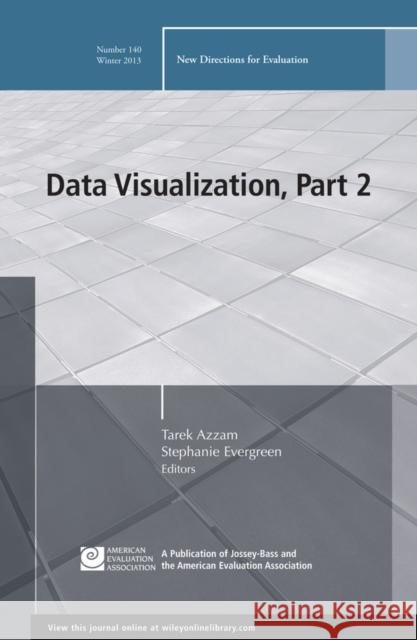
Data Visualization, Part 2 : New Directions for Evaluation, Number 140  9781118833544 John Wiley & Sons - książkaWidoczna okładka, to zdjęcie poglądowe, a rzeczywista szata graficzna może różnić się od prezentowanej.

Data Visualization, Part 2 : New Directions for Evaluation, Number 140

ISBN-13: 9781118833544 / Angielski / Miękka / 2013 / 96 str.

cena 112,91 zł
(netto: 107,53 VAT:  5%)

Najniższa cena z 30 dni: 111,75 zł
Termin realizacji zamówienia:
ok. 30 dni roboczych
Bez gwarancji dostawy przed świętami

Darmowa dostawa!

This issue delivers concrete suggestions for optimally using data visualization in evaluation, as well as suggestions for best practices in data visualization design. It focuses on specific quantitative and qualitative data visualization approaches that include data dashboards, graphic recording, and geographic information systems (GIS). Readers will get a step-by-step process for designing an effective data dashboard system for programs and organizations, and various suggestions to improve their utility. The next section illustrates the role that graphic recording can play in helping programs and evaluators understand and communicate the mission and impact that an intervention is having in a democratic and culturally competent way. The GIS section provides specific examples of how mapped data can be used to understand program implementation and effectiveness, and the influence that the environment has on these outcomes.

  • Discusses best practices that inform and shape our data visualization design choices
  • Highlights the best use of each tool/approach
  • Provides suggestions for effective practice
  • Discuss the strengths and limitations of each approach in evaluation practice
This is the 140th volume of the Jossey-Bass quarterly report series New Directions for Evaluation, an official publication of the American Evaluation Association.

Kategorie:
Nauka, Pedagogika i oświata
Kategorie BISAC:
Education > General
Computers > System Administration - Storage & Retrieval
Wydawca:
John Wiley & Sons
Seria wydawnicza:
J–B PE Single Issue (Program) Evaluation
Język:
Angielski
ISBN-13:
9781118833544
Rok wydania:
2013
Ilość stron:
96
Waga:
0.16 kg
Wymiary:
22.9 x 15.5 x 0.6
Oprawa:
Miękka
Wolumenów:
01

EDITOR–IN–CHIEF S COMMENT 1
Paul R. Brandon

EDITORS NOTES 3
Tarek Azzam, Stephanie Evergreen

5. Design Principles for Data Visualization in Evaluation 5
Stephanie Evergreen, Chris Metzner
This chapter will present design principles that contribute to achieving the communication goal of data visualization, which is to grab audience attention and help them engage with the data such that the resulting
product is increased understanding.

6. Data Dashboard as Evaluation and Research Communication Tool 21
Veronica S. Smith
This chapter introduces evaluators to data dashboards, which are visual displays that feature the most important information needed to achieve specific goals captured on a single screen. This chapter will
highlight keys to realizing the potential of data dashboards by describing appropriate use and effective practices for designing and creating these tools.

7. Graphic Recording 47
Jara Dean–Coffey
This chapter explores graphic recording, which is a visualization process that captures the themes and ideas emerging from group discussions.The chapter provides information on what the graphic recording process can look like and how it can fit into evaluation practice.

8. Mapping Data, Geographic Information Systems 69
Tarek Azzam
This chapter offers an introduction to geographic information systems (GIS) and provides examples of how this approach to data visualization can help evaluators better understand the context in which they
are working, conduct a deeper analysis of the data, and communicate using maps to illustrate important findings and patterns.

INDEX 85

This issue is Part 2 of a two–part series on data visualization in evaluation.
This part offers readers concrete suggestions for optimally using
data visualization in evaluation, as well as suggestions for best practices
in data visualization design. This part will also focus on specific
quantitative and qualitative data visualization approaches that include
data dashboards, graphic recording, and geographic information systems
(GIS). The data dashboard chapter will introduce readers to a
step–by–step process for designing an effective data dashboard system
for programs and organizations, and provide various suggestions to
improve their utility. The graphic recording chapter illustrates the role
that graphic recording can play in helping programs and evaluators
understand and communicate the mission and impact that an intervention
is having in a democratic and culturally competent way. The
GIS chapter provides specific examples of how mapped data can be
used to understand program implementation and effectiveness, and
the influence that the environment has on these outcomes. Each of
these chapters will highlight the best use of each tool/approach, provide
suggestions for effective practice, and discuss the strengths and
limitations of each approach in evaluation practice. This issue begins
with an overview of the best practices from fields like graphic design
that inform and shape our data visualization design choices. Color versions
of the figures in this issue can be found at www.ndedataviz.com


Udostępnij

Facebook - konto krainaksiazek.pl


Opinie o Krainaksiazek.pl na Opineo.pl

Partner Mybenefit

Krainaksiazek.pl w programie rzetelna firma Krainaksiaze.pl - płatności przez paypal

Czytaj nas na:

Facebook - krainaksiazek.pl
  • książki na zamówienie
  • granty
  • książka na prezent
  • kontakt
  • pomoc
  • opinie
  • regulamin
  • polityka prywatności

Zobacz:

  • Księgarnia czeska

  • Wydawnictwo Książkowe Klimaty

1997-2025 DolnySlask.com Agencja Internetowa

© 1997-2022 krainaksiazek.pl
     
KONTAKT | REGULAMIN | POLITYKA PRYWATNOŚCI | USTAWIENIA PRYWATNOŚCI
Zobacz: Księgarnia Czeska | Wydawnictwo Książkowe Klimaty | Mapa strony | Lista autorów
KrainaKsiazek.PL - Księgarnia Internetowa

Polityka prywatnosci - link
Krainaksiazek.pl - płatnośc Przelewy24
Przechowalnia Przechowalnia






