• Wyszukiwanie zaawansowane
  • Kategorie
  • Kategorie BISAC
  • Książki na zamówienie
  • Promocje
  • Granty
  • Książka na prezent
  • Opinie
  • Pomoc
  • Załóż konto
  • Zaloguj się

Damage-Associated Molecular Patterns in Human Diseases: Volume 3: Antigen-Related Disorders » książka


zaloguj się | załóż konto
Logo Krainaksiazek.pl

koszyk

konto

szukaj
topmenu
Księgarnia internetowa
Szukaj
Książki na zamówienie
Promocje
Granty
Książka na prezent
Moje konto
Pomoc
 
 
Wyszukiwanie zaawansowane
Pusty koszyk
Bezpłatna dostawa dla zamówień powyżej 20 złBezpłatna dostawa dla zamówień powyżej 20 zł

Kategorie główne

• Nauka
 [2952079]
• Literatura piękna
 [1850969]

  więcej...
• Turystyka
 [71058]
• Informatyka
 [151066]
• Komiksy
 [35579]
• Encyklopedie
 [23181]
• Dziecięca
 [620496]
• Hobby
 [139036]
• AudioBooki
 [1646]
• Literatura faktu
 [228729]
• Muzyka CD
 [379]
• Słowniki
 [2932]
• Inne
 [445708]
• Kalendarze
 [1409]
• Podręczniki
 [164793]
• Poradniki
 [480107]
• Religia
 [510956]
• Czasopisma
 [511]
• Sport
 [61267]
• Sztuka
 [243299]
• CD, DVD, Video
 [3411]
• Technologie
 [219640]
• Zdrowie
 [100984]
• Książkowe Klimaty
 [124]
• Zabawki
 [2281]
• Puzzle, gry
 [3363]
• Literatura w języku ukraińskim
 [258]
• Art. papiernicze i szkolne
 [8020]
Kategorie szczegółowe BISAC

Damage-Associated Molecular Patterns in Human Diseases: Volume 3: Antigen-Related Disorders

ISBN-13: 9783031217753 / Angielski / Twarda / 2023 / 720 str.
Walter Gottlieb Land
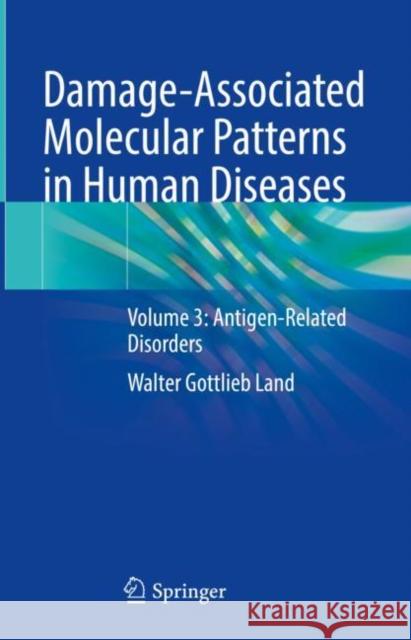
Damage-Associated Molecular Patterns in Human Diseases: Volume 3: Antigen-Related Disorders Walter Gottlieb Land 9783031217753 Springer - książkaWidoczna okładka, to zdjęcie poglądowe, a rzeczywista szata graficzna może różnić się od prezentowanej.

Damage-Associated Molecular Patterns in Human Diseases: Volume 3: Antigen-Related Disorders

ISBN-13: 9783031217753 / Angielski / Twarda / 2023 / 720 str.

Walter Gottlieb Land
cena 805,10
(netto: 766,76 VAT:  5%)

Najniższa cena z 30 dni: 771,08
Termin realizacji zamówienia:
ok. 22 dni roboczych
Dostawa w 2026 r.

Darmowa dostawa!
inne wydania

The core of this three-volume book deals with damage-associated molecular patterns abbreviated “DAMPs”, which are unique molecules that save life and fight for survival of all organisms on this planet by triggering robust inflammatory/immune defense responses upon any injury, including those caused by pathogens such as viruses and bacteria. However, these molecules also have a dark side: when produced in excess upon severe insults, they can trigger serious human diseases.The three volumes present current understanding of the importance of DAMP-promoted immune responses in the etiopathogenesis of human diseases and explore how this understanding is impacting diagnosis, prognosis, and future treatment. This third volume addresses the potential of DAMPs in clinical practice, as therapeutic targets and therapeutics, by focusing on a description of antigen-related diseases, which are pathogenetically dominated by DAMPs, that is, infectious and autoimmune disorders and allograft rejection (as an undesired function of these molecules), as well as tumor rejection (as the desired function of these molecules).The book is written for professionals from all medical and paramedical disciplines who are interested in the introduction of innovative data from modern inflammation and immunity research into clinical practice. In this sense, the book reflects an approach to translational medicine. The readership will include all practitioners and clinicians, in particular, ICU clinicians, infectiologists, microbiologists, virologists, hematologists, rheumatologists, diabetologists, neurologists, transplantologists, oncologists, and pharmacists.Also available: Damage-Associated Molecular Patterns in Human Diseases - Vol. 1: Injury-Induced Innate Immune Responses; Damage-Associated Molecular Patterns in Human Diseases - Vol. 2: Danger Signals as Diagnostics, Prognostics, and Therapeutic Targets.


The core of this three-volume book deals with damage-associated molecular patterns abbreviated “DAMPs”, which are unique molecules that save life and fight for survival of all organisms on this planet by triggering robust inflammatory/immune defense responses upon any injury, including those caused by pathogens such as viruses and bacteria. However, these molecules also have a dark side: when produced in excess upon severe insults, they can trigger serious human diseases.The three volumes present current understanding of the importance of DAMP-promoted immune responses in the etiopathogenesis of human diseases and explore how this understanding is impacting diagnosis, prognosis, and future treatment. This third volume addresses the potential of DAMPs in clinical practice, as therapeutic targets and therapeutics, by focusing on a description of antigen-related diseases, which are pathogenetically dominated by DAMPs, that is, infectious and autoimmune disorders and allograft rejection (as an undesired function of these molecules), as well as tumor rejection (as the desired function of these molecules).The book is written for professionals from all medical and paramedical disciplines who are interested in the introduction of innovative data from modern inflammation and immunity research into clinical practice. In this sense, the book reflects an approach to translational medicine. The readership will include all practitioners and clinicians, in particular, ICU clinicians, infectiologists, microbiologists, virologists, hematologists, rheumatologists, diabetologists, neurologists, transplantologists, oncologists, and pharmacists.Also available: Damage-Associated Molecular Patterns in Human Diseases - Vol. 1: Injury-Induced Innate Immune Responses; Damage-Associated Molecular Patterns in Human Diseases - Vol. 2: Danger Signals as Diagnostics, Prognostics, and Therapeutic Targets.

Kategorie:
Nauka, Medycyna
Kategorie BISAC:
Medical > Internal Medicine
Medical > Immunology
Wydawca:
Springer
Język:
Angielski
ISBN-13:
9783031217753
Rok wydania:
2023
Dostępne języki:
Ilość stron:
720
Oprawa:
Twarda

Preface

​Foreword
Acknowledgments 
Abbreviations
Part I Prologue
1 Perspectives of the Danger/Injury Model of Immunology as Applied to Antigen-Related Human Disorders
Part II Infections
2 Infectious Agents: From the Red Queen Paradigm to Some of Their Genuine Traits
3 Virulence of Pathogens and the Counteracting Responses of the Host
4 The DAMP-Driven Host Immune Defense Program Against Pathogens
5 The Pathogenetic Role of DAMPs in Severe Infectious Diseases
Part III Autoimmunity
6 Basic Trajectories in Autoimmunity
7 DAMPs in Systemic Autoimmune Diseases
8 DAMPs in Organ-Specific Autoimmune Diseases
Part IV Transplants and Cancer
9 The Undesirable and DesirableFunctions of DAMPs in Transplant and Tumor Rejection
Part V Epilogue
10 Approaching the DAMPome: Evolution in Medicine?

Walter G. Land is Professor Emeritus of the LMU University in Munich, Germany. After earning his MD, he spent four years specializing in Experimental Surgery, Immunology, and Organ Transplantation at the Institute for Surgical Research, LMU University, Munich. In 1979 he performed the first pancreas transplant in Germany at Klinikum Großhadern, where he subsequently spent almost 30 years as Head of the Transplantation Center. He also held a position as C3 Professor for Surgery and Transplantation Surgery in Munich for almost 20 years, until 2004. Currently, he is Emeritus Professor at LMU University Munich and Ancien Professeur Conventionné at the University of Strasbourg, France.

Professor Land is an Elected Member of the German National Academy of Sciences Leopoldina and the European Academy of Sciences and Arts; also, he is an Honorary Member of the American Society of Transplant Surgeons and the European Academy of Tumor Immunology.

Professor Land has been a co-founder of many European and German Societies, including the European Society for Organ Transplantation (ESOT), European College of Organ Transplantation, the German Transplantation Society, the German Academy of Transplantation Medicine, and the Society of Innate Immunity.

Professor Land has chaired the European Society for Organ Transplantation, the Society of Transplantation and Innate Immunity, and the Society of Innate Immunity. He is the author or editor of many articles and books, was awarded the Erich Lexer Prize by the German Surgical Society in 1991, the Order of Merit of the Federal Republic of Germany in 1996, the Bavarian State Medal for Social Merit in 1997, the Millennium Medal of the Transplantation Society in 2000, and the Maharshi Sushruta Prize for Transplantation Biology in India in 2005.

This book is a continuation of the topic of “DAMPs in Human Diseases”, the basics of which were described in a first volume, and details of their role in polytrauma, solid organ injuries, atherosclerosis, and cerebrocardiovascular diseases in a second volume by the same author. The third volume presents our current understanding of the impact of DAMP-driven innate/adaptive immune responses on the etiopathogenesis of antigen-related disorders, focusing on infectious and autoimmune diseases (highlighting respiratory virus diseases such as COVID-19, bacterial sepsis, and malaria) and autoimmune diseases (emphasizing systemic lupus erythematosus, rheumatoid arthritis, multiple sclerosis, type 1 diabetes), and briefly discussing allograft and tumor rejection. The detailed description and illustration of DAMP-triggered inflammatory pathways in the various chapters explain, for example, why it is the dysregulated emission of DAMPs - and not the virus or the bacterium per se- that is responsible for admitting COVID-19 or sepsis patients to the ICU for intensive care treatment. Also, the chapters on autoimmune diseases explain why, mechanistically, environmental factors make up a significant part of the risk in disease initiation and propagation.

Our growing understanding of such deleterious pathogenetic functions of activating DAMPs and suppressing DAMPs (SAMPs) is used as a point of departure to explore how these molecules can be used as valuable diagnostic and prognostic biomarkers as well as future therapeutic targets and therapeutics.

The book is written for professionals from all medical and paramedical disciplines who are interested in the introduction of innovative data from modern inflammation and immunity research into clinical practice. In this sense, the book reflects an approach to translational medicine. The readership will include all practitioners and clinicians, in particular, ICU clinicians, infectiologists, microbiologists, virologists, hematologists, rheumatologists, diabetologists, neurologists, transplantologists, oncologists, and pharmacists.


Udostępnij

Facebook - konto krainaksiazek.pl


Opinie o Krainaksiazek.pl na Opineo.pl

Partner Mybenefit

Krainaksiazek.pl w programie rzetelna firma Krainaksiaze.pl - płatności przez paypal

Czytaj nas na:

Facebook - krainaksiazek.pl
  • książki na zamówienie
  • granty
  • książka na prezent
  • kontakt
  • pomoc
  • opinie
  • regulamin
  • polityka prywatności

Zobacz:

  • Księgarnia czeska

  • Wydawnictwo Książkowe Klimaty

1997-2025 DolnySlask.com Agencja Internetowa

© 1997-2022 krainaksiazek.pl
     
KONTAKT | REGULAMIN | POLITYKA PRYWATNOŚCI | USTAWIENIA PRYWATNOŚCI
Zobacz: Księgarnia Czeska | Wydawnictwo Książkowe Klimaty | Mapa strony | Lista autorów
KrainaKsiazek.PL - Księgarnia Internetowa

Polityka prywatnosci - link
Krainaksiazek.pl - płatnośc Przelewy24
Przechowalnia Przechowalnia





