• Wyszukiwanie zaawansowane
  • Kategorie
  • Kategorie BISAC
  • Książki na zamówienie
  • Promocje
  • Granty
  • Książka na prezent
  • Opinie
  • Pomoc
  • Załóż konto
  • Zaloguj się

Cybersecurity Teaching in Higher Education » książka


zaloguj się | załóż konto
Logo Krainaksiazek.pl

koszyk

konto

szukaj
topmenu
Księgarnia internetowa
Szukaj
Książki na zamówienie
Promocje
Granty
Książka na prezent
Moje konto
Pomoc
 
 
Wyszukiwanie zaawansowane
Pusty koszyk
Bezpłatna dostawa dla zamówień powyżej 20 złBezpłatna dostawa dla zamówień powyżej 20 zł

Kategorie główne

• Nauka
 [2949965]
• Literatura piękna
 [1857847]

  więcej...
• Turystyka
 [70818]
• Informatyka
 [151303]
• Komiksy
 [35733]
• Encyklopedie
 [23180]
• Dziecięca
 [617748]
• Hobby
 [139972]
• AudioBooki
 [1650]
• Literatura faktu
 [228361]
• Muzyka CD
 [398]
• Słowniki
 [2862]
• Inne
 [444732]
• Kalendarze
 [1620]
• Podręczniki
 [167233]
• Poradniki
 [482388]
• Religia
 [509867]
• Czasopisma
 [533]
• Sport
 [61361]
• Sztuka
 [243125]
• CD, DVD, Video
 [3451]
• Technologie
 [219309]
• Zdrowie
 [101347]
• Książkowe Klimaty
 [123]
• Zabawki
 [2362]
• Puzzle, gry
 [3791]
• Literatura w języku ukraińskim
 [253]
• Art. papiernicze i szkolne
 [7933]
Kategorie szczegółowe BISAC

Cybersecurity Teaching in Higher Education

ISBN-13: 9783031242151 / Angielski
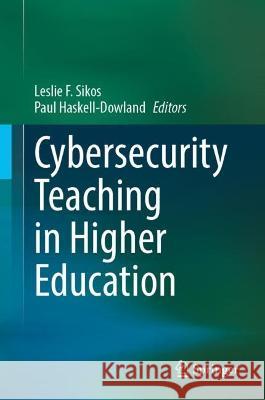
Leslie F. Sikos; Paul Haskell-Dowland
Cybersecurity Teaching in Higher Education Leslie F. Sikos Paul Haskell-Dowland 9783031242151 Springer - książkaWidoczna okładka, to zdjęcie poglądowe, a rzeczywista szata graficzna może różnić się od prezentowanej.

Cybersecurity Teaching in Higher Education

ISBN-13: 9783031242151 / Angielski

Leslie F. Sikos; Paul Haskell-Dowland
cena 605,23 zł
(netto: 576,41 VAT:  5%)

Najniższa cena z 30 dni: 578,30 zł
Termin realizacji zamówienia:
ok. 22 dni roboczych
Bez gwarancji dostawy przed świętami

Darmowa dostawa!
inne wydania

This book collects state-of-the-art curriculum development considerations, training methods, techniques, and best practices, as well as cybersecurity lab requirements and aspects to take into account when setting up new labs, all based on hands-on experience in teaching cybersecurity in higher education.In parallel with the increasing number and impact of cyberattacks, there is a growing demand for cybersecurity courses in higher education. More and more educational institutions offer cybersecurity courses, which come with unique and constantly evolving challenges not known in other disciplines. For example, step-by-step guides may not work for some of the students if the configuration of a computing environment is not identical or similar enough to the one the workshop material is based on, which can be a huge problem for blended and online delivery modes. Using nested virtualization in a cloud infrastructure might not be authentic for all kinds of exercises, because some of its characteristics can be vastly different from an enterprise network environment that would be the most important to demonstrate to students. The availability of cybersecurity datasets for training and educational purposes can be limited, and the publicly available datasets might not suit a large share of training materials, because they are often excessively documented, but not only by authoritative websites, which render these inappropriate for assignments and can be misleading for online students following training workshops and looking for online resources about datasets such as the Boss of the SOC (BOTS) datasets. The constant changes of Kali Linux make it necessary to regularly update training materials, because commands might not run the same way they did a couple of months ago.The many challenges of cybersecurity education are further complicated by the continuous evolution of networking and cloud computing, hardware and software, which shapes student expectations: what is acceptable and respected today might be obsolete or even laughable tomorrow.


This book collects state-of-the-art curriculum development considerations, training methods, techniques, and best practices, as well as cybersecurity lab requirements and aspects to take into account when setting up new labs, all based on hands-on experience in teaching cybersecurity in higher education.

In parallel with the increasing number and impact of cyberattacks, there is a growing demand for cybersecurity courses in higher education. More and more educational institutions offer cybersecurity courses, which come with unique and constantly evolving challenges not known in other disciplines. For example, step-by-step guides may not work for some of the students if the configuration of a computing environment is not identical or similar enough to the one the workshop material is based on, which can be a huge problem for blended and online delivery modes. Using nested virtualization in a cloud infrastructure might not be authentic for all kinds of exercises, because some of its characteristics can be vastly different from an enterprise network environment that would be the most important to demonstrate to students. The availability of cybersecurity datasets for training and educational purposes can be limited, and the publicly available datasets might not suit a large share of training materials, because they are often excessively documented, but not only by authoritative websites, which render these inappropriate for assignments and can be misleading for online students following training workshops and looking for online resources about datasets such as the Boss of the SOC (BOTS) datasets. The constant changes of Kali Linux make it necessary to regularly update training materials, because commands might not run the same way they did a couple of months ago.
The many challenges of cybersecurity education are further complicated by the continuous evolution of networking and cloud computing, hardware and software, which shapes student expectations: what is acceptable and respected today might be obsolete or even laughable tomorrow.

Kategorie:
Informatyka
Kategorie BISAC:
Education > Computers & Technology
Computers > Security - Network Security
Wydawca:
Springer
Język:
Angielski
ISBN-13:
9783031242151

Chapter. 1. Challenges and Opportunities of Teaching Cybersecurity in UK University Computing Programmes

Chapter. 2. Using the Delphi Method to Elicit Requirements for an International Master’s Program in Information Security Management
Chapter. 3. Designing and Developing a Scenario-Based Curriculum for Cyber Education in HE
Chapter. 4. Enabling teamwork in Cybersecurity courses
Chapter. 5. Towards a Light-Weight Certification Scheme for Cybersecurity MOOCs
Chapter. 6. Learning Environments for Digital Forensics Teaching in Higher Education

Dr. Leslie F. Sikos is a computer scientist specializing in artificial intelligence and data science, with a focus on cybersecurity applications. He holds two Ph.D. degrees and 20+ industry certificates. He is an active member of the research community as an author, editor, reviewer, conference organizer, and speaker; a senior member of the IEEE, and a certified professional of the Australian Computer Society. Beyond numerous journal papers, Dr. Sikos published more than 20 books, including textbooks, monographs, and edited volumes.

Prof. Paul Haskell-Dowland is the Associate Dean for Computing and Security in the School of Science at Edith Cowan University, Perth, Australia. Paul has maintained a significant interest in cybersecurity education with leadership roles in higher education institutions. Paul has led teams delivering cybersecurity education at undergraduate and postgraduate level including research programs through to Ph.D. Paul is the ACS/Australian Country Member Representative and Chair of the International Federation for Information Processing (IFIP) Technical Committee 11; a member of the ACS Cyber Security Committee; a Fellow of the Australian Information Security Association; and, a Fellow of UK HE Advance (FHEA)—all with a focus on cybersecurity education, training, and awareness.
In addition to his academic leadership role, Paul has delivered keynotes, invited presentations, workshops, professional development/training and seminars across the world.

This book collects state-of-the-art curriculum development considerations, training methods, techniques, and best practices, as well as cybersecurity lab requirements and aspects to take into account when setting up new labs, all based on hands-on experience in teaching cybersecurity in higher education.

In parallel with the increasing number and impact of cyberattacks, there is a growing demand for cybersecurity courses in higher education. More and more educational institutions offer cybersecurity courses, which come with unique and constantly evolving challenges not known in other disciplines. For example, step-by-step guides may not work for some of the students if the configuration of a computing environment is not identical or similar enough to the one the workshop material is based on, which can be a huge problem for blended and online delivery modes. Using nested virtualization in a cloud infrastructure might not be authentic for all kinds of exercises, because some of its characteristics can be vastly different from an enterprise network environment that would be the most important to demonstrate to students. The availability of cybersecurity datasets for training and educational purposes can be limited, and the publicly available datasets might not suit a large share of training materials, because they are often excessively documented, but not only by authoritative websites, which render these inappropriate for assignments and can be misleading for online students following training workshops and looking for online resources about datasets such as the Boss of the SOC (BOTS) datasets. The constant changes of Kali Linux make it necessary to regularly update training materials, because commands might not run the same way they did a couple of months ago.
The many challenges of cybersecurity education are further complicated by the continuous evolution of networking and cloud computing, hardware and software, which shapes student expectations: what is acceptable and respected today might be obsolete or even laughable tomorrow.




Udostępnij

Facebook - konto krainaksiazek.pl


Opinie o Krainaksiazek.pl na Opineo.pl

Partner Mybenefit

Krainaksiazek.pl w programie rzetelna firma Krainaksiaze.pl - płatności przez paypal

Czytaj nas na:

Facebook - krainaksiazek.pl
  • książki na zamówienie
  • granty
  • książka na prezent
  • kontakt
  • pomoc
  • opinie
  • regulamin
  • polityka prywatności

Zobacz:

  • Księgarnia czeska

  • Wydawnictwo Książkowe Klimaty

1997-2025 DolnySlask.com Agencja Internetowa

© 1997-2022 krainaksiazek.pl
     
KONTAKT | REGULAMIN | POLITYKA PRYWATNOŚCI | USTAWIENIA PRYWATNOŚCI
Zobacz: Księgarnia Czeska | Wydawnictwo Książkowe Klimaty | Mapa strony | Lista autorów
KrainaKsiazek.PL - Księgarnia Internetowa

Polityka prywatnosci - link
Krainaksiazek.pl - płatnośc Przelewy24
Przechowalnia Przechowalnia



