• Wyszukiwanie zaawansowane
  • Kategorie
  • Kategorie BISAC
  • Książki na zamówienie
  • Promocje
  • Granty
  • Książka na prezent
  • Opinie
  • Pomoc
  • Załóż konto
  • Zaloguj się

Current Ornithology: Volume 3 » książka


zaloguj się | załóż konto
Logo Krainaksiazek.pl

koszyk

konto

szukaj
topmenu
Księgarnia internetowa
Szukaj
Książki na zamówienie
Promocje
Granty
Książka na prezent
Moje konto
Pomoc
 
 
Wyszukiwanie zaawansowane
Pusty koszyk
Bezpłatna dostawa dla zamówień powyżej 20 złBezpłatna dostawa dla zamówień powyżej 20 zł

Kategorie główne

• Nauka
 [2949965]
• Literatura piękna
 [1857847]

  więcej...
• Turystyka
 [70818]
• Informatyka
 [151303]
• Komiksy
 [35733]
• Encyklopedie
 [23180]
• Dziecięca
 [617748]
• Hobby
 [139972]
• AudioBooki
 [1650]
• Literatura faktu
 [228361]
• Muzyka CD
 [398]
• Słowniki
 [2862]
• Inne
 [444732]
• Kalendarze
 [1620]
• Podręczniki
 [167233]
• Poradniki
 [482388]
• Religia
 [509867]
• Czasopisma
 [533]
• Sport
 [61361]
• Sztuka
 [243125]
• CD, DVD, Video
 [3451]
• Technologie
 [219309]
• Zdrowie
 [101347]
• Książkowe Klimaty
 [123]
• Zabawki
 [2362]
• Puzzle, gry
 [3791]
• Literatura w języku ukraińskim
 [253]
• Art. papiernicze i szkolne
 [7933]
Kategorie szczegółowe BISAC

Current Ornithology: Volume 3

ISBN-13: 9781461567868 / Angielski / Miękka / 2012 / 522 str.
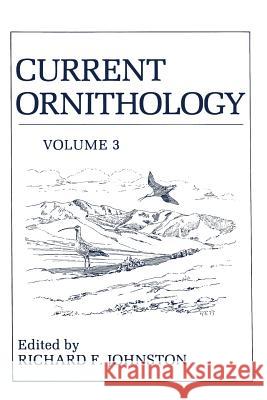
Richard Johnston
Current Ornithology: Volume 3 Johnston, Richard 9781461567868 Springer - książkaWidoczna okładka, to zdjęcie poglądowe, a rzeczywista szata graficzna może różnić się od prezentowanej.

Current Ornithology: Volume 3

ISBN-13: 9781461567868 / Angielski / Miękka / 2012 / 522 str.

Richard Johnston
cena 201,72 zł
(netto: 192,11 VAT:  5%)

Najniższa cena z 30 dni: 192,74 zł
Termin realizacji zamówienia:
ok. 22 dni roboczych
Bez gwarancji dostawy przed świętami

Darmowa dostawa!

If it is still true that more than 80% of the ornithologists in North America are primarily interested or engaged in ecological studies on birds (J. R. King and W. J. Bock, Final Report of the Workshop on a National Plan For Ornithology, 1978), then Volume 3 of Current Orni- thology is preadapted for their consideration. All but one article in this volume are somehow concerned with the ecological aspects of the bi- ology of birds. Variation in the scope of topical coverage is relatively broad, and includes conservation, reproduction, behavior, community structure, and evolutionary ecology. Three reviews concern the pervasive effects of man and industry on various bird populations of the world. Risebrough provides a de- tailed description of the relationships between pesticides and bird pop- ulations. Morrison ass es ses aspects of bird population numbers as in- dicators of environmental change, and Temple outlines current research on endangered species. The broad spectrum of reproductive ecology of birds is variously treated in this volume. Jehl and Murray explore sexual selection and some of the resulting complexities in the evolution of sexual size di- morphism, primarily in shorebirds. Lawton and Lawton are concerned with the relationships between social behavior and breeding systems in which variation is found in the age at which reproduction is first undertaken. Oring examines the wide-ranging variation in polyandrous breeding systems in birds, while Rohwer is concerned with adoption versus infanticide in birds, and their relationships to reproductive fit- ness.


Kategorie:
Nauka, Biologia i przyroda
Kategorie BISAC:
Science > Zoologia i nauki o zwierzętach
Nature > Birdwatching Guides
Wydawca:
Springer
Język:
Angielski
ISBN-13:
9781461567868
Rok wydania:
2012
Wydanie:
Softcover Repri
Ilość stron:
522
Waga:
0.79 kg
Wymiary:
22.9 x 15.2
Oprawa:
Miękka
Wolumenów:
01

1 The Evolution of Normal and Reverse Sexual Size Dimorphism in Shorebirds and Other Birds.- 1. Introduction.- 2. Methods.- 3. The Shorebirds.- 3.1. Charadrii.- 3.2. Scolopaci.- 4. Patterns of Size Dimorphism.- 4.1. Sexual Size Dimorphism and Foraging Behavior.- 4.2. Sexual Size Dimorphism and Latitude.- 4.3. Sexual Size Dimorphism and Mating Systems.- 4.4. Relationship between Size and Plumage Dimorphism.- 5. Theories Pertaining to the Evolution of Sexual Size Dimorphism.- 5.1. Ecological Theories.- 5.2. Reproductive Theories.- 6. A General Theory for the Evolution of Sexual Size Dimorphism.- 7. Effects of Ecological Factors on Size Dimorphism.- 7.1. Chionididae.- 7.2. Haematopodidae.- 7.3. Recurvirostridae.- 7.4. Charadriidae.- 7.5. Jacanidae.- 7.6. Scolopacidae.- 8. Sexual Size Dimorphism in Other Taxa.- 8.1. Ratites and Tinamous.- 8.2. Pelecaniformes.- 8.3. Falconiformes.- 8.4. Stercorariidae.- 8.5. Strigiformes.- 8.6. Turnicidae.- 8.7. Trochilidae.- 8.8. Other Families.- 8.9. Mammals.- 9. Future Research.- 10. Conclusions.- References.- 2 Bird Songs and Avian Systematics.- 1. Introduction.- 2. Bird Song and Species Problems.- 2.1. Songs and Sympatric Sibling Species.- 2.2. Songs and Allopatric Populations.- 2.3. Variation among Populations and Variation among Species.- 2.4. Songs and Subspecies.- 2.5. Limitations: Social and Developmental Factors.- 2.6. Song as a Test of Species Limits in Two Species Groups.- 3. Experimental Tests of Species Distinctiveness.- 3.1. Song Playback Experiments.- 3.2. Geographic Variation in Song and in Responsiveness.- 3.3. Female Responsiveness to Song.- 4. Bird Songs and the Phylogeny of Speciation.- 4.1. Character Analysis in Phylogenetic Systematics.- 4.2. Song Development, Templates, and Cultural Evolution.- 4.3. Repertoires and the Ethology of Homologies.- 4.4. Phylogenetic Analyses of Two Species Groups.- 4.5. Prospective for Other Groups.- 5. Discussion.- References.- 3 Social Dominance, Mating and Spacing Systems, Female Fecundity, and Vocal Dialects in Captive and Free-Ranging Brown-Headed Cowbirds.- 1. Introduction.- 2. Studies of Captive Cowbirds.- 2.1. An Overview of Previous Captivity Studies.- 2.2. Conditions in Captivity and Methods.- 2.3. Singing and Dominance Behavior.- 2.4. Dominance and Male Age.- 2.5. Consortships between Males and Females.- 2.6. Female-Female Aggression and Consortships.- 3. Discussion of the Aviary Results and of Recent Field Studies on Mating and Spacing Patterns.- 3.1. Mating System.- 3.2. Why Should Cowbirds Be Monogamous?.- 3.3. Dominance, Male Age, and Pairing Success.- 3.4. Spacing Patterns.- 4. Field Studies of Phenomena That Show Little Geographic Variation.- 4.1. Diurnal Cycle in Social Behavior and the Opportunistic Use of Space.- 4.2. Numbers of Eggs Layed and Comments on Female Reproductive Strategies.- 5. Field Studies of Phenomena That Vary Geographically.- 5.1. Geographic Differences in the Relative Dominance Status, Mating Success, and Weights of Adult and Yearling Males.- 5.2. Geographic Variation in the Presence and Absence of Localized Vocal Dialects.- 6. Concluding Remarks.- References.- 4 Heterochrony, Deferred Breeding, and Avian Sociality.- 1. Introduction.- 2. Advantages of Delayed Somatic Maturation.- 3. Evidence of Paedomorphosis in the Class Aves.- 4. Heterochronic Trends in the Corvids.- 4.1. Deferred Somatic Maturity and Sociality.- 4.2. A Corvid Sampler.- 4.3. The New World Jays.- 5. Ecological and Evolutionary Significance of Avian Heterochrony.- 5.1. Subadult Plumages: Female Mimicry, Crypsis, and Neoteny.- 5.2. Ecological Correlates of Avian Paedomorphosis.- References.- 5 Avian Frugivory and Seed Dispersal in Eastern North America.- 1. Introduction.- 2. Methods.- 3. Bird-Dispersed Plants and Some of Their Characteristics.- 3.1. Phenology.- 3.2. Growth Forms.- 3.3. Fruit Size and Nutritional Value.- 4. Avian Frugivores and Some of Their Characteristics.- 4.1. Phenology.- 4.2. Body Size and Morphology.- 5. Effects of Dispersal and Frugivory on Plant Populations.- 5.1. Population Dynamics.- 5.2. Competition.- 5.3. Habitat Breadth.- 6. Effects of Frugivory on Bird Populations.- 6.1. Population Dynamics.- 6.2. Competition.- 6.3. Habitat Breadth.- 7. Plant Community Comparisons.- 7.1. Gebitat Comparisons.- 8. Bird Community Comparisons.- 8.1. Geographic Comparisons.- 8.2. Habitat Comparisons.- 8.3. Seasonal Comparisons.- 8.4. Comparison among Frugivore “Classes”.- 8.5. Relationship between Bird Community and Plant Community.- 9. Summary.- References.- 6 Competition in Migrant Birds in the Nonbreeding Season.- 1. Introduction.- 1.1. Competition: Operational Definition.- 1.2. The Role of Competition in Theories about Migratory Bird Distribution.- 2. Intraspecific Competition.- 2.1. Dominance.- 2.2. Territoriality.- 2.3. Age-and Sex-Related Geographic Separation.- 2.4. Latitudinal Separation of and Leap-Frog Migration between Geographic Races and Closely Related Species.- 3. Interspecific Competition.- 3.1. Dominance and Interspecific Territoriality.- 3.2. Feeding Specialization.- 3.3. Testing Predictions of Community Theory.- 3.4. Interspecific Geographic Separation.- 4. Conclusions.- References.- 7 Avian Polyandry.- 1. Introduction.- 2. Classical Polyandry.- 2.1. Jacanas.- 2.2. Spotted Sandpipers.- 2.3. Phalaropes.- 2.4. Other Species.- 3. Evolution of Classical Polyandry.- 3.1. Females Are Not as Capable as Males at Providing Uniparental Care.- 3.2. Females Are Better Able than Males to Obtain Secondary Mates.- 3.3. Ancestral Conditions Preceding Polyandry.- 4. Did Polyandry Evolve from Monogamy via a Multi-Clutch Polygamy Stage?.- 5. Cooperative Polyandry.- 5.1. Galapagos Hawk (Buteo galapagoensis).- 5.2. Harris’ Hawk (Parabuteo unicinctus).- 5.3. Dusky Moorhen (Gallinula tenebrosa).- 5.4. Tasmanian Native Hen (Tribonyx mortierii].- 5.5. Acorn Woodpecker [Melanerpes formicivorus).- 5.6. Dunnock (Prunella modularis).- 6. Theories on the Evolution of Cooperative Polyandry.- 6.1. Extended Polygyny Threshold Model.- 6.2. Ecological Saturation Model.- 6.3. Female Monopolization Model.- 6.4. Kin Selection Model.- 6.5. Future.- 7. Birds Improperly Considered Polyandrous.- 7.1. Multi-Clutching Monogamy.- 7.2. Multi-Clutching Polygamy.- 7.3. Female Defense (Harem) Polygyny Plus Sequential Polyandry.- 8. Conclusion.- References.- 8 Selection for Adoption Versus Infanticide by Replacement “Mates” in Birds.- 1. Introduction.- 2. A Review of Adoption and Infanticide in Birds.- 2.1. Behavior of Replacing Males (Including Female Jacanas).- 2.2. Behavior of Replacing Females (Excluding Female Jacanas).- 3. A Prospective Analysis for Birds.- 3.1. Effects of Within-Season Divorce and Dispersal for Renesting.- 3.2. Effects of Divorce between Seasons and of High Courtship Costs.- 4. Alternate Hypotheses for Adoption in Birds.- 4.1. Newton’s Nest Site Limitation Hypothesis.- 4.2. Rohwer’s Additional Mate Hypothesis.- 5. Adaptive or Maladaptive? A Review of Cases.- 5.1. Indifference.- 5.2. Adoption.- 6. Infanticide in Other Contexts.- References.- 9 Pesticides and Bird Populations.- 1. Introduction.- 2. Biocidal Chemicals.- 2.1. Uses and Applications.- 2.2. Toxicology.- 3. Impacts upon Bird Populations.- 3.1. Mortality.- 3.2. Effects on Reproduction.- 3.3. Disruptions in the Food Webs.- 3.4. Habitat Modifications.- 3.5. Impacts of the Ending of DDT Use in North America.- 3.6. Endangered Species.- 4. Prospects for the Future.- References.- 10 Bird Populations as Indicators of Environmental Change.- 1. Introduction.- 1.1. Indicator Species Concept.- 1.2. The Use of Birds as Indicators.- 2. Quantity of Habitat.- 2.1. Natural Phenomena.- 2.2. Human Disturbance.- 3. Quality of Habitat.- 3.1. Natural Phenomena.- 3.2. Human Disturbance.- 4. Summary and Conclusions.- References.- 11 The Problem of Avian Extinctions.- 1. Introduction.- 2. The Magnitude of the Endangered Bird Problem.- 2.1. A Taxonomie Survey of Endangered Birds.- 2.2. An Ecological Survey of Endangered Birds.- 3. Causes of Declines in Avian Populations.- 3.1. Proximate Causes of Declines.- 3.2. Ultimate Causes of Declines.- 4. How to Deal with Declining and Endangered Birds.- 4.1. Treatment of Proximate Causes of Declines.- 4.2. Treatment of Ultimate Causes of Declines.- 5. Status of Efforts to Prevent Extinctions.- References.- Author Index.- Bird Name Index.

Johnston, Richard Johnston is editor of Bass Player magazine, and a ... więcej >


Udostępnij

Facebook - konto krainaksiazek.pl


Opinie o Krainaksiazek.pl na Opineo.pl

Partner Mybenefit

Krainaksiazek.pl w programie rzetelna firma Krainaksiaze.pl - płatności przez paypal

Czytaj nas na:

Facebook - krainaksiazek.pl
  • książki na zamówienie
  • granty
  • książka na prezent
  • kontakt
  • pomoc
  • opinie
  • regulamin
  • polityka prywatności

Zobacz:

  • Księgarnia czeska

  • Wydawnictwo Książkowe Klimaty

1997-2025 DolnySlask.com Agencja Internetowa

© 1997-2022 krainaksiazek.pl
     
KONTAKT | REGULAMIN | POLITYKA PRYWATNOŚCI | USTAWIENIA PRYWATNOŚCI
Zobacz: Księgarnia Czeska | Wydawnictwo Książkowe Klimaty | Mapa strony | Lista autorów
KrainaKsiazek.PL - Księgarnia Internetowa

Polityka prywatnosci - link
Krainaksiazek.pl - płatnośc Przelewy24
Przechowalnia Przechowalnia





