• Wyszukiwanie zaawansowane
  • Kategorie
  • Kategorie BISAC
  • Książki na zamówienie
  • Promocje
  • Granty
  • Książka na prezent
  • Opinie
  • Pomoc
  • Załóż konto
  • Zaloguj się

Current Ornithology » książka


zaloguj się | załóż konto
Logo Krainaksiazek.pl

koszyk

konto

szukaj
topmenu
Księgarnia internetowa
Szukaj
Książki na zamówienie
Promocje
Granty
Książka na prezent
Moje konto
Pomoc
 
 
Wyszukiwanie zaawansowane
Pusty koszyk
Bezpłatna dostawa dla zamówień powyżej 20 złBezpłatna dostawa dla zamówień powyżej 20 zł

Kategorie główne

• Nauka
 [2949965]
• Literatura piękna
 [1857847]

  więcej...
• Turystyka
 [70818]
• Informatyka
 [151303]
• Komiksy
 [35733]
• Encyklopedie
 [23180]
• Dziecięca
 [617748]
• Hobby
 [139972]
• AudioBooki
 [1650]
• Literatura faktu
 [228361]
• Muzyka CD
 [398]
• Słowniki
 [2862]
• Inne
 [444732]
• Kalendarze
 [1620]
• Podręczniki
 [167233]
• Poradniki
 [482388]
• Religia
 [509867]
• Czasopisma
 [533]
• Sport
 [61361]
• Sztuka
 [243125]
• CD, DVD, Video
 [3451]
• Technologie
 [219309]
• Zdrowie
 [101347]
• Książkowe Klimaty
 [123]
• Zabawki
 [2362]
• Puzzle, gry
 [3791]
• Literatura w języku ukraińskim
 [253]
• Art. papiernicze i szkolne
 [7933]
Kategorie szczegółowe BISAC

Current Ornithology

ISBN-13: 9781461567899 / Angielski / Miękka / 2012 / 420 str.
Richard Johnston
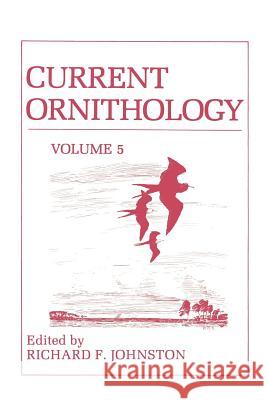
Current Ornithology Richard Johnston 9781461567899 Springer - książkaWidoczna okładka, to zdjęcie poglądowe, a rzeczywista szata graficzna może różnić się od prezentowanej.

Current Ornithology

ISBN-13: 9781461567899 / Angielski / Miękka / 2012 / 420 str.

Richard Johnston
cena 403,47 zł
(netto: 384,26 VAT:  5%)

Najniższa cena z 30 dni: 385,52 zł
Termin realizacji zamówienia:
ok. 22 dni roboczych
Bez gwarancji dostawy przed świętami

Darmowa dostawa!

Volume 5 of this series continues its coverage of currently active re- search fields in ornithology. Because an editor can never be a disin- terested observer of his or her own editorial efforts, any claim for su- periority of this volume is not without conflict of interest. Even so, Volume 5 has certain merits that even a parent should acknowledge, and I find the current chapters not merely timely and authoritative but compelling in their demand for a reader's attention. Wolfgang and Roswitha Wiltschko provide a perceptive review of magnetic orientation in birds, a piece dedicated to Fritz Merkel, the pioneer in studies of magnetic orientation. Sergei Kharitonov and Doug- las Siegel-Causey are concerned with the behavioral ecology of seabird coloniality, emphasizing their field experiences in the USSR and the United States. Ted Miller examines the application of studies of bird behavior to comparative biology, pursuing the interface of behavior and evolutionary biology adumbrated by Konrad Lorenz in the 1930s. Jeremy Raynor gives us a summary of the work over the past decade on bird flight, which is not, by turns, as complex or as simple as we had formerly believed. Carrol Henderson describes recent develop- ments in nongame bird conservation, based on his pioneering work in the State of Minnesota. Alan Kamil discusses optimal experimental design for research in ornithology, a field in which experimental work is frequently difficult to pursue.


Kategorie:
Nauka, Biologia i przyroda
Kategorie BISAC:
Science > Zoologia i nauki o zwierzętach
Nature > Birdwatching Guides
Wydawca:
Springer
Seria wydawnicza:
Current Ornithology
Język:
Angielski
ISBN-13:
9781461567899
Rok wydania:
2012
Wydanie:
Softcover Repri
Numer serii:
000051009
Ilość stron:
420
Waga:
0.64 kg
Wymiary:
22.9 x 15.2
Oprawa:
Miękka
Wolumenów:
01

1 Form and Function in Avian Flight.- 1. Introduction.- 2. Flapping Flight Aerodynamics.- 2.1. Airfoil Action and Force Generation.- 2.2. Thrust from Flapping Wings.- 2.3. Vortex Action in Flapping Flight.- 2.4. Wingbeat Kinematics in Flying Birds.- 2.5. Theoretical Models of Flapping Flight Mechanics.- 2.6. Scaling and Avian Flight.- 2.7. Von Helmholtz’s Scaling Theory.- 3. Ecology and Wing Morphology in Flying Birds.- 3.1. Allometry of Wing Size.- 3.2. Principal Components Analysis (PCA) of Wing Morphology.- 3.3. The Mosaic of Adaptation.- 3.4. Comparison of Birds and Bats.- 3.5. Why Do Ducks Have Small Wings?.- 3.6. The Flight Muscles: Pectoralis and Supracoracoideus.- 4. Evolutionary Constraints on Flight Adaptation.- 4.1. The Energy Margin and the Upper Limit to Size.- 4.2. Scaling of Wingbeat Frequency.- 4.3. Constraints on Morphological Adaptation.- 4.4. Flight Morphology and Fitness.- References.- 2 Magnetic Orientation in Birds.- 1. The Magnetic Field of the Earth.- 1.1. Spatial Distribution of the Geomagnetic Field.- 1.2. Temporal Variations of the Magnetic Field.- 1.3. Experimental Magnetic Fields.- 2. The Magnetic Compass of Birds.- 2.1. Functional Characteristics.- 2.2. A Widespread Mechanism among Birds.- 2.3. Perception of Magnetic Fields.- 3. Role of the Magnetic Compass in Bird Orientation.- 3.1. The Magnetic Compass in Homing.- 3.2. The Magnetic Compass in Migratory Orientation.- 3.3. The Magnetic Compass as a Directional Reference System.- 4. Noncompass Use of the Magnetic Field.- 4.1. Controlling the Course of Migration.- 4.2. Magnetic Parameters in the Navigational “Map”.- References.- 3 Temporal Patterns of Pair Formation and Reproduction in Annual Cycles and Associated Endocrinology in Waterfowl.- 1. Introduction.- 2. Strategies of Reproduction and Breeding Patterns in Waterfowl.- 3. A Brief Review of Avian Endocrinology.- 3.1. The Hypothalamus and Hypothalamic Releasing Hormones and Factors.- 3.2. The Pituitary and Associated Hormones.- 3.3. Inhibitory Feedback by Steroids.- 3.4. Stimulatory Feedback by Steroids.- 3.5. Other Hormones Relevant to Reproduction.- 4. Summary of the Major Components of the Annual Cycle.- 5. Temporal Patterns of Molt in Waterfowl.- 5.1. Molt Chronology.- 5.2. Endocrine Correlates of Molt.- 6. Autumnal Gonadal Recrudescence.- 7. Autumnal Migration.- 7.1. Autumnal Migratory Chronology.- 7.2. Endocrine Correlates of Migration.- 8. Winter Period of Initial Pair Formation.- 8.1. Temporal Patterns of Pair Formation and Reproduction.- 8.2. Male Courtship and Reproductive Activity.- 8.3. Female Receptivity to Male Courtship.- 8.4. Mate Choice and Pair Formation in Waterfowl.- 9. Vernal Premigratory Changes and Early Migration.- 9.1. The Role of Photoperiod.- 9.2. Temporal Patterning of Pulsatile Hormone Release.- 9.3. Importance of the Timing of Nutrient Acquisition, Molt, and Spring Migration on Subsequent Time of Nesting.- 10. Late Spring Migration and Arrival on the Breeding Grounds.- 10.1. Social Factors Regulating Reproduction.- 10.2. Influence of the Flock and Social Facilitation on Reproduction.- 11. Nesting and Egg Laying.- 11.1. Clutch Size and Seasonal Patterns of Egg Laying.- 11.2. Genetic and Environmental Determinants of Reproductive Traits.- 11.3. Physiological Mechanisms and Endocrine Correlates of Egg Laying.- 12. Incubation and Renesting.- 12.1. Incubation and Renesting Behavior.- 12.2. Endocrine Correlates of Incubation and Renesting.- 13. Seasonal Decline and Termination of the Reproductive Phase.- 14. Summary.- References.- 4 Female-Biased Philopatry, Monogamy, and the Timing of Pair Formation in Migratory Waterfowl.- 1. Introduction.- 2. Waterfowl Breeding Systems.- 3. Why Monogamy, Early Pairing, and Female Philopatry?.- 3.1. Female Mate Choice.- 3.2. Female-Biased Philopatry.- 3.3. Influence of Inbreeding on Dispersal.- 3.4. Philopatry and Lifetime Monogamy in Swans and Geese.- 4. The Timing of Pairing in Winter.- 4.1. Mate Testing.- 4.2. Diet and the Timing of Pairing.- 4.3. Male-Male Competition and Pairing Date.- 4.4. Timing of Pairing and Accumulation of Nutrients.- 4.5. Male Costs and Female Benefits.- 5. Summary.- References.- 5 Colony Formation in Seabirds.- 1. Introduction.- 2. Formation of Colonies on Previously Used Sites.- 2.1. Site of Pair Formation.- 2.2. Appearance of Birds on the Nesting Site.- 2.3. Development of the Nest Site.- 2.4. Formation of Spatial Structure of Nesting Settlements.- 3. Formation of New Colonies.- 3.1. Colonization of New Colony Sites.- 3.2. Midseason Colony Site Changes.- 4. Supplementary Remarks on Colony Structure.- 4.1. Center and Edge Correlates of Colony Structure.- 4.2. Demographic Correlates of Colony Structure.- 4.3. Distributional Correlates of Colony Structure.- 5. Ecological and Social Factors in Colony Formation.- 5.1. Environmental Correlates of Nest Site Selection.- 5.2. Density-Dependent Correlates of Nest Site Selection.- 5.3. Behavioral Correlates of Nest Site Selection.- 5.4. Interaction of Ecological and Behavioral Correlates on Nest Site Selection.- 6. Concluding Remarks.- References.- 6 Mitochondrial DNA of Birds.- 1. Introduction.- 2. Isolation Procedures.- 3. Methods of Comparison.- 3.1. Restriction Fragment Analysis.- 3.2. Restriction Site Mapping.- 3.3. DNA Sequencing.- 4. Genome Size.- 5. Gene Mapping.- 6. Maternal Phylogenies.- 7. Intraspecific Comparisons.- 8. Interspecific Comparisons.- 9. Rates of Molecular Evolution in Birds.- 9.1. Controversy.- 9.2. Utility of mtDNA.- 9.3. Rates of mtDNA Evolution.- 9.4. Rates of mtDNA Evolution in Geese.- 10. Hybrid Zones and Gene Flow of mtDNA.- 11. Prospects.- References.- 7 Nongame Bird Conservation.- 1. Citizen Support.- 2. Funding.- 3. Planning.- 4. Data Acquisition and Data Management.- 5. Coordination.- 5.1. Intraagency Coordination.- 5.2. Interagency Coordination.- 5.3. Coordination with Private Organizations.- 6. Information and Education.- 7. Habitat Management.- 8. Species Management.- 9. Summary.- References.- 8 Experimental Design in Ornithology.- 1. Introduction.- 2. Can Ornithology Be Scientific?.- 3. Different Methods of Science.- 4. Internal and External Validity.- 5. Statistics and Experimental Design.- 5.1. What to Measure: The Dependent Variable.- 5.2. What to Manipulate: The Independent Variable.- 5.3. What to Control, What to Randomize: Secondary Variables.- 6. The Dual Problems of Subjects: Selection and Assignment.- 6.1. Counterbalancing.- 6.2. Within-Versus Between-Subject s Designs.- 6.3. Order Effects in Within-Subject Designs.- 6.4. Minimizing Residual Effects in Within-Subject Designs.- 6.5. Matched-Pairs Designs.- 6.6. Factorial Designs.- 7. Quasiexperimental Designs.- 8. Doing Research: A Recipe.- 9. Further Reading.- 10. Concluding Remarks.- References.- 9 Description of Bird Behavior for Comparative Purposes.- 1. Introduction.- 2. Description of Behavior.- 2.1. Descriptive Frames of Reference.- 2.2. Behavioral Units and Categories.- 2.3. Variation.- 2.4. Construction of Ethograms.- 3. Concluding Comments.- References.- Author Index.- Bird Name Index.

Johnston, Richard Johnston is editor of Bass Player magazine, and a ... więcej >


Udostępnij

Facebook - konto krainaksiazek.pl


Opinie o Krainaksiazek.pl na Opineo.pl

Partner Mybenefit

Krainaksiazek.pl w programie rzetelna firma Krainaksiaze.pl - płatności przez paypal

Czytaj nas na:

Facebook - krainaksiazek.pl
  • książki na zamówienie
  • granty
  • książka na prezent
  • kontakt
  • pomoc
  • opinie
  • regulamin
  • polityka prywatności

Zobacz:

  • Księgarnia czeska

  • Wydawnictwo Książkowe Klimaty

1997-2025 DolnySlask.com Agencja Internetowa

© 1997-2022 krainaksiazek.pl
     
KONTAKT | REGULAMIN | POLITYKA PRYWATNOŚCI | USTAWIENIA PRYWATNOŚCI
Zobacz: Księgarnia Czeska | Wydawnictwo Książkowe Klimaty | Mapa strony | Lista autorów
KrainaKsiazek.PL - Księgarnia Internetowa

Polityka prywatnosci - link
Krainaksiazek.pl - płatnośc Przelewy24
Przechowalnia Przechowalnia





