• Wyszukiwanie zaawansowane
  • Kategorie
  • Kategorie BISAC
  • Książki na zamówienie
  • Promocje
  • Granty
  • Książka na prezent
  • Opinie
  • Pomoc
  • Załóż konto
  • Zaloguj się

Cuatro Ciénegas Ecology, Natural History and Microbiology » książka


zaloguj się | załóż konto
Logo Krainaksiazek.pl

koszyk

konto

szukaj
topmenu
Księgarnia internetowa
Szukaj
Książki na zamówienie
Promocje
Granty
Książka na prezent
Moje konto
Pomoc
 
 
Wyszukiwanie zaawansowane
Pusty koszyk
Bezpłatna dostawa dla zamówień powyżej 20 złBezpłatna dostawa dla zamówień powyżej 20 zł

Kategorie główne

• Nauka
 [2946912]
• Literatura piękna
 [1852311]

  więcej...
• Turystyka
 [71421]
• Informatyka
 [150889]
• Komiksy
 [35717]
• Encyklopedie
 [23177]
• Dziecięca
 [617324]
• Hobby
 [138808]
• AudioBooki
 [1671]
• Literatura faktu
 [228371]
• Muzyka CD
 [400]
• Słowniki
 [2841]
• Inne
 [445428]
• Kalendarze
 [1545]
• Podręczniki
 [166819]
• Poradniki
 [480180]
• Religia
 [510412]
• Czasopisma
 [525]
• Sport
 [61271]
• Sztuka
 [242929]
• CD, DVD, Video
 [3371]
• Technologie
 [219258]
• Zdrowie
 [100961]
• Książkowe Klimaty
 [124]
• Zabawki
 [2341]
• Puzzle, gry
 [3766]
• Literatura w języku ukraińskim
 [255]
• Art. papiernicze i szkolne
 [7810]
Kategorie szczegółowe BISAC

Cuatro Ciénegas Ecology, Natural History and Microbiology

ISBN-13: 9783319934228 / Angielski / Twarda / 2018 / 134 str.
Valeria Souza;Gabriela Olmedo-Alvarez;Luis Eguiarte
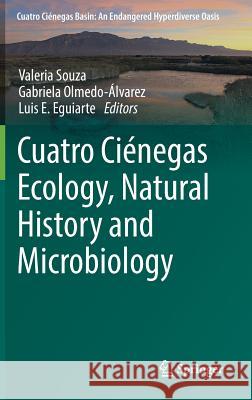
Cuatro Ciénegas Ecology, Natural History and Microbiology Valeria Souza Gabriela Olmedo-Alvarez Luis Eguiarte 9783319934228 Springer International Publishing AG - książkaWidoczna okładka, to zdjęcie poglądowe, a rzeczywista szata graficzna może różnić się od prezentowanej.

Cuatro Ciénegas Ecology, Natural History and Microbiology

ISBN-13: 9783319934228 / Angielski / Twarda / 2018 / 134 str.

Valeria Souza;Gabriela Olmedo-Alvarez;Luis Eguiarte
cena 403,47
(netto: 384,26 VAT:  5%)

Najniższa cena z 30 dni: 385,52
Termin realizacji zamówienia:
ok. 22 dni roboczych
Bez gwarancji dostawy przed świętami

Darmowa dostawa!

The aim of this first book is to introduce the readers of the series to why Cuatro Cienegas Basin (CCB) is so unique, starting with the reason why astrobiologists became interested in this oasis in the first place; namely, the high diversity and abundance of stromatolites and microbial mats in continental waters to be found in the desert oasis. As NASA has long since discovered, the basin may offer the best analog of early Earth. In essence, CCB is a time machine that can take us far back and forth in time. In the respective chapters, the contributing authors explain the extraordinary microbial diversity of Cuatro Cienegas Basin from various perspectives. In order to do so, they explain their journey as well as the different tools used to unravel the basin's mysteries, such as: Why are there so many species in a place without food? How has life there survived the enormity of tectonic shifts through the ages, maintaining its ancient marine heritage?


Kategorie:
Nauka, Biologia i przyroda
Kategorie BISAC:
Science > Mikrobiologia
Science > Life Sciences - Ecology
Science > Environmental Science (see also Chemistry - Environmental)
Wydawca:
Springer International Publishing AG
Język:
Angielski
ISBN-13:
9783319934228
Rok wydania:
2018
Wydanie:
2018
Ilość stron:
134
Waga:
0.40 kg
Wymiary:
23.5 x 15.5
Oprawa:
Twarda
Wolumenów:
01
Dodatkowe informacje:
Wydanie ilustrowane

Chapter 1 - Why Cuatro Ciénegas Basin (CCB) is so special, a walk through the ages: Valeria Souza (UNAM, MX).- Chapter 2 - The Global Climate Change footprint at Cuatro Ciénegas, Mexico: the increment of Extreme Climatic Event frequencies and its relation with water management: Cristina Montiel-González, Francisco Bautista, Oscar Sánchez-Meneses and Felipe García-Oliva (UNAM, MX).- Chapter 3 - Microbial saga: from the ancient past to the present: Valeria Souza, Luis Eguiarte (UNAM, MX), Gabriela Olmedo (CINVESTAV, MX), Michael Travisano (University of Minnesota, USA) and Janet Siefert (Rice University, USA).- Chapter 4 - Hyper-diversity of Virus in CCB: Blanca Taboada, Pavel Isa, Ana Lorena Gutiérrez, Rosa Maria del Ángel (UNAM, MX), Juan Ludert (CINVESTAV, MX), Ana Cecilia Espinosa, Luis E Eguiarte., Susana López, Valeria Souza and Carlos Arias ;(UNAM, MX).- Chapter 5 - How divergent is this oasis? Microbial population genomics studies: Mirna Vazquez; Zulema Gómez; Gabriel Yaxal (UNAM, MX), Gabriela Olmedo (CINVESTAV, MX), Valeria Souza Alejandra Moreno and Luis Eguiarte (UNAM, MX).- Chapter 6 - Microbial ecology in CCB: The survival at the edge of life, mutualisms with locals and antagonisms with the foreigners: Experimental and metagenomics evidence: Laura Espinosa, Eneas Aguirre, Patricia Vélez, Gabriela Olmedo (CINVESTAV, MX), Valerie de Anda, Luis E. Eguiarte and Valeria Souza (UNAM, MX).- Chapter 7 - Mesocosms and other experiments: a way to test resilience of a community: Esmeralda Nguyen López (IPICYT, MX) , Silvia Pajares (UNAM, MX) , Gabriela Olmedo (CINVESTAV, MX), Ana Escalante, Luis Eguiarte and Valeria Souza (UNAM, MX).- Chapter 8 - Bacillus as system model: Diversity and distribution, the bacillus tale: Gabriela Olmedo (CINVESTAV, MX), Ma. Dolores Rodriguez,  Luis David Alcaraz, Valeria Souza (UNAM, MX).- Chapter 9 - Ecological adaptability of Bacillus to the extreme oligotrophy of the Cuatro Cienegas Basin: Jorge Valdivia-Anistro, Luis Eguiarte-Fruns and Valeria Souza (UNAM, MX).- Chapter 10 - Actinobacteria, the story of the biotechnology potential: Héctor Arocha, Susana de la Torre, Hamlet Aviles, Francisco Barona (CINVESTAV, MX).- Index.

Valeria Souza was born in Mexico City and completed her bachelor’s degree in Biology, master’s degree in Genetics and PhD in Ecology at the National Autonomous University of Mexico (UNAM). In 1990 Valeria went to Irvine California (UCI) to work with Rich Lenski and learn experimental evolution. In 1993, she took on a research position at UNAM in Mexico, where she still works today. Her field is Evolutionary Ecology of Microbes and when Valeria completed her PhD, there were no other researchers studying it in Mexico, and very few in the world. As a young researcher, she received a MacArthur fellowship to investigate the role of women in biodiversity and she chose to explore how domestications had changed microbial populations and published a paper on ethnomicrobiology. At the same time she began exploring the role of bacterial sex in the evolution of the pathogenicity in E. coli comparing human related strains with wild animal isolates. In 1999, all of those more predictable trails in academia changed when Valeria and her family were invited by NASA to explore a new world in a journey that led them to the depths of microbial biodiversity in an unlikely oasis in the Chihuahuan desert.


Dr. Gabriela Olmedo studied Biology at Universidad Autónoma de México, and she obtained her Ph.D. at the University of Pennsylvania, U.S.A  in 1990. In May 1990 she started working as an independent researcher at Cinvestav Unidad Irapuato. Using biochemical and genetic strategies her group has described some mechanisms involved in the decay of mRNAs as well as those required for maturation of tRNA, mainly in the bacterial model Bacillus subtilis. Her group is also interested in understanding community interactions and ecological adaptations of bacteria, particularly of the Bacillus genus. Some of the main models for study are the microbial communities in aquatic systems of Cuatro cienegas, Coahuila, Mexico. With her collaborators, she has also employed microbial, genomi
c, and metagenomic approaches to reveal the species and gene pools that dominate different sediment and water systems. Her group has also maintained the Ciencia Viva scientific workshop for undergraduate students for fifteen years. She was chair of the Department of Genetic Engineering at Centro de Investigación y Estudios Avanzados del I.P.N., Unidad Irapuato from 2007 to 2013, and has since been the director there.

The aim of this first book is to introduce the readers of the series to why Cuatro Ciénegas Basin (CCB) is so unique, starting with the reason why astrobiologists became interested in this oasis in the first place; namely, the high diversity and abundance of stromatolites and microbial mats in continental waters to be found in the desert oasis. As NASA has long since discovered, the basin may offer the best analog of early Earth. In essence, CCB is a time machine that can take us far back and forth in time. 

In the respective chapters, the contributing authors explain the extraordinary microbial diversity of Cuatro Ciénegas Basin from various perspectives. In order to do so, they explain their journey as well as the different tools used to unravel the basin’s mysteries, such as: Why are there so many species in a place without food? How has life there survived the enormity of tectonic shifts through the ages, maintaining its ancient marine heritage?




Udostępnij

Facebook - konto krainaksiazek.pl


Opinie o Krainaksiazek.pl na Opineo.pl

Partner Mybenefit

Krainaksiazek.pl w programie rzetelna firma Krainaksiaze.pl - płatności przez paypal

Czytaj nas na:

Facebook - krainaksiazek.pl
  • książki na zamówienie
  • granty
  • książka na prezent
  • kontakt
  • pomoc
  • opinie
  • regulamin
  • polityka prywatności

Zobacz:

  • Księgarnia czeska

  • Wydawnictwo Książkowe Klimaty

1997-2025 DolnySlask.com Agencja Internetowa

© 1997-2022 krainaksiazek.pl
     
KONTAKT | REGULAMIN | POLITYKA PRYWATNOŚCI | USTAWIENIA PRYWATNOŚCI
Zobacz: Księgarnia Czeska | Wydawnictwo Książkowe Klimaty | Mapa strony | Lista autorów
KrainaKsiazek.PL - Księgarnia Internetowa

Polityka prywatnosci - link
Krainaksiazek.pl - płatnośc Przelewy24
Przechowalnia Przechowalnia




