• Wyszukiwanie zaawansowane
  • Kategorie
  • Kategorie BISAC
  • Książki na zamówienie
  • Promocje
  • Granty
  • Książka na prezent
  • Opinie
  • Pomoc
  • Załóż konto
  • Zaloguj się

Crossover Designs: Testing, Estimation, and Sample Size » książka


zaloguj się | załóż konto
Logo Krainaksiazek.pl

koszyk

konto

szukaj
topmenu
Księgarnia internetowa
Szukaj
Książki na zamówienie
Promocje
Granty
Książka na prezent
Moje konto
Pomoc
 
 
Wyszukiwanie zaawansowane
Pusty koszyk
Bezpłatna dostawa dla zamówień powyżej 20 złBezpłatna dostawa dla zamówień powyżej 20 zł

Kategorie główne

• Nauka
 [2950560]
• Literatura piękna
 [1849509]

  więcej...
• Turystyka
 [71097]
• Informatyka
 [151150]
• Komiksy
 [35848]
• Encyklopedie
 [23178]
• Dziecięca
 [617388]
• Hobby
 [139064]
• AudioBooki
 [1657]
• Literatura faktu
 [228597]
• Muzyka CD
 [383]
• Słowniki
 [2855]
• Inne
 [445295]
• Kalendarze
 [1464]
• Podręczniki
 [167547]
• Poradniki
 [480102]
• Religia
 [510749]
• Czasopisma
 [516]
• Sport
 [61293]
• Sztuka
 [243352]
• CD, DVD, Video
 [3414]
• Technologie
 [219456]
• Zdrowie
 [101002]
• Książkowe Klimaty
 [124]
• Zabawki
 [2311]
• Puzzle, gry
 [3459]
• Literatura w języku ukraińskim
 [254]
• Art. papiernicze i szkolne
 [8079]
Kategorie szczegółowe BISAC

Crossover Designs: Testing, Estimation, and Sample Size

ISBN-13: 9781119114680 / Angielski / Twarda / 2016 / 248 str.
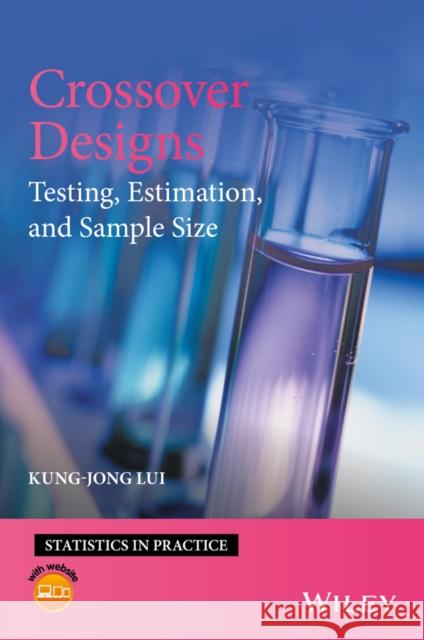
Kung–Jong Lui
Crossover Designs: Testing, Estimation, and Sample Size Lui, Kung-Jong 9781119114680 John Wiley & Sons - książkaWidoczna okładka, to zdjęcie poglądowe, a rzeczywista szata graficzna może różnić się od prezentowanej.

Crossover Designs: Testing, Estimation, and Sample Size

ISBN-13: 9781119114680 / Angielski / Twarda / 2016 / 248 str.

Kung–Jong Lui
cena 378,15
(netto: 360,14 VAT:  5%)

Najniższa cena z 30 dni: 375,82
Termin realizacji zamówienia:
ok. 30 dni roboczych
Dostawa w 2026 r.

Darmowa dostawa!

A comprehensive and practical resource for analyses of crossover designs For ethical reasons, it is vital to keep the number of patients in a clinical trial as low as possible. As evidenced by extensive research publications, crossover design can be a useful and powerful tool to reduce the number of patients needed for a parallel group design in studying treatments for non-curable chronic diseases. This book introduces commonly-used and well-established statistical tests and estimators in epidemiology that can easily be applied to hypothesis testing and estimation of the relative treatment effect for various types of data scale in crossover designs. Models with distribution-free random effects are assumed and hence most approaches considered here are semi-parametric. The book provides clinicians and biostatisticians with the exact test procedures and exact interval estimators, which are applicable even when the number of patients in a crossover trial is small. Systematic discussion on sample size determination is also included, which will be a valuable resource for researchers involved in crossover trial design. Key features

  • Provides exact test procedures and interval estimators, which are especially of use in small-sample cases.
  • Presents most test procedures and interval estimators in closed-forms, enabling readers to calculate them by use of a pocket calculator or commonly-used statistical packages.
  • Each chapter is self-contained, allowing the book to be used a reference resource.
  • Uses real-life examples to illustrate the practical use of test procedures and estimators
  • Provides extensive exercises to help readers appreciate the underlying theory, learn other relevant test procedures and understand how to calculate the required sample size.
Crossover Designs: Testing, Estimation and Sample Size will be a useful resource for researchers from biostatistics, as well as pharmaceutical and clinical sciences. It can also be used as a textbook or reference for graduate students studying clinical experiments.

A comprehensive and practical resource for analyses of crossover designs For ethical reasons, it is vital to keep the number of patients in a clinical trial as low as possible.

Kategorie:
Nauka, Matematyka
Kategorie BISAC:
Medical > Research
Medical > Chemia kliniczna
Wydawca:
John Wiley & Sons
Seria wydawnicza:
Statistics in Practice
Język:
Angielski
ISBN-13:
9781119114680
Rok wydania:
2016
Ilość stron:
248
Waga:
0.43 kg
Wymiary:
23.11 x 15.24 x 1.78
Oprawa:
Twarda
Wolumenów:
01
Dodatkowe informacje:
Bibliografia

About the author xi

Preface xii

About the companion website xiv

1 Crossover design definitions, notes, and limitations 1

1.1 Unsuitability for acute or most infectious diseases 2

1.2 Inappropriateness for treatments with long–lasting effects 2

1.3 Loss of efficiency in the presence of carry–over effects 3

1.4 Concerns of treatment–by–period interaction 3

1.5 Flaw of the commonly used two–stage test procedure 4

1.6 Higher risk of dropping out or being lost to follow–up 4

1.7 More assumptions needed in use of a crossover design 5

1.8 General principle and conditional approach used in the book 5

2 AB/BA design in continuous data 7

2.1 Testing non–equality of treatments 10

2.2 Testing non–inferiority of an experimental treatment to an active control treatment 11

2.3 Testing equivalence between an experimental treatment and an active control treatment 12

2.4 Interval estimation of the mean difference 13

2.5 Sample size determination 16

2.5.1 Sample size for testing non–equality 16

2.5.2 Sample size for testing non–inferiority 17

2.5.3 Sample size for testing equivalence 18

2.6 Hypothesis testing and estimation for the period effect 19

2.7 Estimation of the relative treatment effect in the presence of differential carry–over effects 21

2.8 Examples of SAS programs and results 22

Exercises 27

3 AB/BA design in dichotomous data 30

3.1 Testing non–equality of treatments 34

3.2 Testing non–inferiority of an experimental treatment to an active control treatment 36

3.3 Testing equivalence between an experimental treatment and an active control treatment 39

3.4 Interval estimation of the odds ratio 40

3.5 Sample size determination 42

3.5.1 Sample size for testing non–equality 42

3.5.2 Sample size for testing non–inferiority 42

3.5.3 Sample size for testing equivalence 43

3.6 Hypothesis testing and estimation for the period effect 45

3.7 Testing and estimation for carry–over effects 47

3.8 SAS program codes and likelihood–based approach 48

Exercises 51

4 AB/BA design in ordinal data 57

4.1 Testing non–equality of treatments 62

4.2 Testing non–inferiority of an experimental treatment to an active control treatment 64

4.3 Testing equivalence between an experimental treatment and an active control treatment 65

4.4 Interval estimation of the generalized odds ratio 66

4.5 Sample size determination 67

4.5.1 Sample size for testing non–equality 67

4.5.2 Sample size for testing non–inferiority 68

4.5.3 Sample size for testing equivalence 68

4.6 Hypothesis testing and estimation for the period effect 70

4.7 SAS codes for the proportional odds model with normal random effects 72

Exercises 74

5 AB/BA design in frequency data 75

5.1 Testing non–equality of treatments 78

5.2 Testing non–inferiority of an experimental treatment to an active control treatment 81

5.3 Testing equivalence between an experimental treatment and an active control treatment 83

5.4 Interval estimation of the ratio of mean frequencies 84

5.5 Sample size determination 86

5.5.1 Sample size for testing non–equality 86

5.5.2 Sample size for testing non–inferiority 87

5.5.3 Sample size for testing equivalence 88

5.6 Hypothesis testing and estimation for the period effect 88

5.7 Estimation of the relative treatment effect in the presence of differential carry–over effects 90

Exercises 92

6 Three–treatment three–period crossover design in continuous data 95

6.1 Testing non–equality between treatments and placebo 102

6.2 Testing non–inferiority of an experimental treatment to an active control treatment 103

6.3 Testing equivalence between an experimental treatment and an active control treatment 104

6.4 Interval estimation of the mean difference 104

6.5 Hypothesis testing and estimation for period effects 105

6.6 Procedures for testing treatment–by–period interactions 107

6.7 SAS program codes and results for constant variance 109

Exercises 111

7 Three–treatment three–period crossover design in dichotomous data 115

7.1 Testing non–equality of treatments 121

7.1.1 Asymptotic test procedures 121

7.1.2 Exact test procedures 123

7.1.3 Procedures for simultaneously testing non–equality of two experimental treatments versus a placebo 124

7.2 Testing non–inferiority of an experimental treatment to an active control treatment 126

7.3 Testing equivalence between an experimental treatment and an active control treatment 127

7.4 Interval estimation of the odds ratio 129

7.5 Hypothesis testing and estimation for period effects 131

7.6 Procedures for testing treatment–by–period interactions 133

7.7 SAS program codes and results for a logistic regression model with normal random effects 136

Exercises 138

8 Three–treatment three–period crossover design in ordinal data 141

8.1 Testing non–equality of treatments 150

8.1.1 Asymptotic test procedures 150

8.1.2 Exact test procedure 152

8.2 Testing non–inferiority of an experimental treatment to an active control treatment 153

8.3 Testing equivalence between an experimental treatment and an active control treatment 153

8.4 Interval estimation of the GOR 154

8.5 Hypothesis testing and estimation for period effects 156

8.6 Procedures for testing treatment–by–period interactions 159

8.7 SAS program codes and results for the proportional odds model with normal random effects 160

Exercises 162

9 Three–treatment three–period crossover design in frequency data 164

9.1 Testing non–equality between treatments and placebo 170

9.2 Testing non–inferiority of an experimental treatment to an active control treatment 173

9.3 Testing equivalence between an experimental treatment and an active control treatment 174

9.4 Interval estimation of the ratio of mean frequencies 175

9.5 Hypothesis testing and estimation for period effects 178

9.6 Procedures for testing treatment–by–period interactions 179

Exercises 181

10 Three–treatment (incomplete block) crossover design in continuous and dichotomous data 183

10.1 Continuous data 185

10.1.1 Testing non–equality of treatments 188

10.1.2 Testing non–equality between experimental treatments (or non–nullity of dose effects) 189

10.1.3 Interval estimation of the mean difference 190

10.1.4 SAS codes for fixed effects and mixed effects models 192

10.2 Dichotomous data 194

10.2.1 Testing non–equality of treatments 197

10.2.2 Testing non–equality between experimental treatments (or non–nullity of dose effects) 199

10.2.3 Testing non–inferiority of either experimental treatment to an active control treatment 199

10.2.4 Interval estimation of the odds ratio 200

10.2.5 SAS codes for the likelihood–based approach 202

Exercises 203

References 208

Index 216

Crossover Designs: Testing, Estimation and Sample Size


Kung–Jong Lui, Department of Mathematics and Statistics, San Diego State University, USA


A comprehensive and practical resource for analyses of crossover designs

For ethical reasons, it is vital to keep the number of patients in a clinical trial as low as possible.  As evidenced by extensive research publications, crossover design can be a useful and powerful tool to reduce the number of patients needed for a parallel group design in studying treatments for non–curable chronic diseases.  

This book introduces commonly–used and well–established statistical tests and estimators in epidemiology that can easily be applied to hypothesis testing and estimation of the relative treatment effect for various types of data scale in crossover designs. Models with distribution–free random effects are assumed and hence most approaches considered here are semi–parametric. The book provides clinicians and biostatisticians with the exact test procedures and exact interval estimators, which are applicable even when the number of patients in a crossover trial is small.  Systematic discussion on sample size determination is also included, which will be a valuable resource for researchers involved in crossover trial design.


Key features:

l  Provides exact test procedures and interval estimators, which are especially of use in small–sample cases.

l  Presents most test procedures and interval estimators in closed–forms, enabling readers to calculate them by use of a pocket calculator or commonly–used statistical packages.

l  Each chapter is self–contained, allowing the book to be used a reference resource. 

l  Uses real–life examples to illustrate the practical use of test procedures and estimators

l  Provides extensive exercises to help readers appreciate the underlying theory, learn other relevant test procedures and understand how to calculate the required sample size. 


Crossover Designs: Testing, Estimation and Sample Size will be a useful resource for researchers from biostatistics, as well as pharmaceutical and clinical sciences.  It can also be used as a textbook or reference for graduate students studying clinical experiments.


Udostępnij

Facebook - konto krainaksiazek.pl


Opinie o Krainaksiazek.pl na Opineo.pl

Partner Mybenefit

Krainaksiazek.pl w programie rzetelna firma Krainaksiaze.pl - płatności przez paypal

Czytaj nas na:

Facebook - krainaksiazek.pl
  • książki na zamówienie
  • granty
  • książka na prezent
  • kontakt
  • pomoc
  • opinie
  • regulamin
  • polityka prywatności

Zobacz:

  • Księgarnia czeska

  • Wydawnictwo Książkowe Klimaty

1997-2025 DolnySlask.com Agencja Internetowa

© 1997-2022 krainaksiazek.pl
     
KONTAKT | REGULAMIN | POLITYKA PRYWATNOŚCI | USTAWIENIA PRYWATNOŚCI
Zobacz: Księgarnia Czeska | Wydawnictwo Książkowe Klimaty | Mapa strony | Lista autorów
KrainaKsiazek.PL - Księgarnia Internetowa

Polityka prywatnosci - link
Krainaksiazek.pl - płatnośc Przelewy24
Przechowalnia Przechowalnia




