• Wyszukiwanie zaawansowane
  • Kategorie
  • Kategorie BISAC
  • Książki na zamówienie
  • Promocje
  • Granty
  • Książka na prezent
  • Opinie
  • Pomoc
  • Załóż konto
  • Zaloguj się

Critical Thinking - Concise Edition » książka

zaloguj się | załóż konto
Logo Krainaksiazek.pl

koszyk

konto

szukaj
topmenu
Księgarnia internetowa
Szukaj
Książki na zamówienie
Promocje
Granty
Książka na prezent
Moje konto
Pomoc
 
 
Wyszukiwanie zaawansowane
Pusty koszyk
Bezpłatna dostawa dla zamówień powyżej 20 złBezpłatna dostawa dla zamówień powyżej 20 zł

Kategorie główne

• Nauka
 [2950560]
• Literatura piękna
 [1849509]

  więcej...
• Turystyka
 [71097]
• Informatyka
 [151150]
• Komiksy
 [35848]
• Encyklopedie
 [23178]
• Dziecięca
 [617388]
• Hobby
 [139064]
• AudioBooki
 [1657]
• Literatura faktu
 [228597]
• Muzyka CD
 [383]
• Słowniki
 [2855]
• Inne
 [445295]
• Kalendarze
 [1464]
• Podręczniki
 [167547]
• Poradniki
 [480102]
• Religia
 [510749]
• Czasopisma
 [516]
• Sport
 [61293]
• Sztuka
 [243352]
• CD, DVD, Video
 [3414]
• Technologie
 [219456]
• Zdrowie
 [101002]
• Książkowe Klimaty
 [124]
• Zabawki
 [2311]
• Puzzle, gry
 [3459]
• Literatura w języku ukraińskim
 [254]
• Art. papiernicze i szkolne
 [8079]
Kategorie szczegółowe BISAC

Critical Thinking - Concise Edition

ISBN-13: 9781554812677 / Angielski / Miękka / 2015 / 230 str.

William Hughes; Jonathan Lavery
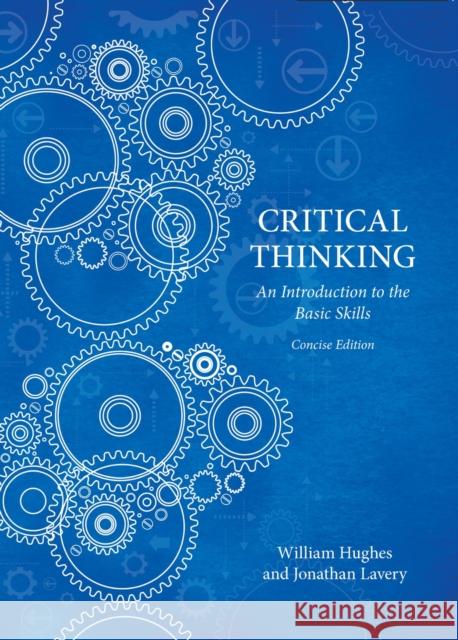
Critical Thinking - Concise Edition Hughes, William 9781554812677 Broadview Press - książkaWidoczna okładka, to zdjęcie poglądowe, a rzeczywista szata graficzna może różnić się od prezentowanej.

Critical Thinking - Concise Edition

ISBN-13: 9781554812677 / Angielski / Miękka / 2015 / 230 str.

William Hughes; Jonathan Lavery
cena 218,36
(netto: 207,96 VAT:  5%)

Najniższa cena z 30 dni: 195,93
Termin realizacji zamówienia:
ok. 30 dni roboczych
Dostawa w 2026 r.

Darmowa dostawa!

A top-selling introduction to good reasoning, in a new succinct and inexpensive format.

Kategorie:
Nauka, Filozofia
Kategorie BISAC:
Philosophy > Logic
Wydawca:
Broadview Press
Język:
Angielski
ISBN-13:
9781554812677
Rok wydania:
2015
Ilość stron:
230
Waga:
0.41 kg
Wymiary:
17.1 x 27.5 x 1.8
Oprawa:
Miękka
Wolumenów:
01
Dodatkowe informacje:
Glosariusz/słownik

Acknowledgments
Online Materials

PART ONE: INTRODUCTION

Chapter 1: Reasoning and Critical Thinking

  1. Reasoning
  2. The Concept of Logical Strength
  3. Truth, Logical Strength, and Soundness
  4. Critical Thinking Skills
  5. Critical Thinking and the Science of Logic
  6. Self-Test No. 1
  7. Questions for Discussion

PART TWO: MEANING

Chapter 2: Meaning and Definition

  1. The Complexity of Language
  2. The Meaning of Language
    1. The Reference Theory of Meaning
    2. The Idea Theory of Meaning
    3. Meaning as Use
  3. The Main Functions of Language
  4. Self-Test No. 2
  5. Questions for Discussion
  6. Definition
  7. The Purposes of Definition
    1. Reportive Definitions
    2. Stipulative Definitions
    3. Essentialist Definitions
  8. Methods of Definition
    1. Genus-Species Method
    2. Ostensive Method
    3. Synonym Method
    4. Operational Method
    5. Contextual Method
  9. Assessing Reportive Definitions
    1. Too Broad a Definition
    2. Too Narrow a Definition
    3. Too Broad and Too Narrow a Definition
    4. Circular Definition
    5. Obscure Definition
  10. Assessing Stipulative and Essentialist Definitions
  11. A Warning
  12. Self-Test No. 3
  13. Questions for Discussion

Chapter 3: Clarifying Meaning

  1. The Principle of Charity
  2. Linguistic Ambiguity
    1. Ambiguity and Vagueness
    2. Referential Ambiguity
    3. Grammatical Ambiguity
    4. Use and Mention
  3. Self-Test No. 4
  4. Analytic, Contradictory, and Synthetic Statements
  5. Self-Test No. 5
  6. Descriptive and Evaluative Meaning
  7. Self-Test No. 6
  8. Necessary and Sufficient Conditions
  9. Self-Test No. 7
  10. Questions for Discussion

Chapter 4: Reconstructing Arguments

  1. Reconstruction
  2. Missing Premises and Conclusions
  3. Self-Test No. 8
  4. Special Cases
    1. Reports of Arguments
    2. Explanations
  5. Self-Test No. 9
  6. The Structure of Arguments
    1. Simple Arguments
    2. T Arguments
    3. V Arguments
    4. Complex Arguments
  7. Self-Test No. 10
  8. Another Warning
  9. Questions for Discussion

PART THREE: ASSESSING ARGUMENTS

Chapter 5: Strategies for Assessing Arguments

  1. The Fallacies Approach
  2. The Criterial Approach
    1. The Three Criteria of a Sound Argument
  3. Seven Rules for Assessing Arguments
    1. Rule 1. Identify the Main Conclusion
    2. Rule 2. Identify the Premises
    3. Rule 3. Identify the Structure of the Argument
    4. Rule 4. Check the Acceptability of the Premises
    5. Rule 5. Check the Relevance of the Premises
    6. Rule 6. Check the Adequacy of the Premises
    7. Rule 7. Look for Counter-Arguments

Chapter 6: Assessing Truth-Claims

  1. Theories of Truth
    1. The Correspondence Theory
    2. The Coherence Theory
    3. The Pragmatic Theory
  2. Types of Truth-Claims
    1. Empirical Truth-Claims
    2. Non-Empirical Truth-Claims
  3. Acceptability
  4. Self-Test No. 11
  5. Questions for Discussion
  6. Assessing the Acceptability of Premises
  7. Some Particular Fallacies
    1. Begging the Question
    2. Inconsistency
    3. Equivocation
    4. False Dichotomy
  8. Self-Test No. 12
  9. Questions for Discussion

Chapter 7: Assessing Relevance

  1. The Criterion of Relevance
  2. Recognizing Irrelevant Premises
  3. Appeals to Authority (1)
  4. Some Particular Fallacies
    1. Ad Hominem
    2. Tu Quoque
    3. Straw Man
  5. Self-Test No. 13
  6. Questions for Discussion

Chapter 8: Assessing Adequacy

  1. The Criterion of Adequacy
  2. Appeals to Authority (2)
  3. Appeals to Anecdotal Evidence
  4. Appeals to Ignorance
  5. The Slippery Slope Fallacy
  6. Causal Fallacies
    1. Post Hoc
    2. Confusing Cause and Effect
    3. Common Cause
  7. Self-Test No. 14
  8. Questions for Discussion

Chapter 9: Deductive Reasoning

  1. The Nature of Deductive Reasoning
  2. Truth-Functional Statements
  3. Formal Validity and Soundness
  4. Valid Argument Forms
  5. Formal Invalidity
  6. Self-Test No. 15
  7. Questions for Discussion

Chapter 10: Inductive Reasoning

  1. The Nature of Inductive Reasoning
  2. Inductive Generalization
  3. Statistical Syllogism
  4. Induction by Confirmation
  5. Analogical Reasoning
  6. Self-Test No. 16
  7. Questions for Discussion

Chapter 11: Arguing Back

  1. Explaining the Weakness
  2. Counter-Examples
  3. Absurd Examples
  4. Counter-Arguments
  5. Self-Test No. 17
  6. Questions for Discussion

Chapter 12: Irrational Techniques of Persuasion

  1. Loaded Terms
  2. Vague Terms
  3. Loaded Questions
  4. False Confidence
  5. Selectivity
  6. Misleading Statistics
  7. Humor
  8. Red Herring
  9. Guilt by Association
  10. Persuasive Redefinition
  11. Self-Test No. 18
  12. Questions for Discussion

Appendix: Answers to Self-Tests

Glossary

Index

Hughes, William Hughes lived in the South in the forties, fifties ... więcej >


Udostępnij

Facebook - konto krainaksiazek.pl


Opinie o Krainaksiazek.pl na Opineo.pl

Partner Mybenefit

Krainaksiazek.pl w programie rzetelna firma Krainaksiaze.pl - płatności przez paypal

Czytaj nas na:

Facebook - krainaksiazek.pl
  • książki na zamówienie
  • granty
  • książka na prezent
  • kontakt
  • pomoc
  • opinie
  • regulamin
  • polityka prywatności

Zobacz:

  • Księgarnia czeska

  • Wydawnictwo Książkowe Klimaty

1997-2025 DolnySlask.com Agencja Internetowa

© 1997-2022 krainaksiazek.pl
     
KONTAKT | REGULAMIN | POLITYKA PRYWATNOŚCI | USTAWIENIA PRYWATNOŚCI
Zobacz: Księgarnia Czeska | Wydawnictwo Książkowe Klimaty | Mapa strony | Lista autorów
KrainaKsiazek.PL - Księgarnia Internetowa

Polityka prywatnosci - link
Krainaksiazek.pl - płatnośc Przelewy24
Przechowalnia Przechowalnia