• Wyszukiwanie zaawansowane
  • Kategorie
  • Kategorie BISAC
  • Książki na zamówienie
  • Promocje
  • Granty
  • Książka na prezent
  • Opinie
  • Pomoc
  • Załóż konto
  • Zaloguj się

Critical Security Studies in the Digital Age: Social Media and Security » książka


zaloguj się | załóż konto
Logo Krainaksiazek.pl

koszyk

konto

szukaj
topmenu
Księgarnia internetowa
Szukaj
Książki na zamówienie
Promocje
Granty
Książka na prezent
Moje konto
Pomoc
 
 
Wyszukiwanie zaawansowane
Pusty koszyk
Bezpłatna dostawa dla zamówień powyżej 20 złBezpłatna dostawa dla zamówień powyżej 20 zł

Kategorie główne

• Nauka
 [2946912]
• Literatura piękna
 [1852311]

  więcej...
• Turystyka
 [71421]
• Informatyka
 [150889]
• Komiksy
 [35717]
• Encyklopedie
 [23177]
• Dziecięca
 [617324]
• Hobby
 [138808]
• AudioBooki
 [1671]
• Literatura faktu
 [228371]
• Muzyka CD
 [400]
• Słowniki
 [2841]
• Inne
 [445428]
• Kalendarze
 [1545]
• Podręczniki
 [166819]
• Poradniki
 [480180]
• Religia
 [510412]
• Czasopisma
 [525]
• Sport
 [61271]
• Sztuka
 [242929]
• CD, DVD, Video
 [3371]
• Technologie
 [219258]
• Zdrowie
 [100961]
• Książkowe Klimaty
 [124]
• Zabawki
 [2341]
• Puzzle, gry
 [3766]
• Literatura w języku ukraińskim
 [255]
• Art. papiernicze i szkolne
 [7810]
Kategorie szczegółowe BISAC

Critical Security Studies in the Digital Age: Social Media and Security

ISBN-13: 9783031207334 / Angielski / Twarda / 2023 / 263 str.
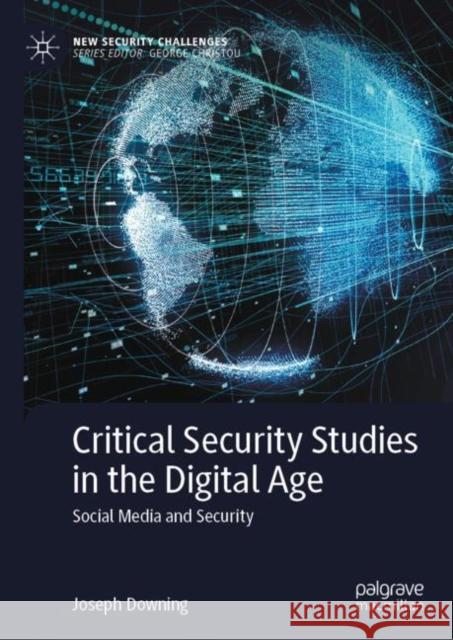
Joseph Downing
Critical Security Studies in the Digital Age: Social Media and Security Joseph Downing 9783031207334 Palgrave MacMillan - książkaWidoczna okładka, to zdjęcie poglądowe, a rzeczywista szata graficzna może różnić się od prezentowanej.

Critical Security Studies in the Digital Age: Social Media and Security

ISBN-13: 9783031207334 / Angielski / Twarda / 2023 / 263 str.

Joseph Downing
cena 523,30
(netto: 498,38 VAT:  5%)

Najniższa cena z 30 dni: 462,63
Termin realizacji zamówienia:
ok. 22 dni roboczych
Bez gwarancji dostawy przed świętami

Darmowa dostawa!
inne wydania

This book demonstrates that the disciplinary boundaries present within international relations approaches to security studies are redundant when examining social media, and inter- and multi-disciplinary analysis is key. A key result of the analysis undertaken is that when examining the social media sphere security scholars need to “expect the unexpected”. This is because social media enables users to subvert, contest and create security narratives with symbols and idioms of their choice which can take into account “traditional” security themes, but also unexpected and under explored themes such as narratives from the local context of the users’ towns and cities, and the symbolism of football clubs. The book also explores the complex topography of social media when considering constructions of security. The highly dynamic topography of social media is neither elite dominated and hierarchical as the Copenhagen School conceptualises security speak. However, neither is it completely flat and egalitarian as suggested by the vernacular security studies’ non-elite approach. Rather, social media’s topography is shifting and dynamic, with individuals gaining influence in security debates in unpredictable ways. In examining social media this book engages with the emancipatory burden of critical security studies. This book argues that it remains unfulfilled on social media and rather presents a “thin” notion of discursive emancipation where social media does provide the ability for previously excluded voices to participate in security debates, even if this does not result in their direct emancipation from power hierarchies and structures offline.


This book demonstrates that the disciplinary boundaries present within international relations approaches to security studies are redundant when examining social media, and inter- and multi-disciplinary analysis is key. A key result of the analysis undertaken is that when examining the social media sphere security scholars need to “expect the unexpected”. This is because social media enables users to subvert, contest and create security narratives with symbols and idioms of their choice which can take into account “traditional” security themes, but also unexpected and under explored themes such as narratives from the local context of the users’ towns and cities, and the symbolism of football clubs. The book also explores the complex topography of social media when considering constructions of security. The highly dynamic topography of social media is neither elite dominated and hierarchical as the Copenhagen School conceptualises security speak. However, neither is it completely flat and egalitarian as suggested by the vernacular security studies’ non-elite approach. Rather, social media’s topography is shifting and dynamic, with individuals gaining influence in security debates in unpredictable ways. In examining social media this book engages with the emancipatory burden of critical security studies. This book argues that it remains unfulfilled on social media and rather presents a “thin” notion of discursive emancipation where social media does provide the ability for previously excluded voices to participate in security debates, even if this does not result in their direct emancipation from power hierarchies and structures offline.

Kategorie:
Nauka, Polityka
Kategorie BISAC:
Political Science > Security (National & International)
Political Science > Terrorism
Social Science > Media Studies
Wydawca:
Palgrave MacMillan
Seria wydawnicza:
New Security Challenges
Język:
Angielski
ISBN-13:
9783031207334
Rok wydania:
2023
Dostępne języki:
Numer serii:
000345230
Ilość stron:
263
Oprawa:
Twarda
Dodatkowe informacje:
Wydanie ilustrowane

Chapter 1. Introduction to Social Media and Critical Security Studies in the Digital Age.- Chapter 2. Conceptualizing Social Media and Critical Security Studies in the Digital Age.-  Chapter 3. Social Media, Digital Methods and Critical Security Studies.- Chapter 4. Social Media, Security and Terrorism in the Digital Age.- Chapter 5. Social Media and Vernacular Security in the Digital Age.- Chapter 6. Social Media, Security and Democracy in the Digital Age.- Chapter 7. Social Media, Security and Identity in the Digital Age.- Chapter 8. Conclusions on Social Media and Security in the Digital Age.

Joseph Downing is Senior Lecturer in International Relations and Politics, Aston University, UK, and Visiting Fellow in the European Institute, London School of Economics and Political Science, UK. He was previously Marie-Curie Fellow at the Laboratoire méditerranéen de sociologie, CNRS, Université Aix-Marseille Marseille, and the School of Oriental and African Studies, University of London. He has published and consulted widely on politics and security.

This book demonstrates that the disciplinary boundaries present within international relations approaches to security studies are redundant when examining social media, and inter- and multi-disciplinary analysis is key. A key result of the analysis undertaken is that when examining the social media sphere security scholars need to “expect the unexpected”. This is because social media enables users to subvert, contest and create security narratives with symbols and idioms of their choice which can take into account “traditional” security themes, but also unexpected and under explored themes such as narratives from the local context of the users’ towns and cities, and the symbolism of football clubs. The book also explores the complex topography of social media when considering constructions of security. The highly dynamic topography of social media is neither elite dominated and hierarchical as the Copenhagen School conceptualises security speak. However, neither is it completely flat and egalitarian as suggested by the vernacular security studies’ non-elite approach. Rather, social media’s topography is shifting and dynamic, with individuals gaining influence in security debates in unpredictable ways. In examining social media this book engages with the emancipatory burden of critical security studies. This book argues that it remains unfulfilled on social media and rather presents a “thin” notion of discursive emancipation where social media does provide the ability for previously excluded voices to participate in security debates, even if this does not result in their direct emancipation from power hierarchies and structures offline.

Joseph Downing is Senior Lecturer in International Relations and Politics, Aston University, UK, and Visiting Fellow in the European Institute, London School of Economics and Political Science, UK. He was previously Marie-Curie Fellow at the Laboratoire méditerranéen de sociologie, CNRS, Université Aix-Marseille Marseille, and the School of Oriental and African Studies, University of London. He has published and consulted widely on politics and security.


Udostępnij

Facebook - konto krainaksiazek.pl


Opinie o Krainaksiazek.pl na Opineo.pl

Partner Mybenefit

Krainaksiazek.pl w programie rzetelna firma Krainaksiaze.pl - płatności przez paypal

Czytaj nas na:

Facebook - krainaksiazek.pl
  • książki na zamówienie
  • granty
  • książka na prezent
  • kontakt
  • pomoc
  • opinie
  • regulamin
  • polityka prywatności

Zobacz:

  • Księgarnia czeska

  • Wydawnictwo Książkowe Klimaty

1997-2025 DolnySlask.com Agencja Internetowa

© 1997-2022 krainaksiazek.pl
     
KONTAKT | REGULAMIN | POLITYKA PRYWATNOŚCI | USTAWIENIA PRYWATNOŚCI
Zobacz: Księgarnia Czeska | Wydawnictwo Książkowe Klimaty | Mapa strony | Lista autorów
KrainaKsiazek.PL - Księgarnia Internetowa

Polityka prywatnosci - link
Krainaksiazek.pl - płatnośc Przelewy24
Przechowalnia Przechowalnia



